COP31 2026: Climate Finance, Climate Justice & India's Position
Key points
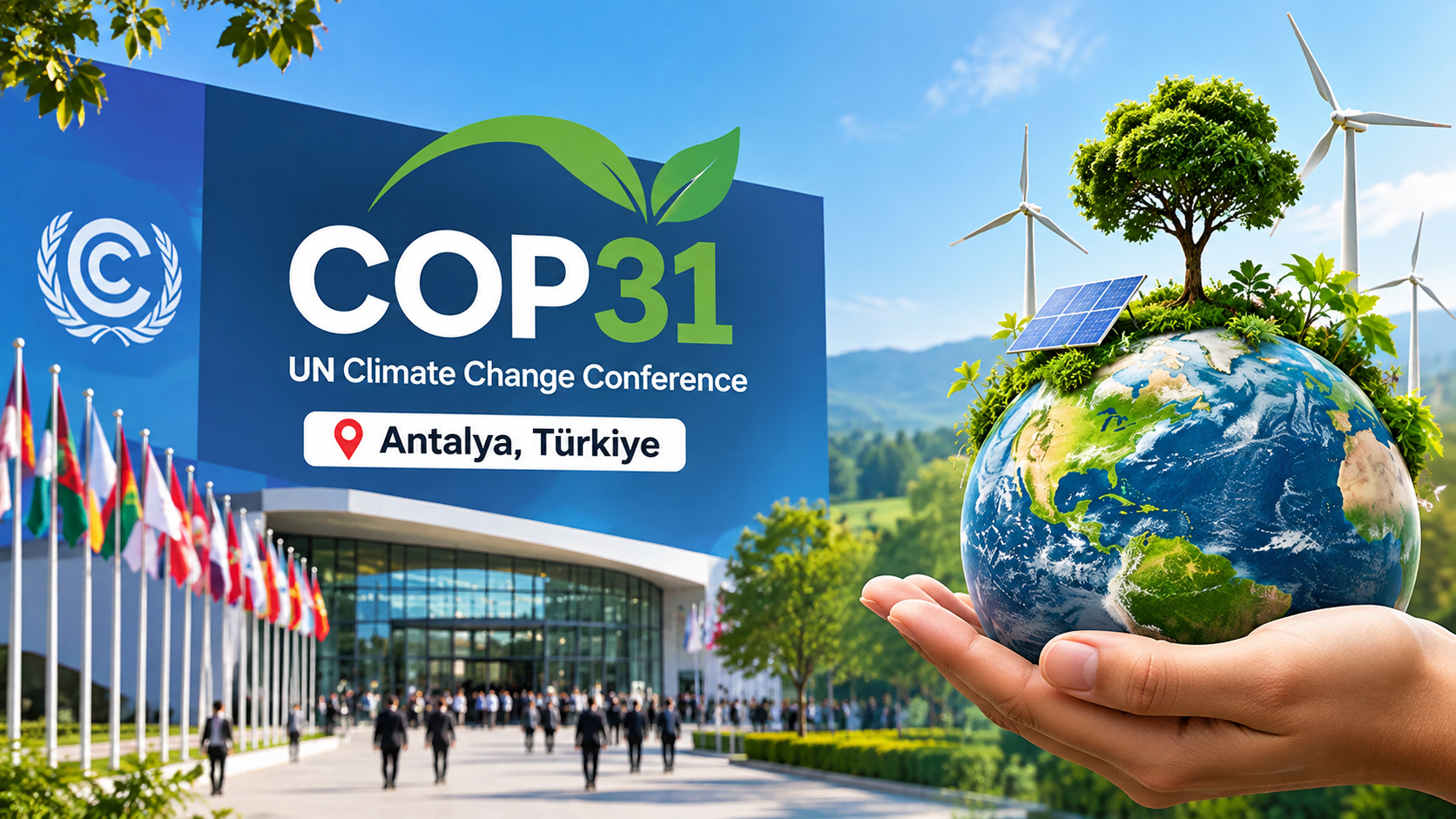
The 31st United Nations Climate Change Conference (COP31) began on 9 November 2026 in Antalya, Türkiye, and will continue until 20 November 2026.
Climate finance, climate justice, adaptation, technology transfer and the responsibilities of developed countries are among the major issues under discussion.
Ahead of the summit, India's Union Minister for Environment, Forest and Climate Change, Bhupender Yadav, emphasised that developed countries must provide predictable, affordable and accessible financial support to developing nations.
India has called for climate action based on equity, historical responsibility and the principle of Common but Differentiated Responsibilities and Respective Capabilities (CBDR-RC).
Key Highlights
Conference: COP31
Host City: Antalya, Türkiye
Dates: 9–20 November 2026
Framework: United Nations Framework Convention on Climate Change (UNFCCC)
COP31 President: Murat Kurum, Türkiye
President of Negotiations: Chris Bowen, Australia
India's Environment Minister: Bhupender Yadav
Major Focus: Climate Finance, Climate Justice, Adaptation and Just Transition
What Is Climate Finance?
Climate finance refers to financial resources used to support activities that reduce greenhouse gas emissions and help communities adapt to climate change.
It includes funding from governments, international institutions, development banks and private investors.
Climate finance generally supports three major areas:
1. Mitigation: Reducing greenhouse gas emissions through renewable energy, energy efficiency, sustainable transport and other measures.
2. Adaptation: Strengthening resilience against floods, droughts, heatwaves, rising sea levels and other climate-related risks.
3. Loss and Damage: Supporting vulnerable countries facing climate impacts that cannot be fully avoided through mitigation or adaptation.
What Is Climate Justice?
Climate justice recognises that countries and communities have contributed unequally to climate change and face different levels of vulnerability.
Developed countries have historically contributed a larger share of cumulative greenhouse gas emissions, while many developing countries face severe climate impacts despite contributing comparatively less.
Climate justice therefore emphasises:
Historical responsibility for greenhouse gas emissions
Equity in sharing climate action responsibilities
Financial and technological support for developing countries
Protection of vulnerable communities
Sustainable development and poverty reduction
Fair access to affordable energy
India's Position Ahead of COP31
On 3 November 2026, Environment Minister Bhupender Yadav outlined India's major negotiating priorities.
1. Predictable Climate Finance
India seeks reliable climate finance from developed countries, particularly public and concessional finance that does not increase the debt burden of developing nations.
2. Article 9.1 of the Paris Agreement
India has emphasised that developed countries have an obligation to provide financial resources to assist developing countries with mitigation and adaptation.
3. Adaptation Finance
India supports increased financial assistance for climate adaptation, particularly for vulnerable populations and climate-sensitive sectors.
4. Just Transition
India supports an energy transition that protects livelihoods, respects national development priorities and ensures affordable energy access.
5. Technology Transfer
India has called for addressing technology costs, intellectual property barriers and trade-related restrictions that limit access to climate-friendly technologies.
Climate Finance Targets: COP29 to COP31
At COP29 in Baku, Azerbaijan, in 2024, countries agreed on a new climate finance goal known as the New Collective Quantified Goal (NCQG).
Climate Finance Commitment | Target |
|---|---|
Previous Annual Goal | USD 100 billion |
New Annual Goal | USD 300 billion by 2035 |
Broader Finance Mobilisation Goal | USD 1.3 trillion annually by 2035 |
Agreement Adopted At | COP29, Baku, Azerbaijan |
Current Negotiation Forum | COP31, Antalya, Türkiye |
The USD 300 billion goal concerns finance for developing countries, with developed countries taking the lead.
The broader USD 1.3 trillion target involves scaling up finance from public and private sources.
A major issue at COP31 is how these commitments can be implemented, monitored and translated into accessible financial resources.
Important Climate Finance Mechanisms
Mechanism | Main Purpose |
|---|---|
Green Climate Fund (GCF) | Supports mitigation and adaptation projects |
Global Environment Facility (GEF) | Finances global environmental projects |
Adaptation Fund | Supports climate adaptation in vulnerable developing countries |
Fund for Responding to Loss and Damage | Assists vulnerable developing countries facing climate-related losses |
New Collective Quantified Goal (NCQG) | Sets a global climate finance mobilisation framework |
Important International Agreements
UNFCCC (1992): Established the international framework for cooperation against climate change.
Kyoto Protocol (1997): Introduced binding emission-reduction commitments for certain developed countries.
Paris Agreement (2015): Aims to keep global temperature rise well below 2°C and pursue efforts to limit warming to 1.5°C above pre-industrial levels.
COP29 (2024): Adopted the new climate finance goal.
COP31 (2026): Focuses on implementing climate commitments, strengthening cooperation and advancing finance, adaptation and energy transition discussions.
Important Facts for Competitive Exams
Topic | Important Fact |
|---|---|
COP31 Host Country | Türkiye |
COP31 Host City | Antalya |
COP31 Dates | 9–20 November 2026 |
COP Full Form | Conference of the Parties |
UNFCCC Adopted | 1992 |
UNFCCC Headquarters | Bonn, Germany |
Paris Agreement | 2015 |
Paris Agreement Article 9 | Climate Finance |
CBDR-RC | Common but Differentiated Responsibilities and Respective Capabilities |
COP29 Host City | Baku, Azerbaijan |
NCQG Target | USD 300 billion annually by 2035 |
Broader Finance Goal | USD 1.3 trillion annually by 2035 |
India's Environment Minister | Bhupender Yadav |
Conclusion
COP31 represents an important opportunity to strengthen global cooperation on climate change and translate existing financial commitments into practical action.
For India and other developing countries, climate finance, climate justice, technology transfer and equitable responsibility-sharing remain central priorities.
The outcome of negotiations will be important for global climate governance, sustainable development and international cooperation.