First SCO Civilisational Dialogue Forum Adopts Indraprastha Communiqué
Key points
In the News
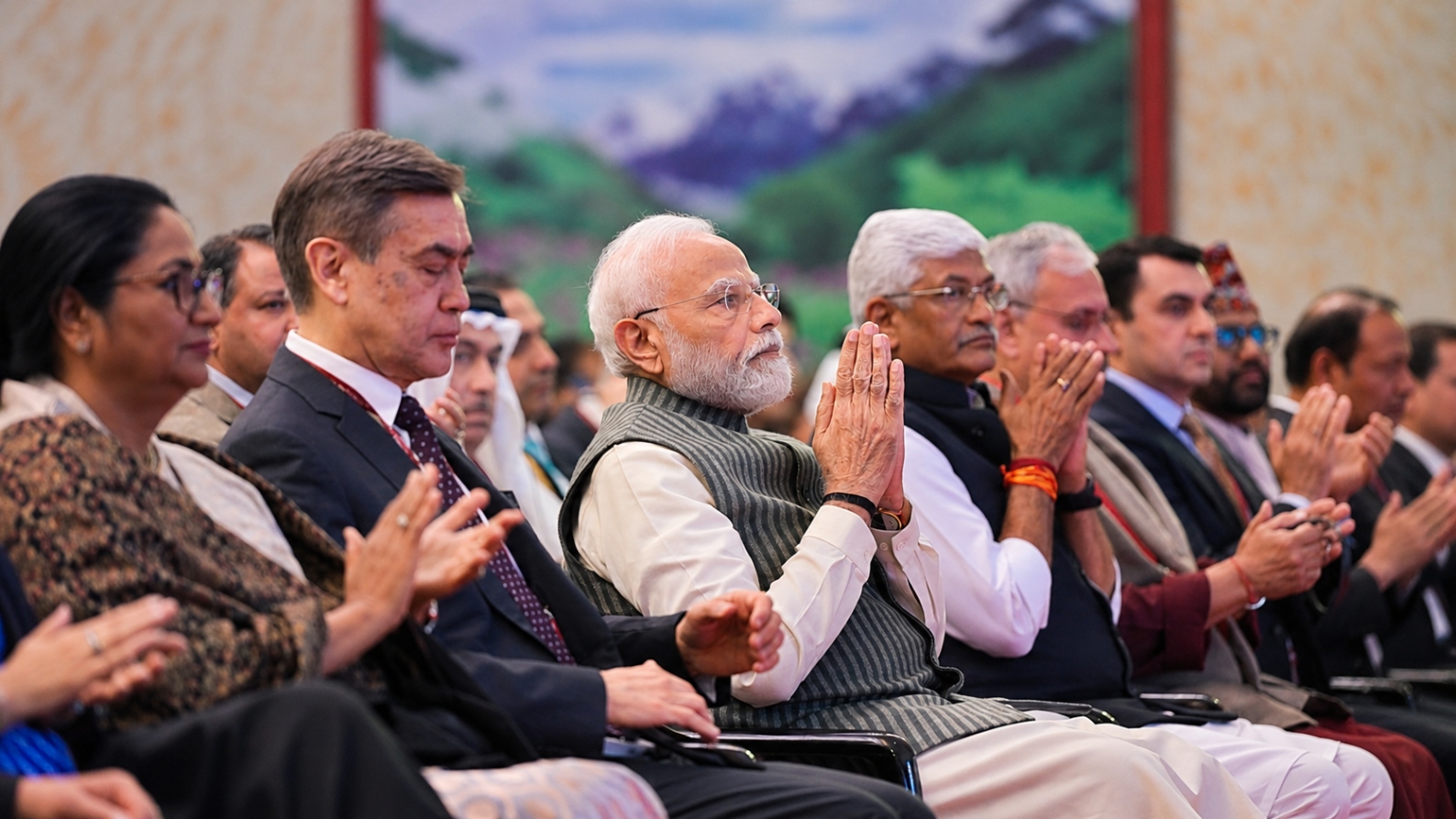
The First Shanghai Cooperation Organisation (SCO) Civilisational Dialogue Forum concluded at Purana Qila, New Delhi, with the adoption of the Indraprastha Communiqué, an outcome document promoting cultural cooperation, heritage preservation and mutual respect among civilisations.
The three-day forum was inaugurated by Prime Minister Narendra Modi on 20 November 2026 and concluded on 22 November 2026.
The event brought together 116 delegates from 22 countries, including four ministers and SCO Secretary-General Nurlan Yermekbayev.
Background
The Shanghai Cooperation Organisation (SCO) is a Eurasian intergovernmental organisation established in 2001 to promote regional security, political cooperation, economic partnerships and cultural exchanges.
The idea of establishing a dedicated SCO Civilisational Dialogue Forum was proposed by Prime Minister Narendra Modi at the SCO Summit in Tianjin, China, in 2025.
The initiative aims to strengthen cultural connections among SCO countries by recognising their shared historical traditions, artistic heritage, philosophical ideas and people-to-people relationships.
The forum reflects India's philosophy of Vasudhaiva Kutumbakam – The World Is One Family.
Key Highlights
1. First SCO Civilisational Dialogue Forum
Host country: India
Venue: Purana Qila, New Delhi
Dates: 20–22 November 2026
Inaugurated by: Prime Minister Narendra Modi
Participating countries: 22
Total delegates: 116
SCO Secretary-General: Nurlan Yermekbayev
Outcome document: Indraprastha Communiqué
The forum was jointly organised by the Ministry of Culture and the Ministry of External Affairs, with the Indira Gandhi National Centre for the Arts (IGNCA) serving as the knowledge partner.
2. Indraprastha Communiqué
The Indraprastha Communiqué was the principal outcome of the forum.
Its major priorities included:
Protecting tangible and intangible cultural heritage.
Combating illicit trafficking of cultural objects.
Respecting the diversity and equality of civilisations.
Encouraging cooperation in manuscript preservation and digitisation.
Strengthening exchanges among museums, libraries and archives.
Promoting joint research, cultural tourism and heritage conservation.
Exploring collaborative nominations for UNESCO heritage recognition.
The communiqué emphasised that cultural heritage can strengthen trust, friendship and understanding among countries.
3. Four Major Thematic Sessions
The forum focused on four areas of cultural and civilisational cooperation.
Civilisational and Cultural Expressions
Discussions examined music, performing arts, textiles, cuisine and traditional cultural practices.
Artistic and Architectural Exchanges
Delegates explored historical connections through Buddhist architecture, Silk Route exchanges, Indo-Persian influences and shared artistic traditions.
Language, Literature, Script and Manuscript Traditions
The session highlighted the preservation of ancient manuscripts, scripts, literary traditions and the transmission of knowledge across generations.
Monastic Trails – Religious and Philosophical Traditions
Participants examined the historical spread of religious and philosophical ideas across Asia, including the influence of Buddhist learning centres.
4. Cultural Exhibitions
Two major exhibitions were organised at Purana Qila.
ASTITVA – The Essence of Our Existence
The exhibition highlighted Delhi's archaeological discoveries, historical development and cultural heritage.
Mahabharat Scroll Pavilion
The pavilion showcased a rare illustrated 18th-century Mahabharata scroll, representing India's manuscript and artistic traditions.
5. Prime Minister Modi's Key Message
Prime Minister Narendra Modi highlighted the importance of civilisational dialogue in strengthening international cooperation.
He encouraged SCO countries to use modern technologies for:
Digitisation and translation of ancient manuscripts.
Collaborative research into shared history.
Preservation of cultural collections.
Joint exhibitions and academic exchanges.
Greater youth participation in cultural diplomacy.
The Prime Minister also emphasised the importance of peace, mutual understanding and trust among nations.
Important Facts for Competitive Exams
Shanghai Cooperation Organisation (SCO)
Established: 15 June 2001
Headquarters: Beijing, China
Original members: China, Russia, Kazakhstan, Kyrgyzstan, Tajikistan and Uzbekistan
India became a full member: 2017
Current Secretary-General: Nurlan Yermekbayev
Official languages: Russian and Chinese
Major focus: Regional security, economic cooperation and cultural engagement
SCO Membership
The SCO has 10 full member countries:
India
China
Russia
Pakistan
Kazakhstan
Kyrgyzstan
Tajikistan
Uzbekistan
Iran
Belarus
Important Organisations
IGNCA: Indira Gandhi National Centre for the Arts, an autonomous institution under India's Ministry of Culture.
UNESCO: United Nations Educational, Scientific and Cultural Organization, responsible for promoting international cooperation in education, science and culture.
Archaeological Survey of India (ASI): India's principal organisation for archaeological research and the protection of centrally protected monuments.
Quick Revision
First SCO Civilisational Dialogue Forum was hosted by India.
Venue: Purana Qila, New Delhi.
Inaugurated by Prime Minister Narendra Modi.
Participation: 116 delegates from 22 countries.
SCO Secretary-General: Nurlan Yermekbayev.
Principal outcome: Indraprastha Communiqué.
Organising ministries: Culture and External Affairs.
Knowledge partner: IGNCA.
The forum was proposed at the Tianjin SCO Summit in 2025.
SCO headquarters: Beijing, China.
India joined the SCO as a full member in 2017.
SCO has 10 full member countries.
The forum promoted cultural diplomacy and heritage preservation.