ICJ Rohingya Genocide Case 2026: Judgment on 19 November
Key points
In the News
The International Court of Justice (ICJ) is scheduled to deliver its judgment on 19 November 2026 in the landmark Rohingya genocide case, officially titled The Gambia v. Myanmar.
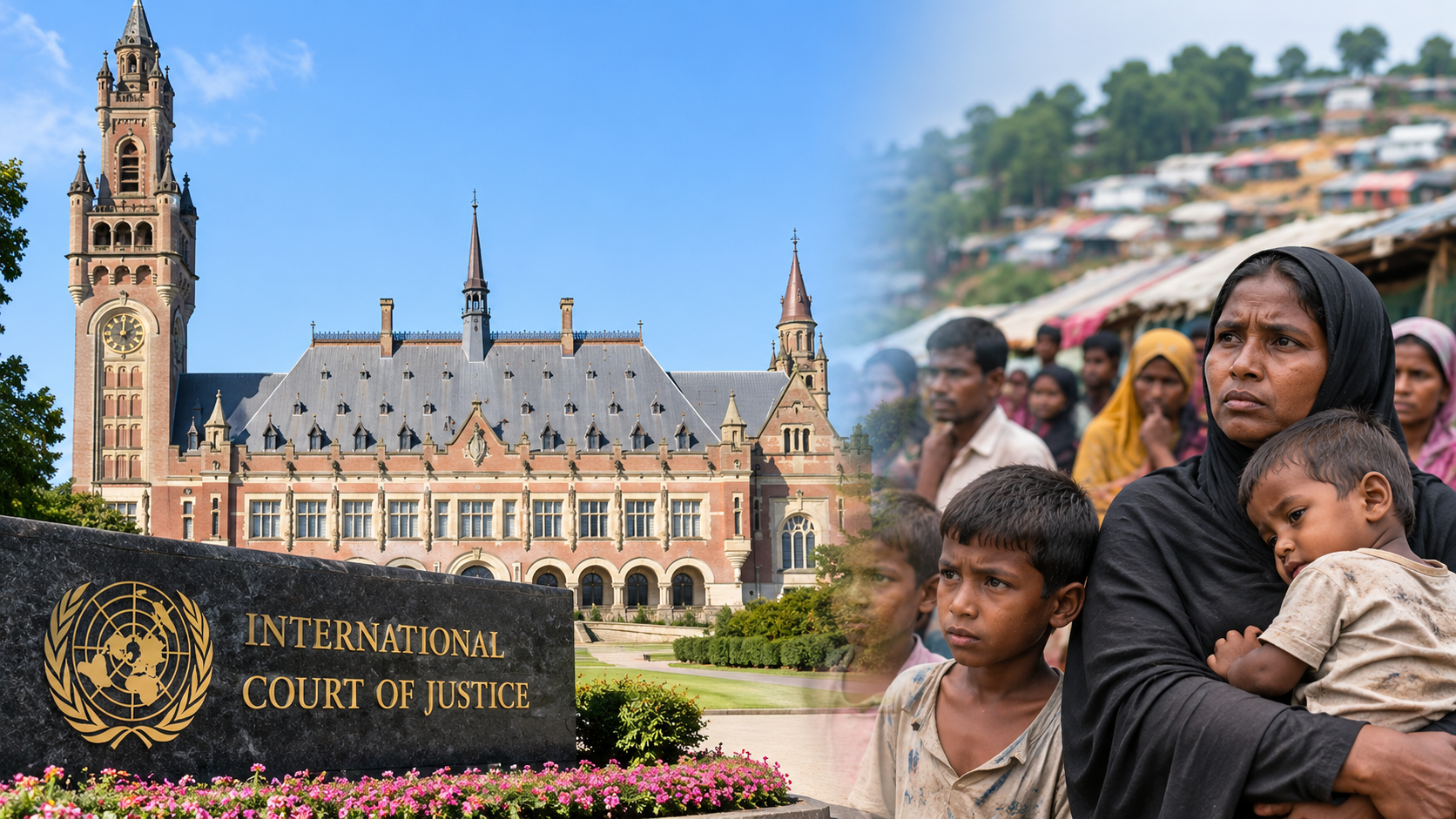
The judgment will be delivered at the Peace Palace in The Hague, Netherlands, by ICJ President Judge Iwasawa Yuji.
The case concerns allegations that Myanmar violated the 1948 Genocide Convention through military operations against the Rohingya community, particularly during 2016–2017.
The ruling is expected to have major implications for international law, state accountability and the protection of vulnerable communities.
Background
The Rohingya are a predominantly Muslim ethnic minority concentrated in Myanmar's Rakhine State.
In August 2017, Myanmar's military launched operations that forced more than 700,000 Rohingya people to flee to neighbouring Bangladesh.
United Nations investigations documented serious allegations of killings, sexual violence, destruction of villages and other human rights abuses.
On 11 November 2019, The Gambia filed a case against Myanmar before the ICJ, alleging violations of the Genocide Convention.
The Gambia brought the case with the support of the Organisation of Islamic Cooperation (OIC).
Myanmar has denied committing genocide and defended its military operations as counterterrorism measures.
Key Highlights
1. Landmark ICJ Judgment
The ICJ will deliver its judgment on 19 November 2026, following hearings held from 12–29 January 2026.
The Court will examine whether Myanmar breached its international obligations under the Genocide Convention.
2. The Gambia's Case Against Myanmar
The Gambia argues that Myanmar's military operations involved prohibited acts committed with the intent to destroy the Rohingya community, wholly or partly.
The case seeks a determination of Myanmar's responsibility under international law, along with appropriate remedies.
3. ICJ's Provisional Measures
On 23 January 2020, the ICJ ordered Myanmar to take provisional measures to protect the Rohingya.
These included preventing acts prohibited under the Genocide Convention, preserving relevant evidence and reporting on implementation.
The provisional measures are legally binding.
4. Eleven Countries Intervene
The ICJ permitted 11 countries to intervene on questions concerning the interpretation of the Genocide Convention.
These include Canada, Denmark, France, Germany, the Netherlands, the United Kingdom, Maldives, Slovenia, the Democratic Republic of the Congo, Belgium and Ireland.
Their interventions concern legal interpretation rather than direct participation as parties to the dispute.
5. Importance for International Law
The judgment could clarify how international courts assess evidence of genocide and establish the specific intent required under international law.
It may influence legal arguments in other genocide-related disputes before the ICJ.
6. Humanitarian Significance
The case is important for Rohingya survivors and refugees, many of whom continue to live in Bangladesh.
The judgment could contribute to international accountability and recognition of the community's experiences.
Important Facts for Competitive Exams
International Court of Justice (ICJ): The principal judicial organ of the United Nations, established under the UN Charter. It is headquartered at the Peace Palace in The Hague, Netherlands.
Genocide Convention, 1948: An international treaty adopted by the UN General Assembly on 9 December 1948 to prevent and punish genocide.
Article IX of the Genocide Convention: Provides for disputes between contracting states concerning the interpretation, application or fulfilment of the Convention to be submitted to the ICJ.
Rohingya Community: An ethnic minority primarily associated with Myanmar's Rakhine State. Large numbers fled to Bangladesh following the 2017 military operations.
ICJ vs ICC: The ICJ decides legal disputes between states, while the International Criminal Court (ICC) prosecutes individuals accused of genocide, war crimes, crimes against humanity and aggression within its jurisdiction.
Genocidal Intent: Under international law, genocide requires the intent to destroy, in whole or in part, a protected national, ethnic, racial or religious group.
Quick Revision
Case and Parties: The Rohingya genocide case is officially known as The Gambia v. Myanmar, filed before the International Court of Justice in November 2019.
Judgment Date and Venue: The ICJ is scheduled to deliver its judgment on 19 November 2026 at the Peace Palace in The Hague, Netherlands.
Legal Framework: The case concerns alleged violations of the 1948 Genocide Convention, with jurisdiction based on Article IX.
Historical Background: Myanmar's 2017 military operations in Rakhine State forced more than 700,000 Rohingya people to flee to Bangladesh.
Previous Court Orders: In January 2020, the ICJ ordered Myanmar to prevent prohibited genocidal acts and preserve relevant evidence.
International Significance: The judgment could shape the interpretation of genocide, state responsibility and international accountability in future cases.
Conclusion
The upcoming ICJ judgment in the Rohingya genocide case represents an important development in international justice and human rights law.
Its findings could influence how states are held accountable for violations of the Genocide Convention and how international courts assess allegations of genocide.
For competitive examinations, the ICJ's headquarters, the 1948 Genocide Convention, Article IX, The Gambia v. Myanmar case and the Rohingya crisis are particularly important.