India–Ukraine Relations: Modi–Zelenskyy Talks and Proposed Food Corridors
Key points
Why in the News?
Prime Minister Narendra Modi held a telephone conversation with Ukrainian President Volodymyr Zelenskyy on 9 November 2026, discussing diplomatic efforts to resolve the Russia–Ukraine conflict and strengthen bilateral cooperation.
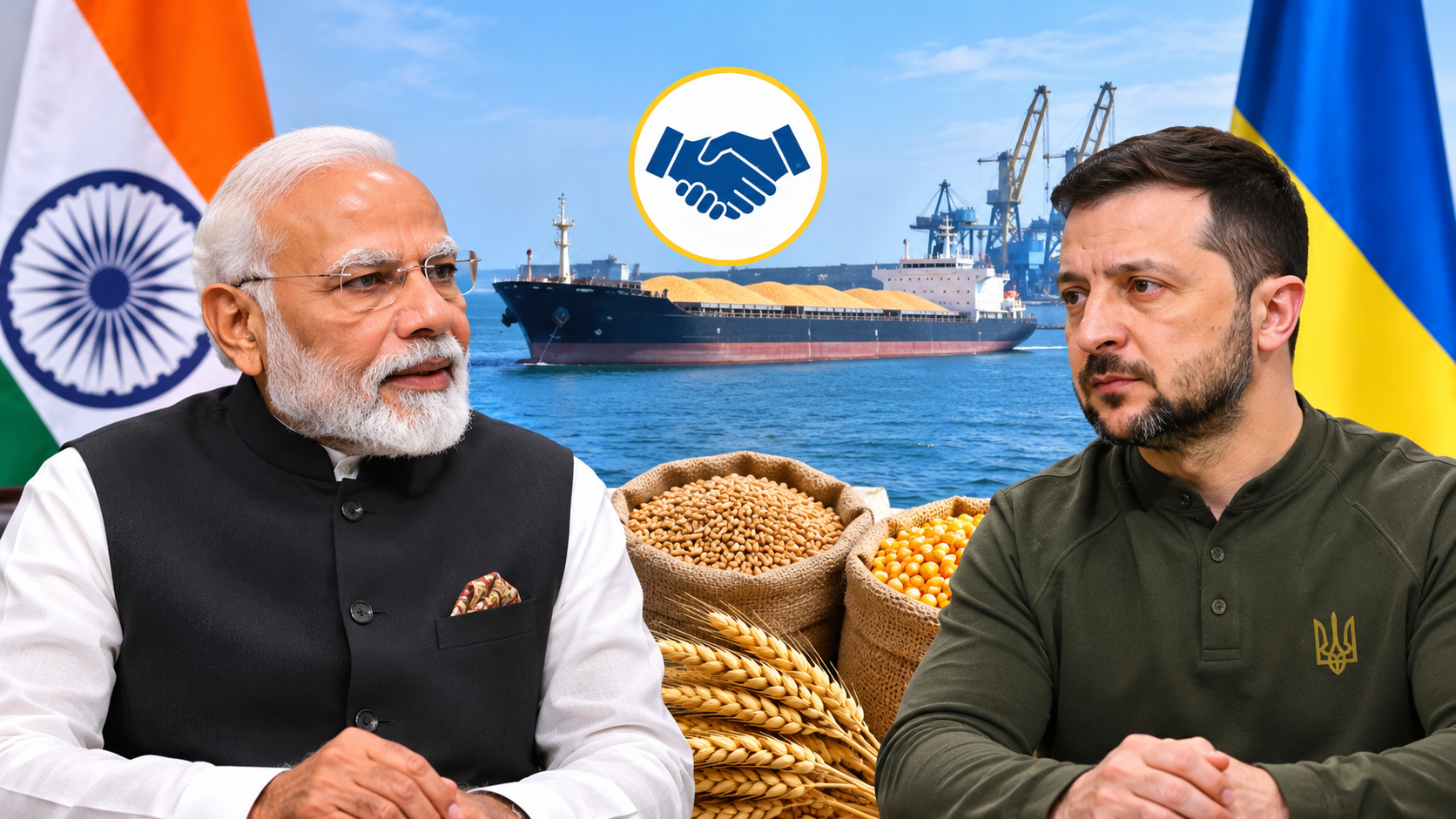
During the conversation, Zelenskyy raised concerns about disruptions to Ukrainian grain exports through the Black Sea and stated that India was ready to mediate efforts to establish food corridors for the safe transportation of agricultural commodities.
The discussion took place ahead of planned trilateral peace negotiations involving Russia, Ukraine and the United States in Abu Dhabi, United Arab Emirates, on 10–11 November 2026.
India reaffirmed its commitment to resolving the conflict through dialogue and diplomacy while supporting global food security.
Key Highlights of Modi–Zelenskyy Talks
The two leaders discussed several important issues concerning regional stability, humanitarian concerns and international cooperation.
Peaceful Resolution: PM Modi reiterated India's position that the Russia–Ukraine conflict should be resolved through dialogue and diplomacy.
Food Corridors: Ukraine sought India's assistance in facilitating safe grain exports through the Black Sea.
Global Food Security: Both sides discussed the consequences of disrupted food supplies for developing countries.
Diplomatic Engagement: Zelenskyy briefed Modi on preparations for the proposed Abu Dhabi peace talks.
Bilateral Relations: The leaders agreed to strengthen cooperation and maintain regular diplomatic contact.
On the same day, External Affairs Minister S. Jaishankar also spoke with Russian Foreign Minister Sergey Lavrov about the conflict and ongoing diplomatic initiatives.
What Are the Proposed Black Sea Food Corridors?
Food corridors are designated maritime routes or arrangements intended to facilitate the safe transportation of food grains and other essential agricultural commodities during conflicts.
The Black Sea is an important international shipping region connecting major agricultural exporters, particularly Ukraine and Russia, with global markets.
Ukraine is a major exporter of wheat, maize and sunflower oil. Disruptions to its maritime trade can affect international food prices and supplies.
The proposed arrangements aim to:
Facilitate safe transportation of Ukrainian grain exports.
Reduce risks to commercial vessels and maritime infrastructure.
Improve global food supply chains.
Protect food security in developing countries.
Support diplomatic confidence-building between Russia and Ukraine.
India's possible role would involve diplomatic mediation rather than direct military participation.
Significance for Global Food Security
The Russia–Ukraine conflict has disrupted agricultural trade and maritime transportation in the Black Sea region.
Countries in Africa, West Asia and parts of Asia depend on imported food grains and agricultural commodities from international markets.
Prolonged disruptions can contribute to higher food prices, supply shortages and increased food insecurity.
Restoring safe maritime trade could help stabilise global agricultural markets and protect vulnerable populations.
India’s Diplomatic Role in the Russia–Ukraine Conflict
India has consistently advocated dialogue, diplomacy and peaceful negotiations to resolve the conflict.
India maintains important diplomatic relationships with both Russia and Ukraine, allowing it to engage with both sides.
Its diplomatic approach focuses on:
Supporting peaceful negotiations.
Protecting civilians and humanitarian interests.
Maintaining international food and energy security.
Ensuring safe commercial shipping.
Promoting stability in global supply chains.
India has also highlighted the challenges faced by the Global South, particularly regarding food, fuel, fertilisers and finance.
Background of India–Ukraine Relations
India and Ukraine established diplomatic relations in 1992, following Ukraine's independence from the Soviet Union in 1991.
Bilateral cooperation covers several areas, including trade, education, pharmaceuticals, agriculture and defence-related industries.
India has maintained diplomatic engagement with Ukraine throughout the ongoing conflict while also preserving its longstanding relationship with Russia.
The latest discussions reflect India's growing involvement in international diplomatic initiatives and global food security concerns.