India's Retail Inflation Rises to 6.09% in October 2026, Crosses RBI's 6% Limit
Key points
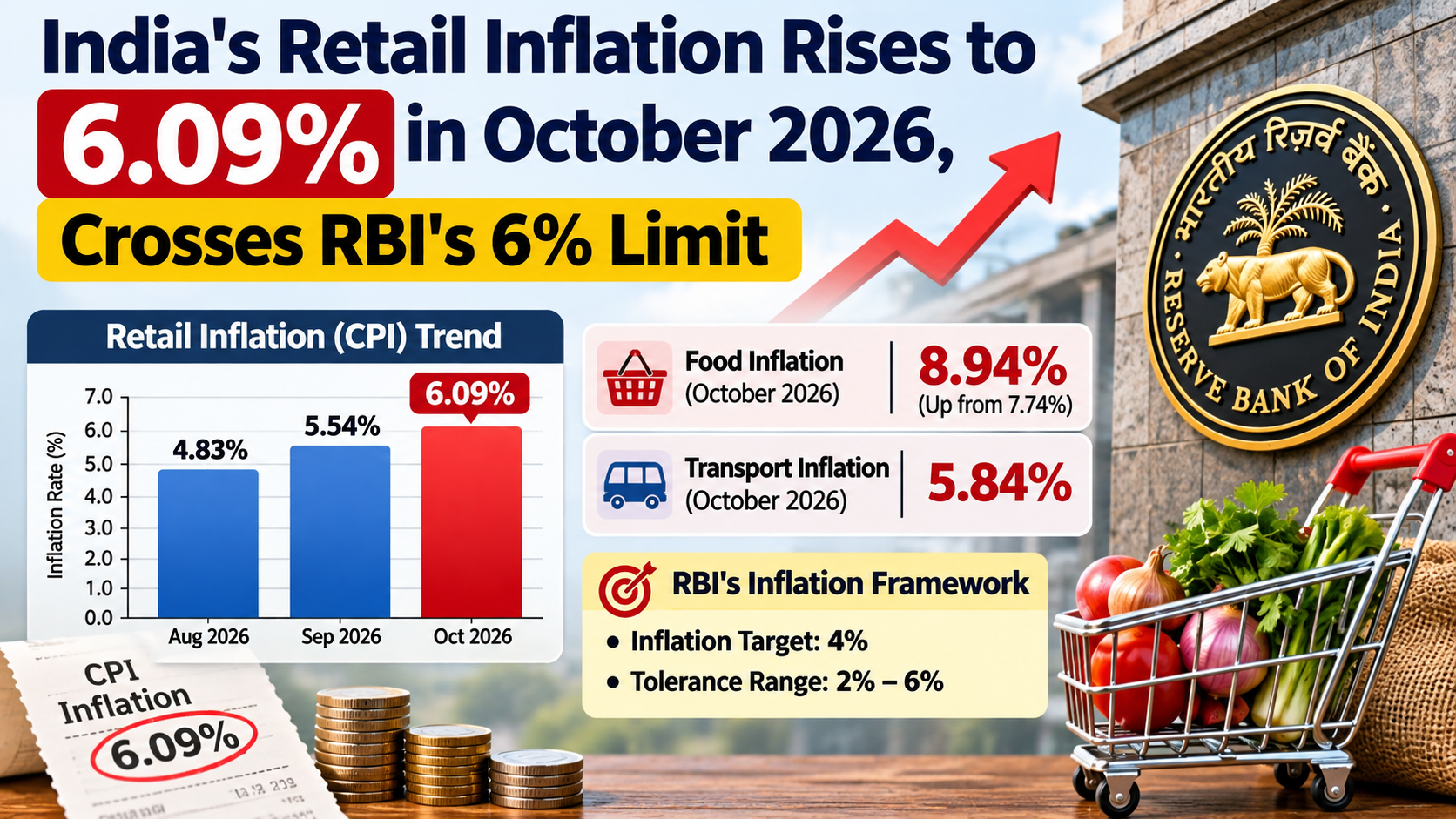
India's retail inflation reportedly increased to 6.09% in October 2026, compared with 5.54% in September 2026. Rising food prices and transportation costs were among the major factors contributing to inflationary pressure. The reported inflation rate crossed the Reserve Bank of India's (RBI) upper tolerance limit of 6%, raising concerns about household expenses and monetary policy.
Key Highlights
Retail Inflation (October 2026): 6.09%
Retail Inflation (September 2026): 5.54%
Food Inflation (October 2026): 8.94%
RBI Inflation Target: 4%
RBI Tolerance Range: 2%–6%
Inflation Indicator: Consumer Price Index (CPI)
Data Released By: National Statistical Office (NSO)
Major Reasons Behind Rising Inflation
1. Rising Food Prices: Higher prices of vegetables and other essential food products increased household expenditure and contributed to inflationary pressure.
2. Transportation Costs: Rising transportation expenses increased the cost of moving goods and services, adding pressure to consumer prices.
3. Agricultural and Supply Concerns: Weather-related uncertainties and supply disruptions can affect agricultural production and food availability, resulting in higher market prices.
RBI's Inflation Target
The Reserve Bank of India follows a flexible inflation-targeting framework to maintain price stability while supporting economic growth.
Under this framework, the central government has specified a 4% inflation target with a tolerance band of ±2 percentage points.
Inflation above 6% indicates that price increases have exceeded the upper tolerance limit.
The RBI's Monetary Policy Committee (MPC) considers inflation trends, economic growth and other indicators when deciding the policy repo rate.
Important Facts for Competitive Exams
Consumer Price Index (CPI): CPI measures changes in the prices of goods and services purchased by households. It is the primary indicator used to measure retail inflation in India.
National Statistical Office (NSO): The NSO operates under the Ministry of Statistics and Programme Implementation (MoSPI) and is responsible for publishing India's official CPI data.
RBI Inflation Target: India's inflation-targeting framework specifies a 4% target with a tolerance range of 2% to 6%.
Monetary Policy Committee (MPC): The MPC consists of six members, including three representatives from the RBI and three external members appointed by the Central Government.
RBI Act, 1934: The monetary policy framework received statutory recognition through amendments to the RBI Act in 2016.
Impact of Inflation: Higher inflation reduces consumers' purchasing power and can affect savings, investments, borrowing costs and overall economic growth.
Conclusion
The reported increase in India's retail inflation to 6.09% in October 2026 highlights growing price pressures in the economy. Controlling food inflation, maintaining price stability and supporting economic growth remain important priorities for policymakers.