NITI Aayog PLI Schemes Report 2026
Key points
In the News
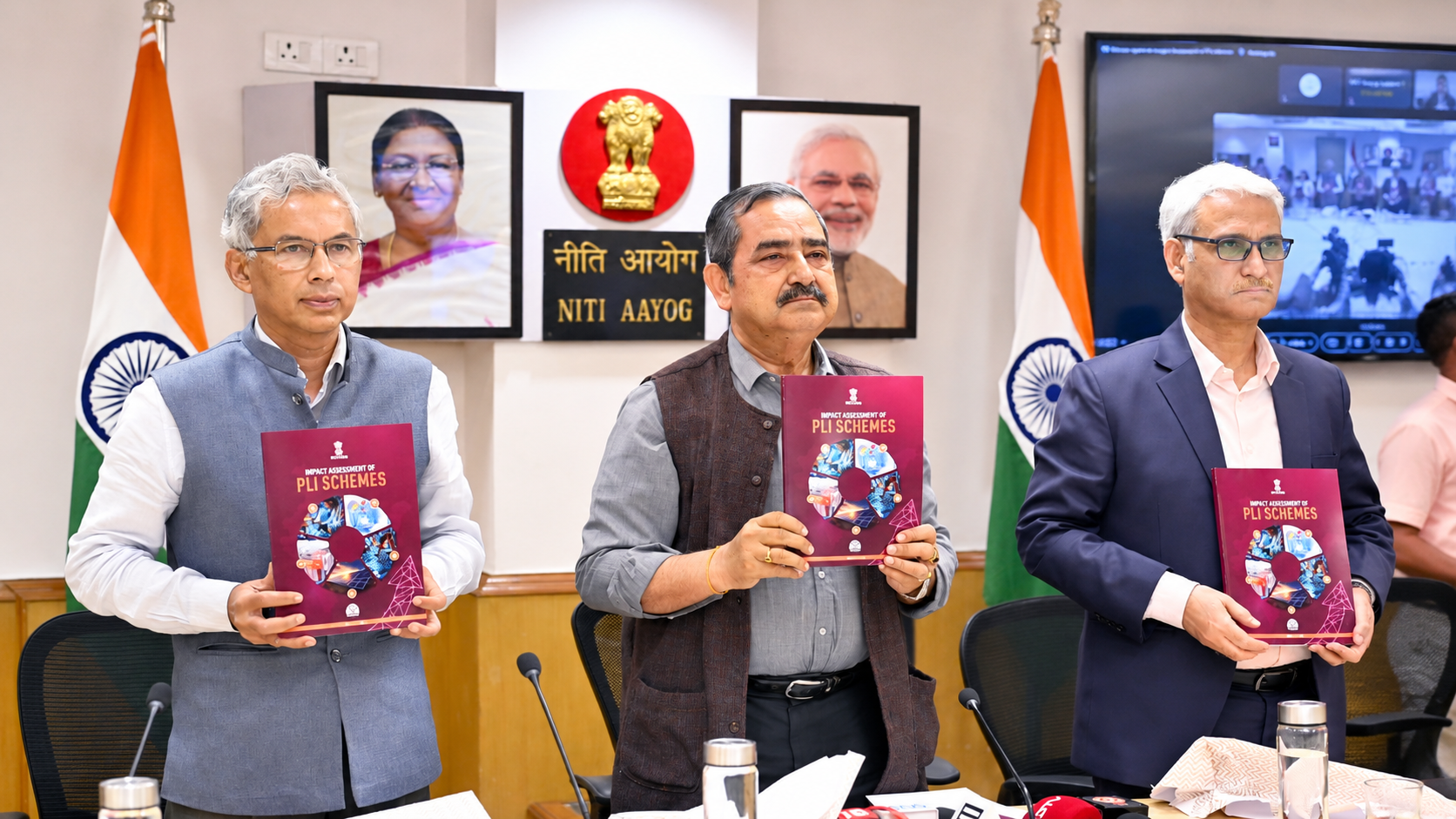
NITI Aayog released the “Impact Assessment of PLI Schemes” report on 12 November 2026 in collaboration with the Indian Institute of Management Ahmedabad (IIM Ahmedabad).
The report evaluates the performance of India's Production Linked Incentive (PLI) Schemes across 14 sectors, focusing on investment, manufacturing output, exports and employment generation.
It highlights that nearly 70% of targeted segments are on track, although employment generation remains below the overall target.
Background
The Government of India introduced the Production Linked Incentive (PLI) Schemes during 2020–21 to promote domestic manufacturing, attract investment, reduce import dependence and strengthen India's participation in global supply chains.
Under the schemes, eligible manufacturers receive financial incentives linked to incremental production or sales, subject to scheme-specific conditions.
The initiative supports Atmanirbhar Bharat and the vision of Viksit Bharat 2047.
Key Highlights of the Report
Total Sectors Covered: 14 manufacturing sectors, including electronics, pharmaceuticals, automobiles, telecom and textiles.
Investment Generated: Approximately ₹2.40 lakh crore, achieving 76% of the overall investment target.
Production and Sales: Approximately ₹22.66 lakh crore, representing 64% of the target.
Employment Generated: Around 8.49 lakh jobs, achieving only 28% of the overall employment target.
Incentive Disbursement: Approximately ₹35,354 crore disbursed across the schemes.
Strong-Performing Sectors: Electronics manufacturing, pharmaceuticals, telecom and food processing.
Emerging Sectors: Advanced Chemistry Cell batteries, specialty steel and technical textiles are gradually developing manufacturing capacity.
The figures represent cumulative progress up to March 2026, not annual achievements.
Important Facts for Competitive Exams
1. Production Linked Incentive (PLI) Scheme
The PLI initiative provides financial incentives to eligible manufacturers based on additional production or sales. It aims to strengthen domestic manufacturing, increase exports and improve India's global competitiveness.
2. NITI Aayog
NITI Aayog stands for National Institution for Transforming India. Established on 1 January 2015, it replaced the Planning Commission and functions as the Government of India's public policy think tank.
3. Department for Promotion of Industry and Internal Trade (DPIIT)
DPIIT functions under the Ministry of Commerce and Industry and plays an important role in promoting industrial development, investment and manufacturing competitiveness.
4. Atmanirbhar Bharat Initiative
Atmanirbhar Bharat focuses on strengthening India's economic self-reliance through domestic production, technological development, innovation and reduced dependence on critical imports.
5. Major Recommendations of the Report
The assessment recommends greater MSME participation, stronger domestic value addition, improved data monitoring, sector-specific policy interventions and measures to strengthen demand for Indian-manufactured products.
Quick Revision
Report Name: Impact Assessment of PLI Schemes
Released By: NITI Aayog
Release Date: 12 November 2026
Knowledge Partner: IIM Ahmedabad
Sectors Covered: 14
Total Investment: ₹2.40 lakh crore
Production and Sales: ₹22.66 lakh crore
Employment Generated: 8.49 lakh
Employment Target Achievement: 28%
Targeted Segments On Track: Nearly 70%
PLI Launch Period: 2020–21
Main Objective: Strengthen domestic manufacturing and exports