Pakistan Successfully Tests Fatah-3 Supersonic Cruise Missile
Key points
In the News
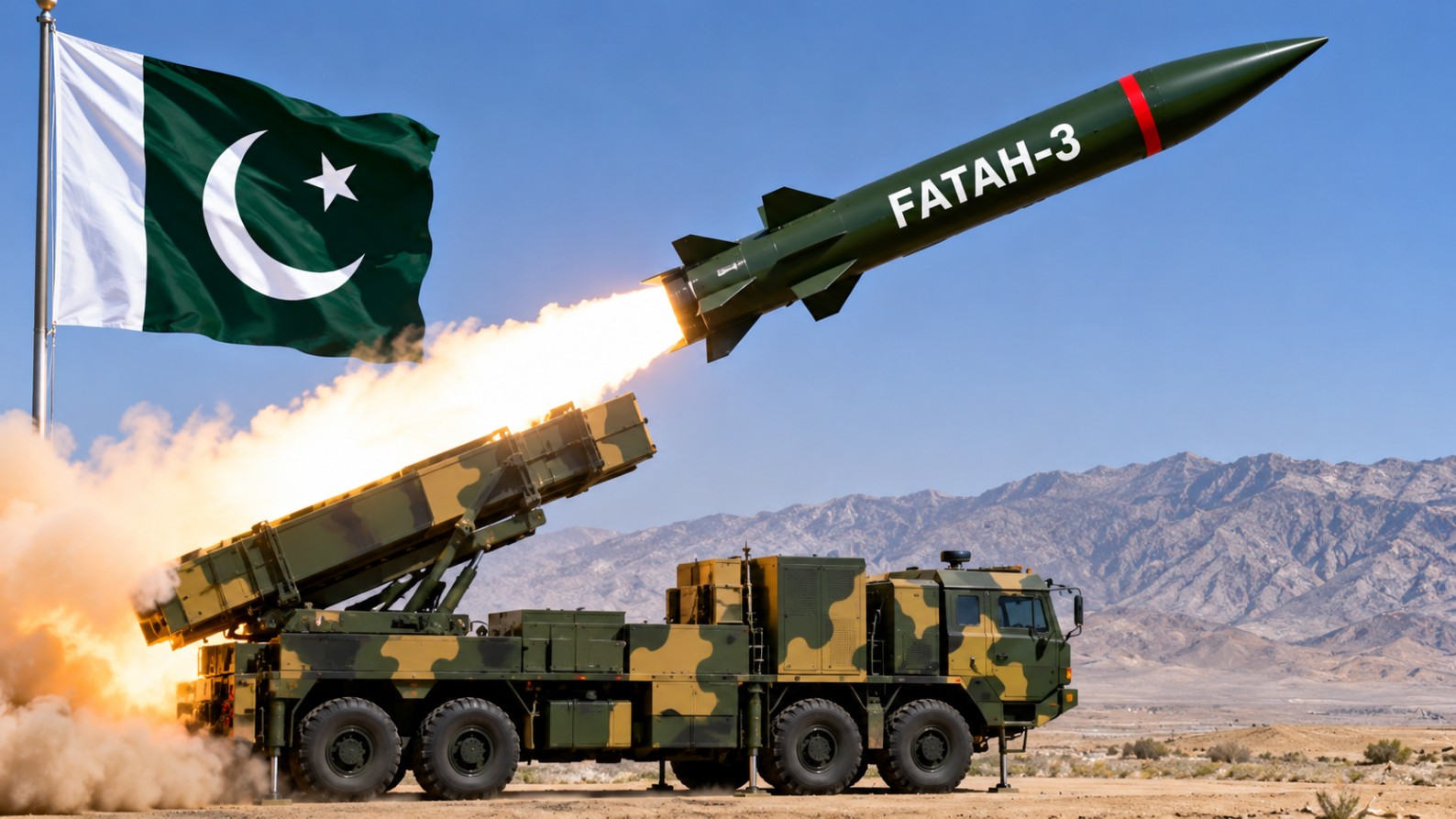
Pakistan successfully test-fired the Fatah-3 Supersonic Cruise Missile on 18 November 2026, according to its military's media wing, Inter-Services Public Relations (ISPR).
The missile is equipped with advanced navigation and propulsion systems and is designed to engage long-range targets at supersonic speeds with high precision.
The test is intended to strengthen the operational capabilities of the Pakistan Army Rocket Force Command (ARFC).
Background
The Fatah missile family forms part of Pakistan's conventional missile development programme.
The Fatah-3 is a supersonic cruise missile designed for high-speed, precision strikes. Unlike ballistic missiles, cruise missiles generally travel through the atmosphere using sustained propulsion and aerodynamic lift.
The test follows Pakistan's development of other Fatah-series missile systems, including Fatah-2 and Fatah-4.
Key Highlights
Missile Name: Fatah-3
Country: Pakistan
Test Date: 18 November 2026
Missile Type: Supersonic Cruise Missile
Test Conducted By: Pakistan Army
Military Command: Army Rocket Force Command (ARFC)
Official Announcement: Inter-Services Public Relations (ISPR)
Major Features: Advanced navigation, propulsion systems and precision-strike capability
Speed Category: Supersonic
Purpose: Strengthening conventional deterrence and long-range strike capabilities
Major Features of Fatah-3 Missile
1. Supersonic Speed
The Fatah-3 is designed to travel faster than the speed of sound, reducing the time available for defensive responses.
2. Advanced Navigation System
According to ISPR, the missile incorporates advanced navigation technology intended to support accurate target engagement.
3. Long-Range Strike Capability
The missile is designed to engage targets at long distances, although its exact operational range was not disclosed in the official test announcement.
4. Advanced Propulsion Technology
The missile uses an advanced propulsion system to support high-speed flight and sustained cruise performance.
5. Conventional Deterrence
Pakistan's military states that Fatah-3 will improve the operational flexibility and strike reach of the Army Rocket Force Command.
Important Facts for Competitive Exams
1. Supersonic Cruise Missile: A supersonic cruise missile travels faster than Mach 1 and generally uses sustained propulsion and aerodynamic lift during its flight.
2. Cruise Missile vs Ballistic Missile: Cruise missiles typically follow powered atmospheric flight paths, while ballistic missiles travel along trajectories dominated by gravity after their powered boost phase.
3. Army Rocket Force Command (ARFC): The ARFC is a Pakistan Army formation associated with conventional missile and rocket operations, including long-range precision-strike capabilities.
4. Inter-Services Public Relations (ISPR): ISPR is the media and public relations organisation of the Pakistan Armed Forces responsible for communicating official military announcements.
5. Conventional Deterrence: Conventional deterrence refers to discouraging hostile military actions through the threat of effective responses using non-nuclear military capabilities.
6. BrahMos Missile: BrahMos is a supersonic cruise missile developed through India–Russia cooperation and used by the Indian Armed Forces. It is relevant for understanding supersonic cruise missile technology, although the two systems should not be treated as technically identical.
Quick Revision
Fatah-3 Missile: Pakistan successfully test-fired the Fatah-3 supersonic cruise missile as part of its conventional missile capability development.
Missile Category: Fatah-3 is a supersonic cruise missile designed for high-speed, long-range precision strikes.
Official Announcement: Pakistan's Inter-Services Public Relations confirmed the test and highlighted its advanced navigation and propulsion systems.
Military Command: The missile is intended to enhance the operational flexibility and strike reach of the Pakistan Army Rocket Force Command.
Supersonic Speed: Supersonic missiles travel faster than the speed of sound, generally described as speeds exceeding Mach 1.
Strategic Significance: Pakistan states that the Fatah-3 system will strengthen its conventional deterrence and overall defence capabilities.