Ten Years of Demonetisation: Cash Circulation and Digital Payments in India

Key points
Why in the News?
India completed 10 years of demonetisation on 8 November 2026, marking a decade since the Union Government withdrew the legal tender status of the old ₹500 and ₹1,000 currency notes in 2016.
The policy was introduced to address black money, counterfeit currency and the use of cash in illegal activities, while encouraging formalisation of the economy and digital transactions.
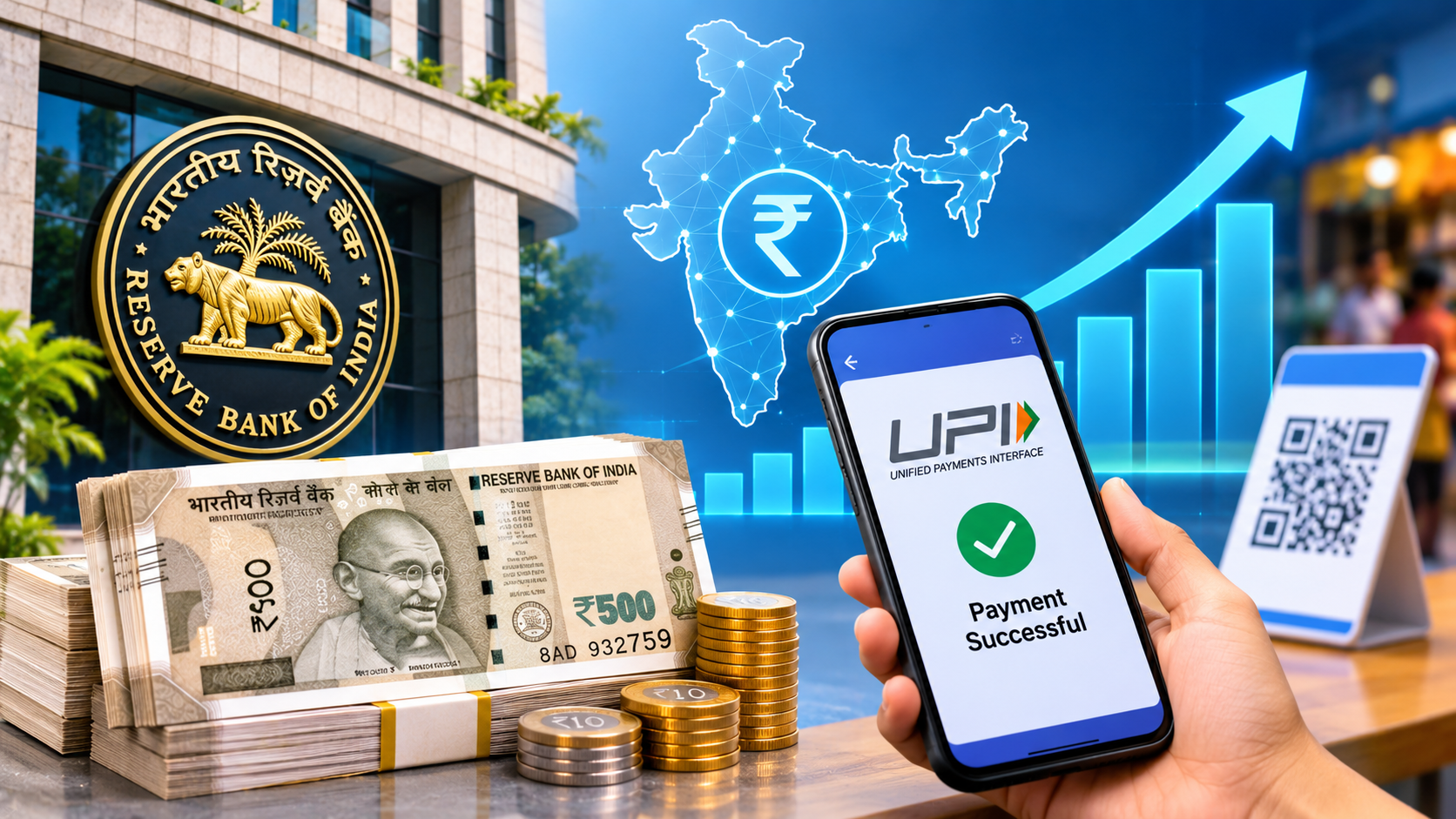
A decade later, India's payment system has undergone a major transformation, particularly through the rapid expansion of the Unified Payments Interface (UPI). However, cash continues to play an important role in the economy, raising questions about the long-term impact of demonetisation on currency circulation and digital payments.
Background of Demonetisation in India
On 8 November 2016, Prime Minister Narendra Modi announced the withdrawal of the legal tender status of the existing ₹500 and ₹1,000 banknotes.
The withdrawn notes accounted for approximately 86% of the value of currency in circulation at that time.
The major objectives included:
Reducing unaccounted wealth and black money.
Combating counterfeit currency.
Disrupting illegal activities financed through cash.
Encouraging digital payments.
Promoting formalisation of economic transactions.
The Reserve Bank of India subsequently introduced new currency notes, including the ₹500 and ₹2,000 denominations.
Cash Circulation Ten Years After Demonetisation
Despite the expansion of digital payments, cash remains an important medium of exchange in India.
According to RBI data, the value of currency in circulation increased substantially in the years following demonetisation.
November 2016: Approximately ₹17.7 lakh crore in currency was circulating before demonetisation.
March 2025: Currency in circulation was approximately ₹36.9 lakh crore.
Major Trend: The nominal value of cash in circulation increased despite the rapid adoption of digital payment systems.
This indicates that growth in digital transactions does not necessarily lead to a corresponding reduction in the total amount of physical currency held by the public.
Population growth, inflation, economic expansion and demand for cash in informal transactions influence currency circulation.
Growth of Digital Payments and UPI
One of the most significant developments during the decade has been the rapid growth of digital payments.
The Unified Payments Interface (UPI) was launched by the National Payments Corporation of India (NPCI) in 2016.
UPI allows individuals and businesses to transfer money instantly between bank accounts using mobile applications.
Major developments include:
Rapid adoption of QR-code payments by small businesses and street vendors.
Expansion of mobile-based financial services.
Increasing use of digital payments in rural and semi-urban areas.
Greater integration of banking services with smartphones.
Growth in digital transactions through UPI, IMPS, NEFT and other payment systems.
UPI has become one of the most widely used retail payment systems in India, supporting the country's transition towards a more digitally connected economy.
Economic Impact of Demonetisation
The long-term impact of demonetisation continues to be debated among economists and policymakers.
Positive Developments
Expansion of digital payment infrastructure.
Greater public awareness of cashless transactions.
Growth in formal banking and electronic payment services.
Increased adoption of digital payments by small merchants.
Major Challenges
Short-term cash shortages affected households and businesses.
Cash-dependent informal sectors experienced economic disruption.
Most demonetised banknotes eventually returned to the banking system.
The value of currency in circulation increased in subsequent years.
The direct contribution of demonetisation to long-term digital payment growth remains difficult to isolate from other technological and policy developments.
Important Facts for Exams
Demonetisation Announcement: 8 November 2016.
10th Anniversary: 8 November 2026.
Withdrawn Denominations: Old ₹500 and ₹1,000 banknotes.
Share of Currency Withdrawn: Approximately 86% by value.
Central Banking Authority: Reserve Bank of India (RBI).
RBI Established: 1 April 1935.
RBI Headquarters: Mumbai.
UPI Launched: 2016.
UPI Developed By: National Payments Corporation of India (NPCI).
NPCI Established: 2008.
Legal Framework: Reserve Bank of India Act, 1934.
Section 26(2): Provides for declaring specified banknote series to cease being legal tender through a Central Government notification on the recommendation of the RBI Central Board.
Supreme Court Judgment: In January 2023, the Supreme Court upheld the 2016 demonetisation decision by a 4:1 majority.
Digital Payment Systems: UPI, IMPS, NEFT, RTGS and RuPay.