Wild Mushrooms: Toxicity, Edibility & Food Safety
Key points
In the News
A rare mushroom species, Phallus indusiatus, commonly known as the Veiled Lady or Bamboo Mushroom, was recently spotted at Ranganathittu Bird Sanctuary in Karnataka.
The mushroom was observed by biologist and nature education officer S. Gagana on 17 November 2026, and its identification was confirmed by C. Hemavathi.
The discovery has drawn attention to the ecological importance of wild mushrooms, their edible and poisonous varieties, and the need for public awareness about mushroom-related food safety.
Background
Mushrooms are the fruiting bodies of certain fungi belonging to the Kingdom Fungi.
Unlike plants, fungi do not contain chlorophyll and obtain nutrients from organic materials or other organisms.
Fungi play an important ecological role by decomposing dead organic matter, recycling nutrients and maintaining soil fertility.
Some mushrooms are edible and nutritious, while others contain naturally occurring toxins capable of causing serious illness or death.
Wild mushrooms are particularly risky because poisonous species can closely resemble edible varieties.
Key Highlights
1. Phallus indusiatus: Rare Mushroom in Karnataka
Scientific Name: Phallus indusiatus
Common Names: Veiled Lady, Bamboo Mushroom
Family: Phallaceae
Order: Phallales
Kingdom: Fungi
Location: Ranganathittu Bird Sanctuary, Karnataka
Type: Saprobic fungus
The mushroom is recognised by its dark cap, white stalk and distinctive lace-like structure called an indusium.
It grows on decomposing organic matter and helps recycle nutrients in forest ecosystems.
The species is cultivated as an edible mushroom in parts of Asia. However, unidentified wild specimens should never be consumed.
2. Ecological Importance of Mushrooms
Mushrooms perform several important ecological functions.
Decomposition: Break down dead plants, wood and organic waste.
Nutrient Recycling: Return essential nutrients to the soil.
Symbiotic Relationships: Some fungi form mycorrhizal associations with plant roots.
Biodiversity: Support forest ecosystems and ecological balance.
Spore Dispersal: Many fungi reproduce through spores carried by wind, water or animals.
3. Edible Mushroom Species
Several mushroom species are commercially cultivated or collected for food.
Mushroom | Scientific Name |
|---|---|
Morel | Morchella spp. |
Chanterelle | Cantharellus spp. |
Oyster Mushroom | Pleurotus ostreatus |
Lion's Mane | Hericium erinaceus |
Bamboo Mushroom | Phallus indusiatus |
Important: These names are provided for general knowledge, not for identifying mushrooms for consumption. Similar-looking wild mushrooms may be poisonous.
4. Poisonous Mushrooms and Their Toxins
Some wild mushrooms contain toxins that can damage vital organs.
Poisonous Mushroom | Major Toxin | Health Effect |
|---|---|---|
Death Cap (Amanita phalloides) | Amatoxins | Severe liver damage |
Destroying Angel (Amanita virosa) | Amatoxins | Liver and kidney failure |
Galerina marginata | Amatoxins | Serious liver toxicity |
Certain Cortinarius species | Orellanine | Kidney damage |
False Morel (Gyromitra esculenta) | Gyromitrin | Neurological and liver toxicity |
Mushroom poisoning is medically known as Mycetism.
Symptoms may include nausea, vomiting, diarrhoea, confusion and neurological disturbances. Severe poisoning can result in organ failure.
Importantly, some dangerous mushroom toxins are not destroyed by ordinary cooking, boiling or drying.
Food Safety and Public Health
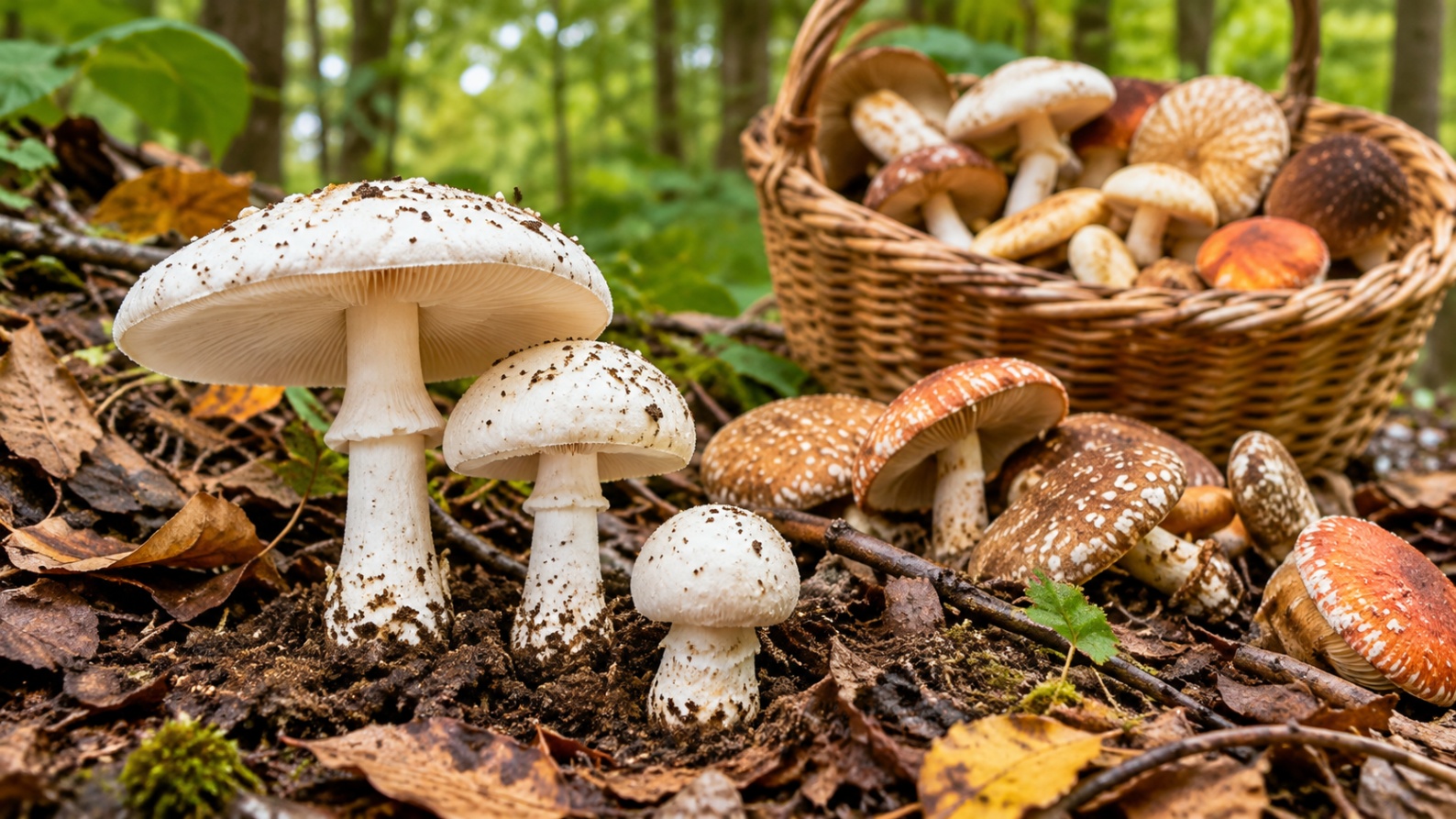
Wild mushroom consumption can pose serious health risks because edible and poisonous species often appear similar.
Important food safety precautions include:
Avoid collecting unidentified wild mushrooms for consumption.
Purchase edible mushrooms from reliable suppliers.
Do not rely on colour, smell or appearance to determine whether a mushroom is safe.
Do not assume that mushrooms eaten by animals are safe for humans.
Cooking does not reliably eliminate poisonous mushroom toxins.
Seek immediate medical attention if mushroom poisoning is suspected.
Preserve any remaining mushroom samples to assist medical identification.
Public awareness and reliable identification are essential for preventing mushroom poisoning.
Quick Revision
Phallus indusiatus was recently observed at Ranganathittu Bird Sanctuary in Karnataka.
Phallus indusiatus is commonly called the Veiled Lady or Bamboo Mushroom.
The species belongs to the family Phallaceae and order Phallales.
Mushrooms are fruiting bodies of fungi.
Fungal cell walls contain chitin.
Mycology is the scientific study of fungi.
Mycetism refers to poisoning caused by toxic mushrooms.
Amanita phalloides contains dangerous amatoxins.
Orellanine is a kidney-damaging toxin found in certain Cortinarius species.
Fungi play an important role in decomposition and nutrient recycling.
Cooking does not reliably destroy poisonous mushroom toxins.
Wild mushrooms should never be consumed without reliable expert identification.