
Joint Entrance Examination Main
National level engineering entrance exam for admission to NITs, IIITs and other colleges
JEE Main Study Material
Courses
View allComplete Vectors for Physics: JEE Main & NEET
Free
Mole Concept and Foundations of Chemistry(Animated) for NEET/JEE Main
₹149
PHYSICS COURSE/IIT JEE FOUNDATION
₹499
Bohr's Model Formulae Derivation for NEET & JEE
₹25
Thermodynamics Practice Questions for Chemistry
₹25
One Shot Revision: Some Basic Concepts of Chemistry (Class 11) – 6 Lessons
₹55
Mock Tests
View allJEE Main & Advanced 2028 Test Series

Free
JEE Main Electrostatics PYQ Mock Test Series 2027
Free
JEE Mains Chemical Kinetics Mock Test
Free
JEE Organic Chemistry Mock Test Series – 100 Questions with Solutions

₹20
Errors and Measurement - 50 Question JEE Test

Free
Sequence and Series
Free
Study Notes
View allChemical Kinetics Notes for JEE Mains with Questions (80 Pages)
80 pages₹40
Alcohols Phenols Ethers Handwritten Notes for JEE Main
16 pages₹15
Amines Handwritten Notes for JEE Mains Notes
26 pages₹22
D&F BLOCK ELEMENTS AND CHEMICAL EQUILIBRIUM ALLEN KOTA Achiever Batch Notes for NEET & JEE Mains
45 pages · 2 filesFree
Class 12 Physics Chapter 1 Notes | Electric Charges & Fields | JEE + NEET + Bihar Board
10 pagesFree
Redox Reactions | Handwritten Notes + Formula Sheet + Solved Questions + Mind Map | JEE/Class 11
15 pages₹19
Bundles
View allJEE Maths Rapid Revision Bundle | Quadratic + P&C + Sequence & Series + Straight Line + Graphical Transformation
5 itemsSave 80%₹45₹9
Complete Exam Preparation Bundle: Notes, Mock Tests & Practice Papers

6 itemsSave 26%₹134₹99
Class 11 Chemistry Notes: Chapters 1-4 Bundle
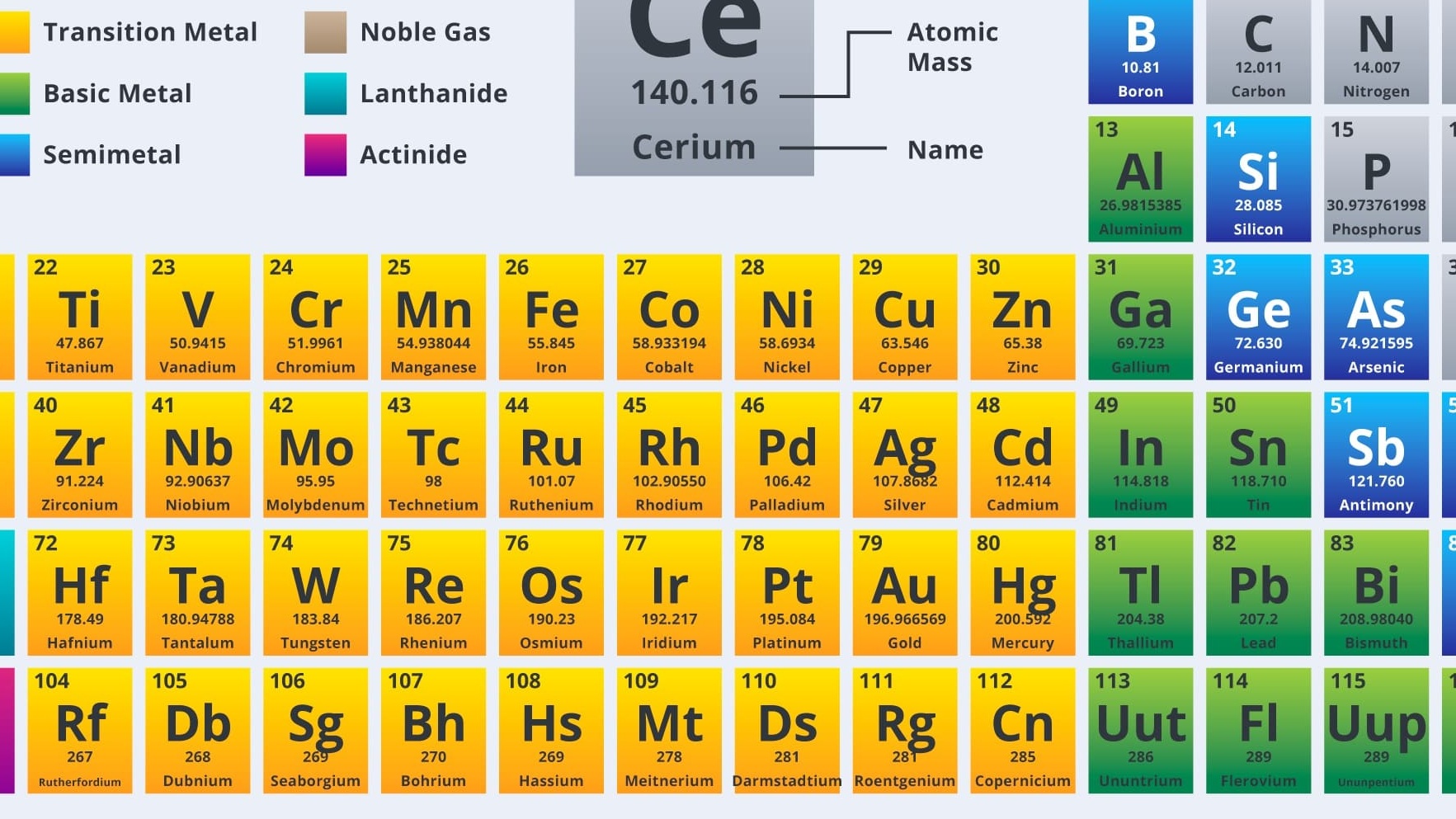
4 itemsSave 50%₹356₹179
JEE Main 2027 Session 1 is now on the calendar. The National Testing Agency (NTA) has listed 22 to 24 and 28 to 30 January 2027 as the exam days, with 31 January kept as a buffer. If you plan to write the exam, you have roughly four months to finish the syllabus, revise it and practise under timed conditions.
This guide covers everything you need in one place: important dates, the exam pattern and marking scheme, eligibility, the current NTA syllabus, previous cutoffs, how results and counselling work, and a practical preparation plan. Dates that NTA has not yet confirmed are clearly marked as expected, so you always know what is official and what is based on past cycles.
JEE Main 2027 at a Glance
Particular | Details |
|---|---|
Exam name | Joint Entrance Examination (Main) |
Conducting body | National Testing Agency (NTA), since 2019 |
Sessions | Two: January (Session 1) and April (Session 2) |
Papers | Paper 1 (B.E./B.Tech), Paper 2A (B.Arch), Paper 2B (B.Planning) |
Mode | Computer-based test; B.Arch drawing test on paper |
Duration | 3 hours per paper (3 hours 30 minutes for 2A and 2B together) |
Languages | 13 |
Used for | Admission to NITs, IIITs, other CFTIs and participating state institutions; qualifying test for JEE Advanced |
Official website |
JEE Main is also one of the largest entrance exams in the country. In 2026, 16,04,854 unique candidates registered for Paper 1 across both sessions and 15,38,468 appeared.
JEE Main 2027 Important Dates
The table below separates what NTA has announced from what is expected based on the 2026 cycle.
Event | JEE Main 2027 | Status | 2026 cycle (for reference) |
|---|---|---|---|
Session 1 registration | October–November 2026 | Expected | 31 Oct – 27 Nov 2025 |
Session 1 exam | 22–24 and 28–30 January 2027 (buffer: 31 Jan) | Announced (tentative, NTA calendar) | 21–29 January 2026 |
Session 1 result | February 2027 | Expected | 16 February 2026 |
Session 2 registration | February 2027 | Expected | 1–25 February 2026 |
Session 2 exam | April 2027 | Expected | 2–8 April 2026 |
Session 2 result and cutoff | April 2027 | Expected | 20 April 2026 |
NTA has stated that its calendar is not a formal notification. Exact registration dates, fees and rules will come with the JEE Main 2027 information bulletin.
Latest Updates
16 September 2026: NTA released its examination calendar up to March 2027, listing the JEE Main 2027 Session 1 dates.
Information bulletin: Expected with the start of Session 1 registration. Keep your Aadhaar details, category certificate and (for PwD candidates) UDID updated, as NTA asked candidates to do before the 2026 cycle.
2026 changes that are likely to continue: Aadhaar or DigiLocker-based identity verification during registration, and facial biometric authentication at exam centres. Calculators, including on-screen ones, are not allowed.
JEE Main Exam Overview
Papers and purpose
Paper 1 (B.E./B.Tech): For engineering admission at NITs, IIITs and CFTIs. It is also the gateway to JEE Advanced, which decides IIT admission.
Paper 2A (B.Arch) and Paper 2B (B.Planning): For architecture and planning programmes.
You can apply for one, two or all three papers, and for one or both sessions.
Mode and duration
Paper | Mode | Duration | PwD duration |
|---|---|---|---|
Paper 1 | CBT | 3 hours | 4 hours |
Paper 2A | CBT (Maths, Aptitude) + pen and paper (Drawing) | 3 hours | 4 hours |
Paper 2B | CBT | 3 hours | 4 hours |
Paper 2A + 2B | As above | 3 hours 30 minutes | 4 hours 10 minutes |
Exam languages
JEE Main is offered in 13 languages: English, Hindi, Assamese, Bengali, Gujarati, Kannada, Malayalam, Marathi, Odia, Punjabi, Tamil, Telugu and Urdu. English, Hindi and Urdu are available at all centres; regional languages are offered at centres in the relevant states.
JEE Main 2027 Exam Pattern and Marking Scheme
Since 2025, Section B has had five compulsory numerical questions per subject with no internal choice. Negative marking now applies to numerical questions as well.
Paper 1 (B.E./B.Tech)
Subject | Section A (MCQ) | Section B (Numerical) | Marks |
|---|---|---|---|
Physics | 20 | 5 | 100 |
Chemistry | 20 | 5 | 100 |
Mathematics | 20 | 5 | 100 |
Total | 60 | 15 | 300 |
Marking scheme: +4 for a correct answer, –1 for a wrong answer, 0 for an unattempted question. This applies to both MCQs and numerical questions.
Paper 2A (B.Arch) and Paper 2B (B.Planning)
Paper | Part | Questions | Marks |
|---|---|---|---|
2A | Mathematics (20 MCQ + 5 numerical) | 25 | 100 |
2A | Aptitude Test | 50 | 200 |
2A | Drawing Test | 2 | 100 |
2A total | 77 | 400 | |
2B | Mathematics (20 MCQ + 5 numerical) | 25 | 100 |
2B | Aptitude Test | 50 | 200 |
2B | Planning-based questions | 25 | 100 |
2B total | 100 | 400 |
What this means for your strategy: With negative marking on every question, guessing on numericals is no longer free. Accuracy on the questions you attempt matters more than attempting all 75.
For a section-wise breakdown, see our JEE Main exam pattern guide.
How the NTA Score and Merit List Work
JEE Main is held in many shifts, and papers differ slightly in difficulty. NTA uses percentiles to make scores comparable across shifts.
Your percentile shows the share of candidates in your session who scored equal to or below you. A 95 percentile means you scored as well as or better than 95% of candidates in that session. It is not a percentage of marks.
If you appear in both sessions, NTA uses the better of your two total NTA scores. The All India Rank is declared only after Session 2.
JEE Main Cutoff: Previous Year Trends
NTA publishes the category-wise qualifying percentile for JEE Advanced with the Session 2 result. Roughly the top 2.5 lakh candidates qualify; in 2026, 2,50,182 did.
Category | 2026 | 2025 | 2024 | 2023 |
|---|---|---|---|---|
General (UR) | 93.41 | 93.10 | 93.24 | 90.78 |
EWS | 82.42 | 80.38 | 81.33 | 75.62 |
OBC-NCL | 80.92 | 79.43 | 79.68 | 73.61 |
SC | 63.92 | 61.15 | 60.09 | 51.98 |
ST | 52.02 | 47.90 | 46.70 | 37.23 |
UR-PwD | 0.0023 | 0.0079 | 0.0019 | 0.0014 |
Figures rounded to two decimals (four for PwD).
Two cutoffs, two purposes:
Qualifying cutoff (NTA): Decides whether you can register for JEE Advanced.
Admission cutoff (JoSAA): Opening and closing ranks for each branch and institute. This decides your actual seat.
Cutoffs have risen for most categories over the last four years, so aim comfortably above the previous figure. Our JEE Main cutoff analysis tracks these trends in detail.
JEE Main 2027 Eligibility Criteria
Nationality
Indian nationals can apply. NRIs, OCI/PIO cardholders and foreign nationals are also eligible, subject to the rules of the admitting institute.
Qualifying examinations
You must have passed or be appearing in Class 12 or an equivalent exam. Accepted equivalents include:
Class 12 from a recognised central or state board (CBSE, CISCE, state boards)
Intermediate or two-year pre-university exam
NIOS senior secondary exam with at least five subjects
Final exam of the two-year Joint Services Wing course of NDA
A three-year diploma recognised by AICTE or a state technical board
Foreign boards or other qualifications recognised as equivalent by the Association of Indian Universities (AIU)
Subject requirements
Programme | Subjects required in Class 12 |
|---|---|
B.E./B.Tech | Physics and Mathematics, plus one of Chemistry, Biology, Biotechnology or a technical vocational subject |
B.Arch | Physics, Chemistry and Mathematics |
B.Planning | Mathematics |
Age limit and attempts
Age: No upper age limit for JEE Main. Institutes may have their own rules.
Year of passing: Following the three-consecutive-years rule, candidates who passed Class 12 in 2025 or 2026, or are appearing in 2027, are expected to be eligible. Confirm this in the 2027 bulletin.
Attempts: Two sessions per year, across three consecutive years, which allows up to six attempts in total.
The 75% criterion for NITs, IIITs and CFTIs
Clearing JEE Main is not enough for admission to NITs, IIITs and other CFTIs. You also need at least 75% in Class 12 (65% for SC/ST), or a place in the top 20 percentile of your board.
State code of eligibility
Your state code depends on where you passed Class 12, not where you live. A student who lives in Noida but passed Class 12 from a school in Delhi has Delhi as the state code. This matters for home-state quotas at NITs.
For a full breakdown, read our JEE Main eligibility criteria guide.
Application Fee
The 2027 fee will be confirmed in the bulletin. For reference, the 2026 fee for one paper at a centre in India was:
Category | Male | Female |
|---|---|---|
General | Rs 1,000 | Rs 800 |
Gen-EWS / OBC-NCL | Rs 900 | Rs 800 |
SC / ST / PwD / Third gender | Rs 500 | Rs 500 |
Fees are higher for two papers and for centres outside India.
JEE Main 2027 Syllabus
NTA revised the syllabus in 2024 to align it with the rationalised NCERT curriculum, and the same syllabus was used in 2025 and 2026. Until NTA releases the 2027 syllabus, prepare from the current units below.
Physics (20 units)
Units and Measurements; Kinematics; Laws of Motion; Work, Energy and Power; Rotational Motion; Gravitation; Properties of Solids and Liquids; Thermodynamics; Kinetic Theory of Gases; Oscillations and Waves; Electrostatics; Current Electricity; Magnetic Effects of Current and Magnetism; Electromagnetic Induction and Alternating Currents; Electromagnetic Waves; Optics; Dual Nature of Matter and Radiation; Atoms and Nuclei; Electronic Devices; Experimental Skills.
Chemistry (20 units)
Physical | Inorganic | Organic |
|---|---|---|
Some Basic Concepts in Chemistry | Classification of Elements and Periodicity | Purification and Characterisation of Organic Compounds |
Atomic Structure | p-Block Elements | Some Basic Principles of Organic Chemistry |
Chemical Bonding and Molecular Structure | d- and f-Block Elements | Hydrocarbons |
Chemical Thermodynamics | Coordination Compounds | Organic Compounds Containing Halogens |
Solutions | Organic Compounds Containing Oxygen | |
Equilibrium | Organic Compounds Containing Nitrogen | |
Redox Reactions and Electrochemistry | Biomolecules | |
Chemical Kinetics | Principles Related to Practical Chemistry |
Mathematics (14 units)
Sets, Relations and Functions; Complex Numbers and Quadratic Equations; Matrices and Determinants; Permutations and Combinations; Binomial Theorem; Sequence and Series; Limit, Continuity and Differentiability; Integral Calculus; Differential Equations; Coordinate Geometry; Three-Dimensional Geometry; Vector Algebra; Statistics and Probability; Trigonometry.
Topics removed in 2024
Many older books and question banks still include chapters that are no longer tested. Skip these:
Physics: Communication Systems
Chemistry: States of Matter, Surface Chemistry, Environmental Chemistry, Polymers, Hydrogen, s-Block Elements, Metallurgy (General Principles and Processes of Isolation of Metals), Chemistry in Everyday Life
Mathematics: Mathematical Induction, Mathematical Reasoning, and parts of Three-Dimensional Geometry
Paper 2 syllabus
Mathematics (2A and 2B): Same as Paper 1 Mathematics
Aptitude (2A and 2B): Awareness of places, buildings, materials and architects; visualising 3D objects from 2D drawings; analytical reasoning
Drawing (2A): Sketching scenes and activities from memory, geometric compositions, colour and texture
Planning (2B): General awareness, social sciences, and thinking skills such as comprehension and map reading
Get the chapter-wise breakdown in our JEE Main syllabus guide.
Preparation Plan for JEE Main 2027
With Session 1 in late January, here is a realistic timeline for a Class 12 student:
Period | Focus |
|---|---|
October–November 2026 | Finish remaining Class 12 chapters; revise Class 11 Mechanics, Chemical Bonding, Algebra |
December 2026 | Full syllabus revision; one full-length mock every week; start error notebook |
January 2027 | Two to three mocks a week; revise formulas and weak chapters; Session 1 |
February–March 2027 | Board exams; short daily JEE practice to stay in touch |
March–April 2027 | Analyse Session 1 performance; targeted revision; mocks; Session 2 |
Practical tips:
Start with NCERT for Chemistry. Much of Inorganic and a large share of Physical Chemistry questions come straight from NCERT concepts.
Keep an error notebook. Write down every mistake from practice and mocks, with the reason. Revise it weekly.
Fix a paper order. Many students start with Chemistry for quick marks, then move to Physics and Mathematics. Test different orders in mocks and stick to what works.
Set a skip rule. If a question takes more than about three minutes without a clear path, mark it and move on.
Protect accuracy. With –1 on every question, 60 correct and 5 wrong beats 65 correct and 15 wrong.
Mock Tests and Previous Year Papers
Previous year papers show you which concepts NTA repeats and how questions are framed. Mock tests show whether you can apply that knowledge in three hours.
Use them together:
Solve chapter-wise PYQs as you finish each chapter.
Take full-length mocks in the same time slot as your exam shift (9 am or 3 pm).
Analyse every mock for at least as long as it took to write. Sort errors into concept gaps, calculation slips and time pressure.
Track section-wise scores over time, not just the total.
Answer Key and Result
Provisional answer key: Released with your recorded responses, usually within about a week of each session. You can challenge answers by paying a fee per question.
Final answer key: Released after challenges are reviewed; results are prepared from it.
Result: Session 1 scores come out in February. After Session 2, NTA releases final NTA scores, the All India Rank and the JEE Advanced qualifying cutoff.
JoSAA Counselling After JEE Main
Admission to IITs, NITs, IIITs and other government-funded technical institutes happens through the Joint Seat Allocation Authority (JoSAA). In 2026, JoSAA handled admissions to 138 institutes: 23 IITs, IISc Bengaluru, 31 NITs, IIEST Shibpur, 26 IIITs and 56 other GFTIs.
How it works:
Register on josaa.nic.in with your JEE credentials
Fill and lock your choices of institutes and branches
Seats are allotted over multiple rounds based on rank, category and choices
Accept the seat, complete online document verification and pay the seat acceptance fee
Report to the allotted institute
IIT seats need a JEE Advanced rank. NIT, IIIT and GFTI seats use your JEE Main rank. Seats left vacant in NITs, IIITs and GFTIs after JoSAA are filled through CSAB counselling. Many state and private universities also accept JEE Main scores through their own counselling.
A Short History of JEE Main
1961: IIT-JEE began as the entrance exam for IITs.
2002: AIEEE was introduced for NITs and other central institutes.
2013: AIEEE became JEE Main and IIT-JEE became JEE Advanced. JEE Main also became the screening test for JEE Advanced.
2019: NTA took over the exam from CBSE and moved it to a two-session format.