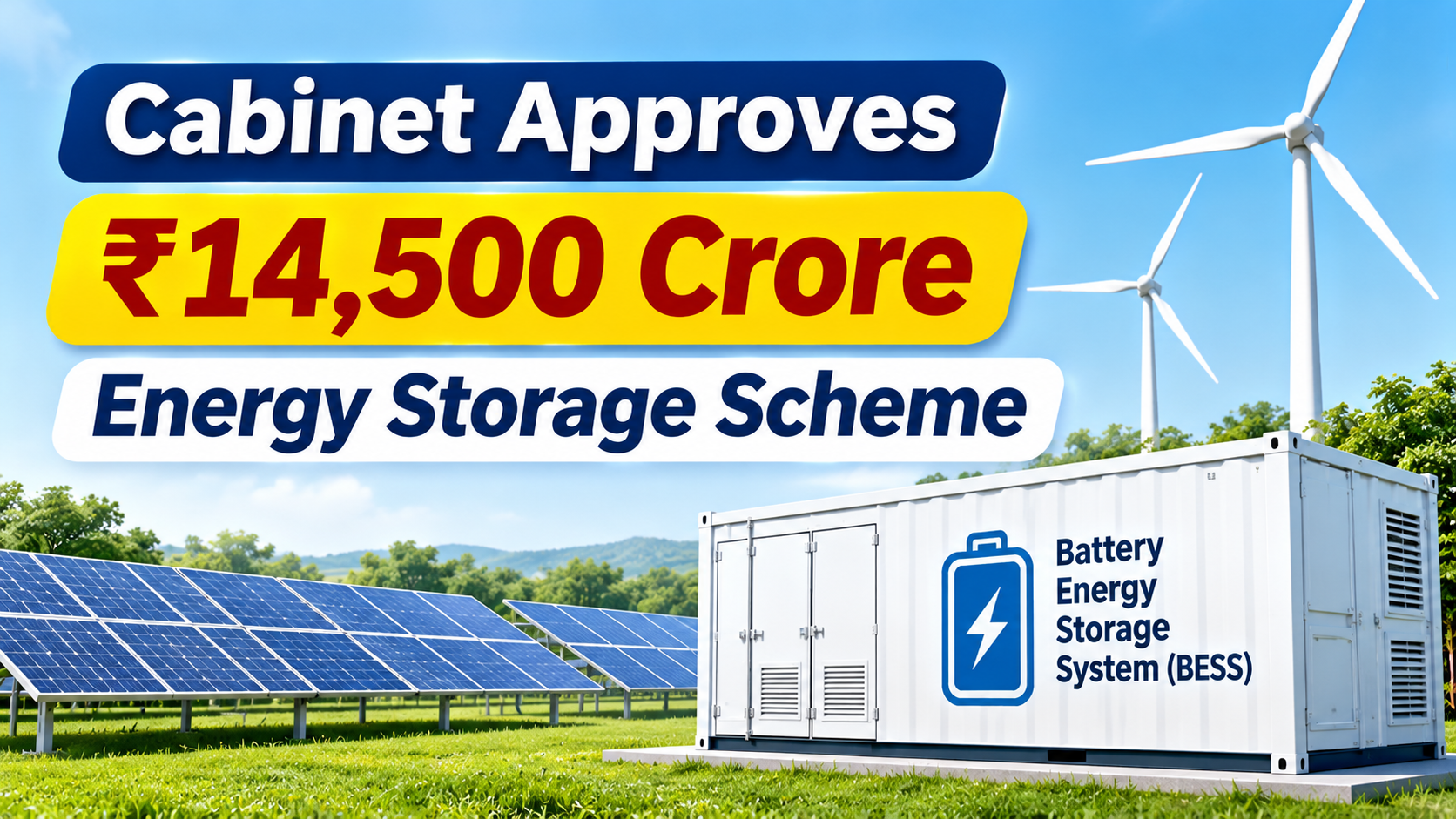
Cabinet Approves ₹14,500 Crore Energy Storage Scheme
Key points
Why in the News?
The Union Cabinet has reportedly approved a ₹14,500 crore initiative for energy storage, aimed at strengthening India's renewable energy infrastructure and improving electricity grid stability.
The initiative focuses on supporting large-scale energy storage systems that can store surplus electricity generated from renewable sources such as solar and wind power.
Key Highlights
Financial Outlay: ₹14,500 crore (reported).
Main Objective: Promote energy storage infrastructure and renewable energy integration.
Technology: Battery Energy Storage Systems (BESS).
Support Mechanism: Viability Gap Funding (VGF).
Expected Benefits: Improved grid stability, reliable electricity supply and reduced dependence on fossil fuels.
What is Battery Energy Storage System (BESS)?
A Battery Energy Storage System stores electricity in rechargeable batteries and releases it when required.
It helps manage fluctuations in solar and wind power generation and ensures a more reliable electricity supply.
Important Facts for Competitive Exams
BESS: Battery Energy Storage System.
VGF: Viability Gap Funding.
Nodal Ministry: Ministry of Power.
India's Target: 500 GW of non-fossil fuel-based electricity capacity by 2030.
Exam Relevance: UPSC, State PCS, SSC, Railway and UGC NET.
Conclusion
Energy storage is essential for India's transition towards clean energy. Greater investment in battery storage can improve renewable energy utilisation, strengthen electricity infrastructure and support long-term energy security.