CCS Approves ₹40,000 Crore for 8 Next-Generation Corvettes for Indian Navy
- By Sanjay Kumar
- 30 Oct 2026, 18:10 IST
- 6 min read
Key points
Why in the News?
The Cabinet Committee on Security (CCS), chaired by Prime Minister Narendra Modi, has approved a defence acquisition project worth over ₹40,000 crore for the construction of eight Next-Generation Corvettes (NGCs) for the Indian Navy, according to reports published on 29–30 October 2026.
These advanced warships are expected to strengthen India's maritime security, coastal defence and naval combat capabilities in the Indian Ocean Region.
The vessels will be constructed by two Indian shipbuilding companies:
Garden Reach Shipbuilders & Engineers (GRSE), Kolkata
Goa Shipyard Limited (GSL), Goa
The first warship is expected to be delivered by 2030, subject to contract signing and construction progress.
Key Facts: Next-Generation Corvettes Project 2026
Particulars | Details |
|---|---|
Project | Next-Generation Corvettes |
Abbreviation | NGC |
Approved By | Cabinet Committee on Security |
CCS Chairman | Prime Minister Narendra Modi |
Reported Approval | October 2026 |
Project Cost | Over ₹40,000 crore |
Total Warships | 8 |
Intended Operator | Indian Navy |
Shipbuilding Companies | GRSE and GSL |
GRSE Location | Kolkata, West Bengal |
GSL Location | Goa |
Approximate Displacement | 2,000 tonnes per vessel |
Expected Maximum Speed | Around 30 knots |
Design | Indigenous, developed by Indian Navy |
First Delivery Target | 2030 |
Main Purpose | Maritime security and multi-role naval operations |
What Are Next-Generation Corvettes?
A corvette is a relatively small, fast and manoeuvrable naval warship designed to perform military operations in coastal and offshore waters.
Corvettes are generally smaller than frigates and destroyers.
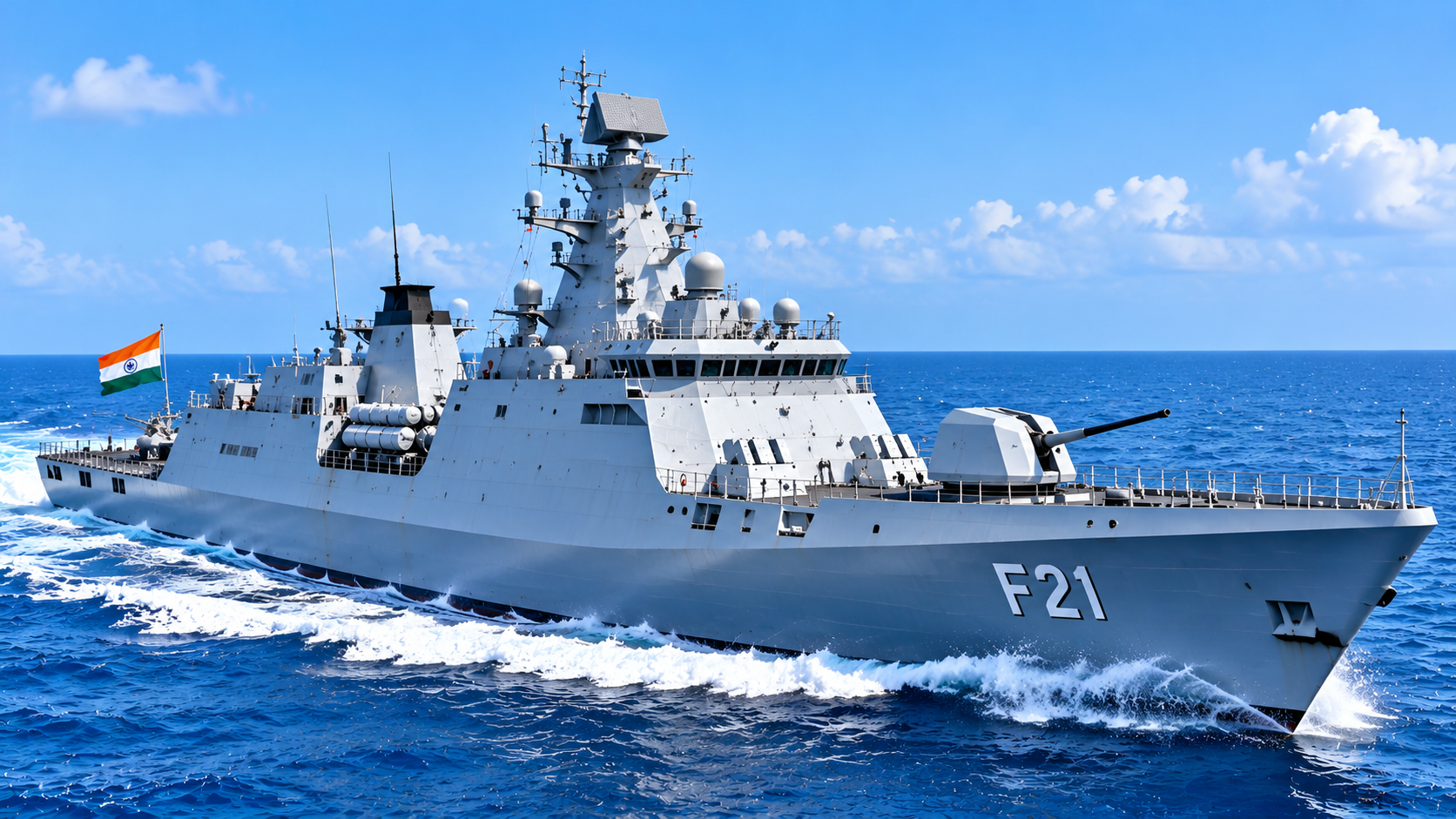
The Indian Navy's Next-Generation Corvettes are planned as modern, multi-role surface combatants with stealth features, advanced sensors and weapons.
They are expected to perform several types of naval missions, including surveillance, escort duties, coastal defence and combat operations.
Major Features of Next-Generation Corvettes
1. Indigenous Stealth Design
The warships will use a new design developed in-house by the Indian Navy.
Stealth features are intended to reduce the ships' detectability, improving their ability to operate in contested maritime environments.
2. High-Speed Operations
Each corvette is expected to reach a speed of approximately 30 knots.
A knot is a unit of speed used in maritime and aviation operations.
1 knot = 1 nautical mile per hour.
3. Multi-Role Combat Capability
The corvettes are expected to undertake different maritime security and combat missions.
Operational Role | Purpose |
|---|---|
Anti-Surface Warfare | Counter hostile surface vessels |
Anti-Submarine Warfare | Detect and engage underwater threats |
Anti-Air Warfare | Defend against aerial threats |
Coastal Defence | Protect India's coastal waters |
Maritime Surveillance | Monitor activities at sea |
Escort Operations | Protect important naval or maritime assets |
Search and Attack | Locate and engage identified threats |
Deterrence | Discourage hostile maritime activities |
4. Modern Sensors and Weapons
The planned vessels are expected to incorporate modern combat systems, sensors and weapons.
Their final equipment configuration will depend on the detailed design and procurement process.
5. Indigenous Construction
All eight corvettes are planned to be built at Indian shipyards.
This will support domestic defence manufacturing, shipbuilding capabilities and the maritime industrial ecosystem.
Which Companies Will Build the Corvettes?
The project is expected to involve two major Indian shipyards.
Company | Location | Reported Allocation |
|---|---|---|
Garden Reach Shipbuilders & Engineers | Kolkata, West Bengal | 5 corvettes |
Goa Shipyard Limited | Goa | 3 corvettes |
Total | India | 8 corvettes |
The reported distribution is subject to final contract arrangements.
About Garden Reach Shipbuilders & Engineers
Garden Reach Shipbuilders & Engineers (GRSE) is a defence public sector shipbuilding company headquartered in Kolkata.
It manufactures various classes of ships and vessels for the Indian Navy and Indian Coast Guard.
GRSE operates under the administrative control of the Ministry of Defence.
About Goa Shipyard Limited
Goa Shipyard Limited (GSL) is a defence public sector undertaking located in Goa.
It specialises in the construction of naval and maritime vessels, including patrol vessels and other ships for defence and security organisations.
GSL also functions under the Ministry of Defence.
What Is the Cabinet Committee on Security?
The Cabinet Committee on Security (CCS) is one of the important Cabinet committees of the Government of India.
It is chaired by the Prime Minister and deals with major matters concerning national security, defence and strategic policy.
Important Facts About CCS
Particulars | Details |
|---|---|
Full Form | Cabinet Committee on Security |
Abbreviation | CCS |
Chairman | Prime Minister of India |
Main Areas | National security, defence and strategic matters |
Role in Defence Procurement | Considers major defence acquisition proposals |
What Is the Defence Acquisition Council?
The Defence Acquisition Council (DAC) is the apex decision-making body of the Ministry of Defence for defence procurement matters.
It is chaired by the Defence Minister of India.
In June 2022, the DAC accorded Acceptance of Necessity for the procurement of Next-Generation Corvettes at an estimated cost of approximately ₹36,000 crore.
The reported CCS approval in October 2026 represents a later stage in the acquisition process.
CCS vs DAC
Cabinet Committee on Security | Defence Acquisition Council |
|---|---|
Chaired by the Prime Minister | Chaired by the Defence Minister |
Handles major national security decisions | Handles defence acquisition matters |
Considers major strategic and defence proposals | Reviews and approves procurement requirements |
Functions at Cabinet level | Functions under the Ministry of Defence |
Why Is the Project Important for India?
Strengthening Maritime Security
The additional warships are expected to improve the Indian Navy's capacity to monitor and defend important maritime areas.
Improving Coastal Defence
Corvettes can undertake patrol, surveillance and combat missions in coastal and offshore waters.
Enhancing Indian Ocean Capabilities
The Indian Ocean Region is strategically important because of its international shipping routes, energy transportation and maritime trade.
Supporting Atmanirbhar Bharat
Domestic warship construction supports India's objective of strengthening indigenous defence manufacturing.
Encouraging Defence Industrial Development
The project can create opportunities for Indian shipbuilders, equipment manufacturers and associated industries.
What Is SAGAR?
SAGAR stands for Security and Growth for All in the Region.
It is an Indian maritime cooperation vision announced in 2015.
The initiative emphasises maritime security, regional cooperation and shared development in the Indian Ocean Region.
Indigenous naval capability development supports India's wider maritime security objectives.
Corvette vs Frigate vs Destroyer
Feature | Corvette | Frigate | Destroyer |
|---|---|---|---|
General Size | Relatively small | Medium to large | Generally larger |
Primary Role | Coastal and offshore operations | Multi-role fleet operations | Advanced fleet air defence and other combat roles |
Speed | Usually high | Varies by design | Varies by design |
Weapons | Mission-specific systems | Broad range of weapons | Typically extensive combat systems |
Operational Reach | Often more limited | Generally greater | Generally greater |
These are broad classifications; actual capabilities depend on individual ship designs.
India's Existing Kamorta-Class Corvettes
The Indian Navy already operates four Kamorta-class corvettes, which are indigenous anti-submarine warfare vessels.
Ship | Class |
|---|---|
INS Kamorta | Kamorta Class |
INS Kadmatt | Kamorta Class |
INS Kiltan | Kamorta Class |
INS Kavaratti | Kamorta Class |
The planned Next-Generation Corvettes will complement the Navy's existing corvette fleet.
Important Facts to Remember
Question | Answer |
|---|---|
Which committee reportedly approved the project? | Cabinet Committee on Security |
Who chairs the CCS? | Prime Minister |
What is the project cost? | Over ₹40,000 crore |
How many corvettes are planned? | Eight |
What does NGC stand for? | Next-Generation Corvette |
Which force will operate the vessels? | Indian Navy |
Which shipyards are involved? | GRSE and GSL |
Where is GRSE located? | Kolkata |
Where is GSL located? | Goa |
What is the approximate displacement? | 2,000 tonnes |
What is the expected speed? | Around 30 knots |
When is the first delivery targeted? | 2030 |
Who developed the proposed design? | Indian Navy |
What does DAC stand for? | Defence Acquisition Council |
Who chairs the DAC? | Defence Minister |
What does SAGAR stand for? | Security and Growth for All in the Region |
Conclusion
The reported ₹40,000 crore-plus Next-Generation Corvettes project is a significant development in India's naval modernisation programme.
The planned induction of eight indigenous warships is expected to strengthen maritime surveillance, coastal defence and multi-role naval capabilities.
The project also supports domestic shipbuilding and India's efforts to increase self-reliance in defence manufacturing.
The next major steps will be the signing of construction contracts and the commencement of shipbuilding activities.