
Current Affairs: 30 October 2026
Today's Current Affairs cover 10 important topics, including COP31 Climate Summit 2026, Exercise Garuda Shakti, India–Sri Lanka SAMHiTA Project, China's Grey-Zone Warfare, discovery of *Allocaecilius nilgiriensis*, Punah Bharan App, National Unity Day 2026, Indian Navy's ₹40,000 crore Next-Generation Corvettes Project, 14th International Tourism Mart and International Day of Care and Support. These developments highlight major updates in national affairs, defence, international relations, science, environment and government initiatives.
- Art & Culture
- UPSC CSE
- Railway
- UGC NET
- UPSC Prelims

0114th International Tourism Mart 2026 in Tawang, Arunachal Pradesh : Key Facts and Significance

Key points
Why in the News?
The 14th International Tourism Mart (ITM) 2026 was inaugurated on 29 October 2026 in Tawang, Arunachal Pradesh.
The three-day event, scheduled from 29 to 31 October 2026, is organised by the Ministry of Tourism, Government of India, in association with the Government of Arunachal Pradesh and other North Eastern States.
Union Minister for Tourism and Culture Gajendra Singh Shekhawat attended the inauguration.
The event aims to promote the tourism potential of India's eight North Eastern States, strengthen international tourism partnerships and encourage sustainable tourism development.
Key Facts at a Glance
Particulars | Details |
|---|---|
Event | 14th International Tourism Mart |
Edition | 14th |
Year | 2026 |
Venue | Tawang, Arunachal Pradesh |
Dates | 29–31 October 2026 |
Organised by | Ministry of Tourism, Government of India |
Union Tourism Minister | Gajendra Singh Shekhawat |
International Buyers | 43 from 22 countries |
Domestic Buyers | 42 from 16 States/UTs |
Sellers | 81 |
Previous Edition | Gangtok, Sikkim (2025) |
What is the International Tourism Mart?
The International Tourism Mart (ITM) is an annual flagship tourism promotion initiative of the Ministry of Tourism.
Its primary objective is to showcase the tourism potential of the North Eastern Region of India to domestic and international markets.
The event brings together tourism operators, travel agencies, hospitality businesses, international buyers and government representatives.
Major Objectives
Promote tourism destinations across the eight North Eastern States.
Encourage international and domestic tourism partnerships.
Develop adventure, cultural and eco-tourism.
Promote local handicrafts, handlooms and traditional products.
Generate employment opportunities for local communities.
Encourage environmentally sustainable tourism.
Major Highlights of the 14th International Tourism Mart 2026
1. Record International Participation
The 2026 edition witnessed participation from 43 international buyers representing 22 countries, marking the highest international buyer participation recorded for the event.
Additionally, 42 domestic buyers and 81 sellers participated to explore tourism business opportunities.
2. Focus on Sustainable Tourism
The event emphasised sustainable tourism development, adventure tourism, community-based tourism, music festivals and cultural tourism.
These initiatives aim to strengthen the regional economy while protecting the natural environment and cultural heritage.
3. North East Bazaar
The North East Bazaar was inaugurated to showcase traditional handicrafts, handlooms, textiles and locally produced goods.
Cultural performances and regional cuisines also highlighted the diverse traditions of North Eastern India.
4. Tourism Business Meetings
Business-to-Business (B2B) meetings were scheduled for 30 October 2026.
These meetings aim to connect tourism operators and service providers with domestic and international buyers.
A Regional Meeting of Tourism Ministers of North Eastern States was also scheduled to discuss regional tourism development.
5. Tawang Hosts the Event After 13 Years
Tawang previously hosted the 2nd International Tourism Mart in 2013.
The 14th edition marks the event's return to Tawang after 13 years.
Eight North Eastern States of India
State | Capital |
|---|---|
Arunachal Pradesh | Itanagar |
Assam | Dispur |
Manipur | Imphal |
Meghalaya | Shillong |
Mizoram | Aizawl |
Nagaland | Kohima |
Sikkim | Gangtok |
Tripura | Agartala |
The North Eastern Region is known for its biodiversity, natural landscapes, cultural diversity, traditional festivals and adventure tourism opportunities.
Tourism Growth in North Eastern India
According to figures presented by the Ministry of Tourism, domestic tourist visits to the eight North Eastern States increased significantly between 2019 and 2025.
Year | Domestic Tourist Visits |
|---|---|
2019 | 95.65 lakh |
2025 | Approximately 1.51 crore |
Key Fact: Domestic tourist visits increased by approximately 58% between 2019 and 2025.
This growth highlights the increasing importance of the North Eastern Region in India's tourism sector.
Government Initiatives for Tourism Development
The Government of India has supported tourism infrastructure development in the North Eastern Region through several schemes.
Government Scheme | Projects | Sanctioned Amount |
|---|---|---|
Swadesh Darshan 1.0 | 16 | ₹1,309 crore |
Swadesh Darshan 2.0 | 17 | ₹564 crore |
Challenge Based Destination Development | 9 | ₹139 crore |
SASCI | 9 | ₹790 crore |
PRASHAD | 9 | ₹258 crore |
Important Tourism Schemes
Swadesh Darshan Scheme: Launched in 2014–15 to develop tourism infrastructure through thematic tourist circuits.
Swadesh Darshan 2.0: Focuses on sustainable and responsible tourism destination development.
PRASHAD Scheme: Pilgrimage Rejuvenation and Spiritual Heritage Augmentation Drive focuses on developing pilgrimage and spiritual tourism destinations.
UDAN Scheme: Ude Desh ka Aam Nagrik is a regional air connectivity initiative designed to make air travel more accessible.
About Tawang, Arunachal Pradesh
Tawang is an important Himalayan tourism destination in Arunachal Pradesh.
It is known for its Buddhist monasteries, mountain landscapes, cultural heritage and historical significance.
Important Tourist Attractions
Tawang Monastery: One of India's most prominent Buddhist monasteries.
Tawang War Memorial: Commemorates Indian soldiers who sacrificed their lives during the 1962 India–China War.
Jaswant Garh War Memorial: Associated with Rifleman Jaswant Singh Rawat.
Urgelling Gompa: Associated with the birthplace of the 6th Dalai Lama.
Pankang Teng Tso Lake: A scenic high-altitude lake near Tawang.
Jang Waterfall: A popular natural attraction in the Tawang region.
Important Points to Remember
The 14th International Tourism Mart 2026 is being held in Tawang, Arunachal Pradesh.
The event dates are 29–31 October 2026.
The organising ministry is the Ministry of Tourism.
The Union Tourism Minister is Gajendra Singh Shekhawat.
The event recorded participation from 43 international buyers representing 22 countries.
The previous edition was held in Gangtok, Sikkim, in 2025.
Tawang previously hosted the second edition in 2013.
The event promotes sustainable tourism, international partnerships and the tourism potential of North Eastern India.
The North Eastern Region comprises eight states.
The International Tourism Mart is an important platform for promoting India's North Eastern tourism industry.
02World Bank Group's First Digital Strategy 2026: Objectives, AI and Digital Development
Key points
Why in the News?
The World Bank Group launched its first Digital and AI Strategy on 20 October 2026 in Seoul, South Korea, during the Global AI and Digital Summit.
The strategy aims to help developing countries expand affordable internet access, improve digital public services, develop digital skills, create employment opportunities and strengthen their readiness for Artificial Intelligence (AI).
World Bank Group President Ajay Banga emphasised the importance of digital technology in improving productivity, creating jobs and expanding economic opportunities.
The World Bank Group also announced an AI Infrastructure and Readiness Initiative, initially focusing on Africa and Latin America.
Key Facts: World Bank Group Digital Strategy 2026
Particulars | Details |
|---|---|
Initiative | First Digital and AI Strategy |
Launched By | World Bank Group |
Launch Date | 20 October 2026 |
Launch Location | Seoul, South Korea |
Event | Global AI and Digital Summit |
World Bank Group President | Ajay Banga |
Main Objective | Expand digital access and create jobs |
Strategic Priorities | Four |
AI Focus | Practical and affordable Small AI |
AI Infrastructure Initiative | Initial focus on Africa and Latin America |
Digital Opportunity Ambition | 1 billion people by 2030 |
What Are the Four Major Objectives?
The World Bank Group's Digital Strategy focuses on four interconnected priorities.
1. Expanding Digital Connectivity
The first objective is to improve access to reliable internet services, particularly in developing and low-income countries.
The strategy supports:
Expansion of broadband and telecommunications infrastructure.
Improved connectivity in rural and remote areas.
Development of shared digital infrastructure.
Public-private partnerships to attract investment.
Better internet connectivity for schools, hospitals and businesses.
Key Point: Digital connectivity is essential for education, healthcare, employment and economic development.
2. Making Digital Devices and Internet Affordable
Millions of people remain digitally excluded because smartphones, internet data and broadband services are expensive.
The strategy aims to improve affordability through partnerships with telecommunications companies, device manufacturers, financial institutions and other businesses.
It encourages affordable smartphones, lower connectivity costs and responsible payment options.
3. Strengthening Digital Services and Skills
The third priority focuses on building digital systems that make government and business services more accessible.
Important areas include:
Digital identification systems.
Digital payment infrastructure.
Secure data-sharing platforms.
Digital literacy and employment-related training.
Digital services for citizens and businesses.
These measures can improve public service delivery, financial inclusion and economic productivity.
4. Building Artificial Intelligence Readiness
The fourth objective is to help developing countries prepare for the adoption and responsible use of Artificial Intelligence.
It focuses on improving computing infrastructure, developing usable local data, strengthening digital skills and supporting practical AI applications.
The World Bank Group particularly emphasises Small AI, which refers to AI tools designed for specific tasks and local needs.
Examples include AI applications that help farmers identify crop diseases, assist healthcare workers and support small businesses in managing inventory.
What is the AI Infrastructure and Readiness Initiative?
Alongside the digital strategy, the World Bank Group announced a new AI Infrastructure and Readiness Initiative.
The initiative aims to help emerging economies access affordable computing resources and apply AI to practical development challenges.
Important Features
Initial geographical focus on Africa and Latin America.
Shared computing infrastructure using Graphics Processing Units (GPUs).
Pay-as-you-go access to AI computing resources.
Support for practical AI applications.
Knowledge partnerships involving NVIDIA and Cassava Technologies.
The initiative offers an alternative to requiring every country to establish expensive standalone national AI data centres.
Global Digital Divide: Important Statistics
The World Bank Group highlighted major differences in digital access between high-income and low-income countries.
Indicator | Figure |
|---|---|
People without internet access worldwide in 2025 | More than 2 billion |
Internet usage in low-income countries | 23% |
Internet usage in high-income countries | 94% |
Young people expected to reach working age in developing countries over the next 10–15 years | 1.2 billion |
Jobs projected to be created in those economies | Approximately 420 million |
Estimated employment gap | Approximately 780 million |
These figures show why expanding digital access, skills and economic opportunities is a major development priority.
Five Priority Sectors for Digital Development
The World Bank Group has identified five sectors where digital technology can support productivity, employment and economic growth.
Infrastructure and Energy: Improving efficiency, planning and infrastructure management.
Agribusiness: Supporting farmers through digital markets, agricultural information and AI tools.
Healthcare: Improving access to medical information, diagnostics and healthcare services.
Tourism: Helping tourism businesses reach customers and improve service delivery.
Value-Added Manufacturing: Increasing productivity through automation and digital technologies.
What is Digital Public Infrastructure?
Digital Public Infrastructure (DPI) refers to foundational digital systems that support essential services and transactions across society.
It commonly includes digital identity, digital payment systems and secure data exchange.
Examples from India
Aadhaar: Digital identity infrastructure.
Unified Payments Interface (UPI): Digital payments.
DigiLocker: Secure digital document access and sharing.
These systems demonstrate how digital infrastructure can improve access to financial and government services.
About the World Bank Group
The World Bank Group is an international development institution that works to reduce poverty and promote sustainable economic development.
Important Facts
Particulars | Details |
|---|---|
Established | 1944 |
Headquarters | Washington, D.C., United States |
President | Ajay Banga |
Main Development Institutions | IBRD and IDA |
Total World Bank Group Institutions | Five |
Five Institutions of the World Bank Group
International Bank for Reconstruction and Development (IBRD): Provides financial support to middle-income and creditworthy low-income countries.
International Development Association (IDA): Provides concessional financing and grants to eligible low-income countries.
International Finance Corporation (IFC): Supports private-sector development.
Multilateral Investment Guarantee Agency (MIGA): Provides political risk insurance and credit enhancement.
International Centre for Settlement of Investment Disputes (ICSID): Facilitates the settlement of international investment disputes.
Important Fact: The World Bank generally refers to IBRD and IDA, while the World Bank Group consists of five institutions.
Significance of the Digital Strategy
Reducing the Digital Divide: The strategy seeks to make internet access and digital technology more inclusive.
Employment Generation: Digital infrastructure and skills can help businesses expand and create economic opportunities.
AI for Development: Affordable AI tools can support agriculture, healthcare, education and business activities.
Financial Inclusion: Digital identification and payment infrastructure can improve access to financial services.
Digital Safety: The strategy incorporates privacy protection, cybersecurity and fraud prevention across its priorities.
Sustainable Economic Growth: Digital technology can improve productivity and the efficiency of public services.
Important Facts to Remember
Question | Answer |
|---|---|
Who launched the first Digital and AI Strategy? | World Bank Group |
When was it launched? | 20 October 2026 |
Where was it launched? | Seoul, South Korea |
Who is the World Bank Group President? | Ajay Banga |
How many strategic priorities are included? | Four |
What type of AI is emphasised? | Small AI |
Which regions are initially targeted by the AI Infrastructure Initiative? | Africa and Latin America |
What is the digital opportunity ambition for 2030? | One billion people |
Where is the World Bank Group headquartered? | Washington, D.C. |
How many institutions form the World Bank Group? | Five |
Conclusion
The World Bank Group's First Digital and AI Strategy 2026 is an important international initiative to expand affordable digital access, strengthen digital services and create economic opportunities in developing countries.
By combining connectivity, affordability, digital skills and practical AI applications, the strategy seeks to support inclusive economic growth and help countries benefit from technological development.
03COP31 2026: Venue, Presidency and Climate Negotiations
Key points
Why in the News?
The 31st Conference of the Parties (COP31) to the United Nations Framework Convention on Climate Change (UNFCCC) is scheduled to take place from 9 to 20 November 2026 in Antalya, Türkiye.
COP31 has attracted international attention because of its unique leadership arrangement. Türkiye will host the conference and hold the COP Presidency, while Australia will serve as the President of Negotiations.
Murat Kurum, Türkiye's Minister of Environment, Urbanisation and Climate Change, has been nominated as COP31 President. Chris Bowen, Australia's Minister for Climate Change and Energy, will lead the negotiations.
The conference will focus on implementing the Paris Agreement, reducing greenhouse gas emissions, strengthening climate finance and helping vulnerable countries adapt to climate change.
Key Facts: COP31 2026
Particulars | Details |
|---|---|
Conference | COP31 |
Full Name | 31st Conference of the Parties |
Convention | UNFCCC |
Dates | 9–20 November 2026 |
Host City | Antalya |
Host Country | Türkiye |
Venue | Antalya Expo Center |
COP31 President-designate | Murat Kurum |
President of Negotiations | Chris Bowen |
Negotiations Led By | Australia |
World Leaders' Summit | 11–12 November 2026 |
Pre-COP Meeting | Fiji, 5–8 October 2026 |
Previous Conference | COP30, Belém, Brazil (2025) |
Why Are Türkiye and Australia Sharing Responsibilities?
Türkiye and Australia both sought to host COP31.
Following negotiations during COP30 in Brazil in November 2025, an agreement was reached to divide responsibilities between the two countries.
Under this arrangement:
Türkiye's Responsibilities
Host COP31 in Antalya.
Hold the COP Presidency.
Manage the conference's Action Agenda.
Coordinate the overall hosting arrangements.
Australia's Responsibilities
Lead the formal climate negotiations.
Serve as President of Negotiations.
Work with Pacific island countries to highlight their climate priorities.
This arrangement allows Türkiye to host the conference while giving Australia a major role in directing negotiations.
What is COP?
COP stands for Conference of the Parties.
It is the decision-making body of the United Nations Framework Convention on Climate Change (UNFCCC).
The conference brings together countries to discuss global climate action, including emission reductions, climate finance, adaptation and implementation of international climate agreements.
The first COP meeting was held in Berlin, Germany, in 1995.
Important Facts About UNFCCC
Particulars | Details |
|---|---|
Full Form | United Nations Framework Convention on Climate Change |
Adopted | 1992 |
Entered into Force | 21 March 1994 |
Secretariat Headquarters | Bonn, Germany |
First COP | Berlin, Germany (1995) |
Major Agreement | Paris Agreement (2015) |
Major Climate Negotiations Expected at COP31
1. Climate Finance
Climate finance refers to financial resources provided to support efforts to reduce greenhouse gas emissions and adapt to climate change.
Developing countries seek greater access to affordable and predictable funding for clean energy, resilient infrastructure and climate adaptation.
Climate finance is expected to remain a major negotiating issue at COP31.
2. Climate Change Adaptation
Adaptation involves preparing for and responding to the effects of climate change.
Examples include flood protection, drought-resistant agriculture, heat action plans, early warning systems and climate-resilient infrastructure.
COP31 discussions will address ways to strengthen adaptation planning, implementation and financial support.
3. Greenhouse Gas Emission Reduction
Countries are expected to discuss stronger implementation of national climate commitments.
These commitments are known as Nationally Determined Contributions (NDCs) under the Paris Agreement.
NDCs describe the actions countries intend to take to reduce emissions and address climate change.
4. Just Transition
A just transition means moving towards a low-carbon economy while protecting workers, communities and vulnerable populations.
The negotiations are expected to examine ways to ensure that the energy transition supports employment, social protection and equitable development.
5. Renewable Energy and Electrification
COP31 preparations have emphasised the expansion of renewable energy and electrification.
One initiative under discussion is the 35 by 35 Global Electrification Pledge, which aims to increase electricity's share of global final energy consumption to 35% by 2035.
6. Loss and Damage
Loss and damage refers to harmful climate impacts that cannot be fully prevented through mitigation or adaptation.
These may include damage caused by extreme weather, sea-level rise and other climate-related disasters.
Support for particularly vulnerable developing countries remains an important issue in international climate negotiations.
What is the Paris Agreement?
The Paris Agreement is an international climate treaty adopted at COP21 in Paris, France, in December 2015.
It entered into force on 4 November 2016.
Major Objectives
Keep the increase in global average temperature well below 2°C above pre-industrial levels.
Pursue efforts to limit global warming to 1.5°C.
Strengthen countries' ability to adapt to climate impacts.
Align financial flows with low-emission and climate-resilient development.
The Paris Agreement operates through nationally determined climate commitments and periodic reviews of collective progress.
What Happened at Pre-COP31?
Preparatory meetings for COP31 took place in Fiji and Tuvalu from 5 to 8 October 2026.
Australia worked with Pacific island countries to bring attention to the climate challenges facing the Pacific region.
Important concerns included rising sea levels, extreme weather events, climate finance, adaptation and the protection of vulnerable island communities.
These discussions helped shape priorities ahead of the main conference in Antalya.
Why is COP31 Important?
Implementation of Climate Commitments: COP31 will examine how countries can translate climate targets into practical action.
Climate Finance: Developing countries will seek progress on financial support for mitigation and adaptation.
Energy Transition: Renewable energy, electrification and the shift towards low-carbon development will be major areas of discussion.
Pacific Island Concerns: Australia's negotiating role creates an opportunity to highlight the challenges facing Pacific island nations.
International Cooperation: COP31 will provide a platform for countries to negotiate shared responses to climate change.
Important Facts to Remember
Question | Answer |
|---|---|
Where will COP31 be held? | Antalya, Türkiye |
When is COP31 scheduled? | 9–20 November 2026 |
Which country holds the COP31 Presidency? | Türkiye |
Who is the COP31 President-designate? | Murat Kurum |
Which country leads COP31 negotiations? | Australia |
Who is the President of Negotiations? | Chris Bowen |
Where was COP30 held? | Belém, Brazil |
Where was the first COP held? | Berlin, Germany |
When was the Paris Agreement adopted? | 2015 |
Where is the UNFCCC Secretariat headquartered? | Bonn, Germany |
Conclusion
COP31 2026 in Antalya will be an important international climate conference focusing on the implementation of the Paris Agreement, climate finance, adaptation and the global energy transition.
The shared leadership arrangement between Türkiye and Australia is a distinctive feature of the conference.
04Exercise Garuda Shakti 2026: India–Indonesia Joint Military Exercise
Key points
Why in the News?
The 11th edition of Exercise Garuda Shakti 2026, a bilateral Joint Special Forces Exercise between India and Indonesia, commenced on 27 October 2026 in Banyuwangi, Indonesia.
The exercise is scheduled to continue until 6 November 2026. It focuses on jungle warfare, special operations, combat readiness and improving interoperability between the armed forces of both countries.
India is represented by personnel from the Parachute Regiment (Special Forces) of the Indian Army.
The exercise is an important part of India–Indonesia bilateral defence cooperation and provides an opportunity for both countries to exchange military expertise and operational experience.
Key Facts: Exercise Garuda Shakti 2026
Particulars | Details |
|---|---|
Exercise Name | Garuda Shakti 2026 |
Edition | 11th |
Participating Countries | India and Indonesia |
Host Country | Indonesia |
Location | Banyuwangi, Indonesia |
Starting Date | 27 October 2026 |
Ending Date | 6 November 2026 |
Indian Contingent | Parachute Regiment (Special Forces) |
Indonesian Contingent | Indonesian Special Forces |
Exercise Type | Bilateral Joint Special Forces Exercise |
Main Focus | Jungle Warfare and Special Operations |
Primary Objective | Strengthening interoperability and defence cooperation |
What is Exercise Garuda Shakti?
Exercise Garuda Shakti is a bilateral military exercise conducted between the Special Forces of India and Indonesia.
It aims to enhance operational coordination, mutual understanding and military cooperation between the two countries.
The exercise allows participating personnel to exchange tactics, techniques and procedures used during special operations.
Major Objectives
Strengthen bilateral defence cooperation between India and Indonesia.
Improve interoperability between the Special Forces of both countries.
Exchange operational knowledge and military expertise.
Enhance combat readiness in challenging environments.
Improve coordination during joint military operations.
Major Training Activities in Garuda Shakti 2026
The 2026 edition focuses on special operations in jungle environments.
Training Activity | Main Purpose |
|---|---|
Jungle Warfare | Improve combat skills in dense forest environments |
Obstacle Crossing | Enhance mobility and coordination in difficult terrain |
Combat Marksmanship | Improve shooting accuracy and weapons-handling skills |
Mountaineering | Develop endurance and terrain-handling capabilities |
Air Assault Training | Improve coordination during aerial insertion operations |
Combat-Hardening Sessions | Strengthen physical and mental resilience |
Tactical Knowledge Exchange | Share special operations techniques and experience |
Jungle Warfare Training
Jungle warfare is an important component of the exercise because dense vegetation, restricted visibility and difficult terrain create unique operational challenges.
Personnel practise specialised techniques to improve movement, coordination and operational readiness.
Combat Marksmanship and Obstacle Crossing
Combat marksmanship helps personnel improve weapons-handling skills and shooting accuracy.
Obstacle-crossing activities develop endurance, mobility and coordination during demanding military operations.
Air Assault and Special Operations Training
Air assault training focuses on coordinated military operations involving aerial movement and ground action.
The exercise also provides opportunities to exchange knowledge of specialised military equipment and operational practices.
Final Validation Exercise
The joint training is expected to conclude with a validation exercise involving simulated operational scenarios.
Assessment Area | Objective |
|---|---|
Physical Endurance | Evaluate operational fitness |
Tactical Coordination | Assess cooperation between contingents |
Combat Readiness | Test preparedness for challenging operations |
Joint Operations | Assess application of jointly practised techniques |
The validation exercise will help assess how effectively the participating forces can apply the skills developed during joint training.
About the Indian Parachute Regiment (Special Forces)
The Parachute Regiment is a specialised regiment of the Indian Army.
Its Special Forces units, commonly known as Para SF, are trained to undertake demanding military operations in challenging environments.
Important Characteristics
Specialised military training.
Airborne and special operations capabilities.
High levels of physical endurance.
Ability to operate in difficult terrain.
Advanced combat and operational skills.
Personnel from the Parachute Regiment (Special Forces) are participating in Exercise Garuda Shakti 2026.
Garuda Shakti 2025 vs Garuda Shakti 2026
Particulars | 2025 Edition | 2026 Edition |
|---|---|---|
Edition | 10th | 11th |
Host Country | India | Indonesia |
Location | Bakloh, Himachal Pradesh | Banyuwangi, Indonesia |
Dates | 3–12 December 2025 | 27 October–6 November 2026 |
Main Training Environment | Semi-mountainous terrain | Jungle terrain |
Participating Countries | India and Indonesia | India and Indonesia |
The 10th edition was conducted at the Special Forces Training School in Bakloh, Himachal Pradesh.
The 2026 edition is being held in Indonesia, with a focus on jungle warfare and special operations.
Importance of Exercise Garuda Shakti 2026
1. Strengthening Defence Cooperation
The exercise promotes stronger military relations between India and Indonesia through joint training and professional interaction.
2. Improving Interoperability
Interoperability refers to the ability of military forces from different countries to operate together effectively.
Joint training improves coordination, communication and understanding of operational procedures.
3. Enhancing Special Forces Capabilities
The exercise helps personnel exchange expertise and improve their ability to operate in challenging environments.
4. Supporting Indo-Pacific Security Cooperation
India and Indonesia are important partners in the Indo-Pacific region.
Defence cooperation between the two countries contributes to mutual understanding and regional security cooperation.
India–Indonesia Relations: Important Background
India and Indonesia maintain diplomatic, economic, maritime and defence relations.
Indonesia is an important Southeast Asian country and a member of the Association of Southeast Asian Nations (ASEAN).
Both countries cooperate on maritime security, regional stability and defence-related matters.
Important Facts About Indonesia
Particulars | Details |
|---|---|
Country | Indonesia |
Capital | Jakarta |
Currency | Indonesian Rupiah |
Region | Southeast Asia |
Regional Organisation | ASEAN |
Strategic Importance | Maritime routes connecting the Indian and Pacific Oceans |
Joint Exercise with India | Garuda Shakti |
Important Facts to Remember
Question | Answer |
|---|---|
Garuda Shakti is conducted between which countries? | India and Indonesia |
Which edition is being held in 2026? | 11th |
Where is Garuda Shakti 2026 being held? | Banyuwangi, Indonesia |
When did the exercise begin? | 27 October 2026 |
When will it conclude? | 6 November 2026 |
Which Indian unit is participating? | Parachute Regiment (Special Forces) |
What is the main focus of the exercise? | Jungle Warfare and Special Operations |
Where was the 10th edition held? | Bakloh, Himachal Pradesh |
Which country hosted the 2025 edition? | India |
Which country is hosting the 2026 edition? | Indonesia |
Conclusion
Exercise Garuda Shakti 2026 reflects the strengthening defence partnership between India and Indonesia.
The 11th edition focuses on jungle warfare, special operations, combat readiness and interoperability between the Special Forces of both countries.
The exercise provides an important opportunity for military personnel to exchange operational expertise and improve bilateral defence cooperation.
05SAMHiTA Project 2026: India–Sri Lanka Buddhist Heritage Cooperation
Key points
Why in the News?
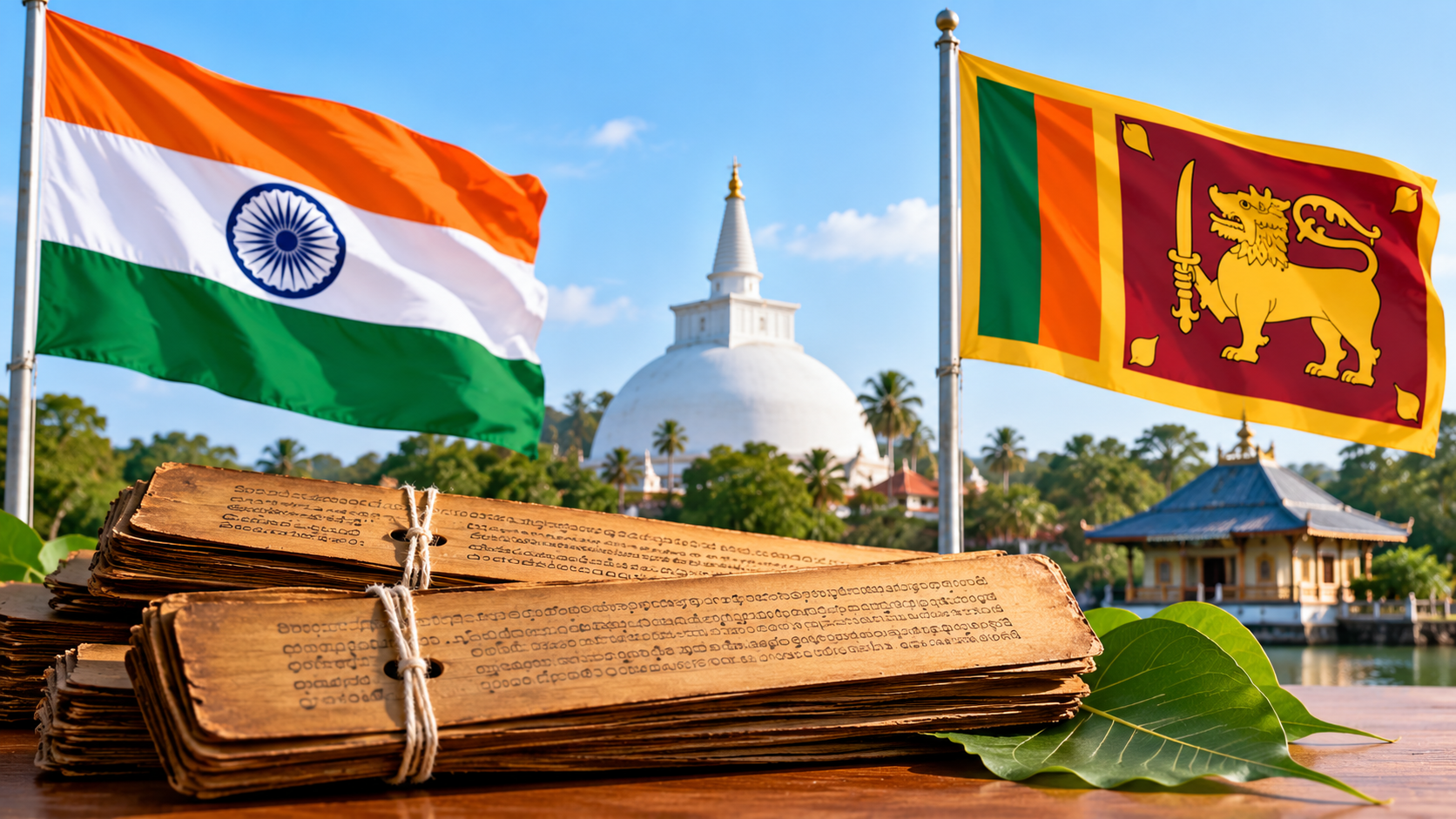
India and Sri Lanka have strengthened their cultural cooperation through the SAMHiTA Palm-Leaf Manuscript Digitisation Project, formally launched at the Gangaramaya Temple in Colombo on 23 October 2026.
SAMHiTA stands for South Asian Manuscript Histories and Textual Archive.
The project is being undertaken by the India International Centre (IIC), New Delhi, in collaboration with Gangaramaya Temple, with financial assistance from the Government of India.
Its main objective is to digitise and preserve ancient manuscripts containing valuable information about Buddhism, philosophy, languages, rituals and South Asian cultural traditions.
Santosh Jha, India's High Commissioner to Sri Lanka, attended the launch ceremony.
Key Facts: SAMHiTA Project 2026
Particulars | Details |
|---|---|
Project Name | SAMHiTA |
Full Form | South Asian Manuscript Histories and Textual Archive |
Launch Date | 23 October 2026 |
Launch Location | Gangaramaya Temple, Colombo |
Partner Countries | India and Sri Lanka |
Indian Institution | India International Centre, New Delhi |
Sri Lankan Partner | Gangaramaya Temple |
Financial Assistance | Government of India |
MoU Signed | July 2026 |
Manuscripts Being Digitised | Approximately 100 |
Expected Completion | End of November 2026 |
Indian High Commissioner | Santosh Jha |
Main Objective | Preservation of ancient manuscripts and shared cultural heritage |
What is the SAMHiTA Project?
The SAMHiTA Project is a cultural heritage preservation initiative aimed at protecting ancient South Asian manuscripts through digitisation.
Many historical manuscripts are written on palm leaves and contain valuable knowledge about religious traditions, languages, philosophy and cultural practices.
Such manuscripts can deteriorate over time because of environmental conditions, physical handling and natural ageing.
Digitisation creates electronic records of these manuscripts, helping preserve their contents for future generations.
Major Objectives
Preserve ancient palm-leaf manuscripts.
Protect Buddhist and South Asian intellectual heritage.
Create digital records of historical texts.
Support research into ancient languages and cultural traditions.
Encourage cooperation between Indian and Sri Lankan heritage institutions.
Promote the long-term preservation of historical knowledge.
What is Being Digitised Under the Project?
Around 100 ancient manuscripts preserved at Gangaramaya Temple are being digitised by a team of Sri Lankan experts.
Manuscript Content | Historical Importance |
|---|---|
Buddhist Traditions | Records religious teachings and practices |
Philosophy | Preserves intellectual and spiritual ideas |
Ancient Languages | Supports linguistic and textual research |
Rituals and Customs | Documents traditional cultural practices |
Artistic Traditions | Preserves knowledge of historical artistic practices |
Historical Knowledge | Helps researchers understand South Asian heritage |
The digitisation work is expected to be completed by the end of November 2026.
Role of India and Sri Lanka
India | Sri Lanka |
|---|---|
Provides financial assistance | Provides access to temple manuscripts |
India International Centre coordinates the partnership | Gangaramaya Temple serves as the institutional partner |
Supports heritage preservation cooperation | Sri Lankan experts undertake digitisation work |
Encourages expansion to additional institutions | Helps safeguard local historical collections |
The collaboration demonstrates how the two countries can combine institutional expertise and local knowledge to protect their shared cultural heritage.
Why is Gangaramaya Temple Important?
Gangaramaya Temple is a prominent Buddhist temple in Colombo, Sri Lanka, located near Beira Lake.
It is known for its religious, educational and cultural importance.
The temple preserves historical materials and serves as a centre of Buddhist learning and religious activities.
Under Project SAMHiTA, Gangaramaya Temple has become the first institution in Sri Lanka to partner with the India International Centre.
An MoU between the two institutions was signed in July 2026.
Historical Buddhist Relations Between India and Sri Lanka
India and Sri Lanka share Buddhist and cultural connections extending over more than 2,000 years.
Spread of Buddhism to Sri Lanka
According to Buddhist historical traditions, Buddhism was introduced to Sri Lanka during the reign of Emperor Ashoka in the 3rd century BCE.
Mahinda, traditionally identified as Emperor Ashoka's son, played an important role in introducing Buddhist teachings to the island.
Sanghamitta, traditionally identified as Ashoka's daughter, is associated with the introduction of the sacred Bodhi tree sapling to Sri Lanka.
These events helped establish enduring religious and cultural relations between the two countries.
Important Historical Facts
Particulars | Details |
|---|---|
Indian Emperor | Ashoka |
Historical Period | 3rd century BCE |
Buddhist Missionary | Mahinda |
Associated Buddhist Figure | Sanghamitta |
Sri Lankan Ruler | Devanampiya Tissa |
Important Religious Tradition | Theravada Buddhism |
Sacred Tree Tradition | Sri Maha Bodhi at Anuradhapura |
Other India–Sri Lanka Buddhist Heritage Initiatives
India and Sri Lanka have undertaken several initiatives to strengthen their shared Buddhist heritage.
1. Buddhist Heritage Preservation
Both countries cooperate in preserving Buddhist monuments, religious institutions and historical traditions.
2. Buddhist Pilgrimage
Sri Lankan pilgrims visit important Buddhist destinations in India, including Bodh Gaya, Sarnath and Kushinagar.
3. Cultural and Educational Exchanges
Religious scholars, monks and cultural institutions participate in programmes that promote Buddhist studies and historical research.
4. Devnimori Relics Exposition 2026
In February 2026, sacred Buddhist relics from Devnimori in Gujarat were exhibited at Gangaramaya Temple in Colombo.
The exposition highlighted the continuing spiritual and cultural connections between India and Sri Lanka.
Why is Manuscript Digitisation Important?
Preservation of Historical Knowledge
Ancient manuscripts contain information about societies, religions, languages and intellectual traditions.
Protection from Physical Deterioration
Palm-leaf manuscripts can become fragile over time. Digitisation helps preserve their textual content even when original materials deteriorate.
Support for Research
Digital archives can help scholars study ancient texts and compare historical manuscripts.
Cultural Cooperation
Joint preservation initiatives strengthen cooperation between countries that share historical and cultural traditions.
Benefits for Future Generations
Digital preservation helps ensure that valuable historical knowledge remains available for future study.
Important Facts to Remember
Question | Answer |
|---|---|
What is the full form of SAMHiTA? | South Asian Manuscript Histories and Textual Archive |
When was the project launched in Sri Lanka? | 23 October 2026 |
Where was the project launched? | Gangaramaya Temple, Colombo |
Which Indian institution is involved? | India International Centre, New Delhi |
Who provides financial assistance? | Government of India |
Which temple is the first Sri Lankan partner? | Gangaramaya Temple |
When was the MoU signed? | July 2026 |
How many manuscripts are being digitised? | Approximately 100 |
When is completion expected? | End of November 2026 |
Who is India's High Commissioner to Sri Lanka? | Santosh Jha |
Who is traditionally associated with spreading Buddhism to Sri Lanka? | Mahinda |
Which Indian emperor is associated with the Buddhist mission to Sri Lanka? | Ashoka |
Conclusion
The SAMHiTA Project 2026 represents an important step in India–Sri Lanka cultural cooperation.
By digitising ancient palm-leaf manuscripts at Gangaramaya Temple, the initiative seeks to preserve Buddhist traditions, historical knowledge and South Asia's shared intellectual heritage.
The project also demonstrates the growing importance of digital technology in cultural heritage conservation.
06China's Grey-Zone Warfare Strategy: Meaning and India's Security Challenges
Key points
Why in the News?
China's Grey-Zone Warfare (GZW) strategy has come into focus following reports of renewed face-offs between Indian and Chinese troops along the Line of Actual Control (LAC) in Arunachal Pradesh.
In October 2026, discussions about troop movements and patrolling in the Upper Subansiri district raised concerns about China's use of incremental military and non-military pressure.
Defence analysts describe these tactics as attempts to influence the situation along disputed borders without triggering a full-scale conventional war.
The issue is significant for India's border security, territorial integrity, cyber preparedness and Indo-Pacific strategic interests.
Key Facts: China's Grey-Zone Warfare
Particulars | Details |
|---|---|
Strategy | Grey-Zone Warfare |
Abbreviation | GZW |
Main Objective | Achieve strategic gains below the threshold of conventional war |
Major Tools | Military pressure, cyber operations, economic coercion, information campaigns |
Chinese Military | People's Liberation Army (PLA) |
Important Concept | Salami Slicing |
Related Chinese Doctrine | Three Warfares |
India's Main Border Concern | Line of Actual Control (LAC) |
Other Security Concerns | Cybersecurity and maritime security |
Important Border Force | Indo-Tibetan Border Police (ITBP) |
What is Grey-Zone Warfare?
Grey-zone warfare refers to coercive actions undertaken between normal peacetime competition and open military conflict.
Instead of launching a large-scale attack, a country may use a combination of military, political, economic, cyber and information-based measures to gradually achieve strategic objectives.
Such operations often involve ambiguity, limited escalation and uncertainty about the appropriate response.
Main Characteristics
Below the War Threshold: Actions are designed to avoid full-scale military conflict.
Ambiguity: The intentions or responsibility behind actions may be difficult to establish.
Gradual Pressure: Small actions can produce significant cumulative strategic effects.
Multiple Instruments: Military and non-military tools are used together.
Plausible Deniability: The responsible actor may deny involvement in certain activities.
Major Tactics Used in Grey-Zone Warfare
Tactic | Meaning |
|---|---|
Salami Slicing | Making small, gradual changes to the existing situation |
Cyber Warfare | Using cyber operations to disrupt or exploit digital systems |
Psychological Warfare | Influencing perceptions, confidence and decision-making |
Information Warfare | Using narratives and information campaigns to shape public opinion |
Legal Warfare | Using legal arguments or laws to support strategic claims |
Economic Coercion | Applying economic pressure to influence another country |
Military Intimidation | Using military deployments and exercises to create pressure |
Infrastructure Expansion | Developing roads, airfields and other facilities to improve strategic positioning |
What is Salami Slicing?
Salami slicing is a strategy in which a state attempts to achieve a larger objective through a series of small actions.
Each individual action may appear limited, but their combined effect can change the strategic situation.
Example Along the LAC
An incremental approach may involve increased patrolling, construction of infrastructure or attempts to establish new operational positions in disputed areas.
These activities can create tensions even without a formal declaration of war.
The term is frequently used by defence analysts when examining China's behaviour along disputed boundaries.
China's Three Warfares Strategy
China's military thinking includes a concept commonly described as the Three Warfares, comprising public opinion warfare, psychological warfare and legal warfare.
Component | Main Purpose |
|---|---|
Public Opinion Warfare | Influence public and international narratives |
Psychological Warfare | Affect the morale and decision-making of opponents |
Legal Warfare | Use legal arguments to support political or territorial objectives |
These approaches may complement conventional military capabilities by shaping the political and information environment.
How Does Grey-Zone Warfare Affect India?
1. Border Pressure Along the LAC
The Line of Actual Control separates areas under Indian and Chinese control, but the two countries do not share a mutually agreed delineation of the entire line.
Different perceptions of the LAC have contributed to patrolling-related tensions.
Incremental military movements and infrastructure development in sensitive areas can increase the risk of confrontation.
2. Border Infrastructure Development
Roads, bridges, airfields, communication networks and logistical facilities can improve the speed at which military forces move and operate.
China's infrastructure development near the Himalayan frontier has therefore become an important subject of Indian strategic analysis.
3. Cybersecurity Challenges
Cyber operations can target government networks, communications systems, critical infrastructure and sensitive information.
Cybersecurity is therefore an important component of national security preparedness.
However, specific cyber incidents should not automatically be attributed to China without reliable evidence.
4. Information and Psychological Operations
Disinformation, propaganda and misleading narratives can influence public opinion and create uncertainty during periods of geopolitical tension.
Reliable communication and verification of information are important defensive measures.
5. Indian Ocean Security
India has important maritime interests in the Indian Ocean region.
China's expanding naval and economic presence is closely monitored by Indian strategic analysts because maritime routes are vital for trade, energy supplies and regional security.
What is the Line of Actual Control?
The Line of Actual Control (LAC) is the line separating areas under Indian and Chinese control in their disputed border regions.
It is not the same as a mutually agreed international boundary.
India and China have differing perceptions of parts of the LAC, which can lead to overlapping patrols and disagreements.
Important Facts About the LAC
Particulars | Details |
|---|---|
Full Form | Line of Actual Control |
Countries | India and China |
Nature | Line of control in disputed border areas |
Western Sector | Ladakh |
Middle Sector | Himachal Pradesh and Uttarakhand |
Eastern Sector | Arunachal Pradesh and Sikkim |
Major Challenge | Differing perceptions of the alignment |
Border Management | Military and diplomatic mechanisms |
Grey-Zone Warfare vs Conventional Warfare
Grey-Zone Warfare | Conventional Warfare |
|---|---|
Operates below the threshold of open war | Involves direct military conflict |
Uses military and non-military measures | Primarily uses organised armed forces |
Often relies on ambiguity | Hostilities are generally more overt |
May involve gradual strategic pressure | May involve large-scale combat operations |
Attribution can be difficult | Responsibility is often more readily identifiable |
Aims to avoid major escalation | Carries a higher risk of major escalation |
India's Security Challenges
India faces several challenges in responding to grey-zone tactics.
Border Surveillance: Monitoring troop movements and infrastructure activities across difficult Himalayan terrain.
Rapid Response: Ensuring that military and border forces can respond quickly to developing situations.
Cyber Resilience: Protecting government systems, communications and critical infrastructure.
Information Security: Countering misleading information and improving public communication.
Diplomatic Management: Maintaining communication channels to prevent local incidents from escalating.
Maritime Awareness: Monitoring developments in the Indian Ocean region.
Measures to Strengthen India's Preparedness
1. Improved Border Infrastructure
Roads, tunnels, bridges and communication networks can strengthen connectivity and logistical support in border regions.
2. Better Surveillance and Intelligence
Satellite imagery, unmanned aerial systems and other surveillance technologies can improve situational awareness.
3. Coordination Between Security Agencies
Effective cooperation between the Indian Army, ITBP, intelligence agencies and other institutions is important for border management.
4. Cybersecurity Preparedness
Stronger cybersecurity systems, incident-response capabilities and protection of critical infrastructure can reduce vulnerabilities.
5. Diplomatic Engagement
Military-level meetings and diplomatic mechanisms can help manage disagreements and reduce the risk of escalation.
6. Maritime Security Cooperation
Naval preparedness, maritime domain awareness and cooperation with regional partners can strengthen India's security interests in the Indian Ocean.
Important Terms to Remember
Term | Meaning |
|---|---|
PLA | People's Liberation Army |
LAC | Line of Actual Control |
ITBP | Indo-Tibetan Border Police |
GZW | Grey-Zone Warfare |
Salami Slicing | Gradual strategic gains through small actions |
Cyber Warfare | Conflict-related activities conducted through digital systems |
Psychological Warfare | Attempts to influence morale and decision-making |
Legal Warfare | Strategic use of legal claims and arguments |
Interoperability | Ability of different forces or systems to work together |
Deterrence | Discouraging hostile action by making its expected costs unacceptable |
Important Facts to Remember
Question | Answer |
|---|---|
What is grey-zone warfare? | Coercive actions below the threshold of conventional war |
Which Chinese military organisation is associated with these tactics? | People's Liberation Army |
What does LAC stand for? | Line of Actual Control |
What is salami slicing? | Gradually changing the status quo through small actions |
What are China's Three Warfares? | Public opinion, psychological and legal warfare |
Which force guards the India–China border alongside the Indian Army? | ITBP |
What is the main concern for India along the LAC? | Border stability and territorial security |
Which maritime region is strategically important to India? | Indian Ocean Region |
Why is grey-zone warfare difficult to counter? | Ambiguity, gradual escalation and use of multiple tools |
Conclusion
China's grey-zone warfare strategy is an important subject in contemporary defence and security studies.
The strategy involves the use of incremental military pressure, information operations, cyber capabilities and other instruments to pursue strategic objectives without necessarily entering conventional war.
For India, the key challenges include maintaining stability along the LAC, strengthening border infrastructure, improving cybersecurity and protecting maritime interests.
An effective response requires coordinated military preparedness, intelligence, diplomacy, technological capabilities and national resilience.
07Allocaecilius nilgiriensis: Newly Identified Species and Biodiversity Significance
Key points
Why in the News?
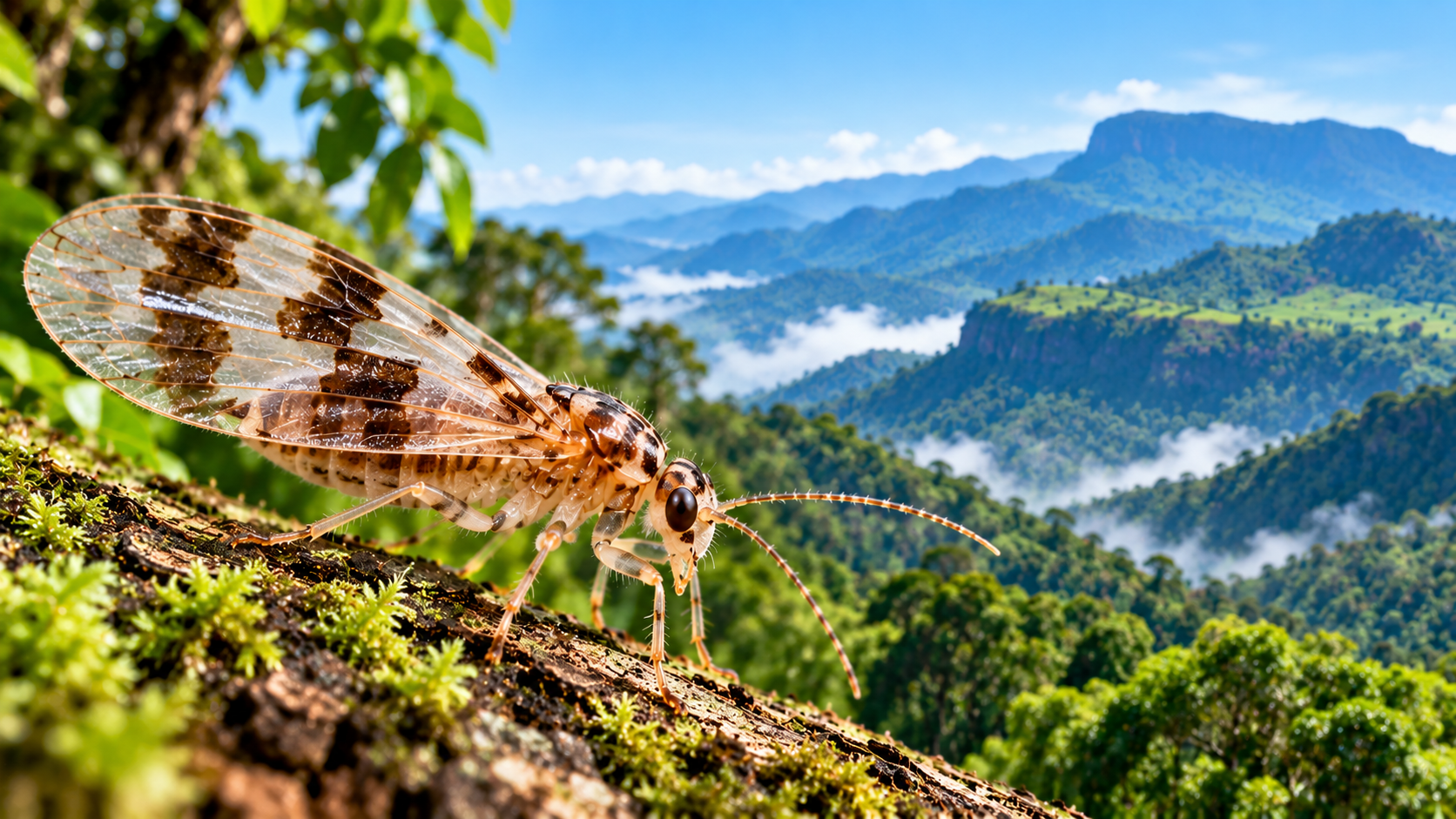
Scientists from the Zoological Survey of India (ZSI) have identified a new insect species named Allocaecilius nilgiriensis from the Nilgiri Hills in the Southern Western Ghats.
The findings were published on 12 October 2026 in the scientific journal Zootaxa.
The discovery is significant because it represents only the second species of the genus Allocaecilius recorded from India.
The new species belongs to a group of small insects commonly known as barklice.
Key Facts: Allocaecilius nilgiriensis
Particulars | Details |
|---|---|
Scientific Name | Allocaecilius nilgiriensis |
Common Group | Barklice |
Order | Psocodea |
Family | Pseudocaeciliidae |
Genus | Allocaecilius |
Discovering Organisation | Zoological Survey of India |
Discovery Region | Nilgiri Hills, Southern Western Ghats |
States | Tamil Nadu and Kerala |
Habitat | Shola and evergreen rainforests |
Scientific Journal | Zootaxa |
Publication Date | 12 October 2026 |
Indian Record | Second species of the genus |
Reported Global Species Count | 13 |
What is Allocaecilius nilgiriensis?
Allocaecilius nilgiriensis is a newly described species of barklouse found in moist forest habitats.
Barklice are small insects commonly associated with tree bark, leaves and other vegetation.
They generally feed on fungi, algae, lichens, mould and organic debris.
Despite their name, barklice are not the same as parasitic lice that live on humans and animals.
The newly discovered species was named after the Nilgiri Mountains, where it was found.
Important Physical Characteristics
Characteristic | Description |
|---|---|
Forewings | Distinctive brown patches in cells R1, R3 and R5 |
Male Anatomy | Thumb-like structures on the hypandrium |
Female Anatomy | Deeply indented subgenital plate |
Identification | Distinctive anatomical features used in taxonomy |
These features help scientists distinguish the species from other members of the genus.
Where Was the Species Discovered?
The species was discovered in the Southern Western Ghats, covering forest habitats in Tamil Nadu and Kerala.
Its reported habitats include moist, shaded forest environments, particularly high-altitude shola and evergreen rainforests.
What Are Shola Forests?
Shola forests are patches of tropical montane evergreen forests commonly found in the higher elevations of the Western Ghats.
They are often surrounded by grasslands and support specialised plant and animal communities.
Shola ecosystems are important for biodiversity conservation and water regulation.
Ecological Importance of Barklice
Barklice contribute to forest ecosystem processes by feeding on microorganisms and organic material.
Their ecological roles include:
Consuming fungi, mould and algae.
Feeding on lichens and dead organic debris.
Contributing to the breakdown of organic material.
Supporting nutrient cycling in forest microhabitats.
The discovery highlights the importance of studying small and often overlooked insects in forest ecosystems.
About the Zoological Survey of India
The Zoological Survey of India (ZSI) is a scientific organisation responsible for studying and documenting India's animal diversity.
Particulars | Details |
|---|---|
Organisation | Zoological Survey of India |
Abbreviation | ZSI |
Established | 1 July 1916 |
Headquarters | Kolkata |
Ministry | Ministry of Environment, Forest and Climate Change |
Main Function | Survey, research and documentation of Indian fauna |
About the Nilgiri Hills and Western Ghats
The Nilgiri Hills are part of the Western Ghats in southern India.
The region is known for its montane forests, grasslands and high biodiversity.
Important Facts
Particulars | Details |
|---|---|
Mountain Region | Nilgiri Hills |
Mountain System | Western Ghats |
Important States | Tamil Nadu, Kerala and Karnataka |
Biodiversity Hotspot | Western Ghats–Sri Lanka |
India's First Biosphere Reserve | Nilgiri Biosphere Reserve |
Nilgiri Biosphere Reserve Established | 1986 |
Western Ghats UNESCO Recognition | 2012 |
Why Is the Discovery Important?
Biodiversity Documentation: The discovery adds a new scientifically described species to India's recorded insect diversity.
Taxonomic Research: Its distinctive anatomical characteristics help scientists understand relationships within the genus Allocaecilius.
Western Ghats Biodiversity: The discovery demonstrates the importance of the Southern Western Ghats as a habitat for specialised organisms.
Forest Conservation: Scientific documentation can improve understanding of the species inhabiting sensitive forest ecosystems.
Important Facts to Remember
Question | Answer |
|---|---|
What is Allocaecilius nilgiriensis? | A newly described barklouse species |
Which organisation discovered it? | Zoological Survey of India |
Where was it discovered? | Nilgiri Hills, Southern Western Ghats |
Which states are associated with its distribution? | Tamil Nadu and Kerala |
To which family does it belong? | Pseudocaeciliidae |
Where were the findings published? | Zootaxa |
When was the research published? | 12 October 2026 |
Which forests provide its habitat? | Shola and evergreen rainforests |
How many species of the genus are reported worldwide? | 13 |
What is the importance of this Indian record? | Second recorded species of the genus in India |
Conclusion
The discovery of Allocaecilius nilgiriensis is an important addition to India's documented insect biodiversity.
The species highlights the ecological significance of the Nilgiri Hills and the Southern Western Ghats.
It also demonstrates the importance of scientific surveys and taxonomic research in understanding and conserving lesser-known organisms.
08“PUNAH BHAWAN App Launch 2026: Objectives, Features and Key Facts”
Key points
Why in the News?
Union Minister of Jal Shakti C. R. Patil launched the Punah Bharan Mobile Application in October 2026 to promote scientific groundwater recharge planning across India.
The application uses geospatial technology to identify suitable locations for artificial groundwater recharge and recommend appropriate recharge structures.
It was developed by the Bhaskaracharya National Institute for Space Applications and Geo-informatics (BISAG-N) in collaboration with the National Water Mission (NWM).
Key Facts: Punah Bharan App 2026
Particulars | Details |
|---|---|
Application | Punah Bharan |
Launch | October 2026 |
Launched By | C. R. Patil |
Ministry | Ministry of Jal Shakti |
Developed By | BISAG-N |
Collaborating Organisation | National Water Mission |
Main Purpose | Scientific groundwater recharge planning |
Technology | Geospatial technology and GIS |
Search Radius | Up to 3 kilometres |
Web Portal | Village-level recharge suitability maps |
What Is the Punah Bharan App?
The Punah Bharan App is a technology-based initiative designed to support groundwater conservation.
It helps users identify areas suitable for artificial groundwater recharge by analysing geographical and hydrological information.
Major Features
Identifies potential groundwater recharge zones within a 3 km radius.
Suggests suitable artificial recharge structures.
Uses rainfall, groundwater levels, slope and drainage information.
Supports location-specific groundwater recharge planning.
Provides village-level maps through an accompanying web portal.
What Is Artificial Groundwater Recharge?
Artificial groundwater recharge is the process of deliberately increasing the amount of water entering underground aquifers.
It can be achieved through structures such as recharge pits, percolation tanks, recharge shafts and check dams.
These structures help rainwater and surface water infiltrate the ground.
About BISAG-N
Particulars | Details |
|---|---|
Full Name | Bhaskaracharya National Institute for Space Applications and Geo-informatics |
Abbreviation | BISAG-N |
Headquarters | Gandhinagar, Gujarat |
Administrative Ministry | Ministry of Electronics and Information Technology |
Specialisation | Geospatial technology, GIS and remote sensing |
About the National Water Mission
The National Water Mission is one of the eight missions under India's National Action Plan on Climate Change (NAPCC).
It promotes water conservation, efficient water use and integrated water resource management.
Why Is the App Important?
The Punah Bharan App can improve groundwater management by supporting evidence-based planning.
It helps authorities identify suitable recharge locations rather than selecting sites without sufficient scientific assessment.
The initiative is particularly relevant to regions experiencing groundwater depletion and increasing water demand.
Important Facts to Remember
Question | Answer |
|---|---|
Who launched the Punah Bharan App? | C. R. Patil |
Which ministry launched it? | Ministry of Jal Shakti |
Which institute developed it? | BISAG-N |
Which mission collaborated on its development? | National Water Mission |
What is its main purpose? | Artificial groundwater recharge planning |
What technology does it use? | Geospatial technology |
What is its search radius? | Up to 3 kilometres |
Where is BISAG-N headquartered? | Gandhinagar, Gujarat |
Conclusion
The Punah Bharan Mobile Application 2026 is an important initiative for technology-driven groundwater management in India.
By combining geospatial information with scientific recharge planning, it aims to support water conservation and sustainable management of groundwater resources.
09National Unity Day 2026: History, Significance and Sardar Vallabhbhai Patel’s Contribution to National Integration
Key points
Why in the News?
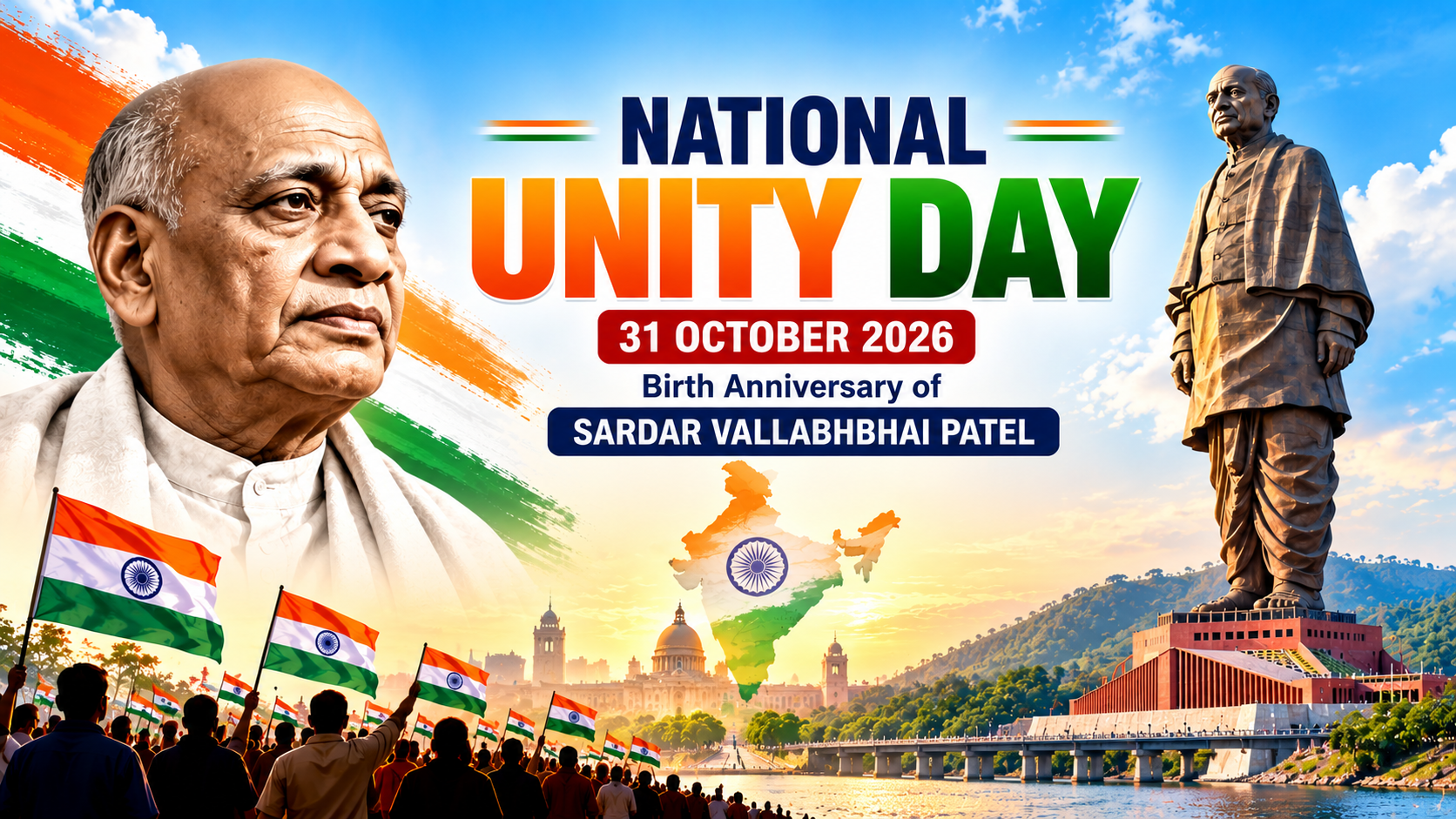
India will observe National Unity Day (Rashtriya Ekta Diwas) on 31 October 2026, marking the 151st birth anniversary of Sardar Vallabhbhai Patel, popularly known as the Iron Man of India.
The main national celebrations are scheduled to take place at the Statue of Unity in Ekta Nagar, Gujarat, with Prime Minister Narendra Modi participating in the commemorative programme.
The 2026 celebrations will feature the Rashtriya Ekta Diwas Parade, cultural programmes and activities highlighting India's national unity and diversity.
Vande Mataram will be the overarching theme of the 2026 Rashtriya Ekta Diwas celebrations.
National Unity Day 2026: Key Facts
Particulars | Details |
|---|---|
Important Day | National Unity Day |
Hindi Name | Rashtriya Ekta Diwas |
Observed On | 31 October |
Day in 2026 | Saturday |
Birth Anniversary | 151st |
Commemorates | Sardar Vallabhbhai Patel |
Birth Date | 31 October 1875 |
Birthplace | Nadiad, Gujarat |
First Observed | 2014 |
Main Venue in 2026 | Statue of Unity, Ekta Nagar, Gujarat |
2026 Celebration Theme | Vande Mataram |
Main Objective | Promote national unity, integrity and security |
What Is National Unity Day?
National Unity Day is an annual national observance dedicated to the memory of Sardar Vallabhbhai Patel.
It recognises his contribution to India's independence movement and the political integration of princely states after independence in 1947.
The day encourages citizens to uphold the values of unity, integrity, security and respect for India's cultural diversity.
History of National Unity Day
The Government of India announced the observance of Rashtriya Ekta Diwas in 2014, choosing 31 October to commemorate Sardar Patel's birth anniversary.
The decision recognised Patel's role in consolidating independent India and bringing numerous princely states into the Indian Union.
Since then, National Unity Day has been observed through programmes such as the Run for Unity, unity pledges, educational activities and commemorative ceremonies.
Why Was 31 October Selected?
Sardar Vallabhbhai Patel was born on 31 October 1875 in Nadiad, Gujarat.
His contribution to political integration and institution-building made his birth anniversary an occasion to emphasise national unity.
Who Was Sardar Vallabhbhai Patel?
Sardar Vallabhbhai Patel was an Indian freedom fighter, lawyer and political leader who played a major role in India's independence movement.
He became independent India's first Deputy Prime Minister and first Home Minister in 1947.
Patel is remembered for his contribution to integrating princely states, strengthening administration and supporting the development of national institutions.
Important Biographical Facts
Particulars | Details |
|---|---|
Full Name | Vallabhbhai Jhaverbhai Patel |
Born | 31 October 1875 |
Birthplace | Nadiad, Gujarat |
Died | 15 December 1950 |
Popular Title | Iron Man of India |
First Deputy Prime Minister | 1947–1950 |
First Home Minister | 1947–1950 |
Important Movements | Kheda Satyagraha and Bardoli Satyagraha |
Political Organisation | Indian National Congress |
Bharat Ratna | 1991, posthumously |
Sardar Vallabhbhai Patel's Contribution to National Integration
1. Integration of Princely States
When India gained independence in 1947, the subcontinent consisted of British Indian provinces and more than 560 princely states.
The political integration of these states was one of the major challenges facing the newly independent country.
Sardar Patel, working closely with V. P. Menon, played a central role in persuading rulers to join the Indian Union.
The process involved diplomacy, negotiations, legal agreements and, in certain cases, the use of military force.
2. Instrument of Accession
The Instrument of Accession was a legal document through which princely states could accede to India.
It initially provided for the transfer of specified subjects, including defence, external affairs and communications, to the Dominion government.
The accession process helped establish a political framework for the integration of princely states.
3. Integration of Junagadh
Junagadh was a princely state in present-day Gujarat.
Its ruler initially chose to accede to Pakistan despite its geographical location and predominantly Hindu population.
Following political developments and Indian intervention, a plebiscite was held in February 1948, producing an overwhelming vote in favour of joining India.
4. Integration of Hyderabad
Hyderabad was one of the largest princely states in India.
Its ruler initially sought to remain independent.
In September 1948, the Indian government conducted a military operation known as Operation Polo.
Following the operation, Hyderabad was brought under Indian control and integrated into the Union.
5. Kashmir and the Accession Process
The princely state of Jammu and Kashmir acceded to India in October 1947 after Maharaja Hari Singh signed the Instrument of Accession.
The accession occurred during an armed conflict following an invasion by tribal forces from Pakistan.
The Kashmir question subsequently became a major international and bilateral dispute.
Patel was an important member of the government during this period, although the handling of Kashmir involved several leaders, including Prime Minister Jawaharlal Nehru.
6. Strengthening India's Administrative System
Sardar Patel strongly supported the creation and continuation of professional all-India administrative services.
He regarded a capable, impartial civil service as essential for maintaining national unity and effective governance.
His support for the administrative services contributed to his reputation as an important architect of India's post-independence administrative system.
Important Princely States and Their Integration
Princely State | Important Historical Event |
|---|---|
Junagadh | Plebiscite held in February 1948 |
Hyderabad | Operation Polo in September 1948 |
Jammu and Kashmir | Instrument of Accession signed in October 1947 |
Travancore | Joined the Indian Union after initially expressing an intention to remain independent |
Bhopal | Merged with India in 1949 |
Patel's Role in India's Freedom Struggle
Kheda Satyagraha, 1918
Patel participated in the Kheda Satyagraha in Gujarat under Mahatma Gandhi's leadership.
The movement opposed the collection of land revenue from farmers facing crop failures and economic hardship.
Bardoli Satyagraha, 1928
Patel led the Bardoli Satyagraha against increased land revenue assessments.
The movement became an important example of organised non-violent resistance.
Following his leadership in Bardoli, he became widely known by the title Sardar.
Indian National Congress
Patel served as President of the Indian National Congress at the Karachi Session in 1931.
The session is remembered for resolutions concerning fundamental rights and national economic policy.
Significance of National Unity Day
National Integration: The day commemorates the historical process of bringing diverse territories into a united political framework.
Unity in Diversity: It encourages respect for India's linguistic, cultural, regional and religious diversity.
National Security: It reinforces the importance of protecting India's sovereignty, integrity and security.
Historical Awareness: It introduces younger generations to the challenges faced during India's political integration.
Civic Responsibility: It encourages citizens to participate in activities promoting cooperation, mutual respect and constitutional values.
National Unity Day 2026 Celebrations
The principal celebrations will be held at Ekta Nagar in Gujarat, near the Statue of Unity.
Planned activities include:
Rashtriya Ekta Diwas Parade featuring security forces.
National Unity Pledge.
Run for Unity programmes.
Cultural performances showcasing India's diversity.
Activities highlighting the role of security forces.
Bharat Parv celebrations.
The 2026 parade will place particular emphasis on the achievements of security forces in countering Left-Wing Extremism.
The national song Vande Mataram will be a central theme of the celebrations.
Statue of Unity: Important Facts
The Statue of Unity is a monument dedicated to Sardar Vallabhbhai Patel.
It is located in Ekta Nagar, formerly known as Kevadia, in Gujarat's Narmada district.
The statue was inaugurated on 31 October 2018.
Key Facts About the Statue of Unity
Particulars | Details |
|---|---|
Dedicated To | Sardar Vallabhbhai Patel |
Location | Ekta Nagar, Gujarat |
River | Narmada |
Height | 182 metres |
Inaugurated | 31 October 2018 |
Sculptor | Ram V. Sutar |
Significance | World's tallest statue |
Conclusion
National Unity Day 2026 commemorates the 151st birth anniversary of Sardar Vallabhbhai Patel and recognises his role in India's political integration.
Patel's leadership during the accession of princely states and his contribution to institution-building remain important parts of India's post-independence history.
Rashtriya Ekta Diwas provides an opportunity to reflect on national unity, constitutional values, cultural diversity and the responsibilities of citizenship.
10CCS Approves ₹40,000 Crore for 8 Next-Generation Corvettes for Indian Navy
Key points
Why in the News?
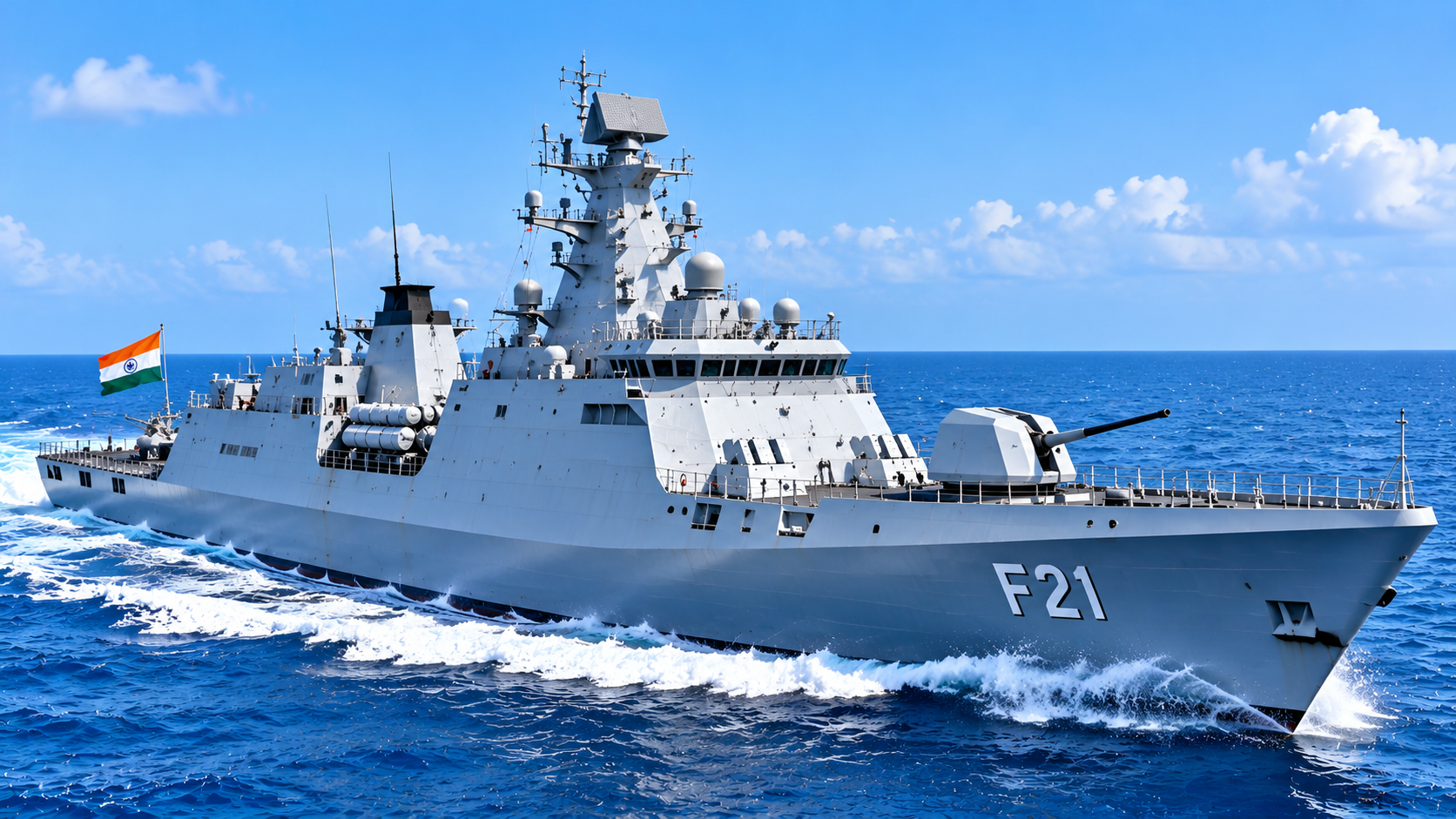
The Cabinet Committee on Security (CCS), chaired by Prime Minister Narendra Modi, has approved a defence acquisition project worth over ₹40,000 crore for the construction of eight Next-Generation Corvettes (NGCs) for the Indian Navy, according to reports published on 29–30 October 2026.
These advanced warships are expected to strengthen India's maritime security, coastal defence and naval combat capabilities in the Indian Ocean Region.
The vessels will be constructed by two Indian shipbuilding companies:
Garden Reach Shipbuilders & Engineers (GRSE), Kolkata
Goa Shipyard Limited (GSL), Goa
The first warship is expected to be delivered by 2030, subject to contract signing and construction progress.
Key Facts: Next-Generation Corvettes Project 2026
Particulars | Details |
|---|---|
Project | Next-Generation Corvettes |
Abbreviation | NGC |
Approved By | Cabinet Committee on Security |
CCS Chairman | Prime Minister Narendra Modi |
Reported Approval | October 2026 |
Project Cost | Over ₹40,000 crore |
Total Warships | 8 |
Intended Operator | Indian Navy |
Shipbuilding Companies | GRSE and GSL |
GRSE Location | Kolkata, West Bengal |
GSL Location | Goa |
Approximate Displacement | 2,000 tonnes per vessel |
Expected Maximum Speed | Around 30 knots |
Design | Indigenous, developed by Indian Navy |
First Delivery Target | 2030 |
Main Purpose | Maritime security and multi-role naval operations |
What Are Next-Generation Corvettes?
A corvette is a relatively small, fast and manoeuvrable naval warship designed to perform military operations in coastal and offshore waters.
Corvettes are generally smaller than frigates and destroyers.
The Indian Navy's Next-Generation Corvettes are planned as modern, multi-role surface combatants with stealth features, advanced sensors and weapons.
They are expected to perform several types of naval missions, including surveillance, escort duties, coastal defence and combat operations.
Major Features of Next-Generation Corvettes
1. Indigenous Stealth Design
The warships will use a new design developed in-house by the Indian Navy.
Stealth features are intended to reduce the ships' detectability, improving their ability to operate in contested maritime environments.
2. High-Speed Operations
Each corvette is expected to reach a speed of approximately 30 knots.
A knot is a unit of speed used in maritime and aviation operations.
1 knot = 1 nautical mile per hour.
3. Multi-Role Combat Capability
The corvettes are expected to undertake different maritime security and combat missions.
Operational Role | Purpose |
|---|---|
Anti-Surface Warfare | Counter hostile surface vessels |
Anti-Submarine Warfare | Detect and engage underwater threats |
Anti-Air Warfare | Defend against aerial threats |
Coastal Defence | Protect India's coastal waters |
Maritime Surveillance | Monitor activities at sea |
Escort Operations | Protect important naval or maritime assets |
Search and Attack | Locate and engage identified threats |
Deterrence | Discourage hostile maritime activities |
4. Modern Sensors and Weapons
The planned vessels are expected to incorporate modern combat systems, sensors and weapons.
Their final equipment configuration will depend on the detailed design and procurement process.
5. Indigenous Construction
All eight corvettes are planned to be built at Indian shipyards.
This will support domestic defence manufacturing, shipbuilding capabilities and the maritime industrial ecosystem.
Which Companies Will Build the Corvettes?
The project is expected to involve two major Indian shipyards.
Company | Location | Reported Allocation |
|---|---|---|
Garden Reach Shipbuilders & Engineers | Kolkata, West Bengal | 5 corvettes |
Goa Shipyard Limited | Goa | 3 corvettes |
Total | India | 8 corvettes |
The reported distribution is subject to final contract arrangements.
About Garden Reach Shipbuilders & Engineers
Garden Reach Shipbuilders & Engineers (GRSE) is a defence public sector shipbuilding company headquartered in Kolkata.
It manufactures various classes of ships and vessels for the Indian Navy and Indian Coast Guard.
GRSE operates under the administrative control of the Ministry of Defence.
About Goa Shipyard Limited
Goa Shipyard Limited (GSL) is a defence public sector undertaking located in Goa.
It specialises in the construction of naval and maritime vessels, including patrol vessels and other ships for defence and security organisations.
GSL also functions under the Ministry of Defence.
What Is the Cabinet Committee on Security?
The Cabinet Committee on Security (CCS) is one of the important Cabinet committees of the Government of India.
It is chaired by the Prime Minister and deals with major matters concerning national security, defence and strategic policy.
Important Facts About CCS
Particulars | Details |
|---|---|
Full Form | Cabinet Committee on Security |
Abbreviation | CCS |
Chairman | Prime Minister of India |
Main Areas | National security, defence and strategic matters |
Role in Defence Procurement | Considers major defence acquisition proposals |
What Is the Defence Acquisition Council?
The Defence Acquisition Council (DAC) is the apex decision-making body of the Ministry of Defence for defence procurement matters.
It is chaired by the Defence Minister of India.
In June 2022, the DAC accorded Acceptance of Necessity for the procurement of Next-Generation Corvettes at an estimated cost of approximately ₹36,000 crore.
The reported CCS approval in October 2026 represents a later stage in the acquisition process.
CCS vs DAC
Cabinet Committee on Security | Defence Acquisition Council |
|---|---|
Chaired by the Prime Minister | Chaired by the Defence Minister |
Handles major national security decisions | Handles defence acquisition matters |
Considers major strategic and defence proposals | Reviews and approves procurement requirements |
Functions at Cabinet level | Functions under the Ministry of Defence |
Why Is the Project Important for India?
Strengthening Maritime Security
The additional warships are expected to improve the Indian Navy's capacity to monitor and defend important maritime areas.
Improving Coastal Defence
Corvettes can undertake patrol, surveillance and combat missions in coastal and offshore waters.
Enhancing Indian Ocean Capabilities
The Indian Ocean Region is strategically important because of its international shipping routes, energy transportation and maritime trade.
Supporting Atmanirbhar Bharat
Domestic warship construction supports India's objective of strengthening indigenous defence manufacturing.
Encouraging Defence Industrial Development
The project can create opportunities for Indian shipbuilders, equipment manufacturers and associated industries.
What Is SAGAR?
SAGAR stands for Security and Growth for All in the Region.
It is an Indian maritime cooperation vision announced in 2015.
The initiative emphasises maritime security, regional cooperation and shared development in the Indian Ocean Region.
Indigenous naval capability development supports India's wider maritime security objectives.
Corvette vs Frigate vs Destroyer
Feature | Corvette | Frigate | Destroyer |
|---|---|---|---|
General Size | Relatively small | Medium to large | Generally larger |
Primary Role | Coastal and offshore operations | Multi-role fleet operations | Advanced fleet air defence and other combat roles |
Speed | Usually high | Varies by design | Varies by design |
Weapons | Mission-specific systems | Broad range of weapons | Typically extensive combat systems |
Operational Reach | Often more limited | Generally greater | Generally greater |
These are broad classifications; actual capabilities depend on individual ship designs.
India's Existing Kamorta-Class Corvettes
The Indian Navy already operates four Kamorta-class corvettes, which are indigenous anti-submarine warfare vessels.
Ship | Class |
|---|---|
INS Kamorta | Kamorta Class |
INS Kadmatt | Kamorta Class |
INS Kiltan | Kamorta Class |
INS Kavaratti | Kamorta Class |
The planned Next-Generation Corvettes will complement the Navy's existing corvette fleet.
Important Facts to Remember
Question | Answer |
|---|---|
Which committee reportedly approved the project? | Cabinet Committee on Security |
Who chairs the CCS? | Prime Minister |
What is the project cost? | Over ₹40,000 crore |
How many corvettes are planned? | Eight |
What does NGC stand for? | Next-Generation Corvette |
Which force will operate the vessels? | Indian Navy |
Which shipyards are involved? | GRSE and GSL |
Where is GRSE located? | Kolkata |
Where is GSL located? | Goa |
What is the approximate displacement? | 2,000 tonnes |
What is the expected speed? | Around 30 knots |
When is the first delivery targeted? | 2030 |
Who developed the proposed design? | Indian Navy |
What does DAC stand for? | Defence Acquisition Council |
Who chairs the DAC? | Defence Minister |
What does SAGAR stand for? | Security and Growth for All in the Region |
Conclusion
The reported ₹40,000 crore-plus Next-Generation Corvettes project is a significant development in India's naval modernisation programme.
The planned induction of eight indigenous warships is expected to strengthen maritime surveillance, coastal defence and multi-role naval capabilities.
The project also supports domestic shipbuilding and India's efforts to increase self-reliance in defence manufacturing.
The next major steps will be the signing of construction contracts and the commencement of shipbuilding activities.