SAMHiTA Project 2026: India–Sri Lanka Buddhist Heritage Cooperation
Key points
Why in the News?
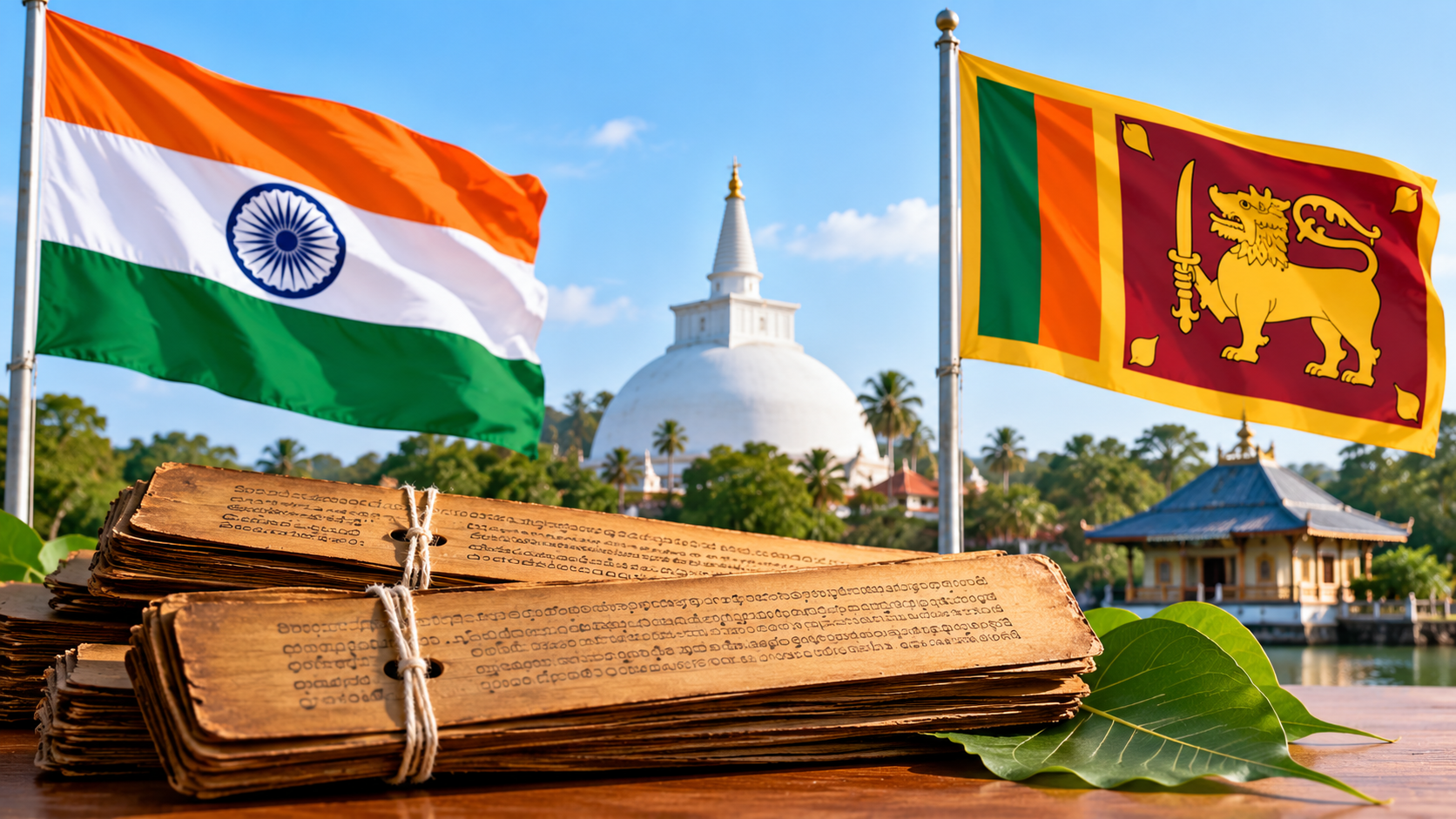
India and Sri Lanka have strengthened their cultural cooperation through the SAMHiTA Palm-Leaf Manuscript Digitisation Project, formally launched at the Gangaramaya Temple in Colombo on 23 October 2026.
SAMHiTA stands for South Asian Manuscript Histories and Textual Archive.
The project is being undertaken by the India International Centre (IIC), New Delhi, in collaboration with Gangaramaya Temple, with financial assistance from the Government of India.
Its main objective is to digitise and preserve ancient manuscripts containing valuable information about Buddhism, philosophy, languages, rituals and South Asian cultural traditions.
Santosh Jha, India's High Commissioner to Sri Lanka, attended the launch ceremony.
Key Facts: SAMHiTA Project 2026
Particulars | Details |
|---|---|
Project Name | SAMHiTA |
Full Form | South Asian Manuscript Histories and Textual Archive |
Launch Date | 23 October 2026 |
Launch Location | Gangaramaya Temple, Colombo |
Partner Countries | India and Sri Lanka |
Indian Institution | India International Centre, New Delhi |
Sri Lankan Partner | Gangaramaya Temple |
Financial Assistance | Government of India |
MoU Signed | July 2026 |
Manuscripts Being Digitised | Approximately 100 |
Expected Completion | End of November 2026 |
Indian High Commissioner | Santosh Jha |
Main Objective | Preservation of ancient manuscripts and shared cultural heritage |
What is the SAMHiTA Project?
The SAMHiTA Project is a cultural heritage preservation initiative aimed at protecting ancient South Asian manuscripts through digitisation.
Many historical manuscripts are written on palm leaves and contain valuable knowledge about religious traditions, languages, philosophy and cultural practices.
Such manuscripts can deteriorate over time because of environmental conditions, physical handling and natural ageing.
Digitisation creates electronic records of these manuscripts, helping preserve their contents for future generations.
Major Objectives
Preserve ancient palm-leaf manuscripts.
Protect Buddhist and South Asian intellectual heritage.
Create digital records of historical texts.
Support research into ancient languages and cultural traditions.
Encourage cooperation between Indian and Sri Lankan heritage institutions.
Promote the long-term preservation of historical knowledge.
What is Being Digitised Under the Project?
Around 100 ancient manuscripts preserved at Gangaramaya Temple are being digitised by a team of Sri Lankan experts.
Manuscript Content | Historical Importance |
|---|---|
Buddhist Traditions | Records religious teachings and practices |
Philosophy | Preserves intellectual and spiritual ideas |
Ancient Languages | Supports linguistic and textual research |
Rituals and Customs | Documents traditional cultural practices |
Artistic Traditions | Preserves knowledge of historical artistic practices |
Historical Knowledge | Helps researchers understand South Asian heritage |
The digitisation work is expected to be completed by the end of November 2026.
Role of India and Sri Lanka
India | Sri Lanka |
|---|---|
Provides financial assistance | Provides access to temple manuscripts |
India International Centre coordinates the partnership | Gangaramaya Temple serves as the institutional partner |
Supports heritage preservation cooperation | Sri Lankan experts undertake digitisation work |
Encourages expansion to additional institutions | Helps safeguard local historical collections |
The collaboration demonstrates how the two countries can combine institutional expertise and local knowledge to protect their shared cultural heritage.
Why is Gangaramaya Temple Important?
Gangaramaya Temple is a prominent Buddhist temple in Colombo, Sri Lanka, located near Beira Lake.
It is known for its religious, educational and cultural importance.
The temple preserves historical materials and serves as a centre of Buddhist learning and religious activities.
Under Project SAMHiTA, Gangaramaya Temple has become the first institution in Sri Lanka to partner with the India International Centre.
An MoU between the two institutions was signed in July 2026.
Historical Buddhist Relations Between India and Sri Lanka
India and Sri Lanka share Buddhist and cultural connections extending over more than 2,000 years.
Spread of Buddhism to Sri Lanka
According to Buddhist historical traditions, Buddhism was introduced to Sri Lanka during the reign of Emperor Ashoka in the 3rd century BCE.
Mahinda, traditionally identified as Emperor Ashoka's son, played an important role in introducing Buddhist teachings to the island.
Sanghamitta, traditionally identified as Ashoka's daughter, is associated with the introduction of the sacred Bodhi tree sapling to Sri Lanka.
These events helped establish enduring religious and cultural relations between the two countries.
Important Historical Facts
Particulars | Details |
|---|---|
Indian Emperor | Ashoka |
Historical Period | 3rd century BCE |
Buddhist Missionary | Mahinda |
Associated Buddhist Figure | Sanghamitta |
Sri Lankan Ruler | Devanampiya Tissa |
Important Religious Tradition | Theravada Buddhism |
Sacred Tree Tradition | Sri Maha Bodhi at Anuradhapura |
Other India–Sri Lanka Buddhist Heritage Initiatives
India and Sri Lanka have undertaken several initiatives to strengthen their shared Buddhist heritage.
1. Buddhist Heritage Preservation
Both countries cooperate in preserving Buddhist monuments, religious institutions and historical traditions.
2. Buddhist Pilgrimage
Sri Lankan pilgrims visit important Buddhist destinations in India, including Bodh Gaya, Sarnath and Kushinagar.
3. Cultural and Educational Exchanges
Religious scholars, monks and cultural institutions participate in programmes that promote Buddhist studies and historical research.
4. Devnimori Relics Exposition 2026
In February 2026, sacred Buddhist relics from Devnimori in Gujarat were exhibited at Gangaramaya Temple in Colombo.
The exposition highlighted the continuing spiritual and cultural connections between India and Sri Lanka.
Why is Manuscript Digitisation Important?
Preservation of Historical Knowledge
Ancient manuscripts contain information about societies, religions, languages and intellectual traditions.
Protection from Physical Deterioration
Palm-leaf manuscripts can become fragile over time. Digitisation helps preserve their textual content even when original materials deteriorate.
Support for Research
Digital archives can help scholars study ancient texts and compare historical manuscripts.
Cultural Cooperation
Joint preservation initiatives strengthen cooperation between countries that share historical and cultural traditions.
Benefits for Future Generations
Digital preservation helps ensure that valuable historical knowledge remains available for future study.
Important Facts to Remember
Question | Answer |
|---|---|
What is the full form of SAMHiTA? | South Asian Manuscript Histories and Textual Archive |
When was the project launched in Sri Lanka? | 23 October 2026 |
Where was the project launched? | Gangaramaya Temple, Colombo |
Which Indian institution is involved? | India International Centre, New Delhi |
Who provides financial assistance? | Government of India |
Which temple is the first Sri Lankan partner? | Gangaramaya Temple |
When was the MoU signed? | July 2026 |
How many manuscripts are being digitised? | Approximately 100 |
When is completion expected? | End of November 2026 |
Who is India's High Commissioner to Sri Lanka? | Santosh Jha |
Who is traditionally associated with spreading Buddhism to Sri Lanka? | Mahinda |
Which Indian emperor is associated with the Buddhist mission to Sri Lanka? | Ashoka |
Conclusion
The SAMHiTA Project 2026 represents an important step in India–Sri Lanka cultural cooperation.
By digitising ancient palm-leaf manuscripts at Gangaramaya Temple, the initiative seeks to preserve Buddhist traditions, historical knowledge and South Asia's shared intellectual heritage.
The project also demonstrates the growing importance of digital technology in cultural heritage conservation.