Manipur Hosts First North East Waree Leeba Festival 2026
Key points
Why in the News?
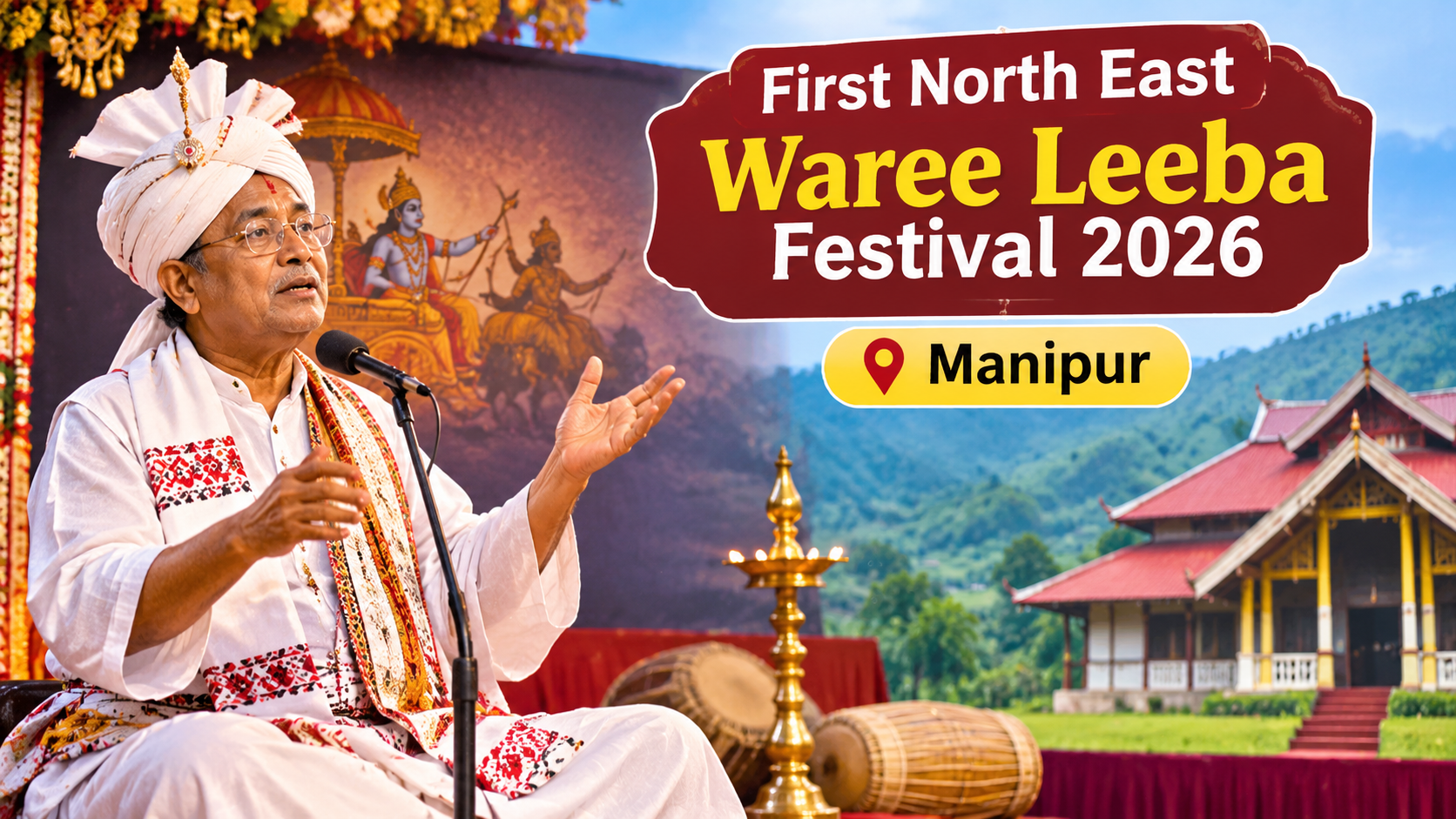
The First North East Waree Leeba Festival 2026 was inaugurated by Manipur Governor Ajay Kumar Bhalla at Irom Meijrao Mamang Community Hall in Imphal West district, Manipur.
The five-day festival, scheduled from 2 to 6 November 2026, aims to preserve and promote Waree Leeba, a traditional storytelling art form associated with the Meitei community of Manipur.
The event brings together artists from Manipur, Assam and Tripura to encourage cultural exchange and protect the region's oral traditions.
The festival is organised by the Repertory of Waree Leeba, Manipur, in collaboration with the Irom Meijrao Women for Cultural Centre, with support under the Ministry of Culture's Cultural Function and Production Grant Scheme.
Key Highlights
Particulars | Details |
|---|---|
Festival | First North East Waree Leeba Festival 2026 |
State | Manipur |
Venue | Irom Meijrao Mamang Community Hall, Imphal West |
Dates | 2–6 November 2026 |
Inaugurated By | Governor Ajay Kumar Bhalla |
Duration | Five Days |
Organiser | Repertory of Waree Leeba, Manipur |
Supporting Organisation | Irom Meijrao Women for Cultural Centre |
Government Support | Ministry of Culture |
Participating States | Manipur, Assam and Tripura |
Main Objective | Preservation of Traditional Storytelling |
What Is Waree Leeba?
Waree Leeba is a traditional oral storytelling art form of the Meitei community of Manipur.
It involves a storyteller narrating religious, historical, mythological and folk stories through expressive speech, gestures and dramatic presentation.
Unlike many other performing arts, Waree Leeba relies primarily on the narrator's voice and expressions rather than elaborate stage arrangements.
Major Features of Waree Leeba
Traditional solo storytelling performance.
Associated with the Meitei cultural heritage of Manipur.
Uses expressive voice modulation and hand gestures.
Stories are drawn from mythology, folklore and history.
Often includes episodes from the Ramayana and Mahabharata.
Helps transmit cultural knowledge and moral values across generations.
Major Highlights of the Festival
1. Participation of Ten Storytelling Troupes
A total of 10 Waree Leeba troupes are participating in the festival.
Five troupes represent different districts of Manipur.
Five troupes come from outside Manipur, including Assam and Tripura.
The event provides a platform for artists to exchange storytelling traditions.
2. Mahabharata Storytelling Performances
The festival features traditional narration of episodes from the Mahabharata.
During the inaugural programme, renowned artist Shyamkanhai Singh presented an episode from the epic through Waree Leeba.
3. Recognition of Traditional Gurus
Governor Ajay Kumar Bhalla paid floral tributes to three deceased Waree Leeba gurus.
Traditional storytelling practitioners from Assam and Tripura were also honoured.
4. Cultural Discussions
The festival includes discussions by writers, cultural scholars and traditional artists on the importance of preserving oral storytelling traditions.
5. Cultural Cooperation
The event promotes interaction among artists from Northeastern states and encourages younger generations to learn traditional storytelling.
Why Is Waree Leeba Important?
Preservation of Cultural Heritage
Waree Leeba helps preserve the oral history, myths, beliefs and traditional knowledge of the Meitei community.
Transmission of Traditional Knowledge
Stories passed down through generations help preserve cultural memory and social values.
Promotion of Regional Identity
The art form represents an important part of Manipur's cultural identity.
Cultural Exchange
The festival strengthens cultural cooperation among Manipur, Assam and Tripura.
Encouraging Younger Generations
The event aims to inspire young people to learn and continue traditional storytelling practices.
Challenges Facing Waree Leeba
Traditional storytelling practices face several challenges, including:
Declining interest among younger generations.
Growing popularity of digital entertainment.
Limited opportunities for traditional performers.
Reduced public patronage.
Loss of experienced storytelling gurus.
Cultural festivals and training initiatives can help protect these traditions from disappearing.
What Is the Cultural Function and Production Grant Scheme?
The Cultural Function and Production Grant (CFPG) Scheme is administered by the Ministry of Culture, Government of India.
It provides financial assistance to eligible cultural organisations for approved programmes and activities.
Major Objectives
Promote Indian art and culture.
Support cultural performances and festivals.
Encourage preservation of traditional art forms.
Provide assistance to cultural organisations.
Promote cultural awareness and participation.
Conclusion
The First North East Waree Leeba Festival 2026 is an important initiative to preserve Manipur's traditional storytelling heritage.
By bringing together artists from different Northeastern states, the festival promotes cultural cooperation, protects oral traditions and encourages younger generations to engage with India's diverse cultural heritage.