COP31 2026: Venue, Presidency and Climate Negotiations
- International Current Affairs – Environment & Climate Change
- UPSC CSE
- Railway
- UGC NET
- UPSC Prelims
Key points
Why in the News?
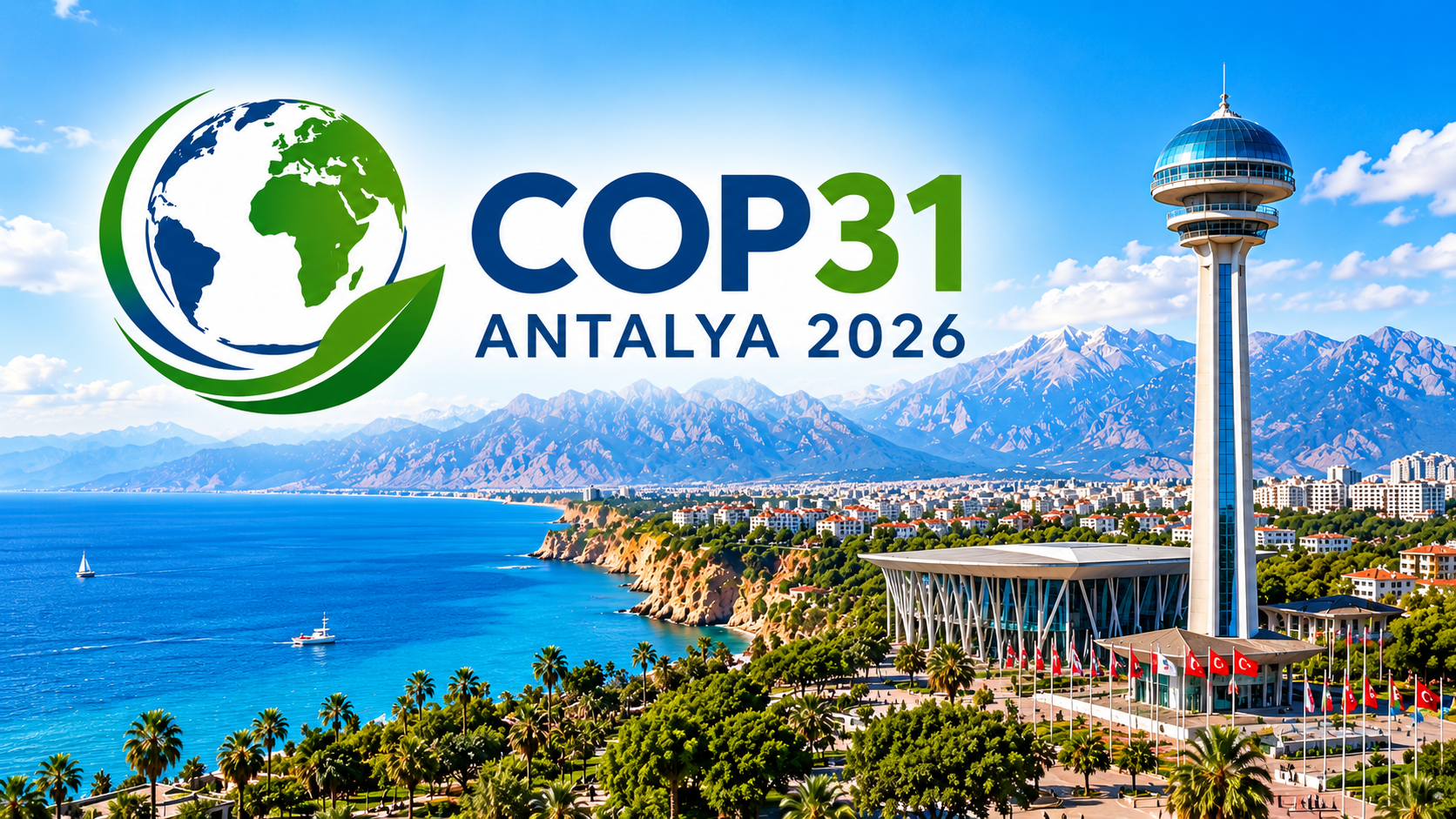
The 31st Conference of the Parties (COP31) to the United Nations Framework Convention on Climate Change (UNFCCC) is scheduled to take place from 9 to 20 November 2026 in Antalya, Türkiye.
COP31 has attracted international attention because of its unique leadership arrangement. Türkiye will host the conference and hold the COP Presidency, while Australia will serve as the President of Negotiations.
Murat Kurum, Türkiye's Minister of Environment, Urbanisation and Climate Change, has been nominated as COP31 President. Chris Bowen, Australia's Minister for Climate Change and Energy, will lead the negotiations.
The conference will focus on implementing the Paris Agreement, reducing greenhouse gas emissions, strengthening climate finance and helping vulnerable countries adapt to climate change.
Key Facts: COP31 2026
Particulars | Details |
|---|---|
Conference | COP31 |
Full Name | 31st Conference of the Parties |
Convention | UNFCCC |
Dates | 9–20 November 2026 |
Host City | Antalya |
Host Country | Türkiye |
Venue | Antalya Expo Center |
COP31 President-designate | Murat Kurum |
President of Negotiations | Chris Bowen |
Negotiations Led By | Australia |
World Leaders' Summit | 11–12 November 2026 |
Pre-COP Meeting | Fiji, 5–8 October 2026 |
Previous Conference | COP30, Belém, Brazil (2025) |
Why Are Türkiye and Australia Sharing Responsibilities?
Türkiye and Australia both sought to host COP31.
Following negotiations during COP30 in Brazil in November 2025, an agreement was reached to divide responsibilities between the two countries.
Under this arrangement:
Türkiye's Responsibilities
Host COP31 in Antalya.
Hold the COP Presidency.
Manage the conference's Action Agenda.
Coordinate the overall hosting arrangements.
Australia's Responsibilities
Lead the formal climate negotiations.
Serve as President of Negotiations.
Work with Pacific island countries to highlight their climate priorities.
This arrangement allows Türkiye to host the conference while giving Australia a major role in directing negotiations.
What is COP?
COP stands for Conference of the Parties.
It is the decision-making body of the United Nations Framework Convention on Climate Change (UNFCCC).
The conference brings together countries to discuss global climate action, including emission reductions, climate finance, adaptation and implementation of international climate agreements.
The first COP meeting was held in Berlin, Germany, in 1995.
Important Facts About UNFCCC
Particulars | Details |
|---|---|
Full Form | United Nations Framework Convention on Climate Change |
Adopted | 1992 |
Entered into Force | 21 March 1994 |
Secretariat Headquarters | Bonn, Germany |
First COP | Berlin, Germany (1995) |
Major Agreement | Paris Agreement (2015) |
Major Climate Negotiations Expected at COP31
1. Climate Finance
Climate finance refers to financial resources provided to support efforts to reduce greenhouse gas emissions and adapt to climate change.
Developing countries seek greater access to affordable and predictable funding for clean energy, resilient infrastructure and climate adaptation.
Climate finance is expected to remain a major negotiating issue at COP31.
2. Climate Change Adaptation
Adaptation involves preparing for and responding to the effects of climate change.
Examples include flood protection, drought-resistant agriculture, heat action plans, early warning systems and climate-resilient infrastructure.
COP31 discussions will address ways to strengthen adaptation planning, implementation and financial support.
3. Greenhouse Gas Emission Reduction
Countries are expected to discuss stronger implementation of national climate commitments.
These commitments are known as Nationally Determined Contributions (NDCs) under the Paris Agreement.
NDCs describe the actions countries intend to take to reduce emissions and address climate change.
4. Just Transition
A just transition means moving towards a low-carbon economy while protecting workers, communities and vulnerable populations.
The negotiations are expected to examine ways to ensure that the energy transition supports employment, social protection and equitable development.
5. Renewable Energy and Electrification
COP31 preparations have emphasised the expansion of renewable energy and electrification.
One initiative under discussion is the 35 by 35 Global Electrification Pledge, which aims to increase electricity's share of global final energy consumption to 35% by 2035.
6. Loss and Damage
Loss and damage refers to harmful climate impacts that cannot be fully prevented through mitigation or adaptation.
These may include damage caused by extreme weather, sea-level rise and other climate-related disasters.
Support for particularly vulnerable developing countries remains an important issue in international climate negotiations.
What is the Paris Agreement?
The Paris Agreement is an international climate treaty adopted at COP21 in Paris, France, in December 2015.
It entered into force on 4 November 2016.
Major Objectives
Keep the increase in global average temperature well below 2°C above pre-industrial levels.
Pursue efforts to limit global warming to 1.5°C.
Strengthen countries' ability to adapt to climate impacts.
Align financial flows with low-emission and climate-resilient development.
The Paris Agreement operates through nationally determined climate commitments and periodic reviews of collective progress.
What Happened at Pre-COP31?
Preparatory meetings for COP31 took place in Fiji and Tuvalu from 5 to 8 October 2026.
Australia worked with Pacific island countries to bring attention to the climate challenges facing the Pacific region.
Important concerns included rising sea levels, extreme weather events, climate finance, adaptation and the protection of vulnerable island communities.
These discussions helped shape priorities ahead of the main conference in Antalya.
Why is COP31 Important?
Implementation of Climate Commitments: COP31 will examine how countries can translate climate targets into practical action.
Climate Finance: Developing countries will seek progress on financial support for mitigation and adaptation.
Energy Transition: Renewable energy, electrification and the shift towards low-carbon development will be major areas of discussion.
Pacific Island Concerns: Australia's negotiating role creates an opportunity to highlight the challenges facing Pacific island nations.
International Cooperation: COP31 will provide a platform for countries to negotiate shared responses to climate change.
Important Facts to Remember
Question | Answer |
|---|---|
Where will COP31 be held? | Antalya, Türkiye |
When is COP31 scheduled? | 9–20 November 2026 |
Which country holds the COP31 Presidency? | Türkiye |
Who is the COP31 President-designate? | Murat Kurum |
Which country leads COP31 negotiations? | Australia |
Who is the President of Negotiations? | Chris Bowen |
Where was COP30 held? | Belém, Brazil |
Where was the first COP held? | Berlin, Germany |
When was the Paris Agreement adopted? | 2015 |
Where is the UNFCCC Secretariat headquartered? | Bonn, Germany |
Conclusion
COP31 2026 in Antalya will be an important international climate conference focusing on the implementation of the Paris Agreement, climate finance, adaptation and the global energy transition.
The shared leadership arrangement between Türkiye and Australia is a distinctive feature of the conference.