Allocaecilius nilgiriensis: Newly Identified Species and Biodiversity Significance
Key points
Why in the News?
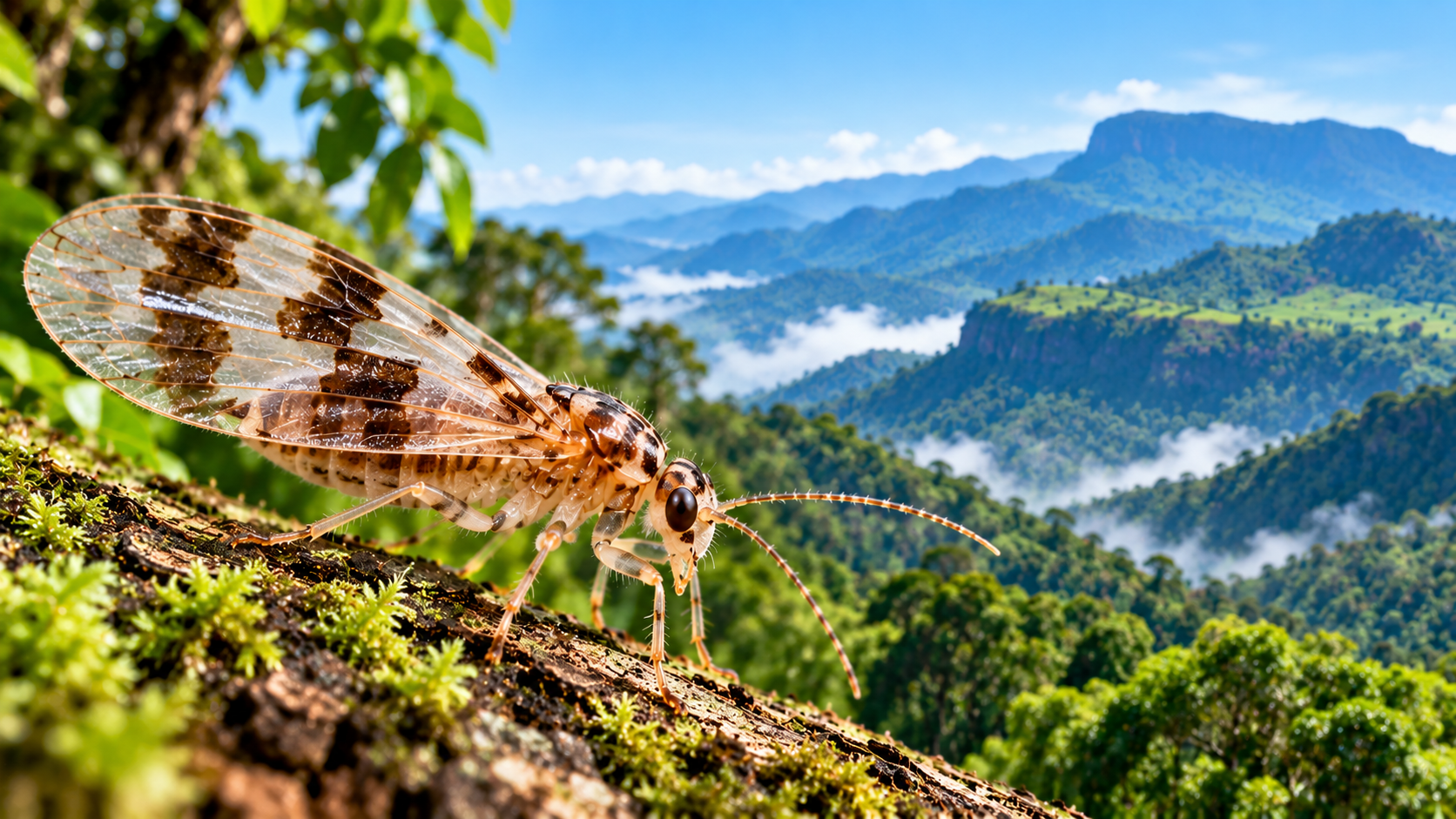
Scientists from the Zoological Survey of India (ZSI) have identified a new insect species named Allocaecilius nilgiriensis from the Nilgiri Hills in the Southern Western Ghats.
The findings were published on 12 October 2026 in the scientific journal Zootaxa.
The discovery is significant because it represents only the second species of the genus Allocaecilius recorded from India.
The new species belongs to a group of small insects commonly known as barklice.
Key Facts: Allocaecilius nilgiriensis
Particulars | Details |
|---|---|
Scientific Name | Allocaecilius nilgiriensis |
Common Group | Barklice |
Order | Psocodea |
Family | Pseudocaeciliidae |
Genus | Allocaecilius |
Discovering Organisation | Zoological Survey of India |
Discovery Region | Nilgiri Hills, Southern Western Ghats |
States | Tamil Nadu and Kerala |
Habitat | Shola and evergreen rainforests |
Scientific Journal | Zootaxa |
Publication Date | 12 October 2026 |
Indian Record | Second species of the genus |
Reported Global Species Count | 13 |
What is Allocaecilius nilgiriensis?
Allocaecilius nilgiriensis is a newly described species of barklouse found in moist forest habitats.
Barklice are small insects commonly associated with tree bark, leaves and other vegetation.
They generally feed on fungi, algae, lichens, mould and organic debris.
Despite their name, barklice are not the same as parasitic lice that live on humans and animals.
The newly discovered species was named after the Nilgiri Mountains, where it was found.
Important Physical Characteristics
Characteristic | Description |
|---|---|
Forewings | Distinctive brown patches in cells R1, R3 and R5 |
Male Anatomy | Thumb-like structures on the hypandrium |
Female Anatomy | Deeply indented subgenital plate |
Identification | Distinctive anatomical features used in taxonomy |
These features help scientists distinguish the species from other members of the genus.
Where Was the Species Discovered?
The species was discovered in the Southern Western Ghats, covering forest habitats in Tamil Nadu and Kerala.
Its reported habitats include moist, shaded forest environments, particularly high-altitude shola and evergreen rainforests.
What Are Shola Forests?
Shola forests are patches of tropical montane evergreen forests commonly found in the higher elevations of the Western Ghats.
They are often surrounded by grasslands and support specialised plant and animal communities.
Shola ecosystems are important for biodiversity conservation and water regulation.
Ecological Importance of Barklice
Barklice contribute to forest ecosystem processes by feeding on microorganisms and organic material.
Their ecological roles include:
Consuming fungi, mould and algae.
Feeding on lichens and dead organic debris.
Contributing to the breakdown of organic material.
Supporting nutrient cycling in forest microhabitats.
The discovery highlights the importance of studying small and often overlooked insects in forest ecosystems.
About the Zoological Survey of India
The Zoological Survey of India (ZSI) is a scientific organisation responsible for studying and documenting India's animal diversity.
Particulars | Details |
|---|---|
Organisation | Zoological Survey of India |
Abbreviation | ZSI |
Established | 1 July 1916 |
Headquarters | Kolkata |
Ministry | Ministry of Environment, Forest and Climate Change |
Main Function | Survey, research and documentation of Indian fauna |
About the Nilgiri Hills and Western Ghats
The Nilgiri Hills are part of the Western Ghats in southern India.
The region is known for its montane forests, grasslands and high biodiversity.
Important Facts
Particulars | Details |
|---|---|
Mountain Region | Nilgiri Hills |
Mountain System | Western Ghats |
Important States | Tamil Nadu, Kerala and Karnataka |
Biodiversity Hotspot | Western Ghats–Sri Lanka |
India's First Biosphere Reserve | Nilgiri Biosphere Reserve |
Nilgiri Biosphere Reserve Established | 1986 |
Western Ghats UNESCO Recognition | 2012 |
Why Is the Discovery Important?
Biodiversity Documentation: The discovery adds a new scientifically described species to India's recorded insect diversity.
Taxonomic Research: Its distinctive anatomical characteristics help scientists understand relationships within the genus Allocaecilius.
Western Ghats Biodiversity: The discovery demonstrates the importance of the Southern Western Ghats as a habitat for specialised organisms.
Forest Conservation: Scientific documentation can improve understanding of the species inhabiting sensitive forest ecosystems.
Important Facts to Remember
Question | Answer |
|---|---|
What is Allocaecilius nilgiriensis? | A newly described barklouse species |
Which organisation discovered it? | Zoological Survey of India |
Where was it discovered? | Nilgiri Hills, Southern Western Ghats |
Which states are associated with its distribution? | Tamil Nadu and Kerala |
To which family does it belong? | Pseudocaeciliidae |
Where were the findings published? | Zootaxa |
When was the research published? | 12 October 2026 |
Which forests provide its habitat? | Shola and evergreen rainforests |
How many species of the genus are reported worldwide? | 13 |
What is the importance of this Indian record? | Second recorded species of the genus in India |
Conclusion
The discovery of Allocaecilius nilgiriensis is an important addition to India's documented insect biodiversity.
The species highlights the ecological significance of the Nilgiri Hills and the Southern Western Ghats.
It also demonstrates the importance of scientific surveys and taxonomic research in understanding and conserving lesser-known organisms.