Rare Yellow Burbot Fish Discovered in New York: A One-in-a-Million Genetic Phenomenon
Key points
In the News
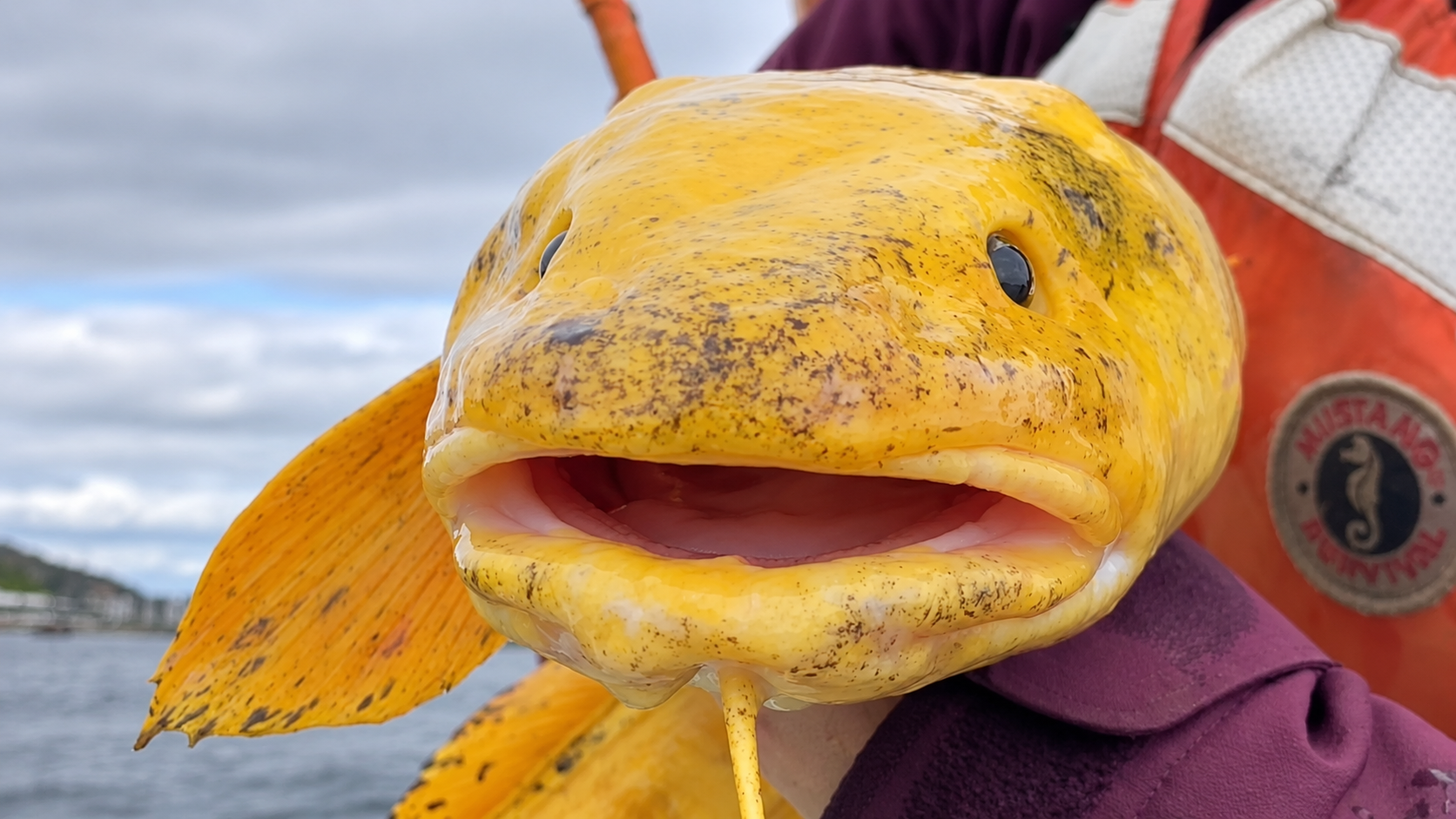
Biologists from the U.S. Fish and Wildlife Service (USFWS) discovered an exceptionally rare yellow-orange Burbot fish (Lota lota) in Oswego Harbor, Lake Ontario, New York, USA. The discovery was made during an aquatic invasive species survey in October 2026 and reported in November 2026.
The fish's unusual coloration is associated with Xanthochromism, a rare genetic pigmentation condition. The discovery has attracted scientific attention because of its rarity and relevance to freshwater biodiversity research.
Background
Burbot is a cold-water freshwater fish belonging to the cod family (Gadidae). It is naturally found in deep lakes and rivers across North America, Europe and Asia.
Normally, Burbot fish have brown, olive or dark mottled coloration that helps them blend into their surroundings.
However, the recently discovered fish displayed an unusual yellow-orange appearance due to Xanthochromism.
The fish was reportedly underweight and appeared unhealthy. It was transferred to Cornell University College of Veterinary Medicine for further scientific examination.
Key Highlights
Discovery Location: Oswego Harbor, Lake Ontario, New York.
Species: Burbot (Lota lota).
Rare Condition: Xanthochromism.
Discovering Agency: U.S. Fish and Wildlife Service.
Research Institution: Cornell University College of Veterinary Medicine.
Significance: Rare genetic variation and freshwater biodiversity monitoring.
What Is Xanthochromism?
Xanthochromism is a rare pigmentation condition characterized by unusually bright yellow or orange coloration in animals.
It is associated with genetic changes affecting normal pigmentation.
Related Pigmentation Conditions:
Albinism: Reduced or absent melanin pigmentation.
Melanism: Unusually dark pigmentation.
Xanthochromism: Abnormal yellow or orange coloration.
Important Facts for Competitive Exams
1. Burbot Fish (Lota lota): Burbot is the only freshwater member of the cod family (Gadidae). It generally inhabits cold, deep freshwater lakes and rivers.
2. Lake Ontario: Lake Ontario is one of North America's five Great Lakes. It lies along the United States–Canada border and drains into the St. Lawrence River.
3. U.S. Fish and Wildlife Service (USFWS): A federal agency under the U.S. Department of the Interior responsible for conserving fish, wildlife, plants and natural habitats.
4. Aquatic Invasive Species: Non-native aquatic organisms that can threaten native biodiversity and disrupt freshwater ecosystems. Monitoring programmes help detect and manage their spread.
5. Environmental DNA (eDNA): Genetic material collected from environmental samples such as water or soil. Scientists use eDNA analysis to identify species without directly capturing them.
6. Biodiversity Conservation: Studying rare genetic variations helps researchers understand biological diversity and monitor changes in freshwater ecosystems.
Quick Revision
A rare yellow-orange Burbot fish (Lota lota) was discovered in Lake Ontario, New York, by USFWS biologists. Its unusual coloration is associated with Xanthochromism, a rare pigmentation condition. The discovery highlights genetic variation and the importance of freshwater biodiversity conservation.