Indian Vulture Travels 10,767 km, Spotted in Latur for First Time
Key points
In the News
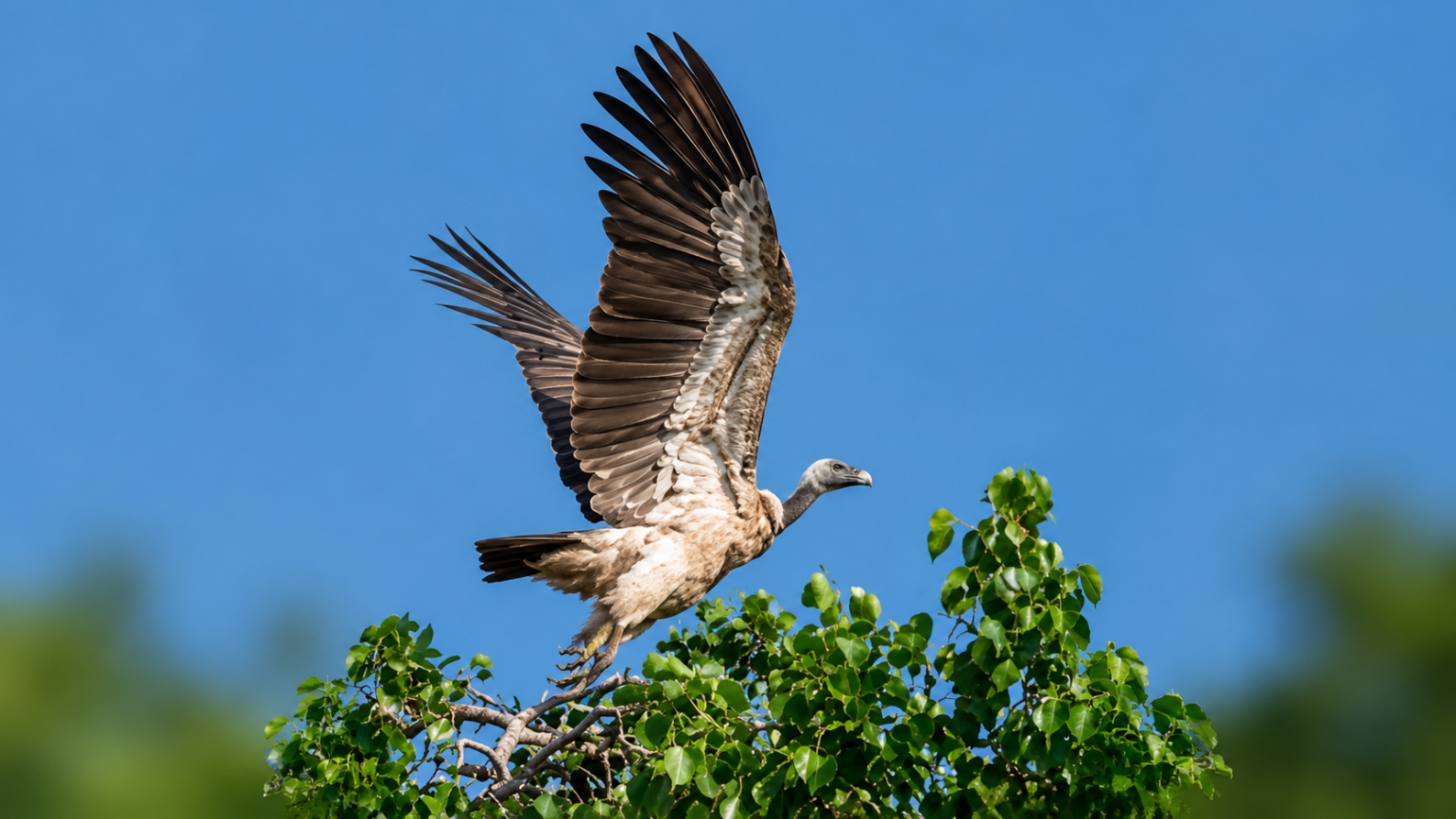
A seven-year-old female Indian vulture (Gyps indicus), identified by tracking code F14/M99, has been recorded for the first time in Latur district, Maharashtra. The critically endangered bird travelled approximately 10,767 km across Maharashtra, Madhya Pradesh and Karnataka, marking an important development in India's vulture conservation efforts.
Background
The Indian vulture is a critically endangered scavenging bird that plays an essential role in maintaining ecological balance by consuming animal carcasses.
The tracked vulture was bred at the Bombay Natural History Society (BNHS) conservation breeding centre in Pinjore, Haryana. It was among 15 vultures released into the Somthana forest range of Melghat Tiger Reserve, Maharashtra.
The bird was fitted with a satellite transmitter and coloured leg bands to monitor its movements and survival in the wild.
Key Highlights
Species: Indian Vulture (Gyps indicus)
Tracking identification: F14/M99
Age and sex: Seven-year-old female
Distance travelled: 10,767 km
States covered: Maharashtra, Madhya Pradesh and Karnataka
First recorded sighting: Ausa tehsil, Latur district, Maharashtra
Conservation breeding centre: BNHS, Pinjore, Haryana
Release location: Melghat Tiger Reserve, Maharashtra
Wildlife enthusiast Abhijit Rasal first observed the bird in Latur. Forest officials and wildlife experts subsequently confirmed its identity using its leg bands.
The sighting demonstrates the potential for captive-bred vultures to survive independently after release and contribute to wild populations.
Important Facts for Competitive Exams
Indian Vulture
Scientific name: Gyps indicus
IUCN Red List status: Critically Endangered
Family: Accipitridae
Ecological role: Scavenger responsible for removing animal carcasses
Major threat: Veterinary diclofenac poisoning
Why Are Vultures Declining?
Diclofenac, a veterinary anti-inflammatory drug, can cause fatal kidney failure in vultures that consume carcasses of treated livestock.
Meloxicam is considered a safer veterinary alternative.
Conservation Significance
Satellite tracking helps conservationists understand movement patterns, survival rates, habitat use and the effectiveness of captive-breeding and reintroduction programmes.
Quick Revision
Indian vulture scientific name: Gyps indicus.
IUCN conservation status: Critically Endangered.
Satellite-tracked vulture identification: F14/M99.
Total reported movement: 10,767 km.
First Latur sighting: Ausa tehsil, Maharashtra.
Conservation breeding organisation: Bombay Natural History Society.
Release site: Melghat Tiger Reserve.
Major threat to vultures: Veterinary diclofenac.
Safer veterinary alternative: Meloxicam.