China’s CERES-2 Rocket Successfully Places Four Satellites in Orbit
Key points
Why in the News?
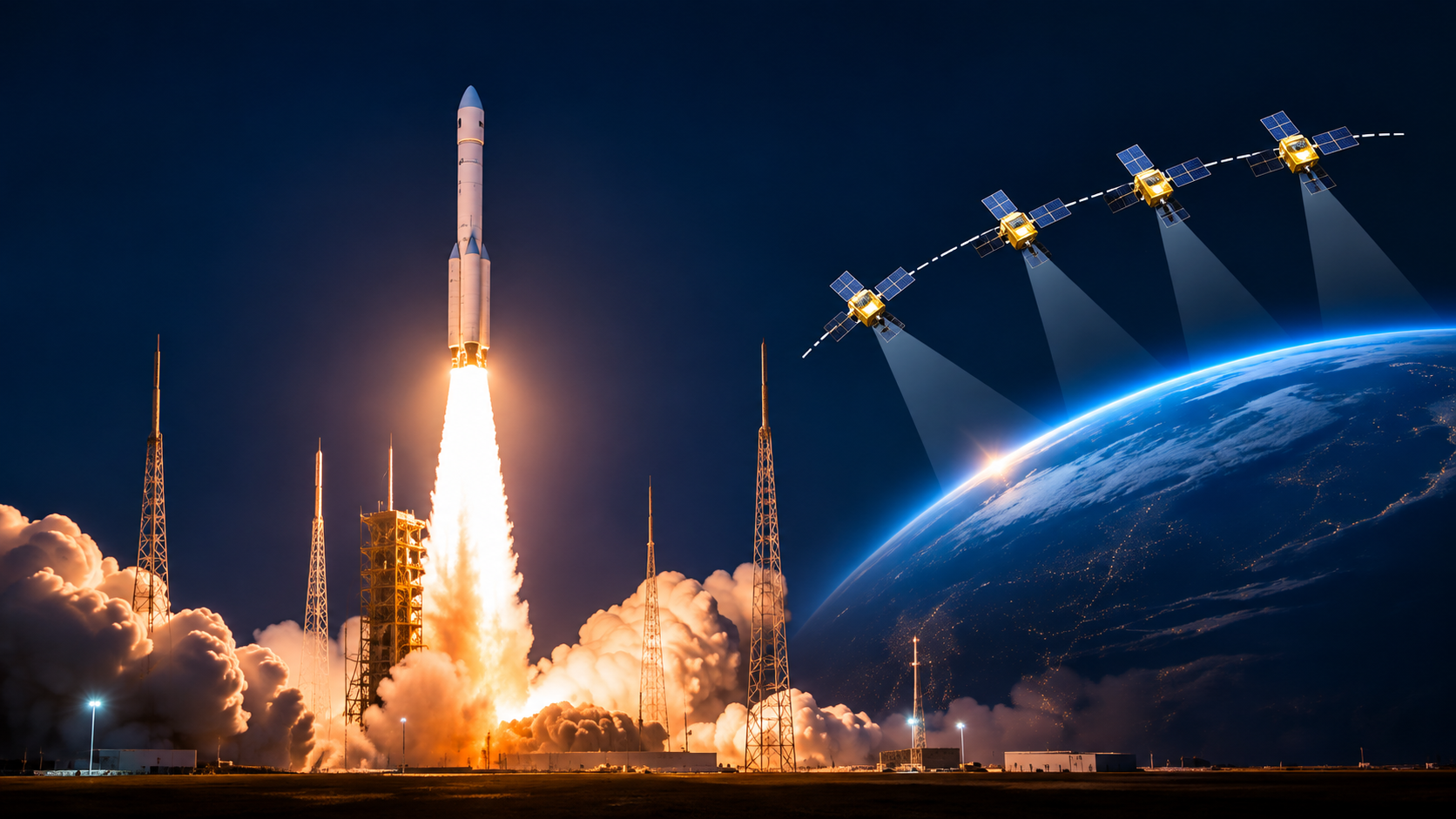
China successfully launched the CERES-2 Y3 carrier rocket from the Jiuquan Satellite Launch Center in northwest China on 7 November 2026. The rocket lifted off at 7:37 a.m. Beijing Time and placed four satellites into a planned 535-kilometre sun-synchronous orbit. The mission marks an important achievement for China's growing commercial space industry.
Satellites and Their Applications
The CERES-2 rocket carried four satellites designed for different scientific and commercial purposes.
Guanlan Experimental Satellite: Developed for ocean remote sensing and monitoring.
Yunyao-1 28: Designed for commercial meteorology and weather-related observations.
Zhongbei Daxue-1: Developed for university-led scientific research.
Juntian-1 06A: Designed for space situational awareness and monitoring activities in orbit.
About CERES-2 Launch Vehicle
The CERES-2 rocket was developed by Galactic Energy (Beijing Galactic Energy Space Technology Co., Ltd.), a Chinese commercial aerospace company.
It is an upgraded version of the earlier CERES-1 rocket and features three solid-propellant stages and a liquid upper stage. The rocket has a liftoff mass of approximately 100 tonnes.
The launch marked the rocket's second flight after its unsuccessful debut on 17 January 2026, when an anomaly prevented it from reaching orbit.
The mission was also the 26th flight of the CERES rocket family and Galactic Energy's 27th orbital launch attempt.
Important Facts for Exams
Launch Date: 7 November 2026.
Launch Centre: Jiuquan Satellite Launch Center, China.
Rocket Manufacturer: Galactic Energy.
Number of Satellites: Four.
Target Orbit: 535-km sun-synchronous orbit.
Rocket Stages: Three solid-propellant stages and one liquid upper stage.
Upper-Stage Propellant: Hydrazine.
Payload Capacity: 1,600 kg to a 500-km low Earth orbit and 1,300 kg to a 500-km sun-synchronous orbit.
Predecessor: CERES-1 rocket.