JAXA Unveils Chandrayaan-5/LUPEX Rover Prototype for India–Japan Lunar Mission
Key points
In the News
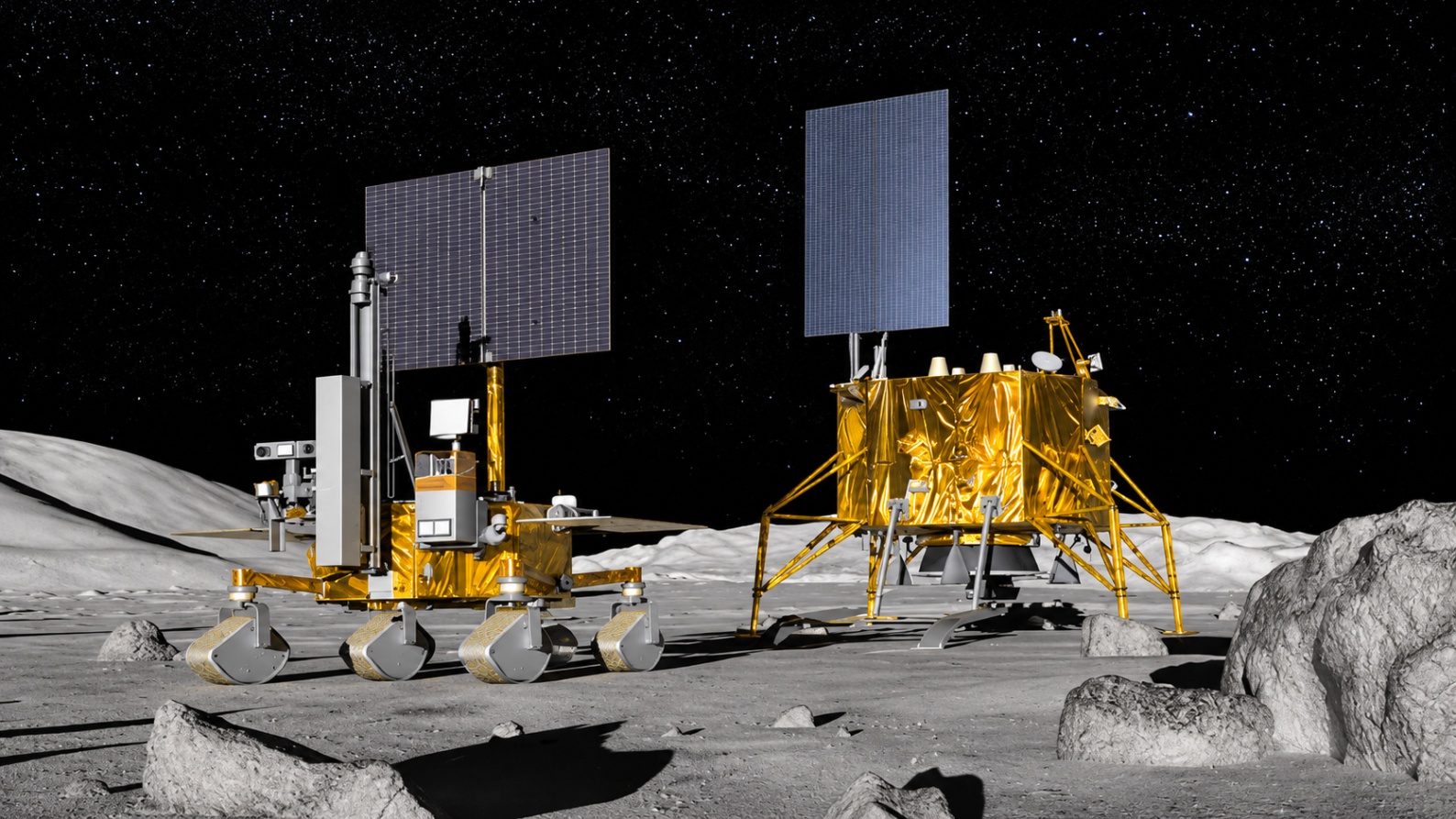
The Japan Aerospace Exploration Agency (JAXA) unveiled the prototype rover for the Chandrayaan-5/Lunar Polar Exploration (LUPEX) mission on 25 November 2026 at the Chofu Aerospace Centre in Tokyo, Japan. The mission is a collaborative initiative between India and Japan to explore lunar water resources.
Background
Chandrayaan-5, also known as LUPEX, is a joint lunar exploration mission of ISRO and JAXA. The mission aims to investigate water ice and other resources near the Moon’s south pole to support sustainable space exploration.
The Government of India granted financial approval for the mission on 10 March 2025.
Key Highlights
Mission Name: Chandrayaan-5/LUPEX
Full Form: Lunar Polar Exploration
Participating Countries: India and Japan
Space Agencies: ISRO and JAXA
Expected Launch: 2028 or later
Launch Vehicle: Japan’s H3 rocket
Launch Site: Tanegashima Space Centre, Japan
Exploration Region: Lunar South Pole
Rover Weight: Approximately 350 kg
Mission Duration: Approximately 3.5 months after landing
Drilling Depth: Up to 1.5 metres
Role of Participating Space Agencies
ISRO: Development of the lunar lander and scientific instruments.
JAXA: Development of the lunar rover and launch vehicle.
NASA: Neutron Spectrometer for detecting subsurface water.
ESA: Exospheric Mass Spectrometer for studying the lunar exosphere.
Objectives of the LUPEX Mission
Detect and analyse water ice near the lunar south pole.
Study the distribution, quantity and quality of lunar water.
Investigate Permanently Shadowed Regions (PSRs).
Assess the potential use of lunar water for producing rocket fuel.
Develop technologies for future sustainable lunar exploration.
Important Facts for Competitive Exams
ISRO: Indian Space Research Organisation.
JAXA: Japan Aerospace Exploration Agency.
ESA: European Space Agency.
Lunar Regolith: Loose soil, dust and rocky material covering the Moon’s surface.
Permanently Shadowed Regions: Areas on the Moon that never receive direct sunlight.
Chandrayaan-1: Launched in 2008.
Chandrayaan-2: Launched in 2019.
Chandrayaan-3: Successfully achieved a soft landing on the Moon on 23 August 2023.
National Space Day (India): 23 August.
Significance
The mission strengthens India–Japan space cooperation and advances research into lunar resources. Water recovered from the Moon could potentially support future human settlements, fuel production and deep-space exploration.
Quick Revision
JAXA unveiled the Chandrayaan-5/LUPEX rover prototype for the joint India–Japan mission aimed at exploring water resources near the lunar south pole.