El Niño Intensifies, Expected to Persist Until March 2027: NOAA Forecast
Key points
In the News
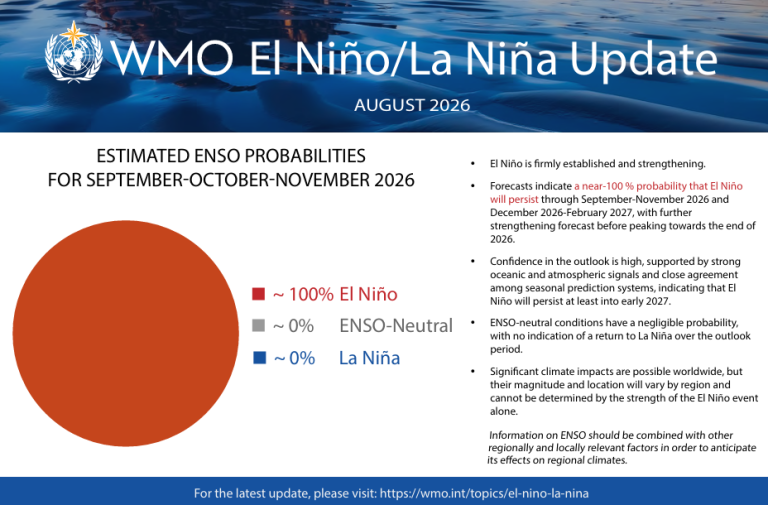
The National Oceanic and Atmospheric Administration (NOAA) has warned that the ongoing El Niño phenomenon is intensifying, with strong to very strong conditions likely to persist through January–March 2027.
According to NOAA's latest forecast, released on 12 November 2026, there is more than a 79% probability of strong to very strong El Niño conditions during this period.
The development could influence global rainfall patterns, temperatures, drought conditions and extreme weather events.
Background
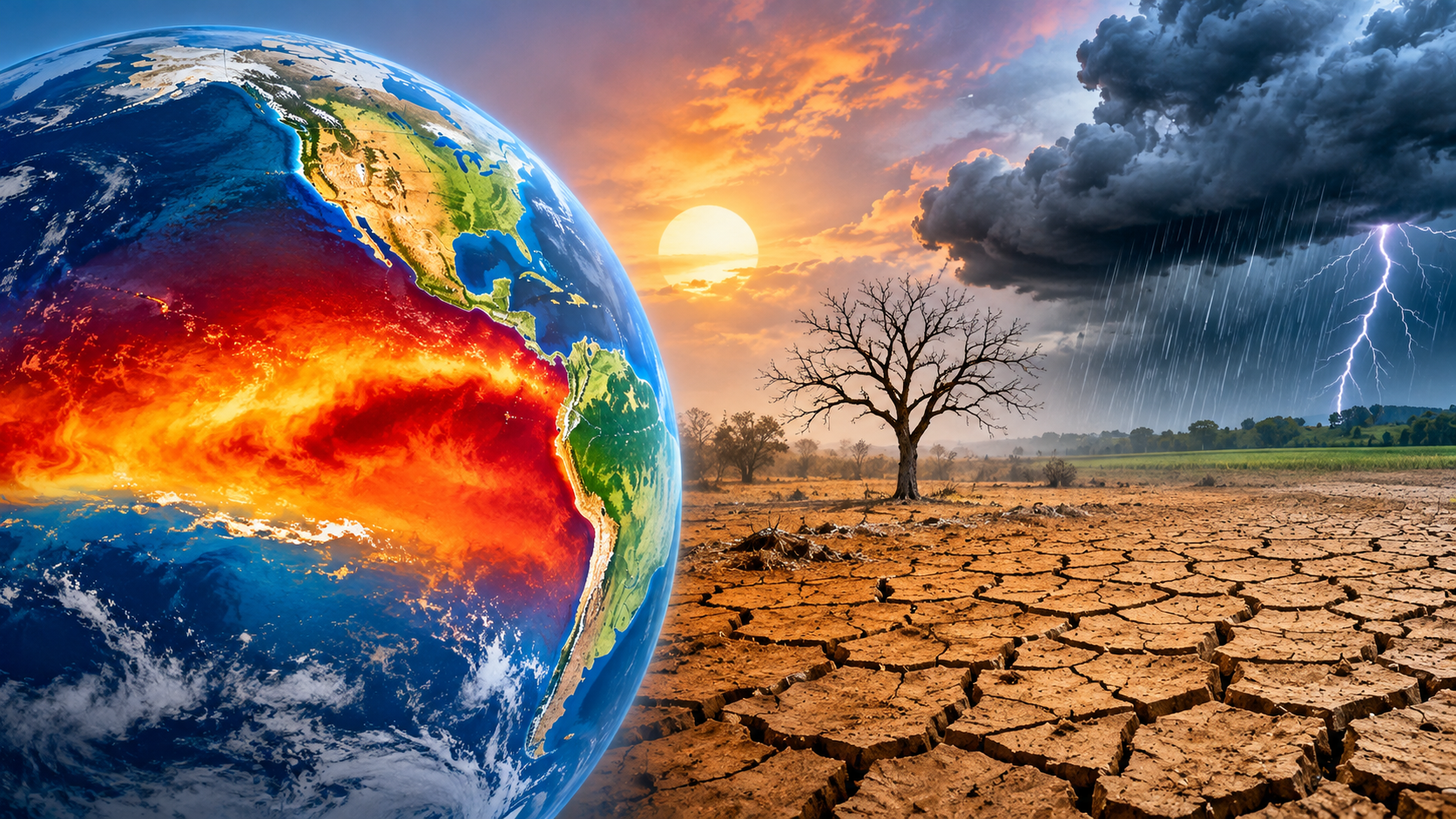
El Niño is a natural climate phenomenon characterised by the abnormal warming of surface waters in the central and eastern equatorial Pacific Ocean.
It forms part of the El Niño–Southern Oscillation (ENSO), a recurring climate pattern that influences atmospheric circulation, rainfall and temperatures worldwide.
ENSO has three phases: El Niño (warm phase), La Niña (cool phase) and ENSO-neutral conditions.
Key Highlights
Forecasting Agency: National Oceanic and Atmospheric Administration (NOAA), United States.
Latest Forecast: 12 November 2026.
Expected Duration: Strong to very strong conditions likely through January–March 2027.
Forecast Probability: More than 79%.
Affected Region: Central and eastern equatorial Pacific Ocean.
Ocean Temperature: The Niño 3.4 index reached approximately +2.5°C.
Peak Intensity: El Niño is expected to strengthen further before weakening in early 2027.
Global Impact: Increased likelihood of temperature anomalies, droughts, heavy rainfall and changes in storm patterns.
India's Concern: El Niño can influence monsoon rainfall, agricultural productivity and water availability, although its effects vary between seasons.
Important Facts for Competitive Exams
1. El Niño–Southern Oscillation (ENSO): ENSO is a natural ocean-atmosphere climate pattern originating in the tropical Pacific Ocean. It affects global weather conditions through changes in sea-surface temperatures, atmospheric pressure and trade winds.
2. El Niño: El Niño is the warm phase of ENSO, associated with unusually warm sea-surface temperatures in the central and eastern equatorial Pacific. It often weakens the Walker Circulation and can reduce Indian summer monsoon rainfall.
3. La Niña: La Niña is the cool phase of ENSO, characterised by below-average sea-surface temperatures in the central and eastern equatorial Pacific. It is often associated with stronger trade winds and can favour increased monsoon rainfall over India.
4. Walker Circulation: It is an atmospheric circulation system over the tropical Pacific Ocean involving rising air over warmer waters and sinking air over cooler regions. El Niño weakens or shifts this circulation, influencing global rainfall patterns.
5. National Oceanic and Atmospheric Administration (NOAA): NOAA is a United States government scientific agency responsible for monitoring oceans, weather, climate and atmospheric conditions. Its Climate Prediction Center regularly issues ENSO forecasts.
Quick Revision
Particulars | Details |
|---|---|
Climate Phenomenon | El Niño |
Climate System | ENSO |
Forecasting Agency | NOAA |
Latest Forecast | 12 November 2026 |
Expected Persistence | January–March 2027 |
Probability | More than 79% |
Niño 3.4 Index | +2.5°C |
Main Region | Equatorial Pacific Ocean |
El Niño Phase | Warm |
La Niña Phase | Cool |
Major Concern | Global Climate and Rainfall Changes |