GCC Military Command Kuwait 2026
Key points
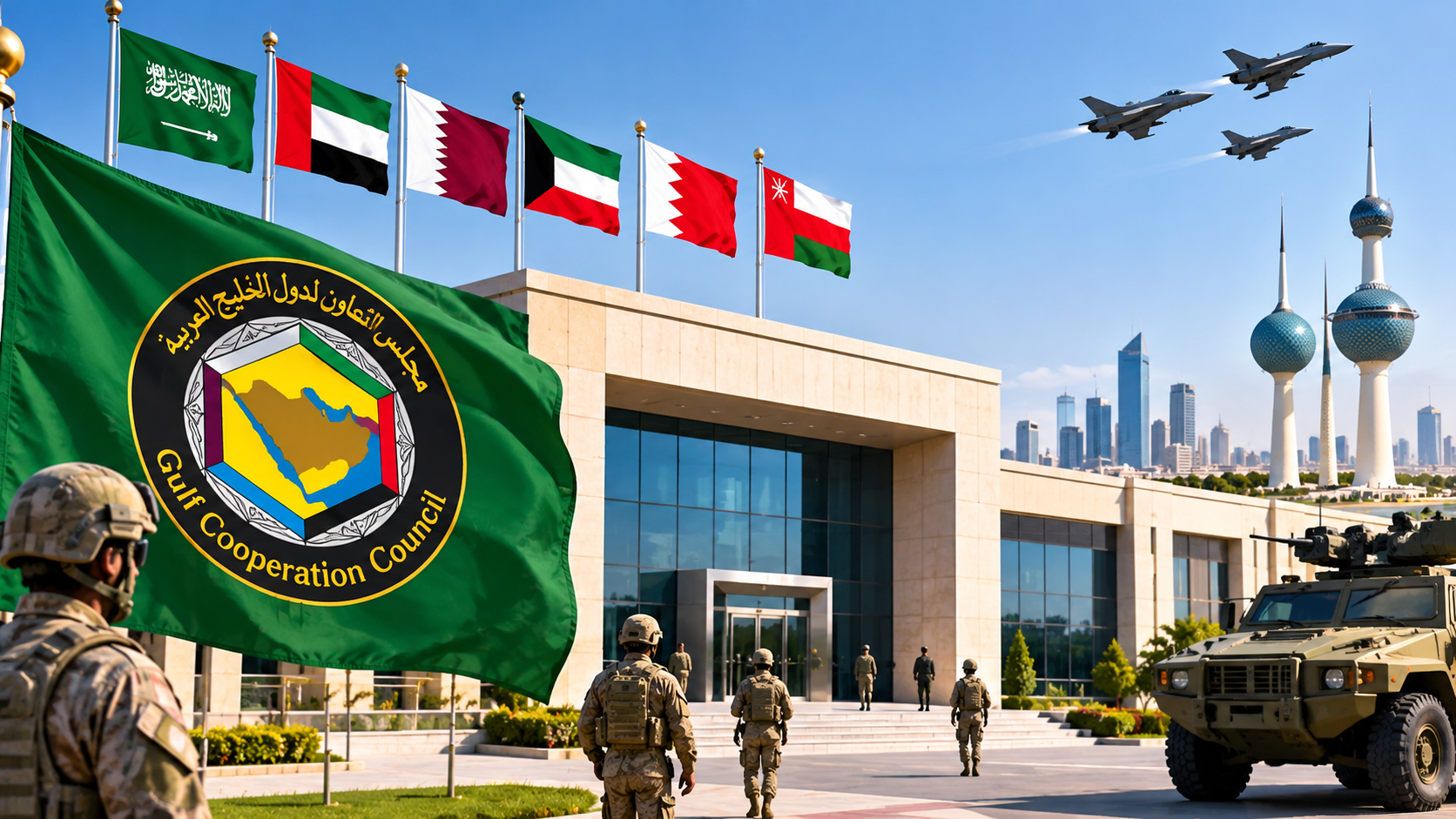
The Gulf Cooperation Council (GCC) has approved the establishment of an advanced military command headquarters in Kuwait to strengthen regional defence cooperation and collective security among its six member countries.
The decision was announced on 10 November 2026 during the 23rd session of the GCC Joint Defence Council, held in Manama, Bahrain.
GCC Secretary-General Jasem Mohamed Albudaiwi confirmed that appropriate military forces would be allocated to the new command headquarters. The initiative aims to enhance joint military readiness, improve defence coordination and strengthen regional stability amid growing security challenges in West Asia.
Key Highlights
Particulars | Details |
|---|---|
Organisation | Gulf Cooperation Council (GCC) |
Major Decision | Establishment of an Advanced Military Command |
New Headquarters Location | Kuwait |
Announcement Date | 10 November 2026 |
Meeting | 23rd GCC Joint Defence Council |
Meeting Venue | Manama, Bahrain |
Meeting Chairperson | Lt Gen Abdullah bin Hassan Al Nuaimi |
GCC Secretary-General | Jasem Mohamed Albudaiwi |
Main Objective | Collective Defence and Regional Security |
GCC Member Countries | Six |
What Is the New GCC Advanced Military Command?
The newly approved Advanced Command in Kuwait will function as part of the GCC's existing Unified Military Command structure.
The initiative is designed to strengthen military cooperation among member states and improve their ability to respond collectively to regional security threats.
The GCC defence ministers also approved the allocation of appropriate military forces to support the new command.
However, the exact number of personnel, operational responsibilities and implementation timeline have not yet been publicly disclosed.
The new command is intended to strengthen the existing defence coordination framework rather than replace the Unified Military Command.
Major Objectives of the GCC Military Command
1. Strengthening Collective Defence
The new headquarters will support coordinated defence efforts among GCC member states and improve their collective ability to respond to common threats.
2. Improving Military Coordination
The initiative aims to strengthen communication and cooperation between the armed forces of the six Gulf countries.
3. Enhancing Regional Security
The command will contribute to regional security planning and cooperation in protecting member states' sovereignty, territories and strategic interests.
4. Strengthening Operational Readiness
Improved military coordination may help member states respond more effectively during security emergencies and regional crises.
Background: GCC Unified Military Command
The GCC established its Unified Military Command in December 2013 during a summit held in Kuwait.
The command was created to strengthen defence integration and coordinate joint military operations among member countries.
Its existing headquarters is located in Riyadh, Saudi Arabia.
The approval of an advanced command in Kuwait represents a further step in developing the GCC's collective military capabilities.
Why Is the Decision Important?
The decision comes amid heightened security tensions in West Asia, including concerns over missile and drone attacks, maritime security and regional military conflicts.
The Gulf region plays a major role in global energy security because several GCC countries are leading exporters of petroleum and natural gas.
Important maritime routes, particularly the Strait of Hormuz, connect Gulf energy producers with international markets.
Strengthening regional defence cooperation is therefore important not only for GCC member countries but also for international trade and energy security.
Gulf Cooperation Council (GCC): Background
The Gulf Cooperation Council is a regional political, economic and security organisation established on 25 May 1981.
Its main objective is to promote cooperation, coordination and integration among Gulf Arab countries.
The organisation works in areas such as economic development, trade, defence, security, education and regional diplomacy.
GCC Member Countries
Country | Capital |
|---|---|
Bahrain | Manama |
Kuwait | Kuwait City |
Oman | Muscat |
Qatar | Doha |
Saudi Arabia | Riyadh |
United Arab Emirates | Abu Dhabi |
The permanent headquarters of the GCC is located in Riyadh, Saudi Arabia.
Important Exam Facts for UPSC, SSC, Banking & State PSC
Gulf Cooperation Council (GCC): Established on 25 May 1981, the GCC is a regional organisation promoting political, economic and security cooperation among six Gulf Arab countries.
New Advanced Military Command: On 10 November 2026, GCC defence ministers approved an advanced command headquarters in Kuwait to strengthen collective defence and military coordination.
23rd GCC Joint Defence Council: The meeting was held in Manama, Bahrain, under the chairmanship of Lieutenant General Abdullah bin Hassan Al Nuaimi, Bahrain's Minister of Defence Affairs.
GCC Secretary-General: Jasem Mohamed Albudaiwi announced the decision and emphasised the importance of joint military cooperation for regional stability.
Unified Military Command: Established in December 2013 at a GCC summit in Kuwait, it coordinates joint military planning and strengthens the defence capabilities of member states.
GCC Headquarters: The organisation's permanent headquarters is located in Riyadh, Saudi Arabia.
GCC Member States: Bahrain, Kuwait, Oman, Qatar, Saudi Arabia and the United Arab Emirates are the six members of the organisation.
Strait of Hormuz: This strategically important maritime passage connects the Persian Gulf with the Gulf of Oman and is a major route for global oil and natural gas shipments.
Conclusion
The GCC's approval of an advanced military command headquarters in Kuwait marks an important development in Gulf defence cooperation.
The initiative reflects the commitment of member countries to strengthening collective security, military coordination and regional stability.
The decision is particularly significant for international relations and defence-related current affairs because of the Gulf region's strategic importance to global energy supplies and maritime trade.