India–ASEAN Maritime Security Cooperation 2026: AIME 2026 and Indo-Pacific Relations
Key points
In the News
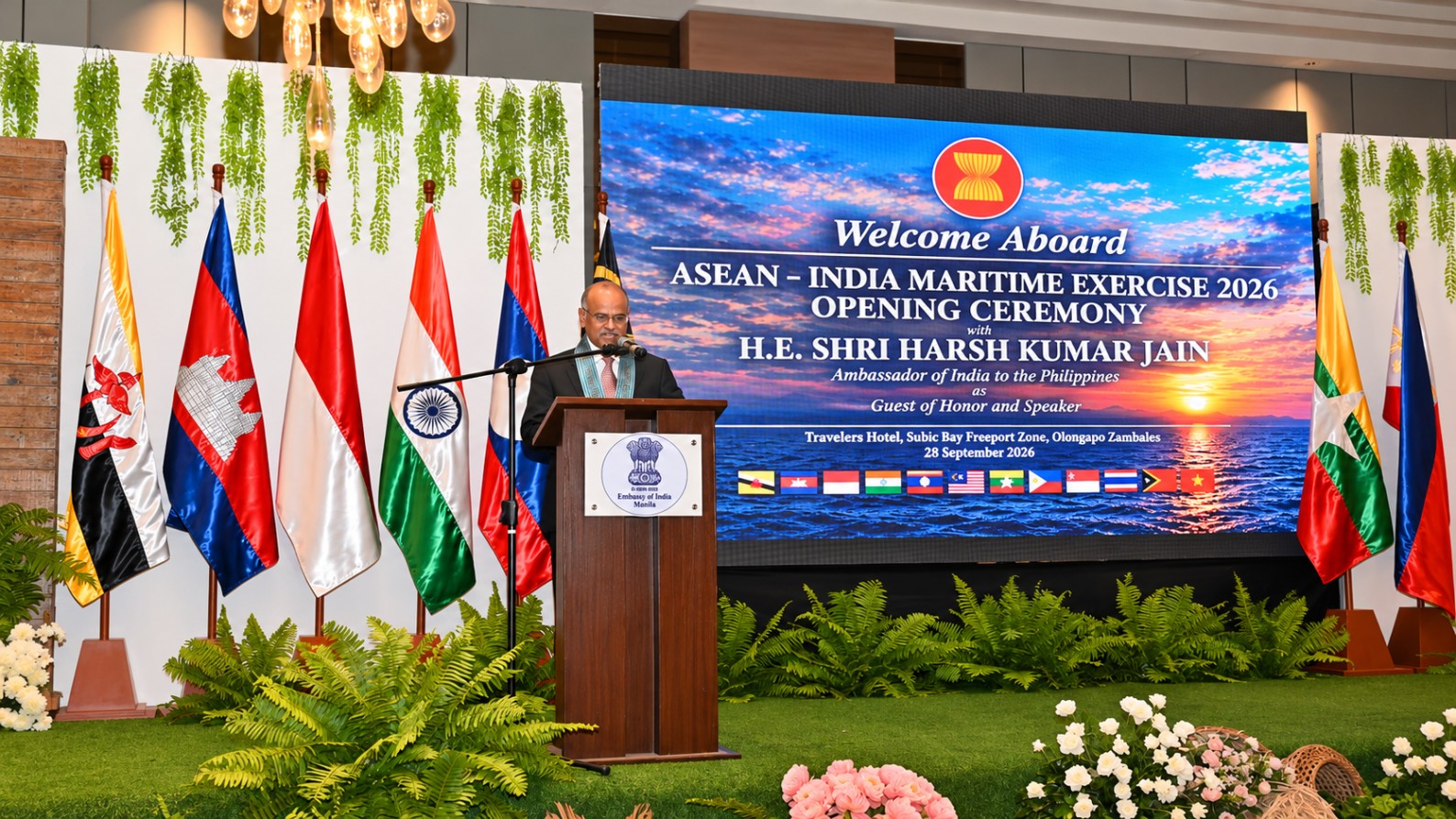
India–ASEAN maritime security cooperation remains an important part of India's Act East Policy and its broader Indo-Pacific strategy. India and the Association of Southeast Asian Nations (ASEAN) are strengthening cooperation in maritime security, naval exercises, freedom of navigation, maritime domain awareness and regional stability.
The partnership is particularly significant because the South China Sea and Indian Ocean are major international trade routes. India supports a free, open, inclusive and rules-based Indo-Pacific region, with ASEAN playing a central role in regional security.
Background
The Association of Southeast Asian Nations (ASEAN) was established on 8 August 1967 through the Bangkok Declaration.
India became an ASEAN Sectoral Dialogue Partner in 1992, a full Dialogue Partner in 1995 and a Summit-level Partner in 2002. The relationship was elevated to a Comprehensive Strategic Partnership in 2022.
Maritime security has become an increasingly important area of cooperation because of challenges such as piracy, illegal fishing, maritime terrorism, trafficking and tensions over disputed waters.
India's Act East Policy, launched in 2014, seeks to strengthen economic, political, cultural and security relations with Southeast Asian countries.
Key Highlights
ASEAN Centrality: India supports ASEAN's central role in the evolving Indo-Pacific regional architecture.
Maritime Security: Cooperation focuses on securing sea lanes, preventing piracy and combating transnational maritime crime.
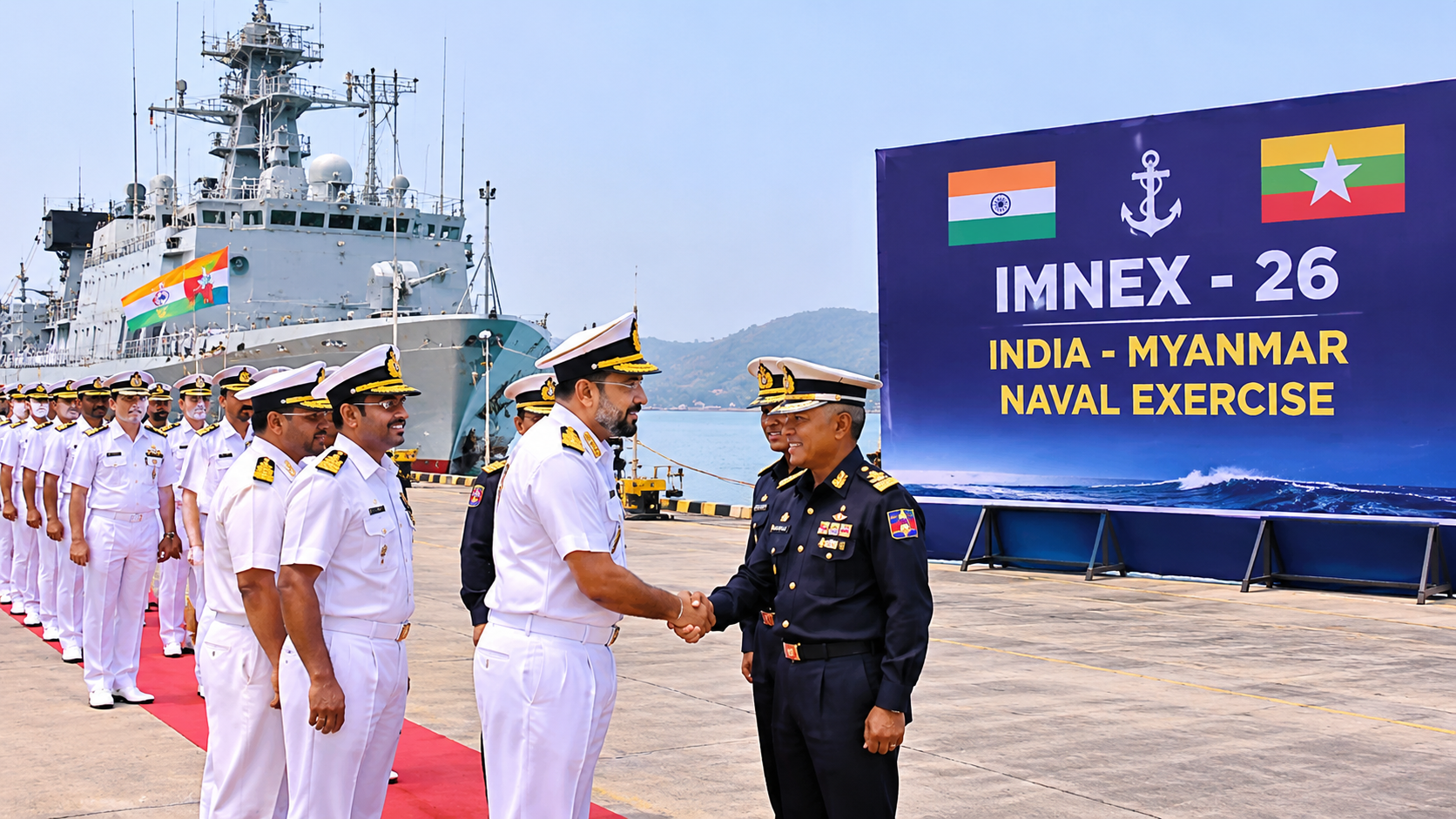
Naval Exercises: India and ASEAN conduct joint naval engagements to improve interoperability and maritime coordination.
South China Sea: India supports freedom of navigation and peaceful settlement of disputes in accordance with international law.
UNCLOS: The United Nations Convention on the Law of the Sea, 1982, provides an important legal framework for maritime rights and responsibilities.
Maritime Domain Awareness: Cooperation includes information sharing, surveillance and monitoring maritime activities.
Humanitarian Assistance: Joint efforts support disaster response, search-and-rescue operations and humanitarian assistance.
Major India–ASEAN Maritime Cooperation Initiatives
1. ASEAN–India Maritime Exercise (AIME)
The inaugural ASEAN–India Maritime Exercise was conducted in May 2023, with activities in Singapore and the South China Sea. It aimed to strengthen maritime cooperation, interoperability and mutual understanding among participating navies.
2. ASEAN Defence Ministers' Meeting Plus (ADMM-Plus)
ADMM-Plus provides a platform for ASEAN countries and their dialogue partners, including India, to cooperate on defence and security matters. Maritime security, counterterrorism and humanitarian assistance are among its major areas of cooperation.
3. ASEAN Outlook on the Indo-Pacific (AOIP)
Adopted in 2019, the AOIP promotes dialogue, cooperation, inclusiveness and ASEAN centrality. Maritime cooperation is one of its four priority areas.
4. Information Sharing and Maritime Surveillance
India promotes maritime domain awareness through cooperation among maritime agencies, information exchange and regional mechanisms that improve understanding of activities at sea.
5. SAGAR Vision
India's Security and Growth for All in the Region (SAGAR) vision, announced in 2015, emphasises maritime security, regional cooperation and sustainable development in the Indian Ocean.
Important Facts for Competitive Exams
1. What is ASEAN?
ASEAN is a regional organisation established in 1967 to promote economic growth, regional stability and cooperation among Southeast Asian countries. Its headquarters is located in Jakarta, Indonesia.
2. What is India's Act East Policy?
Launched in 2014, the Act East Policy aims to deepen India's engagement with Southeast Asia and the wider Indo-Pacific through trade, connectivity, diplomacy and strategic cooperation.
3. What is the ASEAN–India Comprehensive Strategic Partnership?
Established in 2022, it provides an expanded framework for cooperation in areas such as trade, connectivity, maritime security, digital transformation and regional diplomacy.
4. What is UNCLOS?
The United Nations Convention on the Law of the Sea (1982) establishes rules governing maritime zones, navigation rights, exclusive economic zones and the peaceful settlement of maritime disputes.
5. Why is the South China Sea strategically important?
The South China Sea is a major global shipping corridor connecting the Indian and Pacific Oceans. Its strategic importance arises from commercial shipping, fisheries, energy resources and competing territorial claims.
6. What is Maritime Domain Awareness?
Maritime Domain Awareness refers to the effective understanding of activities at sea that may affect security, safety, the economy or the marine environment.
7. What was the first ASEAN–India Maritime Exercise?
The first ASEAN–India Maritime Exercise, AIME 2023, was conducted in May 2023 to enhance naval cooperation and interoperability.
8. What is ASEAN Centrality?
ASEAN Centrality refers to ASEAN's role as a principal convening and coordinating platform for regional dialogue and cooperation in the Indo-Pacific.
Quick Revision
India–ASEAN maritime cooperation is a major component of India's Act East Policy and Indo-Pacific strategy. India became an ASEAN Dialogue Partner in 1995 and established a Comprehensive Strategic Partnership in 2022. The first ASEAN–India Maritime Exercise was held in May 2023. Cooperation focuses on maritime security, freedom of navigation, UNCLOS, naval exercises, ASEAN Centrality and stability in the Indian Ocean and South China Sea.