India Develops First Indigenous H5N1 Bird Flu Vaccine at ICAR-NIHSAD
Key points
In the News
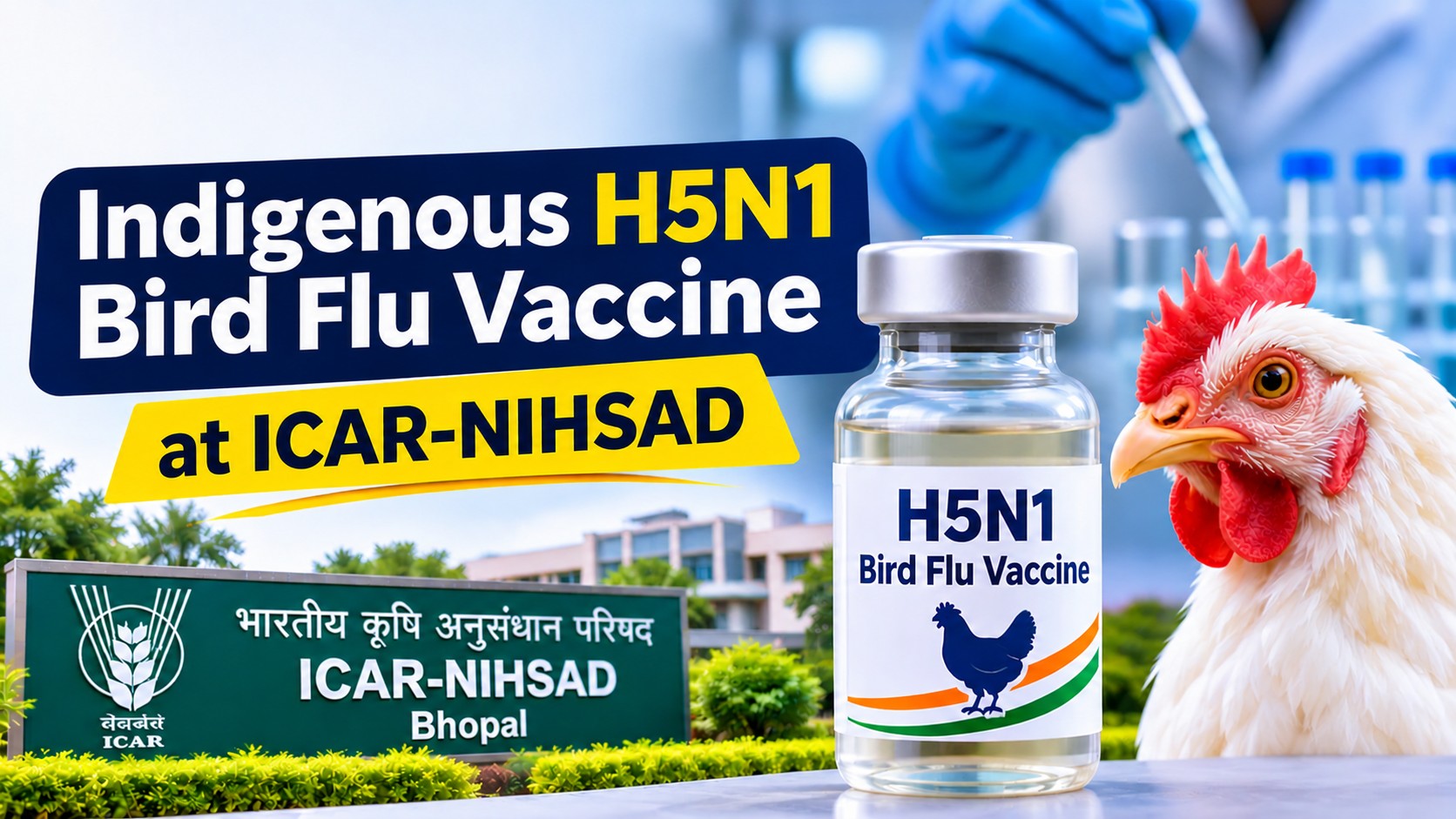
The ICAR-National Institute of High Security Animal Diseases (ICAR-NIHSAD), Bhopal, has developed India's first indigenous inactivated H5N1 (Clade 2.3.2.1a) vaccine for chickens.
Union Minister of Agriculture and Farmers Welfare Shivraj Singh Chouhan is scheduled to dedicate the vaccine to the nation on 20 November 2026 at ICAR-NIHSAD, Bhopal.
The vaccine aims to strengthen poultry disease control and protect chickens against H5N1 strains circulating in India.
Background
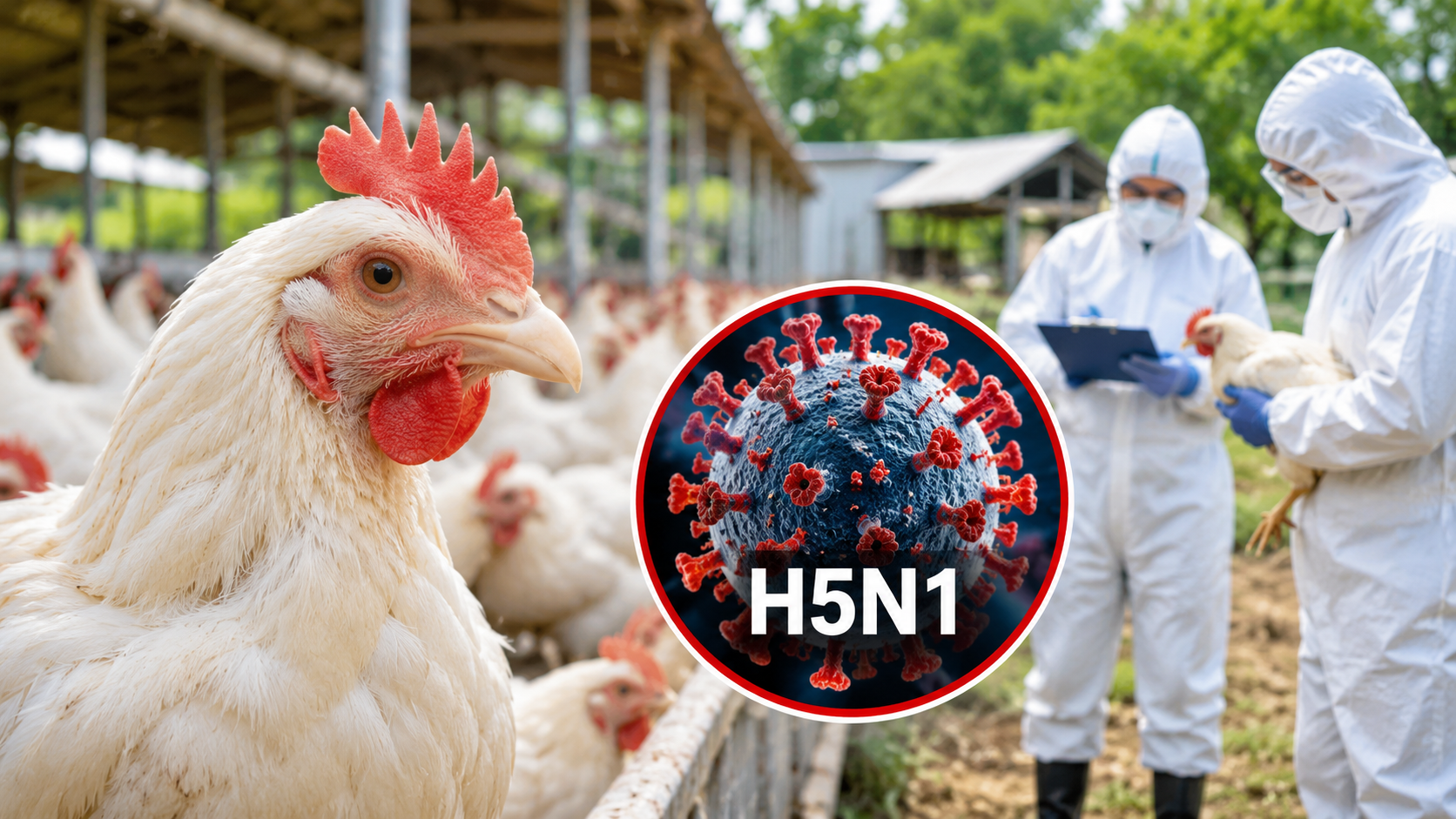
Highly Pathogenic Avian Influenza (HPAI), commonly known as bird flu, is a serious viral disease affecting poultry and other birds.
Bird flu was first detected in India in 2006.
India has recorded more than 500 combined outbreaks involving H5N1 and H5N8 subtypes.
Severe outbreaks can cause nearly 100% mortality among infected poultry.
The disease causes financial losses through bird deaths, culling operations and trade restrictions.
The H5N1 Clade 2.3.2.1a virus has been associated with a large proportion of bird flu outbreaks in chickens.
Key Highlights
Developing Institute: ICAR-NIHSAD, Bhopal, Madhya Pradesh.
Vaccine Type: Inactivated H5N1 vaccine.
Target Virus: Highly Pathogenic Avian Influenza H5N1, Clade 2.3.2.1a.
Target Species: Chickens, not humans.
Purpose: Strengthen poultry disease prevention and reduce outbreak-related losses.
Significance: India's first indigenous vaccine specifically developed against this H5N1 clade.
Important Facts for Competitive Exams
1. What is H5N1?
H5N1 is a subtype of the Influenza A virus responsible for avian influenza. It primarily affects birds but can occasionally infect mammals and humans.
2. What is an Inactivated Vaccine?
An inactivated vaccine uses a virus that has been rendered non-infectious to stimulate an immune response without causing infection from the vaccine virus.
3. What is ICAR-NIHSAD?
The National Institute of High Security Animal Diseases, located in Bhopal, is an institute under the Indian Council of Agricultural Research (ICAR). It conducts research on serious animal diseases, including avian influenza.
4. What is a Viral Clade?
A clade is a group of viruses sharing a common evolutionary ancestor. Clade 2.3.2.1a identifies a specific genetic lineage of the H5N1 virus.
5. Why is Bird Flu Economically Important?
According to government estimates, the 2006 bird flu outbreak caused losses of approximately ₹2,200–₹3,000 crore in India.