India’s Renewable Energy Capacity Reaches 303.46 GW in 2026: Solar, Wind and Green Hydrogen Expansion
Key points
In the News
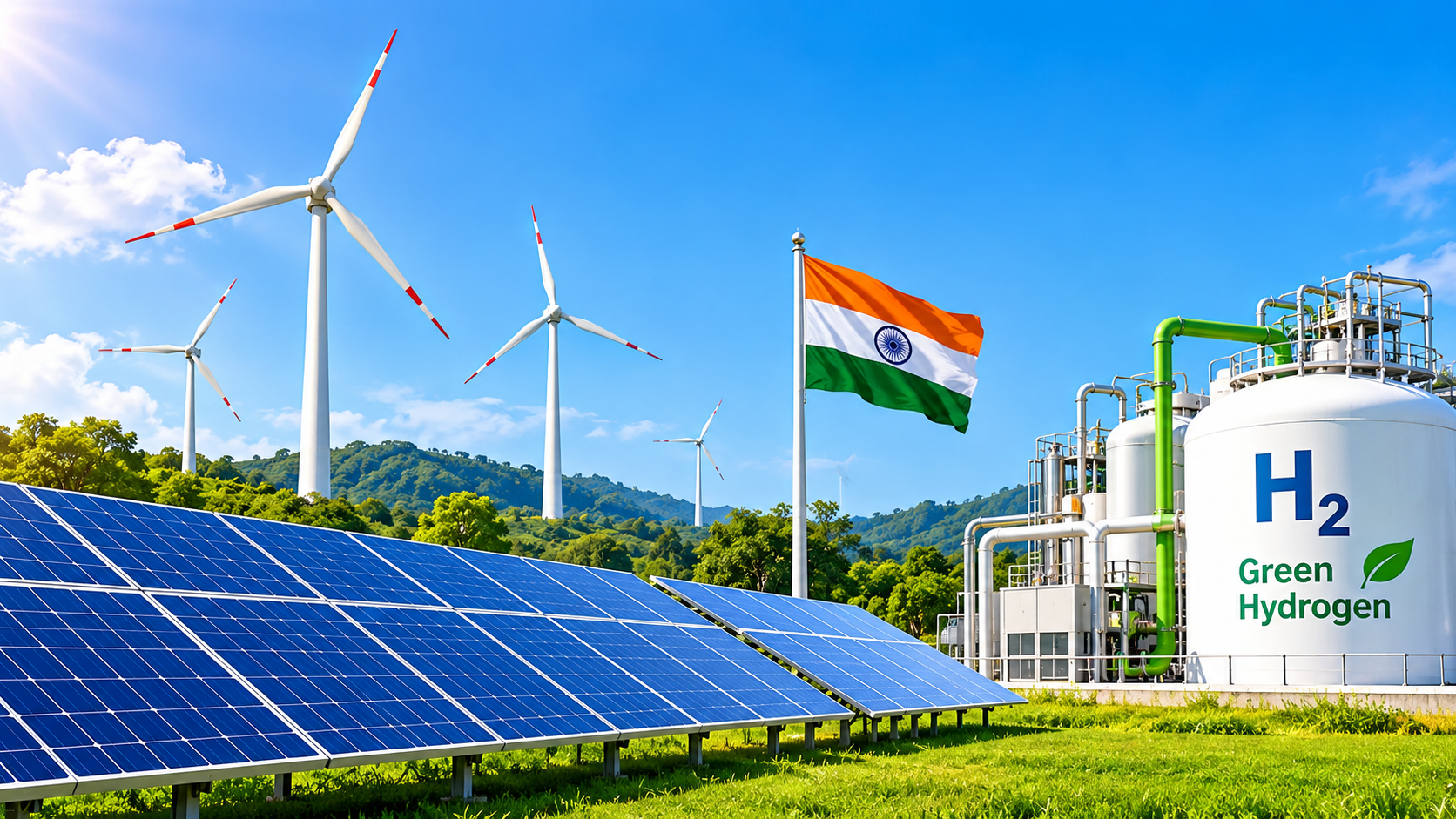
India is accelerating its renewable energy transition in 2026, focusing on solar power, wind energy and green hydrogen to reduce dependence on fossil fuels and achieve long-term climate goals.
The government is expanding clean energy infrastructure through initiatives such as PM Surya Ghar: Muft Bijli Yojana, PM-KUSUM and the National Green Hydrogen Mission.
Background
India has committed to achieving 500 GW of non-fossil fuel-based electricity capacity by 2030 and net-zero emissions by 2070.
Renewable energy development is essential for reducing carbon emissions, improving energy security and supporting sustainable economic growth.
Key Highlights
Sector | Major Initiative / Target |
|---|---|
Solar Energy | Expansion of rooftop and utility-scale solar projects |
Wind Energy | Onshore wind capacity and offshore wind development |
Green Hydrogen | At least 5 million metric tonnes annually by 2030 |
Non-Fossil Electricity Capacity | 500 GW target by 2030 |
Net-Zero Emissions | 2070 |
Rooftop Solar | PM Surya Ghar: Muft Bijli Yojana |
Agricultural Solarisation | PM-KUSUM |
Solar Power: India is expanding solar parks, rooftop installations and agricultural solar pumps.
Wind Energy: New wind projects and hybrid solar-wind systems are supporting clean electricity generation.
Green Hydrogen: The government aims to develop India as a global hub for green hydrogen production, utilisation and exports.
Energy Storage: Battery storage and pumped-storage hydropower are important for managing intermittent renewable energy generation.
Important Facts for Competitive Exams
National Green Hydrogen Mission: Approved in January 2023 with an initial outlay of ₹19,744 crore to support green hydrogen production and associated infrastructure.
PM Surya Ghar Yojana: Launched in February 2024 to promote rooftop solar installations for one crore households.
PM-KUSUM: A government scheme supporting solar pumps, decentralised solar power plants and the solarisation of agricultural electricity connections.
Green Hydrogen: Hydrogen produced using renewable electricity, typically through water electrolysis, with low associated greenhouse gas emissions.
International Solar Alliance (ISA): An international organisation launched by India and France in 2015 to promote solar energy cooperation. Its headquarters is in Gurugram, Haryana.
Quick Revision
2030 Non-Fossil Capacity Target: 500 GW
Net-Zero Target: 2070
Green Hydrogen Production Target: At least 5 MMT annually by 2030
National Green Hydrogen Mission Approved: January 2023
Green Hydrogen Mission Outlay: ₹19,744 crore
PM Surya Ghar Launch: February 2024
ISA Headquarters: Gurugram, Haryana
Concerned Ministry: Ministry of New and Renewable Energy (MNRE)