Madhya Pradesh Foundation Day 2026: History, State Formation and Important Facts
Key points
Why in the News?
Madhya Pradesh celebrated its 70th anniversary of state formation on 1 November 2026, marking 70 years since the formation of the reorganised state on 1 November 1956.
The occasion, known as Madhya Pradesh Sthapana Diwas, highlights the state's historical heritage, cultural diversity, geographical importance and economic development.
Historical Background
1 November 1956: Madhya Pradesh was reorganised under the States Reorganisation Act, 1956.
The new state incorporated Madhya Bharat, Vindhya Pradesh, Bhopal and most of the former Madhya Pradesh.
1 November 2000: Chhattisgarh was separated from Madhya Pradesh and became India's 26th state.
Pandit Ravishankar Shukla became the first Chief Minister of the reorganised Madhya Pradesh.
Key Facts for Competitive Exams
Particulars | Important Facts |
|---|---|
Foundation Day | 1 November |
Formation Year | 1956 |
Capital | Bhopal |
High Court | Jabalpur |
Popular Name | Heart of India |
Major Rivers | Narmada, Chambal, Betwa, Son and Tapti |
Highest Peak | Dhupgarh |
Famous National Parks | Kanha, Bandhavgarh and Pench |
UNESCO Heritage Sites | Sanchi, Bhimbetka and Khajuraho |
State Animal | Barasingha |
State Bird | Indian Paradise Flycatcher |
Major Rivers of Madhya Pradesh
Madhya Pradesh is an important river-origin region of central India. Its rivers support agriculture, irrigation, drinking water supply, hydroelectric power generation and biodiversity.
River | Origin | Important Facts |
|---|---|---|
Narmada | Amarkantak, Anuppur district | Flows westward into the Arabian Sea through the Gulf of Khambhat |
Tapti (Tapi) | Multai, Betul district | West-flowing river that drains into the Arabian Sea |
Chambal | Janapav Hills, near Mhow | Major tributary of the Yamuna River |
Betwa | Vindhyan region near Raisen | Tributary of the Yamuna; flows through MP and Uttar Pradesh |
Son (Sone) | Amarkantak region | Major southern-bank tributary of the Ganga |
Shipra (Kshipra) | Near Indore | Flows through Ujjain, famous for the Simhastha Kumbh Mela |
Ken | Kaimur/Vindhyan region of MP | Tributary of the Yamuna; associated with the Ken–Betwa Link Project |
Important River Facts for Competitive Exams
Narmada River: One of India's major west-flowing rivers, flowing through a rift valley between the Vindhya and Satpura ranges.
Tapti River: Originates at Multai in Betul district and flows westward towards the Arabian Sea.
Chambal River: Known for the National Chambal Sanctuary and its gharial conservation programme.
Betwa River: Associated with the historic town of Orchha and the Ken–Betwa river-linking project.
Shipra River: Ujjain hosts the Simhastha Kumbh Mela on its banks.
Son River: Originates near Amarkantak and joins the Ganga in Bihar.
Geographical and Economic Significance
Heart of India: Madhya Pradesh is centrally located and is India's second-largest state by geographical area.
Agriculture: Major crops include soybean, wheat, pulses and gram.
Mineral Resources: The state has significant deposits of coal, limestone, manganese and diamonds.
Industrial Development: Pithampur is an important automobile and manufacturing hub, while Singrauli is known for coal and power generation.
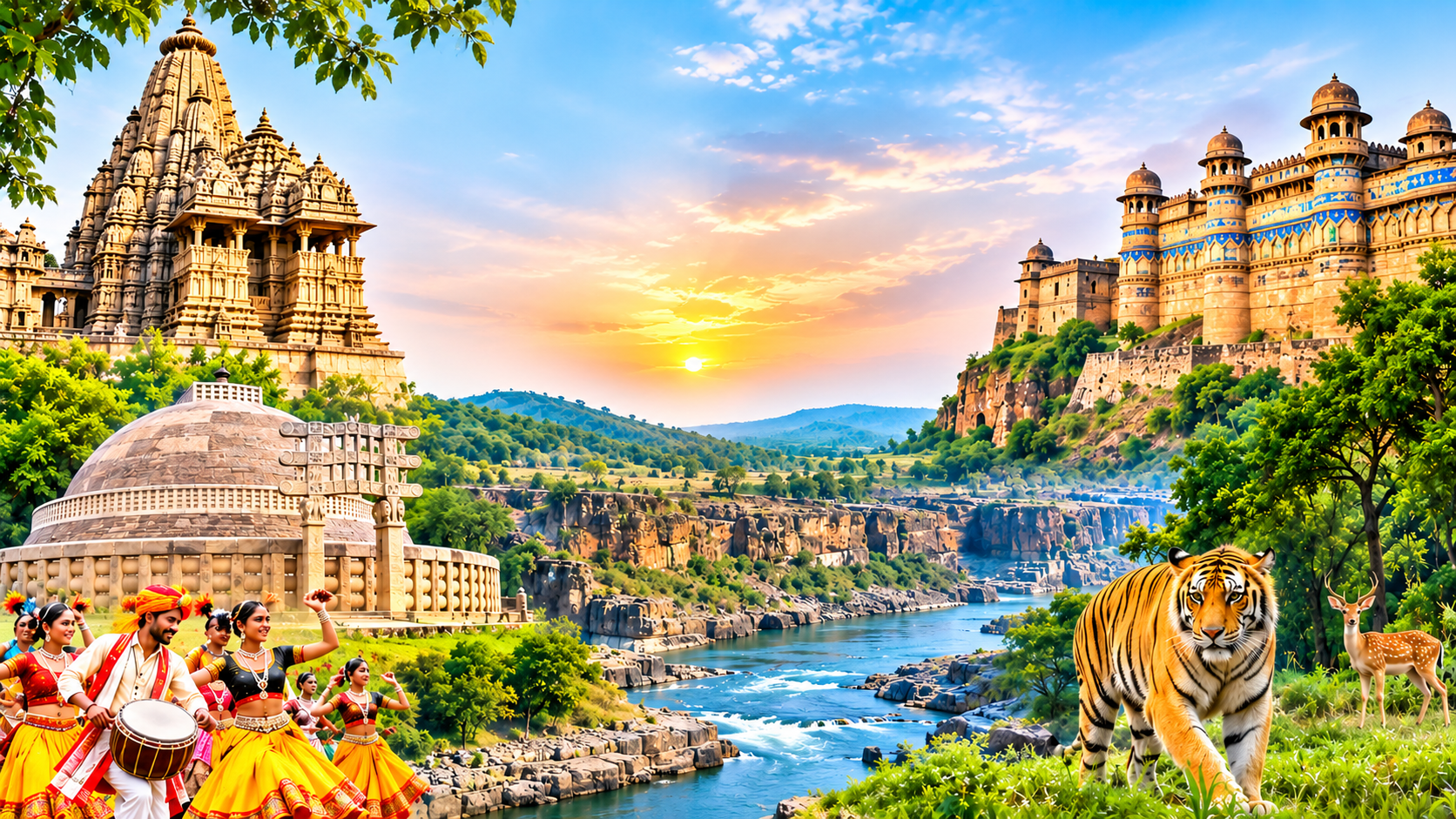
Tourism: Sanchi Stupa, Khajuraho Temples and Bhimbetka Rock Shelters are major heritage attractions.
Cultural Significance
Tribal Heritage: Gond and Bhil communities contribute significantly to the state's cultural traditions.
Traditional Art: Gond painting is an important indigenous art form.
Major Festivals: Bhagoria, Tansen Samaroh and Khajuraho Dance Festival.
Historical Heritage: The state is home to important Buddhist, prehistoric and medieval monuments.
Madhya Pradesh Foundation Day 2026
Madhya Pradesh marked 70 years since its reorganisation on 1 November 1956.
The occasion provides an opportunity to highlight the state's agricultural development, cultural heritage, natural resources and economic progress.
Important Exam Facts
Article 3: Parliament has the power to form new states and alter state boundaries.
States Reorganisation Act, 1956: Madhya Pradesh was reorganised on 1 November 1956.
First Chief Minister: Pandit Ravishankar Shukla (reorganised state).
Chhattisgarh Formation: 1 November 2000.
Narmada River: Originates from Amarkantak in Madhya Pradesh.
Dhupgarh: Highest peak in Madhya Pradesh, located in the Satpura Range.
Major West-Flowing Rivers: Narmada and Tapti.
Yamuna Tributaries: Chambal, Betwa and Ken.