Russia–Ukraine–US Peace Talks 2026 in Abu Dhabi
Key points
Why in the News?
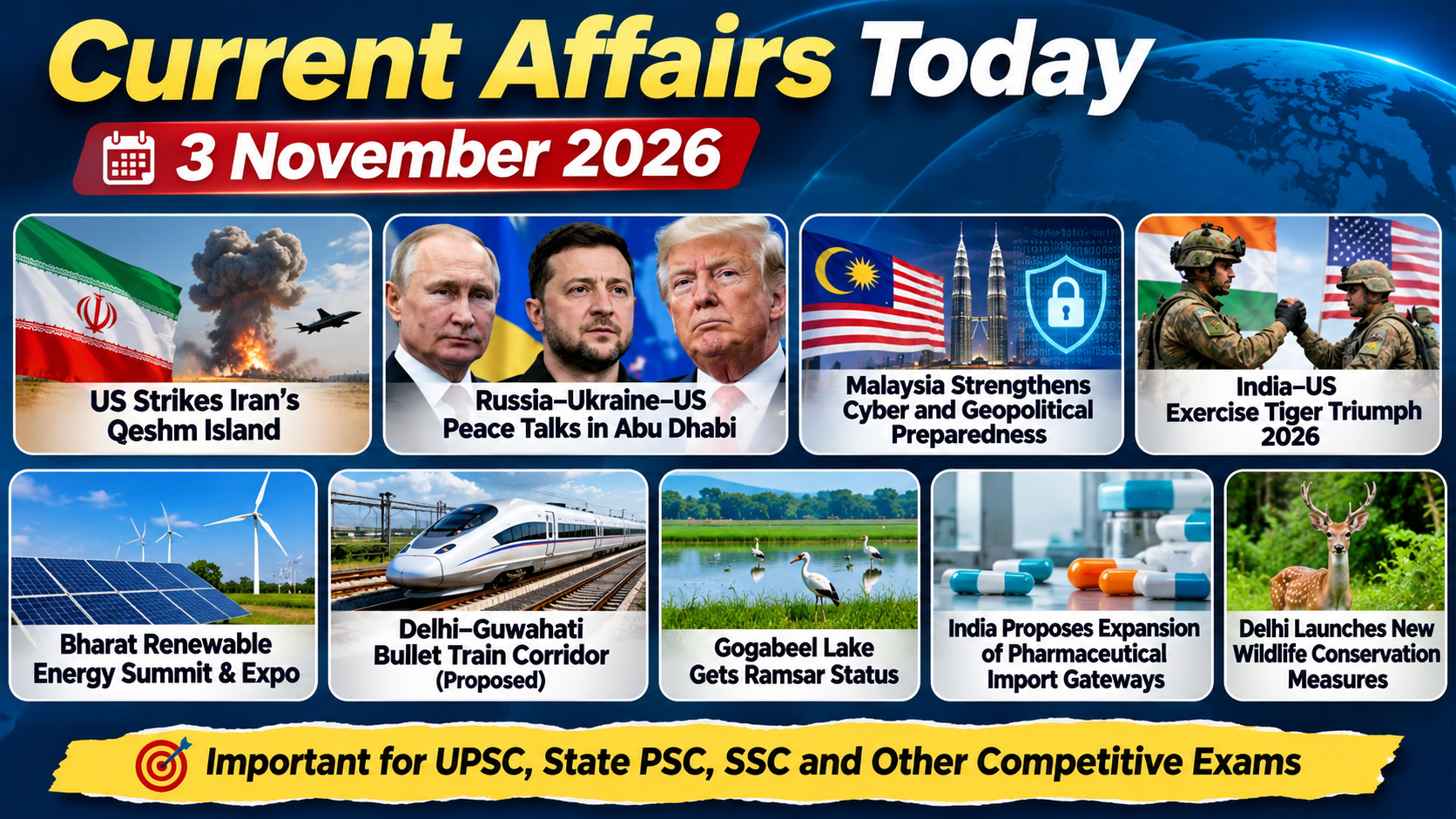
The United States, Russia and Ukraine are scheduled to hold trilateral peace talks on 10–11 November 2026 in Abu Dhabi, United Arab Emirates (UAE), as part of renewed diplomatic efforts to end the Russia–Ukraine war.
On 2 November 2026, US Special Envoy Steve Witkoff announced the planned negotiations. The Kremlin confirmed the meeting on 3 November 2026.
The discussions are expected to focus on post-war security arrangements, military de-escalation, humanitarian assistance and possible steps towards a lasting peace agreement.
Russian President Vladimir Putin's aide Vladimir Medinsky is expected to lead the Russian delegation, while Steve Witkoff and Jared Kushner are expected to represent the United States.
Important: The talks are scheduled for 10–11 November 2026. No final peace agreement has been announced.
Background of the Russia–Ukraine War
The Russia–Ukraine conflict is one of the most significant geopolitical crises in Europe.
The conflict intensified in 2014, when Russia annexed Crimea, an action widely rejected by the international community.
On 24 February 2022, Russia launched a full-scale invasion of Ukraine, resulting in a prolonged war.
The conflict has caused substantial loss of life, displacement of civilians, destruction of infrastructure and disruption of international energy and agricultural markets.
Several diplomatic initiatives have attempted to resolve the conflict, but major disagreements over territorial control and security arrangements remain unresolved.
What Are the Major Objectives of the Abu Dhabi Peace Talks?
1. Ending the Russia–Ukraine War
The main objective is to explore a negotiated settlement that could bring an end to the ongoing conflict.
The United States is acting as a mediator between Russia and Ukraine.
2. Post-War Security Guarantees
Security guarantees are expected to be a central issue.
Ukraine seeks assurances that could protect it against future military attacks.
Russia has raised concerns about NATO's role and the broader European security framework.
3. Military De-escalation
The negotiations are expected to examine possible measures to reduce military hostilities.
These may include ceasefire arrangements and mechanisms for monitoring compliance.
4. Humanitarian Assistance
Humanitarian issues are expected to include:
Prisoner exchanges
Protection of civilians
Humanitarian relief
Return of displaced or transferred civilians
Measures to reduce civilian suffering
5. Reconstruction of Ukraine
The wider diplomatic discussions also involve economic support for rebuilding infrastructure and supporting Ukraine's post-war recovery.
Who Will Participate in the Peace Talks?
United States
The United States will facilitate the trilateral negotiations.
Steve Witkoff, US Special Envoy, and Jared Kushner are expected to lead the American delegation.
Russia
Vladimir Medinsky, an aide to Russian President Vladimir Putin, is expected to lead Russia's delegation.
The Kremlin confirmed the planned meeting on 3 November 2026.
Ukraine
Ukraine is expected to participate in the negotiations.
The complete composition of its delegation had not been confirmed in the reports reviewed.
Why Was Abu Dhabi Selected for the Peace Talks?
Abu Dhabi is the capital of the United Arab Emirates (UAE) and an important diplomatic centre in West Asia.
The UAE has previously facilitated humanitarian exchanges and diplomatic contacts involving Russia and Ukraine.
Hosting the negotiations provides a venue for discussions between the three countries.
About the United Arab Emirates
Capital: Abu Dhabi
Region: West Asia
Currency: UAE Dirham
Official Language: Arabic
Government: Federal monarchy
International Organisation: United Nations
Role of European Countries and NATO
Ahead of the Abu Dhabi negotiations, US representatives are expected to meet European officials in Brussels, Belgium.
The discussions will involve representatives from:
France
Germany
United Kingdom
European Union
North Atlantic Treaty Organization (NATO)
The main subjects include Ukraine's security guarantees, Europe's future security arrangements and economic support for reconstruction.
NATO is a political and military alliance established in 1949. Its headquarters are located in Brussels.
Major Challenges to a Peace Agreement
1. Territorial Disputes
Russia and Ukraine remain divided over the future of Ukrainian territories occupied or claimed by Russia.
Ukraine maintains that its sovereignty and territorial integrity must be respected.
2. Security Guarantees
Ukraine seeks credible international security arrangements to prevent future attacks.
Russia has opposed certain proposals involving NATO membership and foreign military deployments in Ukraine.
3. Ceasefire Conditions
The two countries disagree over the conditions required for a ceasefire.
Ukraine has supported halting hostilities along the existing front line, while Russia has linked a ceasefire to broader political and security arrangements.
4. Reconstruction and Economic Recovery
The war has caused extensive damage to Ukraine's infrastructure, housing, industry and public services.
Reconstruction will require substantial financial resources and international cooperation.
Significance of the Peace Talks for India
Energy Security
The Russia–Ukraine war has affected international crude oil, natural gas and energy markets.
India, as a major energy importer, has an interest in stable international energy supplies.
Food Security
Russia and Ukraine are important producers and exporters of agricultural commodities, particularly wheat.
Disruptions in the region can influence international food prices and supply chains.
Diplomatic Relations
India maintains diplomatic relations with Russia, Ukraine, the United States and European countries.
Developments in the negotiations may affect wider international relations and economic cooperation.
Dialogue and Diplomacy
India has consistently supported dialogue and diplomacy as means of resolving the conflict.
A negotiated settlement could contribute to regional stability and international security.
Conclusion
The planned Russia–Ukraine–US peace talks in Abu Dhabi on 10–11 November 2026 represent another diplomatic attempt to resolve the ongoing conflict.
The negotiations are expected to address security guarantees, military de-escalation, humanitarian issues and possible steps towards a lasting peace agreement.