Satellite-Tracked Amur Falcon Alang Flies 5,700 km from Manipur to Somalia in 101 Hours
Key points
In the News
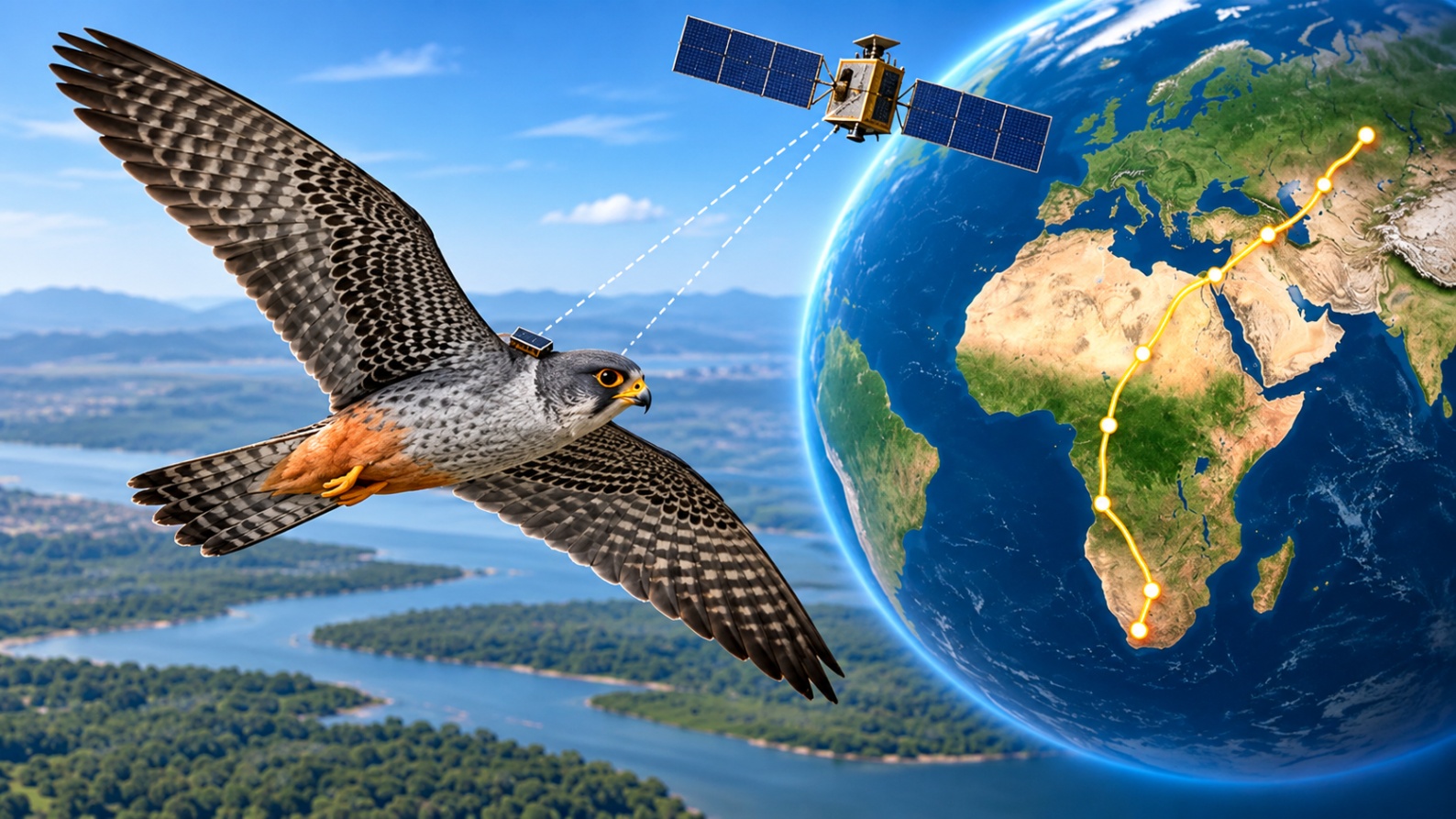
A satellite-tagged female Amur falcon named Alang has completed an extraordinary non-stop migration of approximately 5,700 kilometres from Manipur, India, to Somalia, Africa, in just 101 hours.
Weighing approximately 150 grams, the bird crossed the Arabian Sea without landing, demonstrating the remarkable endurance of long-distance migratory birds.
The journey was recorded through satellite tracking conducted under the Manipur Amur Falcon Tracking Project, involving scientists from the Wildlife Institute of India (WII).
Background
The Amur falcon (Falco amurensis) is a small migratory bird of prey belonging to the family Falconidae.
It breeds in eastern Russia, northeastern China and Mongolia before migrating to southern and eastern Africa for the winter.
During its annual migration, the species passes through northeastern India, particularly Manipur and Nagaland.
These regions provide important resting and feeding grounds where the birds consume insects, especially termites, to accumulate energy reserves before undertaking long-distance flights.
The Amur falcon is known for its remarkable transcontinental migration, including an extensive flight over the Arabian Sea.
Key Highlights
1. Alang Completes 5,700-km Non-Stop Migration
Bird name: Alang.
Species: Amur falcon (Falco amurensis).
Sex: Female.
Approximate weight: 150 grams.
Starting location: Tamenglong district, Manipur.
Destination: Somalia, Africa.
Distance covered: Approximately 5,700 kilometres.
Flight duration: 101 hours.
Major geographical crossing: Arabian Sea.
Alang completed the journey without landing to rest or feed, according to the satellite-tracking update.
2. Satellite Tracking of Amur Falcons
Alang and another Amur falcon named Apapang were fitted with lightweight satellite transmitters by scientists from the Wildlife Institute of India.
The tracking project helps researchers study:
Long-distance migration routes.
Flight duration and travel speed.
Important feeding and resting locations.
Movement across international borders.
Migration behaviour and ecological requirements.
Satellite telemetry provides valuable information for developing conservation strategies for migratory bird species.
3. Migration of Apapang
Another satellite-tagged Amur falcon, Apapang, an adult male, was monitored during the same migration period.
Important observations included:
Apapang initially covered approximately 4,100 kilometres in 95 hours.
The bird was recorded flying over the Arabian Sea during its journey.
Subsequent tracking reported that Apapang reached Somalia after a non-stop flight of approximately 5,400 kilometres.
These observations highlight the extraordinary flight capabilities of Amur falcons.
4. Importance of Manipur and Nagaland
Northeastern India plays a crucial role in the annual migration of Amur falcons.
Important stopover areas include:
Tamenglong district, Manipur.
Chiuluan roosting site, Manipur.
Migratory bird habitats in Nagaland.
Before beginning their long-distance journey, the birds spend several weeks feeding and resting.
Seasonal termite abundance provides an important food source that helps them accumulate fat reserves for migration.
5. Wildlife Institute of India's Role
The Wildlife Institute of India is an autonomous institution under the Ministry of Environment, Forest and Climate Change.
The institute conducts research, training and scientific studies related to wildlife conservation.
Its satellite-tracking initiatives help identify important migratory corridors and support conservation planning.
6. Conservation Significance
Satellite tracking of Amur falcons contributes to wildlife conservation by:
Identifying important migration routes.
Understanding seasonal movement patterns.
Recognising critical stopover habitats.
Supporting international cooperation for migratory species.
Encouraging community participation in bird protection.
Local communities in northeastern India have played an important role in protecting Amur falcons and their traditional roosting sites.
Important Facts for Competitive Exams
Particular | Details |
|---|---|
Common name | Amur Falcon |
Scientific name | Falco amurensis |
Family | Falconidae |
Bird category | Migratory bird of prey |
IUCN conservation status | Least Concern |
Breeding regions | Eastern Russia, northeastern China and Mongolia |
Wintering regions | Southern and eastern Africa |
Important Indian stopover | Manipur and Nagaland |
Tracking institution | Wildlife Institute of India |
Tracked female falcon | Alang |
Tracked male falcon | Apapang |
Major sea crossing | Arabian Sea |
Alang's recorded flight | 5,700 km in 101 hours |
Why Is the Arabian Sea Important?
The Arabian Sea forms a major part of the Amur falcon's migration route between India and Africa.
The birds undertake long flights across open water, making adequate energy reserves and favourable atmospheric conditions important for completing the journey.
Importance of Satellite Telemetry
Satellite telemetry is a scientific technique used to monitor the movement and location of animals using electronic tracking devices.
It is widely used in wildlife research to understand migration, habitat use and animal movement.
Quick Revision
Amur falcon is scientifically known as Falco amurensis.
Alang is a satellite-tagged female Amur falcon.
Alang travelled approximately 5,700 kilometres in 101 hours.
The migration route extended from Manipur to Somalia.
Apapang is a satellite-tagged male Amur falcon.
The Wildlife Institute of India conducted satellite tracking.
Tamenglong district is located in Manipur.
Manipur and Nagaland are important migratory stopover regions.
Amur falcons breed in eastern Russia, northeastern China and Mongolia.
Southern and eastern Africa serve as wintering regions.
The Arabian Sea is an important migration crossing.
Amur falcon belongs to the family Falconidae.
The species is classified as Least Concern by the IUCN.
Satellite telemetry helps scientists monitor wildlife migration.
Termites provide an important food source during migration stopovers.