Sikkim’s Soreng District Becomes India’s First Organic Fisheries Cluster Under PMMSY 2026
Key points
Why in the News?
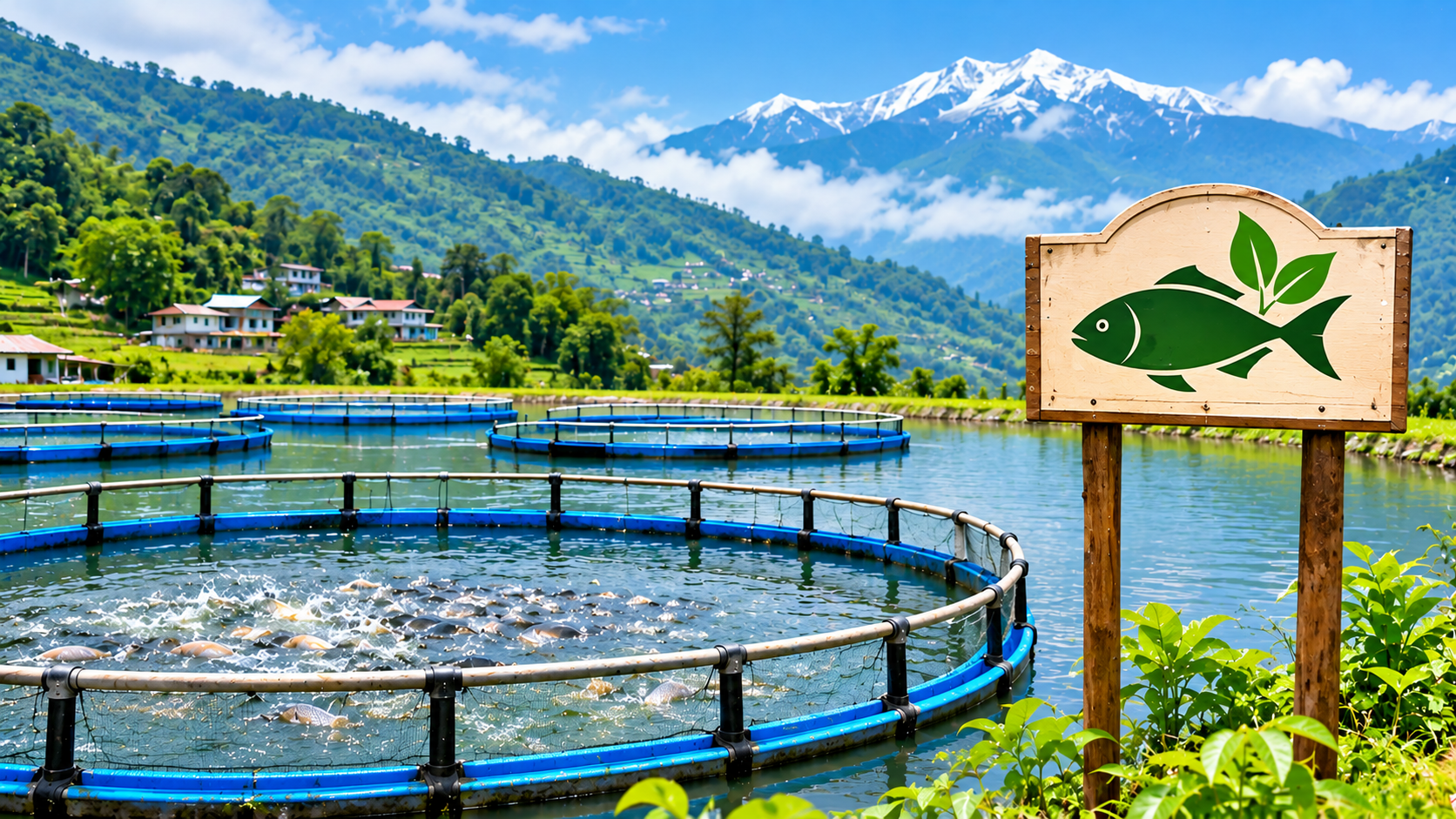
The Government of India highlighted Soreng district in Sikkim as India's first notified Organic Fisheries Cluster under the Pradhan Mantri Matsya Sampada Yojana (PMMSY).
Union Minister Rajiv Ranjan Singh (Lalan Singh) launched the Standard Operating Procedure (SOP) for Organic Certification of Fisheries in the Northeastern Region during his visit to Sikkim.
The minister also inaugurated fisheries development projects worth ₹375 lakh (₹3.75 crore) under PMMSY.
The initiative aims to promote environmentally sustainable fish farming, improve fish farmers' incomes and expand domestic and international markets for organic fish products.
Key Highlights
Particulars | Details |
|---|---|
Cluster | India's First Notified Organic Fisheries Cluster |
Location | Soreng District, Sikkim |
Scheme | Pradhan Mantri Matsya Sampada Yojana |
Ministry | Ministry of Fisheries, Animal Husbandry and Dairying |
Union Minister | Rajiv Ranjan Singh |
Latest Announcement | 2 November 2026 |
Fisheries Projects | ₹3.75 Crore |
Main Objective | Sustainable and Chemical-Free Fish Farming |
Major Fish Species | Amur Carp, Indian Major Carps and Trout |
What Is an Organic Fisheries Cluster?
An Organic Fisheries Cluster is a designated geographical area where fish farming is promoted through environmentally sustainable practices.
The approach focuses on reducing harmful chemical inputs while strengthening the entire fisheries value chain.
Main Features
Fish farming without harmful chemicals, antibiotics and pesticides.
Environmentally sustainable aquaculture practices.
Organic certification and product traceability.
Improved fish production and processing infrastructure.
Better market access for fish farmers.
Promotion of premium organic fish products.
Why Was Soreng District Selected?
Soreng is located in Sikkim, which became India's first fully organic state in 2016.
The district was selected because of its favourable environmental conditions and Sikkim's established organic farming ecosystem.
The initiative builds on the state's experience in sustainable agriculture and extends similar principles to aquaculture.
Major Fish Species
Amur Carp: A freshwater fish suitable for aquaculture.
Indian Major Carps: Important freshwater species used in Indian fish farming.
Trout: A high-value cold-water fish cultivated in Himalayan regions.
Government Launches Organic Fisheries Certification SOP
The Union Government introduced a Standard Operating Procedure for Organic Certification of Fisheries in the Northeastern Region.
Objectives of the SOP
Establish a structured framework for organic fish production.
Promote certification and traceability.
Improve consumer confidence.
Support quality assurance.
Help organic fish products reach premium domestic and export markets.
Fisheries Projects Worth ₹3.75 Crore
The Union Minister inaugurated fisheries projects worth ₹375 lakh under PMMSY.
Major Infrastructure and Technologies
Component | Purpose |
|---|---|
Fish Hatcheries | Support fish breeding and seed production |
Feed Mills | Improve access to fish feed |
Cold Storage | Preserve fish products |
Biofloc Technology | Support efficient aquaculture production |
Recirculatory Aquaculture Systems (RAS) | Enable controlled water reuse in fish farming |
These projects aim to strengthen production, processing, storage and marketing facilities.
Sikkim Signs MoU with ITBP for Trout Procurement
The Government of Sikkim has entered into a Memorandum of Understanding (MoU) with the Indo-Tibetan Border Police (ITBP) for institutional procurement of locally produced Rainbow Trout.
The arrangement aims to provide a stable market for trout farmers and strengthen the cold-water fisheries value chain.
What Is Pradhan Mantri Matsya Sampada Yojana (PMMSY)?
The Pradhan Mantri Matsya Sampada Yojana is a Government of India scheme launched in 2020 to support the sustainable development of the fisheries sector.
Important Facts
Particulars | Details |
|---|---|
Scheme | Pradhan Mantri Matsya Sampada Yojana |
Launch Year | 2020 |
Ministry | Ministry of Fisheries, Animal Husbandry and Dairying |
Original Approved Investment | ₹20,050 Crore |
Initial Implementation Period | 2020–21 to 2024–25 |
Main Focus | Fisheries Infrastructure, Production and Value Chain Development |
Major Objectives
Improve fish production and productivity.
Strengthen fisheries infrastructure.
Promote sustainable aquaculture.
Generate employment opportunities.
Improve the income of fishers and fish farmers.
Develop processing, storage and marketing facilities.
Cluster-Based Development Under PMMSY
The government has adopted a cluster-based approach to fisheries development.
According to the Ministry of Fisheries, 34 fisheries production and processing clusters have been notified across India.
Examples include:
Cluster | Location |
|---|---|
Organic Fisheries | Soreng, Sikkim |
Pearl | Hazaribagh, Jharkhand |
Ornamental Fisheries | Madurai, Tamil Nadu |
Seaweed | Lakshadweep |
Tuna | Andaman and Nicobar Islands |
Organic Fish Farming | West Khasi Hills, Meghalaya |
Why Is This Initiative Important?
1. Sustainable Aquaculture
The initiative encourages fish farming practices that reduce harmful chemical inputs and environmental damage.
2. Higher Farmers' Income
Organic certification and improved market access may help farmers obtain better prices for their products.
3. Development of Northeast India
The project supports fisheries infrastructure, local enterprises and livelihood opportunities in the Northeastern Region.
4. Improved Market Access
Certification and traceability can improve the competitiveness of organic fish products in domestic and international markets.
5. Strengthening the Blue Economy
The initiative supports sustainable fisheries development and economic opportunities linked to aquatic resources.
Conclusion
Soreng district's recognition as India's first notified Organic Fisheries Cluster is an important step towards sustainable aquaculture in India.
The introduction of an organic certification SOP, infrastructure projects worth ₹3.75 crore and improved market linkages are expected to strengthen the fisheries sector and create new opportunities for fish farmers in Sikkim.