Supreme Court Ruling on OBC Creamy Layer 2026
Key points
Why in the News?
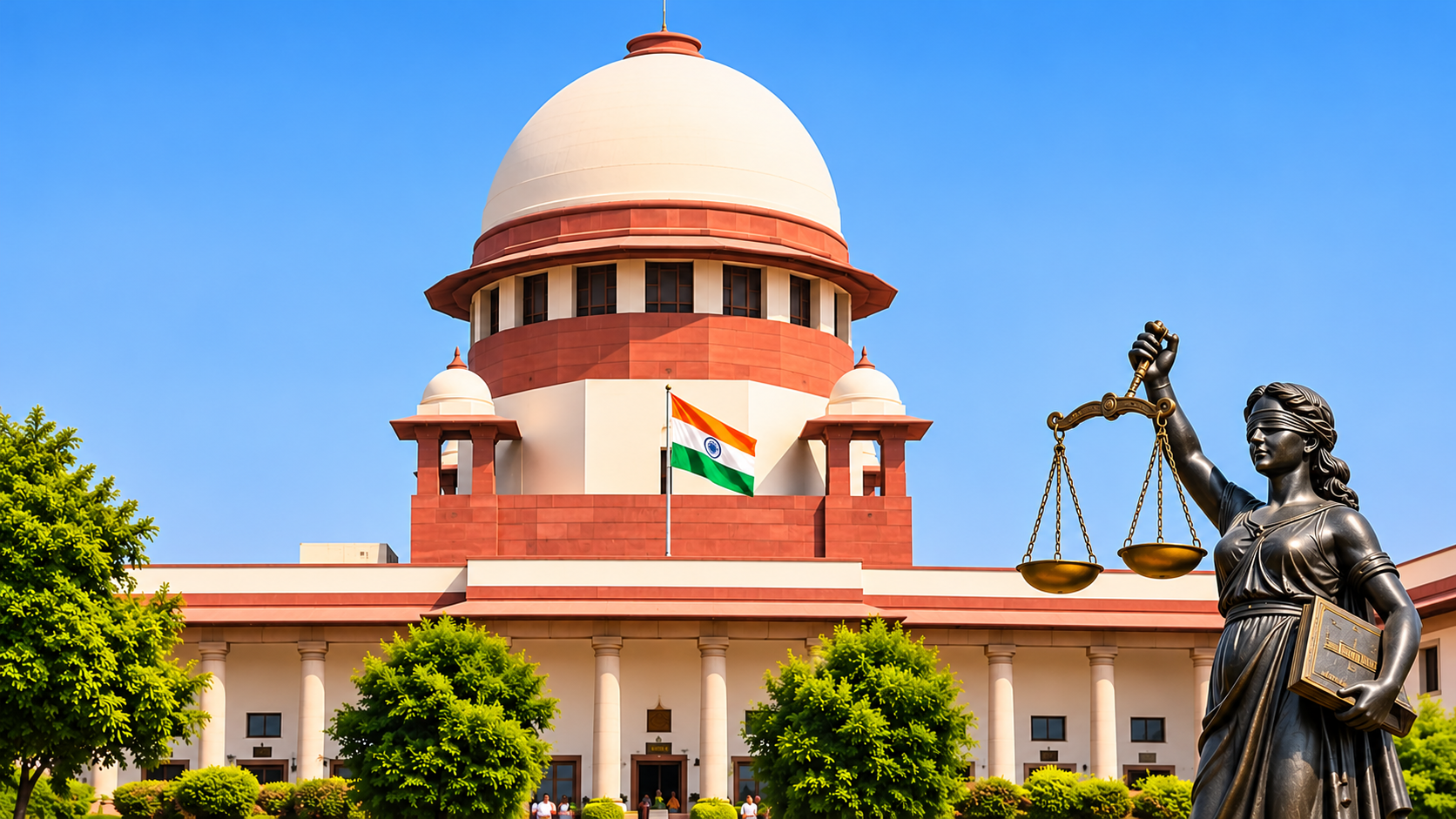
The Supreme Court of India, on 6 November 2026, reaffirmed its earlier ruling concerning the determination of Other Backward Classes (OBC) Creamy Layer status.
A bench comprising Justice P. S. Narasimha and Justice R. Mahadevan rejected the Union Government's request to apply its earlier judgment of 11 March 2026 only to future cases.
The Court reiterated that parental salary income alone cannot be used to determine whether an OBC candidate belongs to the creamy layer. The applicable criteria also require consideration of the status and nature of the parents' employment.
Supreme Court's Observations on OBC Creamy Layer
The Supreme Court clarified that the salary income of parents cannot be treated as the sole basis for determining OBC creamy layer status. Authorities must also consider the nature of the parents' employment, their service status and the relevant government guidelines.
The judgment is particularly significant for candidates whose parents work in Public Sector Undertakings (PSUs) and private-sector organisations. The Court emphasised that the prescribed criteria must be applied consistently while determining reservation eligibility.
The Supreme Court also rejected the Union Government's request to restrict the March 2026 judgment to future cases. However, it clarified that previously completed appointments and settled seniority positions would not automatically be reopened.
The decision is relevant to the pending service allocation process of candidates selected through the UPSC Civil Services Examination 2025. The Court also granted an additional two months for implementing its earlier directions.
What Is the OBC Creamy Layer?
The Creamy Layer refers to relatively advanced sections within Other Backward Classes that are excluded from OBC reservation benefits under the applicable rules.
The principle aims to ensure that reservation benefits reach socially and educationally disadvantaged sections of OBC communities.
Category | Reservation Eligibility |
|---|---|
OBC Non-Creamy Layer | Eligible for OBC reservation, subject to applicable conditions |
OBC Creamy Layer | Not eligible for OBC reservation benefits |
Background of the Creamy Layer Concept
1992 – Indra Sawhney Case
In Indra Sawhney v. Union of India (1992), the Supreme Court upheld OBC reservation in public employment and established the principle of excluding the creamy layer.
1993 – Government Guidelines
The Government of India issued an Office Memorandum on 8 September 1993 establishing criteria for identifying creamy layer status.
2004 – Clarification
Additional government instructions clarified aspects of the income test and its application.
March 2026 – Supreme Court Judgment
The Supreme Court clarified that parental salary income alone cannot determine creamy layer status under the applicable instructions.
November 2026 – Latest Development
The Supreme Court reaffirmed its earlier interpretation and clarified its application to recruitment and service allocation processes.
Constitutional Provisions Related to OBC Reservation
Article | Constitutional Provision |
|---|---|
Article 14 | Equality before law |
Article 15(4) | Special provisions for socially and educationally backward classes, SCs and STs |
Article 16(4) | Reservation in public employment for inadequately represented backward classes |
Article 340 | Commission to investigate conditions of backward classes |
Article 342A | Constitutional provisions relating to socially and educationally backward classes |
Article 141 | Law declared by the Supreme Court is binding on all courts in India |
Important Facts for Competitive Exams
Landmark Judgment: Indra Sawhney v. Union of India (1992).
OBC Reservation in Central Government Direct Recruitment: Generally 27%, subject to applicable rules.
Central OBC Creamy Layer Income Threshold: ₹8 lakh per annum under the applicable income/wealth criteria. This is not simply a test of total parental salary.
Relevant Ministry: Ministry of Social Justice and Empowerment.
Nodal Department for Central Government Service Reservation Instructions: Department of Personnel and Training (DoPT).
Latest Supreme Court Ruling: 6 November 2026.
Relevant UPSC Subject: GS Paper II – Constitution, Governance and Social Justice.
Significance of the Judgment
The Supreme Court's decision is important because it reinforces the need for consistent application of OBC creamy layer criteria across different employment sectors.
The judgment also clarifies that previously completed recruitment processes and settled seniority positions will not automatically be disturbed.
Candidates seeking benefits under the ruling must satisfy the applicable eligibility conditions and legal requirements.
Conclusion
The Supreme Court's November 2026 ruling reinforces that parental salary income alone cannot determine OBC creamy layer status.
The decision highlights the importance of applying the prescribed criteria relating to parental employment status and reservation eligibility.