CERT-In Cybersecurity Rules 2026: Cloud Outages and India's Digital Security
Key points
In the News
The growing dependence on cloud computing and digital services has brought renewed attention to India's cybersecurity framework and the role of the Indian Computer Emergency Response Team (CERT-In).
Cloud service outages can disrupt banking, government portals, digital payments, communication platforms and business operations. Such incidents highlight the importance of cybersecurity preparedness, incident reporting and digital infrastructure resilience.
India's CERT-In framework establishes requirements for reporting specified cybersecurity incidents and maintaining essential records to support investigations and response.
Background
CERT-In is India's national agency for responding to cybersecurity incidents. It operates under the Ministry of Electronics and Information Technology (MeitY).
CERT-In was established in 2004 and is designated as the national incident-response agency under Section 70B of the Information Technology Act, 2000.
On 28 April 2022, CERT-In issued cybersecurity directions covering incident reporting, log retention, time synchronisation and certain record-keeping obligations.
These directions apply to specified organisations, including service providers, intermediaries, data centres, body corporates and government organisations.
Key Highlights
1. Six-Hour Cyber Incident Reporting Rule
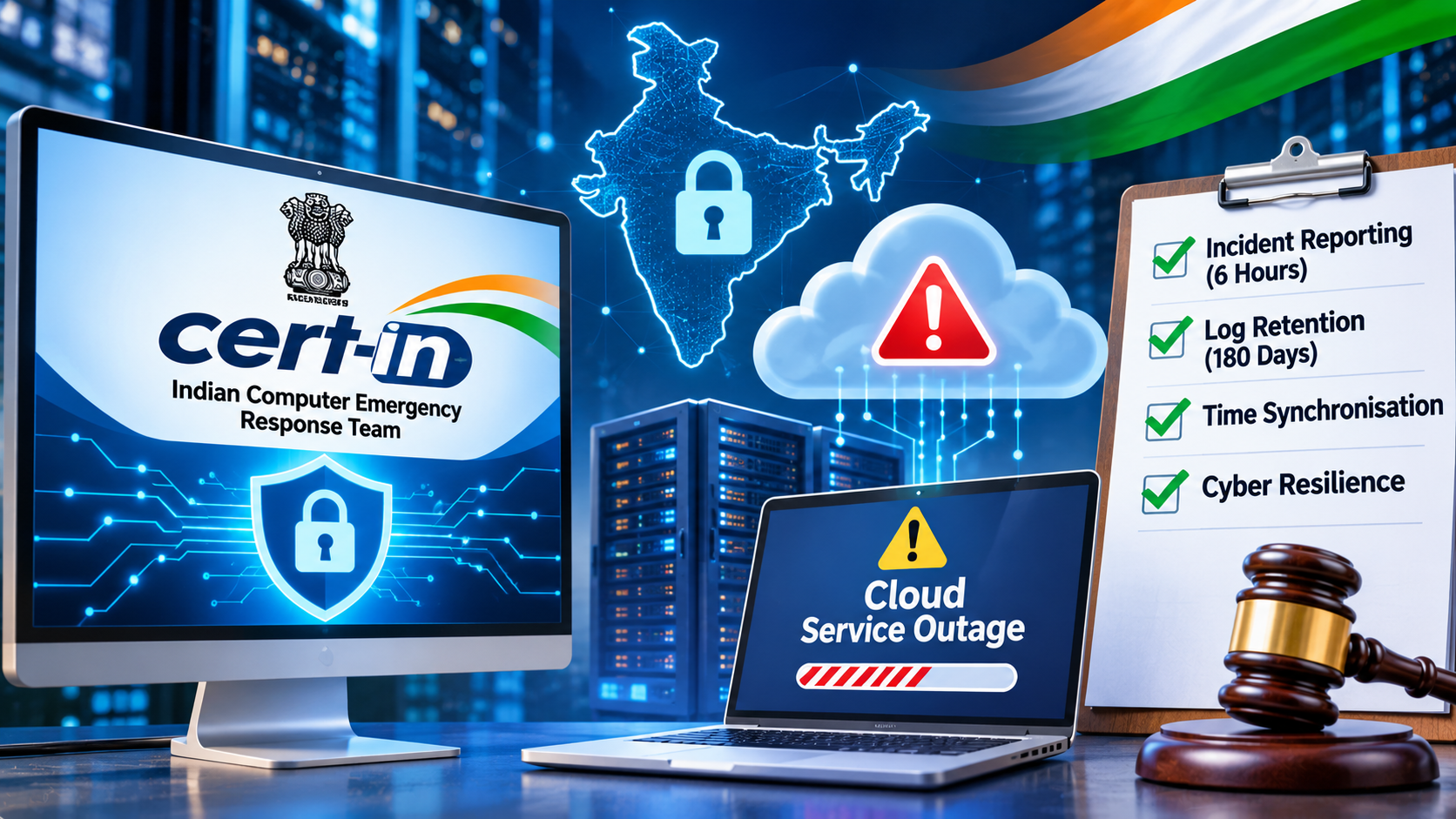
CERT-In requires covered entities to report specified cybersecurity incidents within six hours of noticing them or being informed about them.
Reportable incidents include ransomware attacks, data breaches, unauthorised access and other incidents identified in CERT-In's directions.
This requirement supports faster coordination, investigation and mitigation of cyber threats.
2. Cloud Service Outages and Digital Resilience
Cloud computing allows organisations to access computing resources, software and data storage over the internet.
A major cloud outage can affect multiple services simultaneously because several organisations may depend on the same infrastructure.
However, not every cloud outage is automatically a reportable cybersecurity incident. Reporting obligations depend on the nature of the incident and applicable CERT-In requirements.
3. Mandatory Log Retention
CERT-In's 2022 directions require covered organisations to maintain relevant ICT system logs securely for a rolling period of 180 days.
These logs help investigators identify suspicious activity, trace cyberattacks and analyse security incidents.
4. Time Synchronisation Requirements
Covered entities must synchronise their ICT system clocks with designated or approved time sources.
Accurate timestamps are important for reconstructing cyber incidents and coordinating investigations across different systems.
5. Role of CERT-In
CERT-In performs important cybersecurity functions, including:
Collecting and analysing cybersecurity incident information.
Issuing alerts, advisories and vulnerability notes.
Coordinating responses to major cyber incidents.
Supporting incident prevention and emergency response.
Promoting cybersecurity awareness and preparedness.
6. India's Cybersecurity Framework
India's cybersecurity ecosystem includes several institutions and laws.
CERT-In: National cyber incident-response agency.
NCIIPC: National Critical Information Infrastructure Protection Centre, responsible for protecting critical information infrastructure.
Information Technology Act, 2000: Provides the principal legal framework for electronic transactions and various cybersecurity-related obligations.
Digital Personal Data Protection Act, 2023: Establishes a framework for protecting digital personal data, with obligations applying according to the relevant commencement provisions.
7. Strengthening Cloud Security
Organisations can reduce the impact of cloud disruptions through backup systems, disaster recovery plans, security monitoring and tested business continuity arrangements.
Using geographically distributed infrastructure and avoiding unnecessary dependence on a single service provider can also improve operational resilience.
Important Facts for Competitive Exams
CERT-In: The Indian Computer Emergency Response Team is India's national cybersecurity incident-response agency under MeitY.
Section 70B: The provision of the Information Technology Act, 2000, dealing with CERT-In as the national incident-response agency.
Cloud Computing: Delivery of computing resources, storage, applications and related services through internet-connected infrastructure.
Cybersecurity Incident: An event involving an actual or suspected compromise of the confidentiality, integrity or availability of information systems or data.
NCIIPC: The National Critical Information Infrastructure Protection Centre is designated under Section 70A of the Information Technology Act, 2000.
Ransomware: Malicious software or an attack that restricts access to systems or data, commonly accompanied by demands for payment.
Quick Revision
National Cybersecurity Agency: CERT-In operates under the Ministry of Electronics and Information Technology and coordinates responses to cybersecurity incidents in India.
Reporting Requirement: CERT-In's 2022 directions require specified cybersecurity incidents to be reported within six hours of detection or notification.
Log Retention: Covered organisations must securely maintain relevant ICT system logs for a rolling period of 180 days.
Cloud Outage Risks: Cloud disruptions can affect digital payments, government services and businesses, making backup infrastructure and disaster recovery important.
Legal Framework: Sections 70A and 70B of the Information Technology Act, 2000, are important for understanding India's critical infrastructure protection and cyber incident-response arrangements.
Conclusion
CERT-In's cybersecurity directions play an important role in improving incident reporting, digital accountability and coordinated responses to cyber threats.
The increasing dependence on cloud services also highlights the need for resilient infrastructure, effective monitoring and business continuity planning.