China CE-25A Electric Aircraft Completes First Piloted Flight
Key points
In the News
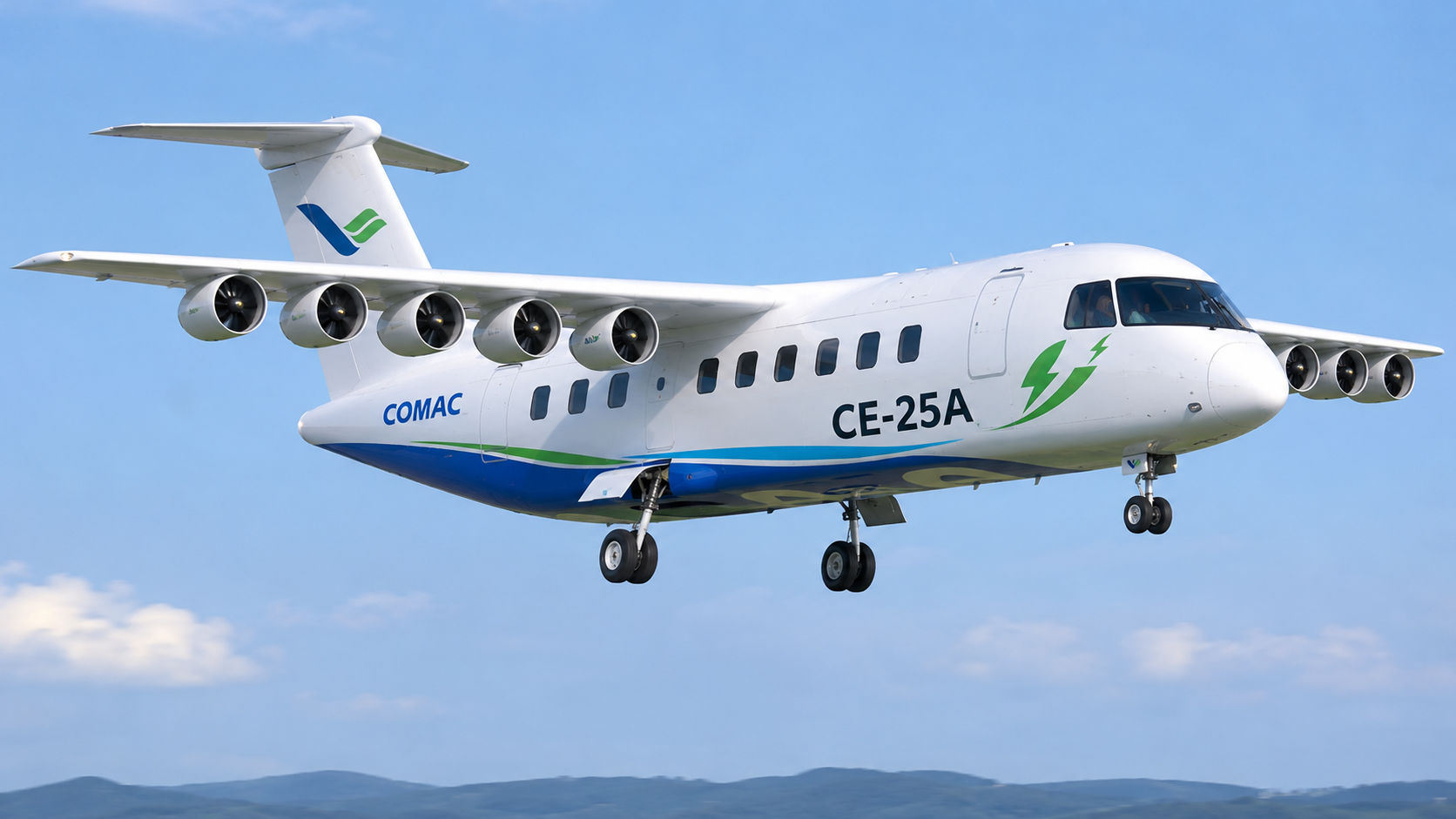
China's CE-25A electric passenger aircraft successfully completed its first piloted flight on 14 November 2026 in Binzhou, Shandong Province.
Developed by the Commercial Aircraft Corporation of China (COMAC), the aircraft is designed to carry 19 passengers and has a planned flight range of 400 kilometres.
The test flight marks an important development in battery-powered aviation and China's efforts to introduce electric aircraft for short-distance commercial travel.
Background
Electric aircraft use electric motors powered by batteries instead of conventional aviation fuel-powered engines.
They are being developed to reduce dependence on fossil fuels, lower operational emissions and potentially reduce aircraft noise.
The CE-25A is COMAC's first electric commercial aircraft, developed in collaboration with Contemporary Amperex Technology Co. Limited (CATL), Shanghai Jiao Tong University and other partners.
The aircraft completed its first unmanned autonomous flight on 2 February 2026, followed by 19 unmanned flight validations before its first piloted test.
Key Highlights
1. Successful First Piloted Flight
The CE-25A completed its maiden piloted flight in Binzhou, Shandong Province, on 14 November 2026.
The aircraft carried two pilots and one flight-test engineer.
It remained airborne for 16 minutes and 38 seconds, covering approximately 60.4 kilometres.
According to COMAC, the aircraft operated normally and its performance indicators met expectations.
2. Aircraft Capacity and Specifications
The CE-25A is designed for short-distance intercity passenger transportation.
Its major specifications include:
Passenger Capacity: 19 passengers
Maximum Takeoff Weight: 10 tonnes
Cruising Speed: 300 km/h
Cruising Altitude: 2,400 metres
Designed Flight Range: 400 kilometres
These specifications make the aircraft suitable for potential regional air connectivity.
3. Advanced Electric Propulsion System
The CE-25A uses a distributed electric propulsion system powered by batteries.
It features 10 electric ducted fans mounted along its wings.
Unlike conventional aircraft engines, electric motors drive the fans to generate thrust.
The technology is intended to improve energy efficiency and reduce operational noise.
4. Collaboration with CATL
The aircraft was developed through cooperation between COMAC, battery manufacturer CATL, Shanghai Jiao Tong University and other research partners.
The collaboration combines aviation engineering, battery technology and advanced electric propulsion systems.
5. Aviation Certification Process
The Civil Aviation Administration of China (CAAC) has accepted COMAC's application for a type certificate.
The certification process evaluates whether an aircraft design meets prescribed aviation safety and airworthiness standards.
The CE-25A has not yet received final certification for commercial passenger operations.
6. Importance for Sustainable Aviation
Electric aircraft could contribute to reducing direct in-flight carbon emissions and supporting cleaner regional transportation.
However, their commercial adoption depends on improvements in battery energy density, charging infrastructure, flight safety and operational range.
Important Facts for Competitive Exams
COMAC: The Commercial Aircraft Corporation of China is a Chinese aircraft manufacturer involved in developing commercial passenger aircraft, including the CE-25A.
CATL: Contemporary Amperex Technology Co. Limited is a major Chinese battery manufacturer involved in electric vehicle and advanced battery technologies.
Electric Aircraft: Aircraft that use electric motors and stored electrical energy for propulsion instead of relying entirely on conventional aviation fuel.
Distributed Electric Propulsion: A technology in which multiple electrically powered propulsors generate thrust across different parts of an aircraft.
CAAC: The Civil Aviation Administration of China is the country's civil aviation regulatory authority responsible for aviation safety and certification.
Type Certificate: An official approval confirming that an aircraft design meets applicable airworthiness requirements.
Quick Revision
Aircraft and Developer: The CE-25A is a 19-passenger electric aircraft developed by China's Commercial Aircraft Corporation of China (COMAC) for short-distance commercial transportation.
First Piloted Flight: The aircraft completed its first piloted flight on 14 November 2026 in Binzhou, Shandong Province, carrying two pilots and one flight-test engineer.
Technical Specifications: The aircraft has a maximum takeoff weight of 10 tonnes, a cruising speed of 300 km/h, a cruising altitude of 2,400 metres and a designed range of 400 kilometres.
Electric Propulsion: The CE-25A uses 10 electrically driven ducted fans mounted along its wings, representing an application of distributed electric propulsion technology.
Certification Status: China's aviation regulator, CAAC, has accepted the aircraft's type certificate application, but commercial passenger operations have not yet been approved.
Conclusion
The successful first piloted flight of China's CE-25A represents progress in electric aviation technology.
With a planned capacity of 19 passengers and a range of 400 kilometres, the aircraft demonstrates the potential of battery-powered regional transportation.
The development is important for competitive examinations covering Science and Technology, Sustainable Aviation, Electric Propulsion and Environmental Innovation.