CSIR-CCMB Study 2026: Scientists Identify New Drug Targets to Fight Tuberculosis
Key points
Why in the News?
Scientists at the CSIR-Centre for Cellular and Molecular Biology (CCMB), Hyderabad, have identified critical weaknesses in Mycobacterium tuberculosis, the bacterium responsible for tuberculosis (TB).
The research, reported on 10 November 2026, identified important protein transport pathways that could serve as potential targets for developing new anti-tuberculosis medicines, particularly against drug-resistant TB.
The discovery is significant for India, which accounts for nearly one-fourth of global tuberculosis cases and approximately one-third of drug-resistant TB infections.
Mapping the Protein Transport Network
The research team, led by CCMB Director Dr. Vinay Kumar Nandicoori, studied how tuberculosis bacteria transport proteins essential for their growth, survival and ability to cause disease.
The study involved collaboration with the Institute of Mathematical Sciences, Chennai, and the Translational Health Science and Technology Institute, Faridabad.
Using computational modelling and laboratory experiments, researchers identified:
92 key components involved in bacterial protein transport.
Nearly 200 molecular reactions within the transport network.
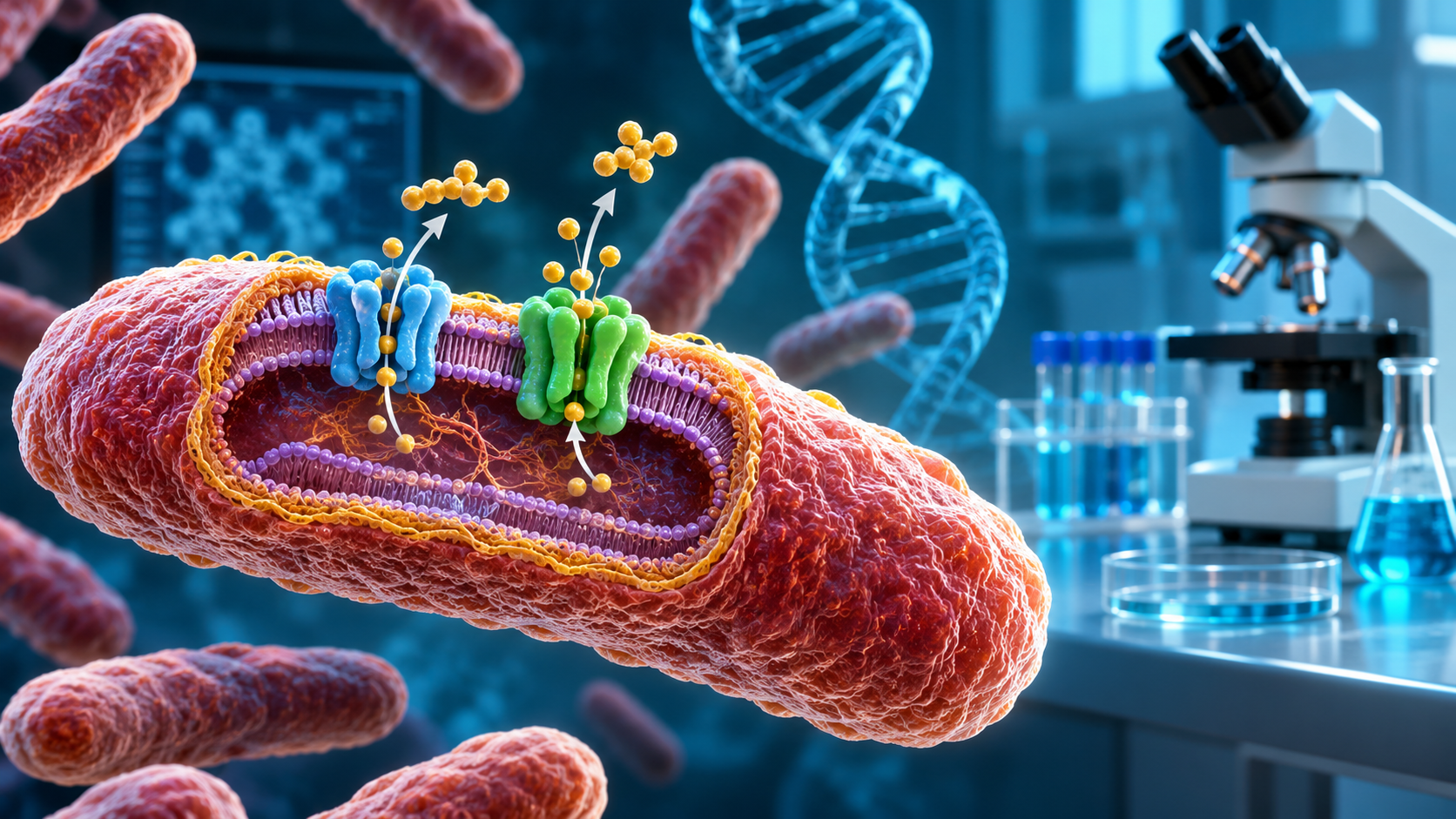
Three important protein secretion systems: Sec pathway, Twin-Arginine Translocation (Tat) system and ESX secretion systems.
These systems help tuberculosis bacteria maintain their cellular structure and survive inside host cells.
SecA1 and Tat Pathways: Major Drug Targets
Researchers focused on two important protein transport pathways, SecA1 and Tat, using CRISPR-based gene-silencing technology to reduce their activity.
The experiments revealed that disrupting these pathways significantly reduced bacterial growth in laboratory cultures and inside immune cells.
SecA1 Pathway: Disruption affected the transport of more than 100 bacterial proteins.
Tat Pathway: Interference affected approximately 140 proteins.
Cell Membrane Damage: Disruption weakened the bacterial cell envelope and increased its permeability.
These findings suggest that blocking protein secretion pathways could provide a new approach to developing medicines against tuberculosis.
Significance for Tuberculosis Treatment
Tuberculosis remains a major public health challenge because drug-resistant strains are becoming increasingly difficult to treat.
The newly identified vulnerabilities could help scientists develop medicines that interfere with essential bacterial survival mechanisms.
However, the findings are still at the research stage, and further studies, drug development and clinical trials will be required before new treatments become available.
The research findings were published in the peer-reviewed scientific journal Molecular & Cellular Proteomics.
Important Facts for Exams
Research Institution: CSIR-Centre for Cellular and Molecular Biology (CCMB), Hyderabad.
Research Leader: Dr. Vinay Kumar Nandicoori.
Disease: Tuberculosis (TB).
Causative Bacterium: Mycobacterium tuberculosis.
Major Drug Targets Identified: SecA1 and Tat protein transport pathways.
Research Technology: CRISPR-based gene silencing and computational modelling.
Key Findings: 92 protein transport components and nearly 200 molecular reactions.
Sec Pathway: Uses ATP energy to transport largely unfolded proteins across bacterial membranes.
Tat Pathway: Transports folded proteins using the proton motive force.
ESX Secretion System: A Type VII secretion system associated with mycobacterial virulence.
Scientific Journal: Molecular & Cellular Proteomics.
Significance: Potential development of new treatments against drug-resistant tuberculosis.