Cyclone Akvan 2026: IMD Issues Severe Cyclonic Storm Warning for Bay of Bengal
Key points
In the News
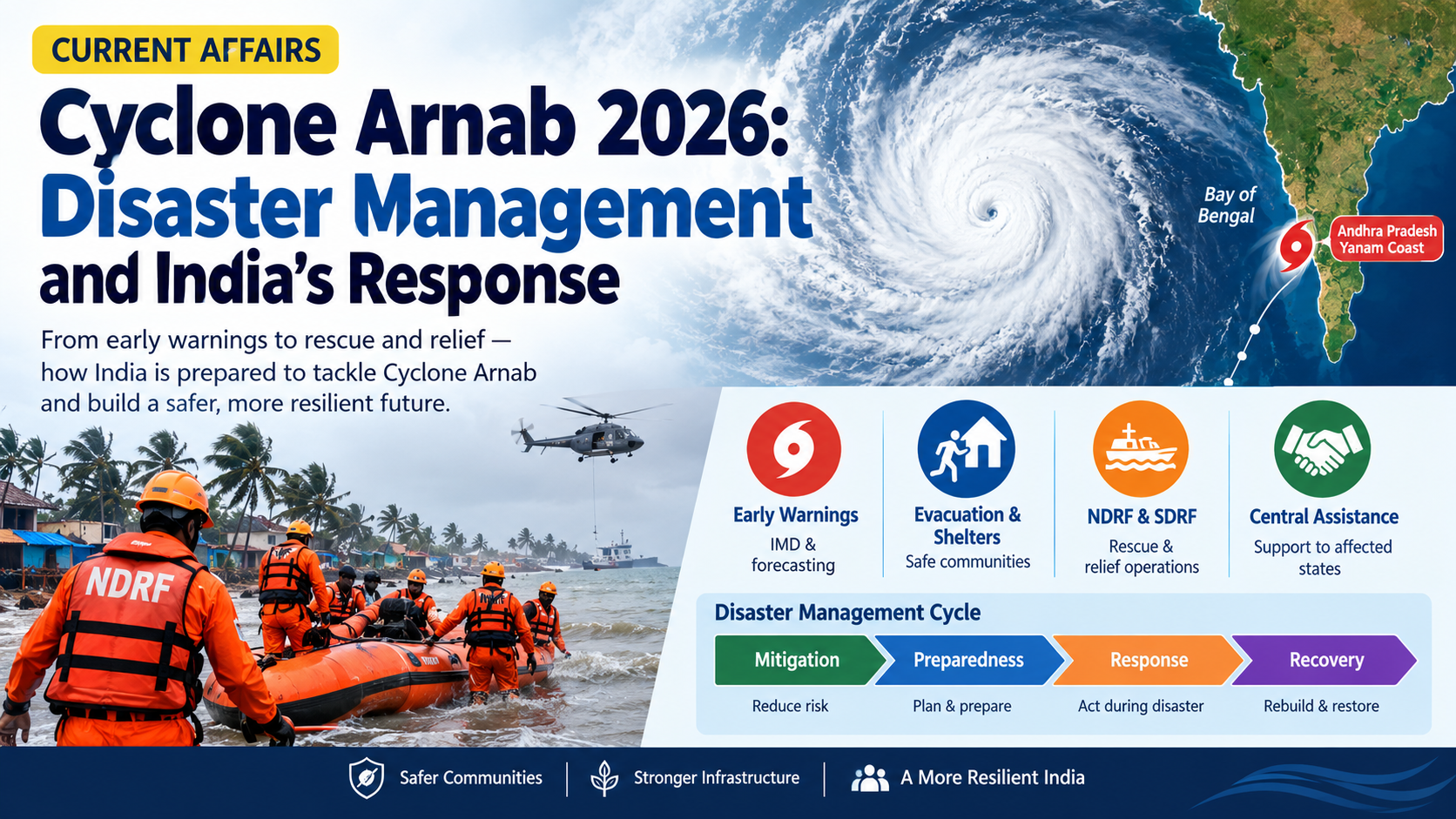
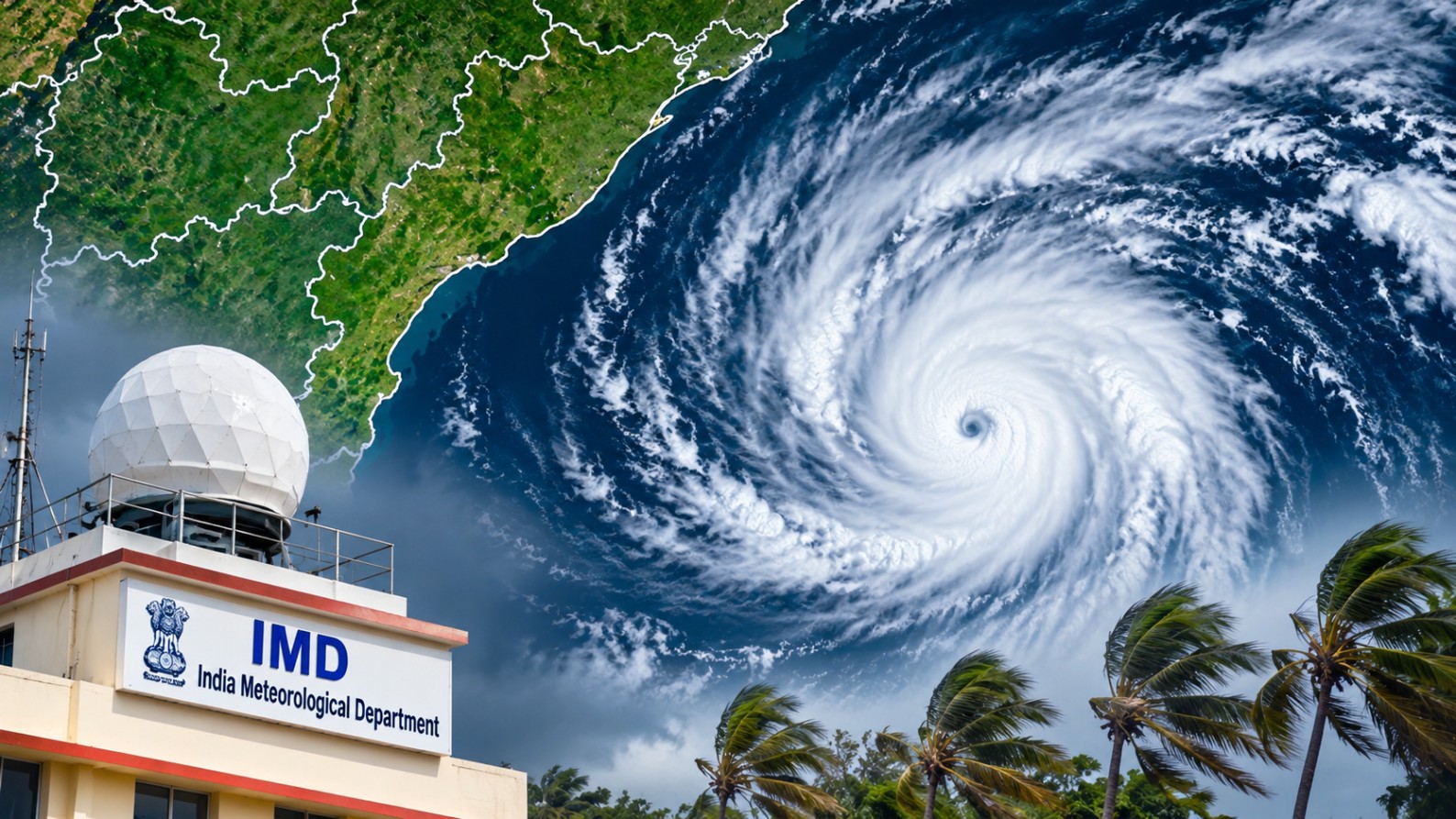
The India Meteorological Department (IMD) has issued a cyclone warning after Cyclone Akvan intensified into a Severe Cyclonic Storm over the Bay of Bengal on 18 November 2026.
According to the IMD's latest bulletin, the cyclone is expected to approach the North Andhra Pradesh, Yanam and South Odisha coasts, bringing strong winds, heavy rainfall and dangerous sea conditions.
The IMD forecasts that the system could cross the coast between Machilipatnam and Puri around noon on 20 November 2026, with sustained winds of 90–100 km/h, gusting to 110 km/h. This remains a forecast and may change as the cyclone develops.
Background
Tropical cyclones are powerful rotating storm systems that develop over warm tropical oceans under favourable atmospheric conditions.
They generally form when sea surface temperatures are sufficiently warm, atmospheric moisture is high and vertical wind shear is relatively low.
The Bay of Bengal is particularly vulnerable to destructive cyclones because its coastal geography and shallow continental shelf can amplify storm-surge impacts.
In India, the IMD, under the Ministry of Earth Sciences, is responsible for monitoring cyclones and issuing forecasts and warnings.
Key Highlights
Cyclone Name: Akvan
Naming Country: Iran
Ocean Basin: North Indian Ocean
Location: Bay of Bengal
Current Classification: Severe Cyclonic Storm
Monitoring Agency: India Meteorological Department
Affected Coastal Areas: Andhra Pradesh, Yanam and South Odisha
Expected Landfall: 20 November 2026, around noon
Forecast Wind Speed at Landfall: 90–100 km/h, gusting to 110 km/h
Major Risks: Heavy rainfall, flooding, strong winds, storm surge and dangerous sea conditions
Tropical Cyclone Classification in India
Cyclone Category | Wind Speed |
|---|---|
Depression | 31–49 km/h |
Deep Depression | 50–61 km/h |
Cyclonic Storm | 62–88 km/h |
Severe Cyclonic Storm | 89–117 km/h |
Very Severe Cyclonic Storm | 118–166 km/h |
Extremely Severe Cyclonic Storm | 167–221 km/h |
Super Cyclonic Storm | 222 km/h or more |
Important Facts for Competitive Exams
1. What is Cyclone Akvan?
Cyclone Akvan is a tropical cyclone that developed over the Bay of Bengal in November 2026. It intensified into a Severe Cyclonic Storm and prompted warnings for India's eastern coastline.
2. Which country suggested the name Akvan?
The name Akvan was contributed by Iran under the North Indian Ocean tropical cyclone naming system.
3. Which organisation monitors tropical cyclones in India?
The India Meteorological Department (IMD) monitors tropical cyclones and issues forecasts, warnings and advisories. Its Regional Specialised Meteorological Centre is located in New Delhi.
4. What conditions favour tropical cyclone formation?
Warm ocean waters, sufficient atmospheric moisture, low vertical wind shear, atmospheric instability and the Coriolis force support tropical cyclone development.
5. What is storm surge?
Storm surge is an abnormal rise in seawater level caused mainly by cyclone winds and low atmospheric pressure. It can lead to severe coastal flooding.
6. Why is the Bay of Bengal prone to destructive cyclones?
Warm waters favour cyclone development, while its funnel-shaped northern coastline and shallow coastal waters can intensify storm-surge impacts.
7. What is the role of the National Disaster Management Authority?
The National Disaster Management Authority (NDMA) provides national disaster-management guidelines and supports preparedness, risk reduction and coordinated disaster response.
8. What is the Coriolis force?
The Coriolis force is the apparent deflection of moving air and water caused by Earth's rotation. It helps tropical cyclones develop their characteristic rotating circulation.
Quick Revision
Cyclone Akvan intensified into a Severe Cyclonic Storm over the Bay of Bengal on 18 November 2026. The cyclone was named by Iran and is being monitored by the India Meteorological Department. The IMD has warned of strong winds and heavy rainfall along the Andhra Pradesh, Yanam and South Odisha coasts. Important exam concepts include tropical cyclone formation, IMD cyclone classification, storm surge, the Coriolis force and disaster preparedness.