Gogabeel Lake: Bihar's 6th Ramsar Site
Key points
Why in the News?
Gogabeel Lake (also known as Gogabil Lake), located in Katihar district of Bihar, received international recognition as a Ramsar Site in October 2025.
It became India's 94th Ramsar Site and Bihar's sixth Ramsar Site at the time of designation.
The recognition highlights the importance of wetland conservation, biodiversity protection and community participation.
About Gogabeel Lake
Gogabeel Lake is a natural oxbow wetland situated in the Trans-Gangetic Plains of Bihar.
It is surrounded by two major rivers:
Mahananda River: To the northeast
Ganga River: To the south
Gogabeel was declared Bihar's first Community Reserve.
Traditional festivals such as Sirva, Adra and Chhath are associated with the wetland and its surrounding communities.
Key Facts for Competitive Exams
Particulars | Details |
|---|---|
Lake Name | Gogabeel / Gogabil Lake |
Location | Katihar, Bihar |
Geographical Region | Trans-Gangetic Plains |
Type | Oxbow Lake |
Ramsar Recognition | India's 94th Ramsar Site |
Ramsar Site Number | 2579 |
Bihar Ramsar Status | Sixth Ramsar Site in October 2025 |
Nearby Rivers | Ganga and Mahananda |
Protected Area Status | Bihar's First Community Reserve |
Important Festivals | Sirva, Adra and Chhath |
What is an Oxbow Lake?
An oxbow lake is a crescent-shaped waterbody formed when a river meander becomes separated from the main river channel.
Such lakes are commonly found in floodplain regions.
Gogabeel Lake is an example of an oxbow wetland in the Gangetic Plains.
Flora and Fauna of Gogabeel Lake
Flora
The surrounding natural landscape includes tropical dry deciduous vegetation.
Fauna
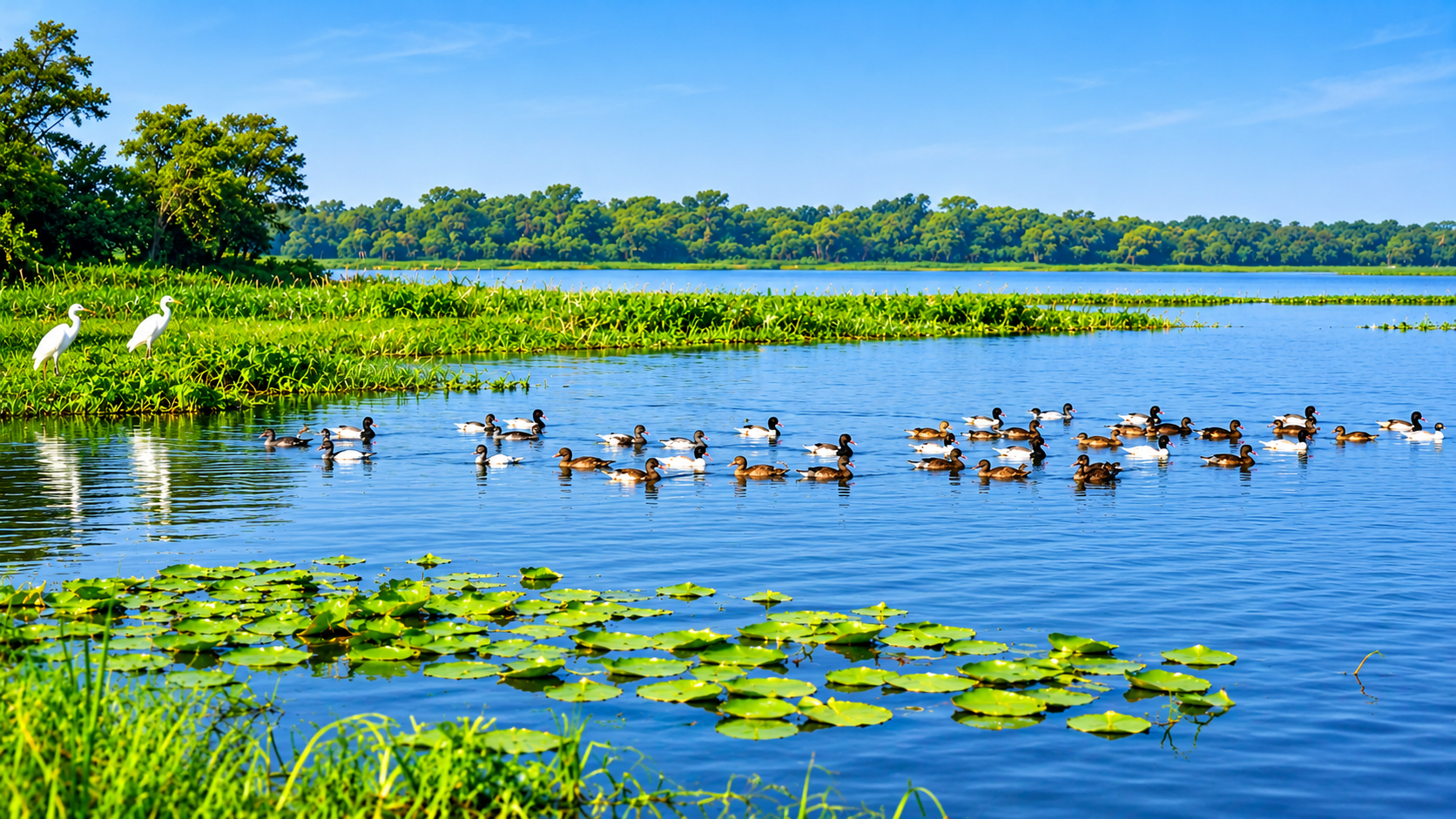
Gogabeel Lake provides wintering habitat for several migratory bird species and supports wildlife of conservation importance.
Important species associated with the wetland include:
Species | Scientific Name | Importance |
|---|---|---|
Smooth-coated Otter | Lutrogale perspicillata | Wetland mammal |
Wallago Catfish | Wallago attu | Vulnerable fish species |
Common Pochard | Aythya ferina | Vulnerable migratory waterbird |
Important: Gogabeel Lake serves as a breeding habitat for Wallago attu, also known as Wallago Catfish.
Ecological Importance
Migratory Birds: Provides wintering habitat for birds travelling along migratory routes.
Biodiversity: Supports aquatic wildlife, fish and wetland vegetation.
Community Conservation: Local communities contribute to wetland protection.
Livelihoods: Supports fishing, irrigation and other traditional activities.
Cultural Significance: Local festivals reflect the relationship between communities and the wetland.
What is the Ramsar Convention?
The Ramsar Convention is an international treaty dedicated to the conservation and wise use of wetlands.
Particulars | Details |
|---|---|
Adopted | 1971 |
Place | Ramsar, Iran |
Entered into Force | 1975 |
Main Objective | Conservation and wise use of wetlands |
Approach | Local, national and international cooperation |
The convention promotes wetland conservation while supporting sustainable development.
Conclusion
Gogabeel Lake's recognition as a Ramsar Site highlights the importance of conserving wetlands and protecting biodiversity.
For competitive examinations, its location, oxbow formation, Ramsar designation, associated rivers and important wildlife species are particularly relevant.