India–Poland Relations 2026: Strategic Partnership, Trade, Defence Cooperation & Key Facts
Key points
Why in the News?
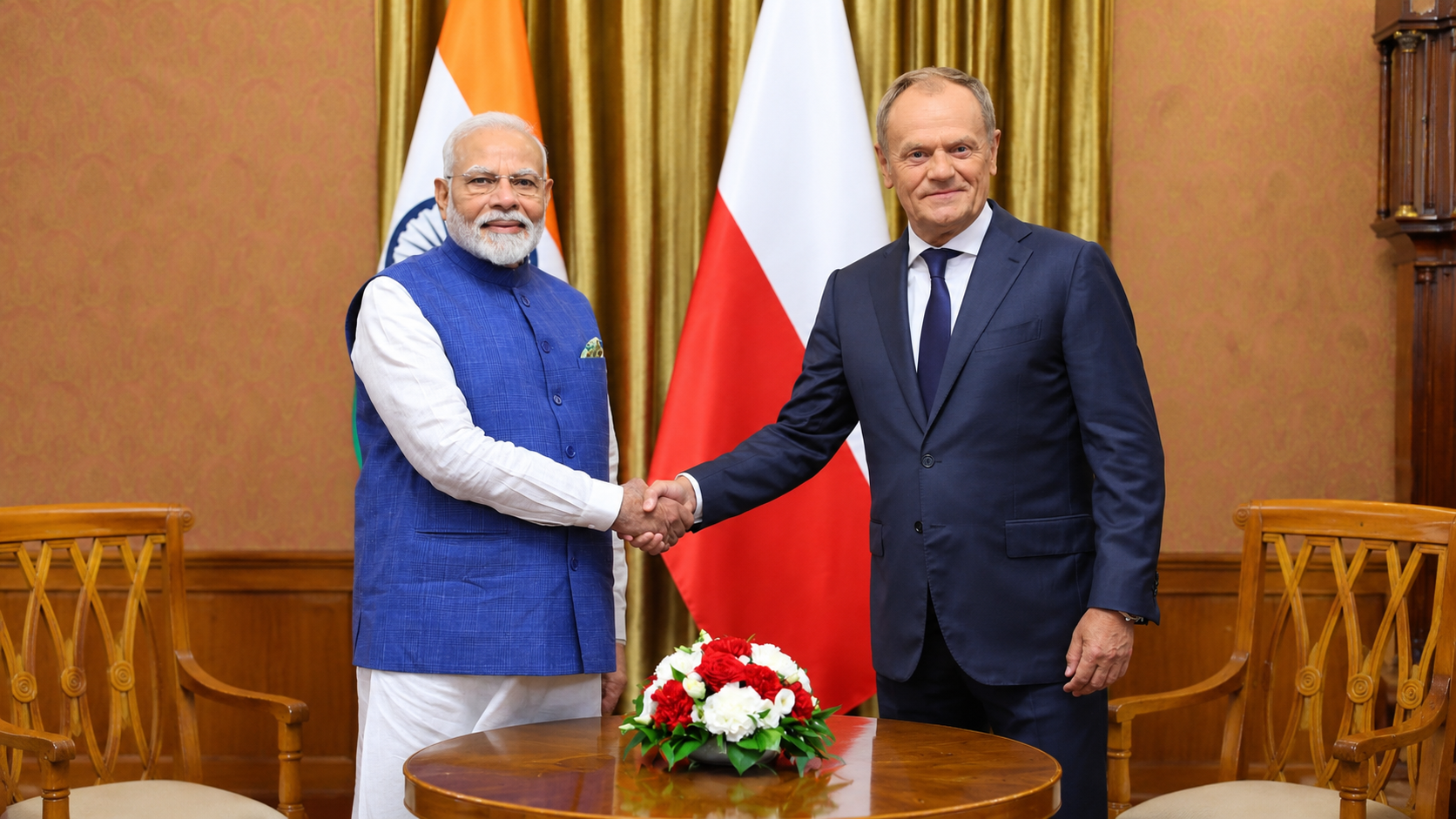
India–Poland relations are gaining importance as both countries work to strengthen their Strategic Partnership through cooperation in trade, defence, technology, space, clean energy and international affairs. The partnership is guided by the India–Poland Action Plan 2024–2028.
India–Poland Relations: Key Highlights
Diplomatic relations: Established in 1954.
Strategic Partnership: Announced in August 2024.
Indian Prime Minister: Narendra Modi.
Polish Prime Minister: Donald Tusk.
Action Plan: India–Poland Action Plan 2024–2028.
Major cooperation areas: Trade, defence, science and technology, space, education and culture.
1. Trade and Economic Cooperation
India and Poland are working to expand bilateral trade and investment. Both countries have opportunities to cooperate in manufacturing, information technology, pharmaceuticals, food processing, clean energy and advanced industries.
Stronger business-to-business connections and cooperation between startups can help diversify supply chains and create new economic opportunities.
2. Defence and Security Cooperation
Defence cooperation is an important area of the India–Poland relationship. Both countries can explore collaboration in defence manufacturing, military technology, cybersecurity and defence industry partnerships.
They also share an interest in counter-terrorism and addressing emerging security challenges.
3. Science, Technology and Innovation
India and Poland have opportunities to strengthen cooperation in emerging technologies, including:
Artificial Intelligence (AI)
Semiconductors
Space research and technology
Critical minerals
Clean energy and battery technology
Startup and innovation ecosystems
Such cooperation can support research, technological development and industrial growth in both countries.
4. Climate Change and Disaster Management
India and Poland can collaborate on climate-resilient infrastructure, renewable energy and sustainable development.
The Coalition for Disaster Resilient Infrastructure (CDRI), an international initiative launched by India in 2019, provides a platform for countries to cooperate on strengthening infrastructure against natural disasters.
5. United Nations and Global Cooperation
India and Poland engage on international issues through multilateral institutions, including the United Nations. Their discussions cover global governance, international security and reform of multilateral institutions.
India supports reform of the UN Security Council to make it more representative of contemporary global realities.
Historical Background of India–Poland Relations
India and Poland established diplomatic relations in 1954. Relations have developed through political dialogue, trade, education, cultural exchanges and cooperation in international forums.
An important historical connection dates back to the Second World War, when the Maharaja of Nawanagar, Jam Saheb Digvijaysinhji, provided refuge to Polish children. His humanitarian contribution remains an important symbol of friendship between the two countries.
In August 2024, Prime Minister Narendra Modi visited Poland, and the two countries elevated their relationship to a Strategic Partnership. They also adopted the India–Poland Action Plan 2024–2028 to guide bilateral cooperation.
Important Facts for Competitive Exams
Topic | Important Fact |
|---|---|
Capital of India | New Delhi |
Capital of Poland | Warsaw |
Diplomatic relations established | 1954 |
Strategic Partnership | 2024 |
Bilateral framework | India–Poland Action Plan 2024–2028 |
Indian Prime Minister | Narendra Modi |
Polish Prime Minister | Donald Tusk |
Important historical figure | Jam Saheb Digvijaysinhji |
Disaster-resilience initiative | Coalition for Disaster Resilient Infrastructure (CDRI) |
Conclusion
India–Poland relations have expanded from traditional diplomatic ties to a broader partnership involving trade, defence, technology, education and sustainable development. Continued engagement can create opportunities for economic growth, innovation and cooperation on global challenges.