
Current Affairs: 29 October 2026
Stay updated with the latest Current Affairs 2026 series covering India–Poland Relations, the 12th BRICS Parliamentary Forum in New Delhi, India’s Industrial Production Growth in September 2026, ISRO’s NVS-03 satellite mission and NavIC, India’s FY 2026–27 economic growth outlook, PM Viksit Gram Swaraj Yojana, Cyclone Arnab and disaster management, and the regulation of anti-cancer medicine prices. This series provides important facts, recent developments and background information for UPSC, UGC NET/JRF and other competitive examinations.
- Government Schemes
- UPSC CSE
- UGC NET
- UPSC GS2
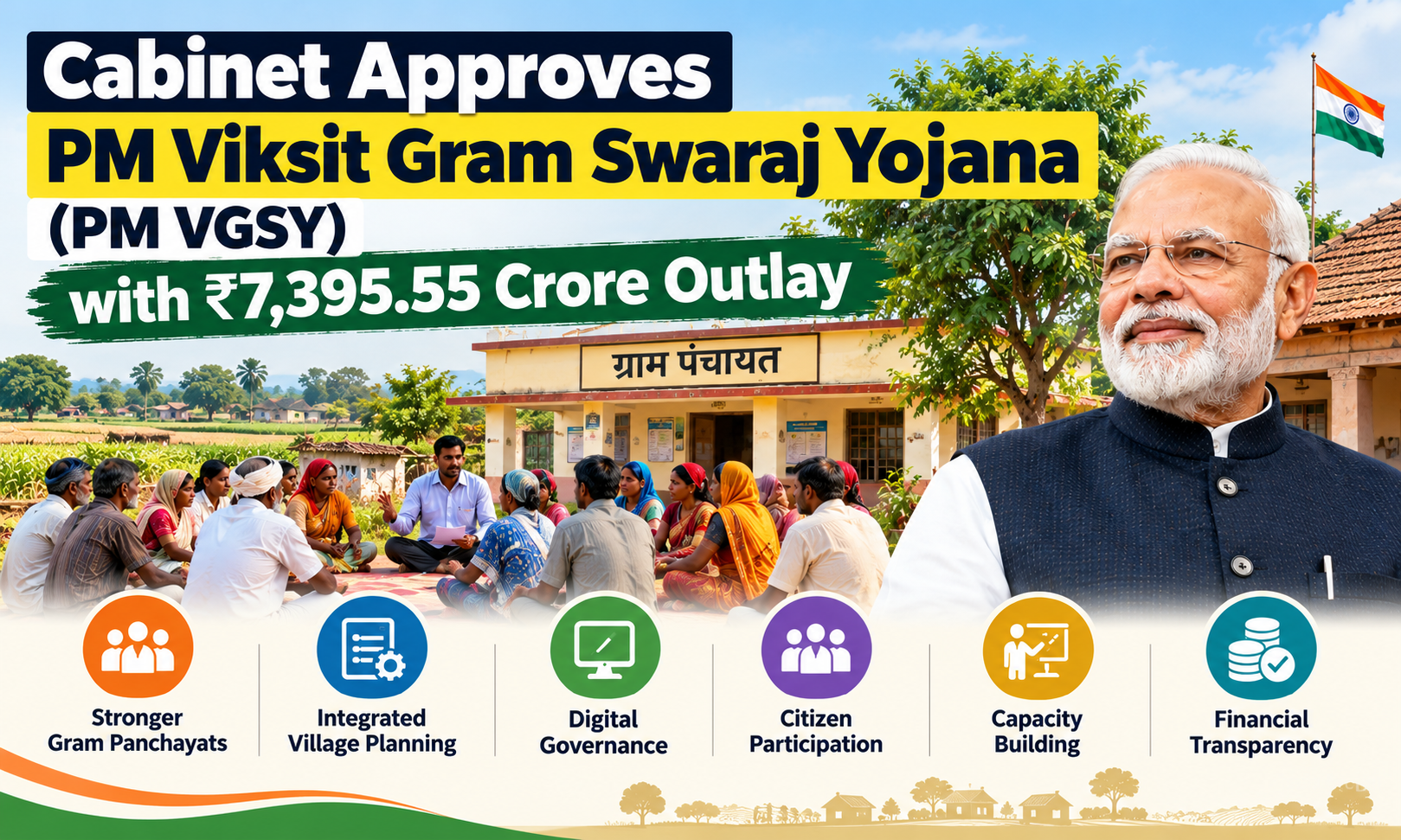
01Cabinet Approves PM Viksit Gram Swaraj Yojana (PM VGSY) with ₹7,395.55 Crore Outlay
Key points
Why in the News?
The Union Cabinet has approved the Pradhan Mantri Viksit Gram Swaraj Yojana (PM VGSY), a Centrally Sponsored Scheme aimed at strengthening Gram Panchayats and improving rural local governance. The scheme will be implemented from 2026–27 to 2030–31 with a total financial outlay of ₹7,395.55 crore.
Key Highlights
Particular | Details |
|---|---|
Scheme | Pradhan Mantri Viksit Gram Swaraj Yojana |
Abbreviation | PM VGSY |
Approved by | Union Cabinet |
Nodal Ministry | Ministry of Panchayati Raj |
Scheme Type | Centrally Sponsored Scheme |
Total Outlay | ₹7,395.55 crore |
Central Share | ₹4,869.48 crore |
State Share | ₹2,526.07 crore |
Implementation Period | 2026–27 to 2030–31 |
Coverage | All States and Union Territories |
Institutional Coverage | More than 2.55 lakh Panchayats and traditional local bodies |
Expected Direct Beneficiaries | Around 32 lakh elected representatives, Panchayat functionaries and other stakeholders |
What Is the Objective of PM VGSY?
The main objective is to transform Gram Panchayats into empowered, accountable and self-reliant institutions of local self-government. The scheme aims to connect village-level development priorities with government programmes, available funds and local community needs.
It also seeks to improve coordination between Central Ministries, State Governments and local bodies so that development activities can be planned and monitored more effectively.
Six Important Focus Areas
1. Strengthening Gram Panchayats: Panchayats will be supported in coordinating local development priorities and government interventions.
2. Integrated Village Planning: The scheme aims to support the preparation of more than 2.55 lakh Gram Panchayat Development Plans (GPDPs) annually through the eGramSwaraj portal.
3. Digital Governance: Information about government schemes, beneficiaries, benefits, community assets and available resources will be integrated to support better planning and monitoring.
4. Public Participation: Gram Sabhas, Panchayat forums and digital outreach platforms will help citizens understand government initiatives and participate in local development discussions. Each coordinated awareness-generation exercise aims to reach at least one crore citizens.
5. Capacity Building: Around 32 lakh elected representatives, Panchayat functionaries and other stakeholders are expected to receive capacity-building support and digital assistance.
6. Financial Accountability: The scheme aims to support at least 2.55 lakh online audit plans annually, alongside improved accounting, public disclosure and mobilisation of Own Source Revenue (OSR).
Important Digital Platforms
eGramSwaraj: A digital platform supporting Panchayat planning and governance processes. Under the scheme, it will support the preparation of integrated Gram Panchayat Development Plans.
AuditOnline: A platform used for online auditing of Panchayati Raj accounts. It supports transparency and accountability in local financial management.
PANCHAM: An AI-enabled, multilingual, two-way communication platform available in 17 Indian languages. It supports communication about government schemes, training material and Panchayat-related information.
Background: What Is a Gram Panchayat?
A Gram Panchayat is a rural local self-government institution. Panchayats are part of India's decentralised governance system and help identify local needs, prepare development plans and support the implementation of public programmes.
The 73rd Constitutional Amendment Act, 1992 gave constitutional status to Panchayati Raj Institutions. Part IX of the Constitution deals with Panchayats, while the Eleventh Schedule lists 29 subjects that may be devolved to Panchayats by State Legislatures.
The Gram Sabha consists of persons registered in the electoral rolls relating to a village within the area of a Gram Panchayat. It provides a forum for local participation and discussion of village-level issues.
Why Is This Scheme Important?
It strengthens decentralised planning and grassroots governance.
It aims to improve coordination between government departments and village-level institutions.
Digital integration can help Panchayats identify development gaps and monitor public programmes.
Online audits and public disclosure can improve financial transparency.
Capacity building can help elected representatives and Panchayat functionaries manage local development more effectively.
The scheme covers all States and Union Territories, including eligible traditional rural local government institutions in areas where Panchayats do not exist under Part IX of the Constitution.
Important Facts to Remember
Total outlay: ₹7,395.55 crore.
Central share: ₹4,869.48 crore.
State share: ₹2,526.07 crore.
Implementation period: 2026–27 to 2030–31.
Ministry: Ministry of Panchayati Raj.
Annual planning target: More than 2.55 lakh Gram Panchayat Development Plans.
Annual audit target: At least 2.55 lakh online audit plans.
PANCHAM: AI-enabled communication platform available in 17 Indian languages.
Constitutional background: 73rd Constitutional Amendment Act, 1992; Part IX and the Eleventh Schedule of the Constitution.
Conclusion
Pradhan Mantri Viksit Gram Swaraj Yojana aims to strengthen rural local governance through integrated planning, digital systems, capacity building, citizen participation and financial accountability. It seeks to help Panchayats connect national development priorities with local needs as part of the broader vision of Viksit Bharat.
02India Highlights Biodiversity Conservation at CBD COP-17 in Armenia

Key points
Why in the News?
On 27 October 2026, India reaffirmed its commitment to biodiversity conservation at the 17th Conference of the Parties to the Convention on Biological Diversity (CBD COP-17), held in Yerevan, Armenia. Union Minister for Environment, Forest and Climate Change Bhupender Yadav delivered India's National Statement at the high-level segment.
On 28 October 2026, India also released four important publications related to biodiversity conservation, biosafety and access and benefit-sharing at a COP-17 side event.
1. What Is CBD COP-17?
The Conference of the Parties (COP) is the main decision-making body of the Convention on Biological Diversity (CBD). It brings together member countries to discuss biodiversity conservation, the sustainable use of biological resources and the fair sharing of benefits arising from genetic resources.
Key Facts
Event: 17th Conference of the Parties to the Convention on Biological Diversity (CBD COP-17)
Host country: Armenia
Host city: Yerevan
Indian representative: Bhupender Yadav, Union Minister for Environment, Forest and Climate Change
Main focus: Biodiversity conservation and implementation of global biodiversity commitments
2. Kunming–Montreal Global Biodiversity Framework
India emphasised that the Kunming–Montreal Global Biodiversity Framework should be implemented according to the national priorities, circumstances and laws of individual countries.
India also highlighted the need for adequate and predictable financial support, capacity-building and technology transfer from developed countries to support implementation.
The framework was adopted at the 15th Conference of the Parties to the CBD in Montreal, Canada, in December 2022. It provides global goals and targets for halting and reversing biodiversity loss by 2030.
One of its best-known targets is to conserve at least 30% of terrestrial and inland water areas, and of marine and coastal areas, by 2030.
3. India's National Biodiversity Targets
India's updated National Biodiversity Strategy and Action Plan translates the global framework into 23 National Biodiversity Targets and 142 indicators.
These targets and indicators help India plan, monitor and assess its progress towards biodiversity conservation and the sustainable use of biological resources.
Biodiversity conservation is important for maintaining ecological balance, protecting wildlife habitats, supporting agriculture and safeguarding livelihoods that depend on forests, wetlands, rivers and other ecosystems.
4. India's Biodiversity Conservation: Important Facts
India highlighted its existing network of protected and conservation areas at CBD COP-17.
Category | Number |
|---|---|
Protected Areas | 1,134 |
Ramsar Sites | 103 |
Biodiversity Heritage Sites | 57 |
Biosphere Reserves | 18 |
Biosphere Reserves in UNESCO's Man and the Biosphere Network | 13 |
Figures reported by the Ministry of Environment, Forest and Climate Change in its PIB release dated 27 October 2026.
5. Major Indian Initiatives for Biodiversity Conservation
International Big Cat Alliance (IBCA)
The International Big Cat Alliance promotes international cooperation for conserving seven big-cat species and their habitats. Cooperation between countries is important because wildlife habitats and conservation challenges can extend across national borders.
MISHTI
The Mangrove Initiative for Shoreline Habitats and Tangible Incomes (MISHTI) focuses on mangrove restoration. Mangroves help protect coastlines, support biodiversity and provide important ecosystem services.
Amrit Dharohar
Amrit Dharohar is associated with wetland conservation and the sustainable use of wetland ecosystems. Wetlands support aquatic life, migratory birds, water-related ecological processes and local livelihoods.
Mission LiFE
Mission LiFE stands for Lifestyle for Environment. It encourages individuals and communities to adopt environmentally responsible lifestyles and sustainable consumption practices.
Ek Ped Maa Ke Naam
This initiative encourages people to plant trees and participate in environmental protection.
Soil Health Card Scheme
The scheme promotes informed soil management and helps farmers understand the condition of their soil so that they can make better decisions about nutrient management and soil fertility.
6. India Releases Four Publications at CBD COP-17
At a side event held on 28 October 2026, India released four publications related to biodiversity and biosafety.
Guidelines for the Designation of India's Other Effective Area-Based Conservation Measures (I-OECMs) 2026: These guidelines support recognition of effective conservation beyond conventional protected areas, subject to appropriate criteria and governance.
5th National Report on the Cartagena Protocol on Biosafety: The report relates to India's reporting on biosafety under the Cartagena Protocol.
The Convention on Biological Diversity Handbook: Reference Guide and Indian Perspective: The handbook provides reference material to support understanding and participation in the CBD process.
India's ABS Success Story: This publication highlights India's experience with access and benefit-sharing.
7. What Is Access and Benefit-Sharing (ABS)?
Access and Benefit-Sharing refers to the process through which access to genetic resources and the sharing of benefits arising from their utilisation are addressed.
Benefits may include monetary payments, research collaboration, technology transfer and other agreed forms of benefit-sharing.
The principle is important because biological resources and associated traditional knowledge can contribute to scientific research, agriculture, medicine and commercial products. Fair benefit-sharing can help ensure that the benefits are shared appropriately, including with relevant local communities.
India highlighted its village-level biodiversity governance and decentralised participation in access and benefit-sharing.
8. What Is the Cali Fund?
The Cali Fund is associated with the multilateral mechanism for sharing benefits arising from the use of digital sequence information on genetic resources.
Digital sequence information refers to digital data about genetic sequences used in scientific research and other applications. India supported benefit-sharing through a multilateral mechanism that includes the Cali Fund.
9. What Is the Cartagena Protocol on Biosafety?
The Cartagena Protocol on Biosafety is an international agreement under the Convention on Biological Diversity. It focuses on the safe handling, transport and use of living modified organisms resulting from modern biotechnology that may have adverse effects on biodiversity, taking into account risks to human health.
At COP-17, India's release of its fifth national report under the protocol highlighted biosafety governance and reporting.
10. What Are Other Effective Area-Based Conservation Measures (OECMs)?
OECMs are geographically defined areas that achieve positive, long-term biodiversity conservation outcomes even if they are not formally designated as conventional protected areas.
They recognise that conservation can also take place through effective management of landscapes and other areas outside traditional protected-area systems.
Important Takeaways
CBD COP-17 was held in Yerevan, Armenia.
India's National Statement was delivered by Bhupender Yadav.
India's updated National Biodiversity Strategy and Action Plan contains 23 National Biodiversity Targets and 142 indicators.
India reported 1,134 Protected Areas, 103 Ramsar sites, 57 Biodiversity Heritage Sites and 18 Biosphere Reserves.
The Kunming–Montreal Global Biodiversity Framework was adopted at CBD COP-15 in Montreal in 2022.
MISHTI focuses on mangrove restoration, while Amrit Dharohar supports wetland conservation.
The Cartagena Protocol on Biosafety addresses risks related to living modified organisms resulting from modern biotechnology.
The Cali Fund is associated with benefit-sharing from the use of digital sequence information on genetic resources.
India released four publications on OECMs, biosafety, the CBD and access and benefit-sharing at COP-17.
03Cyclone Arnab 2026: Disaster Management and India's Response
Key points
Why in the News?
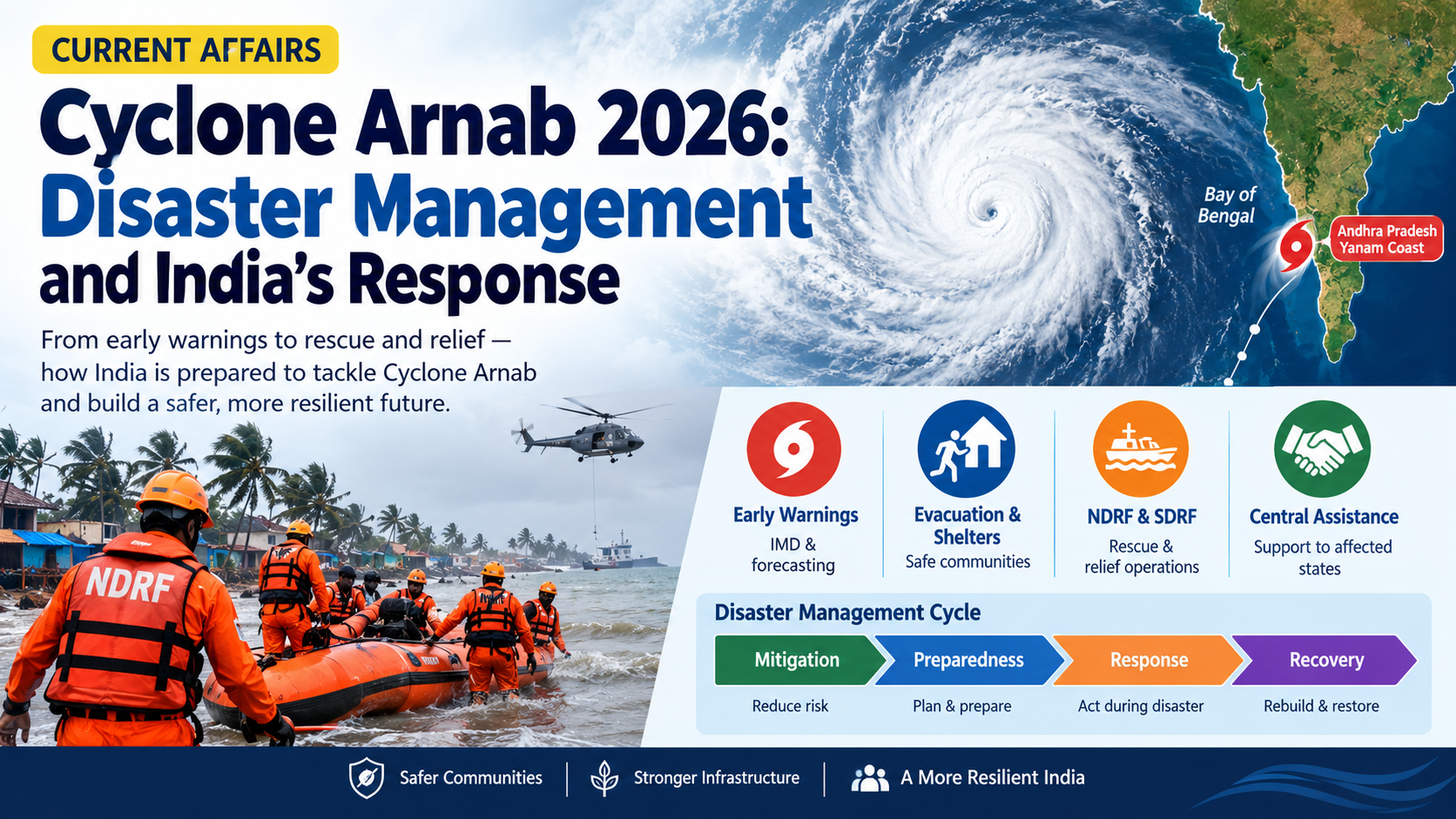
Cyclone Arnab intensified over the Bay of Bengal and crossed the Andhra Pradesh–Yanam coast on 28 October 2026. The cyclone triggered preparedness, evacuation, rescue and relief measures across affected regions.
On 29 October 2026, the Ministry of Home Affairs reported that Union Home Minister Amit Shah had spoken with the Chief Ministers of Andhra Pradesh, Puducherry, Odisha and Chhattisgarh to assure them of central assistance. National Disaster Response Force (NDRF) and State Disaster Response Force (SDRF) teams were engaged in rescue and relief operations. Inter-Ministerial Central Teams (IMCTs) were also to be sent to assess the damage and determine further assistance requirements.
Official update: Press Information Bureau (PIB), Ministry of Home Affairs.
1. What Is Cyclone Arnab?
Cyclone Arnab was a tropical cyclone that developed over the Bay of Bengal in October 2026. According to the Cabinet Secretariat's PIB release dated 26 October, the system developed from a deep depression and intensified into a cyclonic storm.
The India Meteorological Department (IMD) forecast that it would cross the Andhra Pradesh and Yanam coasts between Bapatla and Visakhapatnam as a very severe cyclonic storm on 28 October.
Key Facts
Cyclone name: Arnab
Region of formation: Bay of Bengal
Affected coastal region: Andhra Pradesh–Yanam coast
Expected landfall date: 28 October 2026
Forecast intensity before landfall: Very severe cyclonic storm
Forecast wind speed in the 26 October PIB release: 115–125 km/h, with gusts up to 140 km/h
Key agencies involved: IMD, NDRF, SDRF, NDMA, state disaster management authorities and the armed forces
These wind speeds were forecast before landfall; they should not be interpreted as a verified post-landfall measurement.
2. Government's Disaster Management Response
The Cabinet Secretary, Dr T. V. Somanathan, chaired a meeting of the National Crisis Management Committee (NCMC) on 26 October 2026 to review preparedness for Cyclone Arnab.
The meeting reviewed evacuation arrangements, shelters, deployment of response teams, emergency coordination and measures to minimise damage.
Major Preparedness Measures
Evacuation and shelters: State governments and local administrations arranged shelters and evacuation measures for vulnerable areas.
NDRF and SDRF deployment: Response teams were deployed or kept on standby for rescue and relief work.
District Control Rooms: Control rooms were activated to monitor conditions and coordinate local responses.
Fishermen's safety: Fishermen were advised not to venture into specified areas of the Bay of Bengal and along the affected coasts during the warning period.
Armed forces and Coast Guard: Rescue and relief teams of the Army, Navy, Air Force and Indian Coast Guard, along with ships and aircraft, were kept ready.
Essential services: Authorities were directed to minimise damage to infrastructure and restore essential services as quickly as possible.
3. Latest Central Government Assistance
On 29 October 2026, the Ministry of Home Affairs reported that the Union Home Minister had spoken with the Chief Ministers of Andhra Pradesh, Puducherry, Odisha and Chhattisgarh.
The government stated that NDRF and SDRF teams were conducting rescue and relief operations. Inter-Ministerial Central Teams were to assess the impact and identify further assistance required.
Damage assessment is important because it helps authorities determine the scale of losses and the support required for affected communities and infrastructure.
4. What Is Disaster Management?
Disaster management refers to the systematic process of preparing for, responding to and recovering from disasters. Its purpose is to reduce loss of life, minimise damage to property and infrastructure, and help affected communities recover.
India's disaster management approach includes four major stages:
Stage | Meaning | Cyclone-related example |
|---|---|---|
Mitigation | Reducing disaster risk over the long term | Cyclone-resistant buildings and coastal shelters |
Preparedness | Planning and readiness before a disaster | Early warnings, evacuation plans and mock drills |
Response | Immediate action during and after a disaster | Search and rescue, medical assistance and emergency shelters |
Recovery | Restoring normal life after the disaster | Rebuilding homes, restoring electricity and repairing roads |
These stages are interconnected. Effective preparedness and mitigation can reduce the impact of a cyclone, while timely response and recovery help communities return to normal life.
5. Important Institutions for Disaster Management in India
National Disaster Management Authority (NDMA)
The NDMA lays down policies, plans and guidelines for disaster management in India. It is chaired by the Prime Minister of India.
National Disaster Response Force (NDRF)
The NDRF is a specialised force responsible for responding to major natural and human-made disasters. Its activities include search and rescue, evacuation support and emergency response.
State Disaster Response Force (SDRF)
State-level response forces support disaster response within their respective states. They work with state authorities and other agencies during emergencies.
Important distinction: SDRF can also refer to the State Disaster Response Fund, a financial mechanism for providing relief following notified disasters. The context determines which meaning applies.
India Meteorological Department (IMD)
The IMD monitors weather systems, forecasts cyclones and issues meteorological warnings. Early warnings help governments and communities prepare for potential hazards.
National Crisis Management Committee (NCMC)
The NCMC coordinates the response of central ministries and agencies during major crises. In Cyclone Arnab's case, it reviewed preparedness and inter-agency coordination.
6. How Are Cyclones Classified in India?
The IMD classifies cyclonic systems over the North Indian Ocean according to their maximum sustained wind speeds.
System | Maximum sustained wind speed |
|---|---|
Depression | 31–49 km/h |
Deep Depression | 50–61 km/h |
Cyclonic Storm | 62–88 km/h |
Severe Cyclonic Storm | 89–117 km/h |
Very Severe Cyclonic Storm | 118–166 km/h |
Extremely Severe Cyclonic Storm | 167–221 km/h |
Super Cyclonic Storm | 222 km/h or more |
Note: These are IMD classification ranges. Gusts can be higher than the maximum sustained wind speed.
7. Why Is India's East Coast Vulnerable to Cyclones?
The Bay of Bengal is a major region for tropical cyclone formation. India's eastern coastline is vulnerable to cyclones because of strong winds, heavy rainfall, storm surges and coastal flooding.
Low-lying coastal settlements, river deltas, fishing communities and densely populated areas may face greater risks.
Major Cyclone Hazards
Strong winds: Can damage buildings, electricity lines and communication networks.
Heavy rainfall: Can cause river flooding and urban waterlogging.
Storm surge: An abnormal rise in sea level associated with a storm can inundate coastal areas.
Coastal erosion: Waves and storm surges can remove sand and damage shorelines.
Infrastructure disruption: Roads, airports, ports, power supplies and telecommunications may be affected.
8. Role of Early Warning Systems
Early warning systems are a key part of disaster risk reduction. The IMD provides weather forecasts and cyclone warnings, while disaster management authorities communicate alerts and organise protective action.
An effective warning system requires more than accurate forecasting. Information must reach vulnerable communities in time, be clearly understood and be linked to practical actions such as evacuation, shelter access and the protection of essential services.
9. Disaster Management Act, 2005
The Disaster Management Act, 2005 provides the legal framework for disaster management in India.
It provides for institutional arrangements at the national, state and district levels, including the NDMA, State Disaster Management Authorities (SDMAs) and District Disaster Management Authorities (DDMAs).
The framework supports disaster prevention, mitigation, preparedness, response and recovery through coordinated planning and implementation.
10. Key Lessons from Cyclone Arnab
Cyclone Arnab highlights the importance of coordination among meteorological agencies, central ministries, state governments, local administrations and emergency response forces.
Important lessons include:
Early warnings must be followed by timely protective action.
Evacuation plans and accessible shelters are essential in vulnerable areas.
Fishermen and coastal communities require clear, timely alerts.
Essential services and transport networks need contingency plans.
Rapid damage assessment helps guide relief and recovery.
Coordination between central and state authorities improves disaster response.
Important Takeaways for Competitive Exams
Cyclone Arnab affected the Bay of Bengal region and crossed the Andhra Pradesh–Yanam coast on 28 October 2026.
The Cabinet Secretary chaired an NCMC preparedness meeting on 26 October 2026.
The IMD is India's national meteorological agency responsible for weather forecasting and cyclone warnings.
The NDMA is chaired by the Prime Minister.
The NDRF is a specialised disaster response force.
The Disaster Management Act was enacted in 2005.
Disaster management includes mitigation, preparedness, response and recovery.
Storm surge is a major coastal hazard associated with tropical cyclones.
On 29 October 2026, the Ministry of Home Affairs reported central assistance and ongoing NDRF and SDRF relief operations in the wake of Cyclone Arnab.
04ISRO NVS-03 Satellite Mission 2026: NavIC, Objectives and Key Facts
Key points
Why in the News?
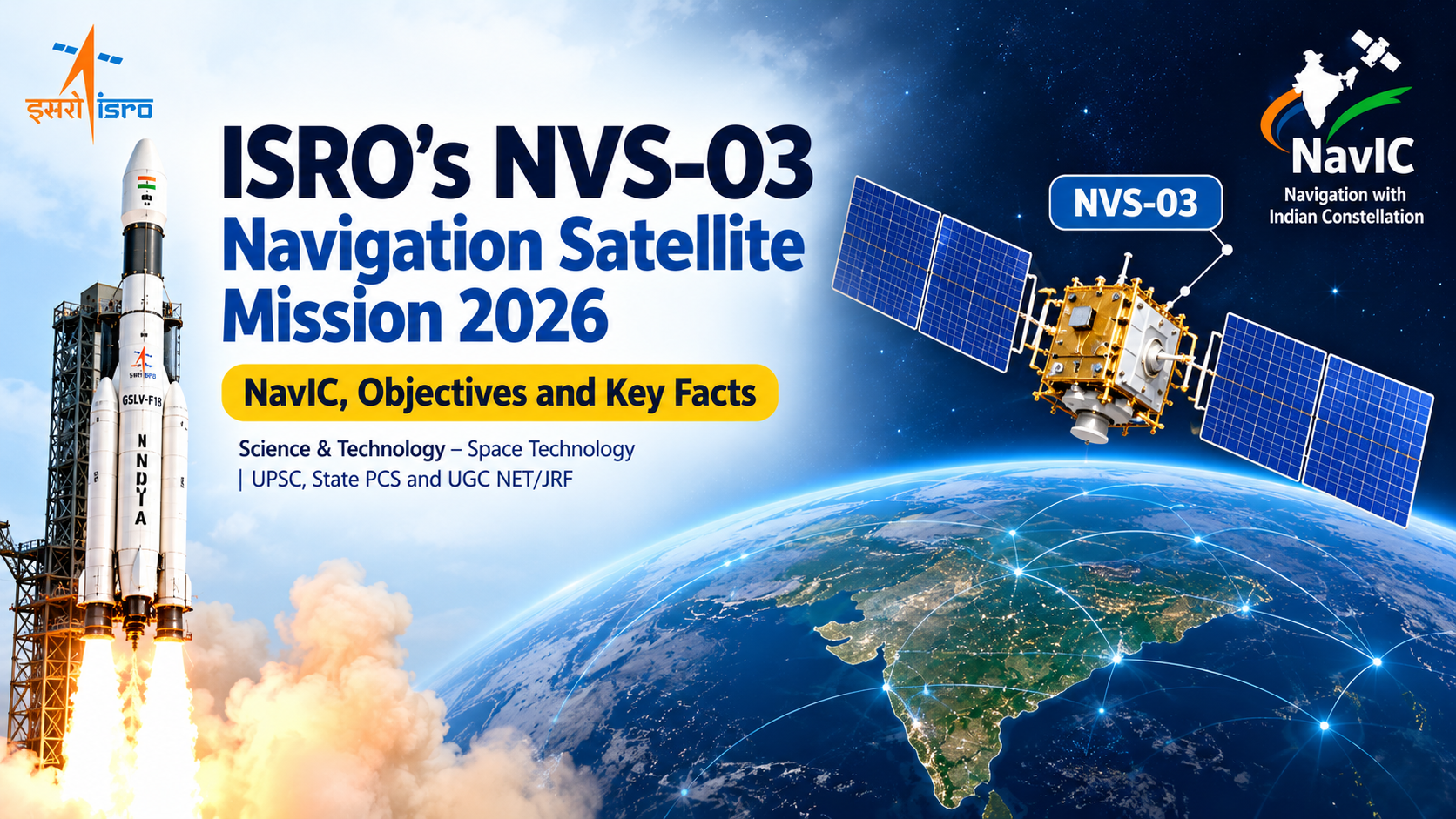
The Indian Space Research Organisation (ISRO) announced the GSLV-F18/NVS-03 mission on 28 October 2026. The mission is planned to launch the NVS-03 navigation satellite into Geosynchronous Transfer Orbit (GTO). The launch is planned from the Second Launch Pad at Satish Dhawan Space Centre, Sriharikota.
Key Facts at a Glance
Mission: GSLV-F18/NVS-03
Space Agency: Indian Space Research Organisation (ISRO)
Satellite: NVS-03
Launch Vehicle: GSLV-F18
Launch Site: Satish Dhawan Space Centre, Sriharikota
Target Orbit: Geosynchronous Transfer Orbit (GTO)
Main Objective: To strengthen India’s indigenous satellite navigation system, NavIC.
What Is NVS-03?
NVS-03 is part of India’s second-generation navigation satellite programme. The mission aims to maintain continuity and improve the reliability of India’s indigenous satellite navigation services.
The satellite carries an indigenous atomic clock along with procured atomic clocks. It also includes the L1 navigation signal, in addition to the existing L5 and S-band signals.
What Is NavIC?
NavIC stands for Navigation with Indian Constellation. It is India’s regional satellite navigation system, formerly known as the Indian Regional Navigation Satellite System (IRNSS).
NavIC provides positioning, navigation and timing services across India and approximately 1,500 km beyond the country’s boundary.
Its applications include:
Transportation and vehicle tracking
Location-based services
Disaster management
Infrastructure monitoring
Surveying and mapping
Accurate time synchronisation
Why Is the NVS-03 Mission Important?
1. Strengthening Navigation Autonomy: The mission supports India’s ability to provide navigation services through its own satellite infrastructure.
2. Improved Signal Compatibility: The addition of the L1 signal can improve compatibility with navigation receivers that support this frequency.
3. Accurate Timing: Atomic clocks are essential for precise satellite positioning and time synchronisation.
4. Civilian and Strategic Applications: NavIC supports transportation, infrastructure, public services and strategic applications.
5. Continuity of Navigation Services: The second-generation satellite programme is designed to strengthen the reliability of India’s regional navigation system.
Important Background for Competitive Exams
What Is GTO?
Geosynchronous Transfer Orbit (GTO) is a transfer orbit used to move a satellite towards its intended geosynchronous orbit. Further orbital manoeuvres are generally required to reach the operational orbit.
Why Are Atomic Clocks Used in Navigation Satellites?
Satellite navigation systems determine a receiver’s position by measuring the travel time of signals transmitted by satellites. Highly accurate clocks are essential for reliable positioning and timing.
Difference Between NavIC and GPS
NavIC is India’s regional satellite navigation system, whereas GPS (Global Positioning System) is operated by the United States and provides global coverage.
Important Facts for UPSC, State PCS and UGC NET/JRF
NavIC: Navigation with Indian Constellation
Former name: Indian Regional Navigation Satellite System (IRNSS)
Space Agency: ISRO
Launch Vehicle: GSLV-F18
Satellite: NVS-03
Target Orbit: Geosynchronous Transfer Orbit
L1, L5 and S-band: Navigation signal bands highlighted for NVS-03
NavIC Coverage: India and approximately 1,500 km beyond its boundary
05India GDP Growth Forecast FY 2026–27: Economic Outlook, RBI and IMF Projections
Key points
Why in the News?
India’s economic growth outlook for the financial year 2026–27 has remained in focus following the latest projections from the Ministry of Finance and major economic institutions.
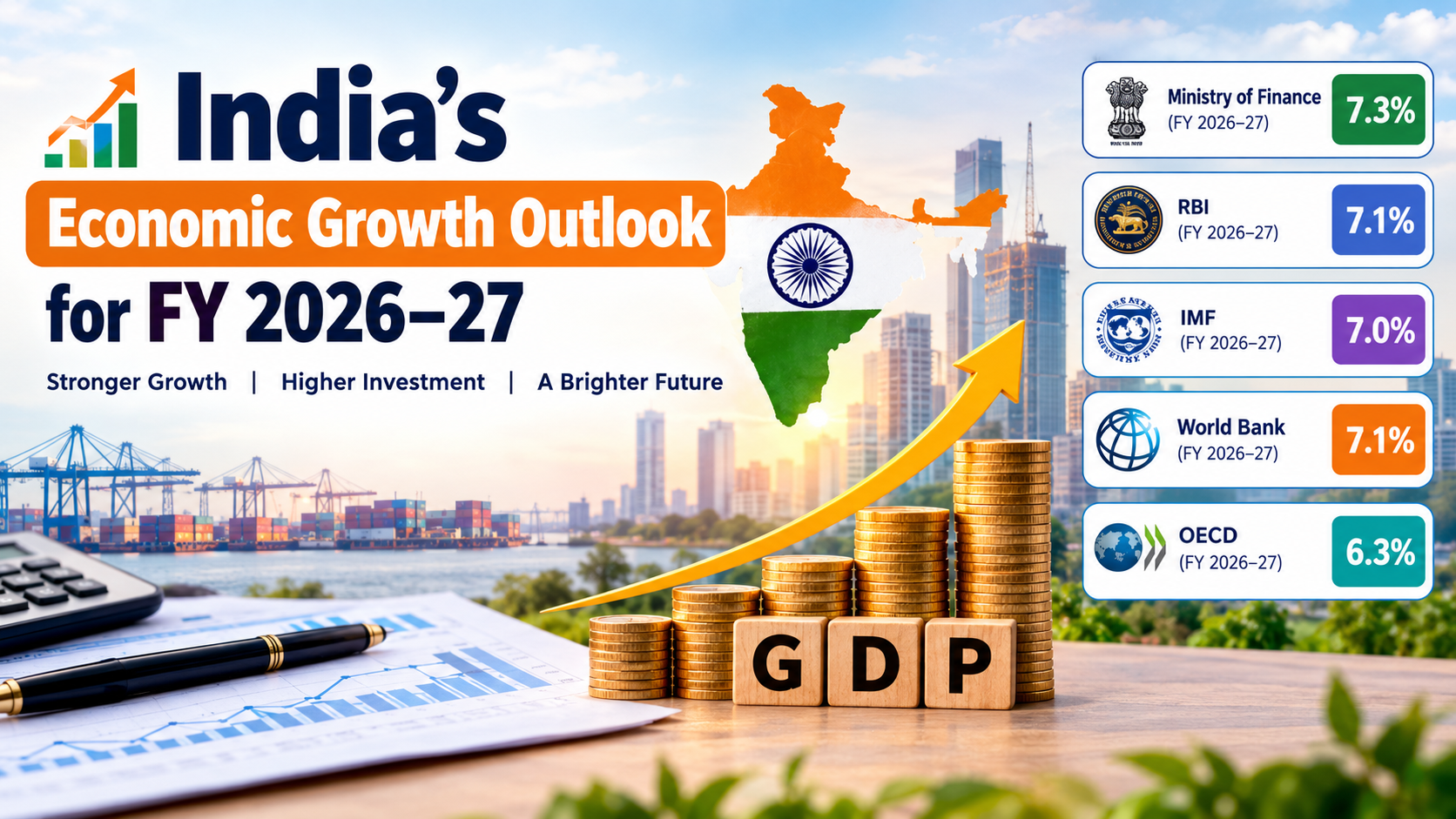
According to a Reuters report published on 29 October 2026, the Ministry of Finance expects India’s economy to grow by 7.3% in FY 2026–27, according to its October economic review. This projection is slightly higher than the Reserve Bank of India’s forecast of 7.1% announced earlier in October. The International Monetary Fund has also raised its FY27 growth projection to 7%.
Key Economic Growth Projections for FY 2026–27
Ministry of Finance: 7.3%, according to the October economic review reported by Reuters.
Reserve Bank of India (RBI): 7.1%, according to its October 2026 forecast.
International Monetary Fund (IMF): 7.0%, according to its October 2026 World Economic Outlook.
World Bank: 7.1%, according to its latest reported upward revision.
Organisation for Economic Co-operation and Development (OECD): Its published outlook projected 6.3%, reflecting a different forecast vintage and economic assumptions.
These estimates differ because institutions use different data cut-off dates, models and assumptions about global conditions. Forecasts may be revised as new economic information becomes available.
What Is GDP Growth?
Gross Domestic Product (GDP) is the total monetary value of final goods and services produced within a country during a specific period.
GDP growth measures the change in economic output over time. In India, the financial year runs from 1 April to 31 March.
Real GDP measures economic growth after adjusting for price changes, while nominal GDP measures output at current prices.
Major Drivers of India’s Economic Growth
1. Domestic Consumption
Household spending on goods and services is an important driver of India’s economy. Consumption supports production, trade, employment and service-sector activity.
2. Services Sector
Information technology, financial services, telecommunications, tourism, transport and professional services contribute significantly to economic activity and employment.
3. Infrastructure and Government Capital Expenditure
Investment in roads, railways, ports, power and other infrastructure can improve connectivity, reduce logistics costs and encourage private investment.
4. Manufacturing and Private Investment
Manufacturing expansion, improved logistics, technology adoption and investment in industrial capacity can support productivity and job creation.
5. Trade Agreements and Exports
Trade agreements may improve market access for Indian goods and services, strengthen supply chains and attract investment. Their overall benefits depend on implementation and global demand.
Challenges to the Growth Outlook
Despite the positive growth projections, several risks remain:
Higher energy prices: Rising crude oil and gas prices can increase production and transportation costs.
Inflation: Higher food and energy prices may reduce household purchasing power.
Global uncertainty: Geopolitical tensions and weaker international demand can affect exports and investment.
External sector pressure: Higher energy import costs may widen the current account deficit.
Employment and productivity: Sustaining growth requires productive jobs, workforce skills and stronger labour-force participation.
The OECD has specifically highlighted higher energy costs, inflation and weaker external demand as risks to India’s growth outlook.
Why Is India’s Economic Growth Outlook Important?
India’s growth outlook matters for employment generation, government revenue, infrastructure development, poverty reduction and improvements in living standards.
Sustained economic expansion also depends on productivity gains, investment, human-capital development, price stability and the ability to manage external economic shocks.
Important Facts for UPSC, State PCS and UGC NET/JRF
FY 2026–27: 1 April 2026 to 31 March 2027.
GDP: Gross Domestic Product.
Real GDP: GDP adjusted for price changes.
Nominal GDP: GDP measured at current prices.
RBI: India’s central bank.
IMF: International Monetary Fund.
World Bank: An international development institution.
OECD: Organisation for Economic Co-operation and Development.
Capital expenditure: Government spending that creates or improves assets, such as infrastructure.
Conclusion
India’s economic outlook for FY 2026–27 remains positive, with the Ministry of Finance projecting 7.3% growth in its October economic review, as reported by Reuters. However, higher energy prices, inflation and global uncertainty remain important risks. Actual growth will depend on domestic demand, investment, productivity and developments in the global economy.
06Supreme Court Questions on Electoral Roll Revision 2026
Key points
Why in the News?
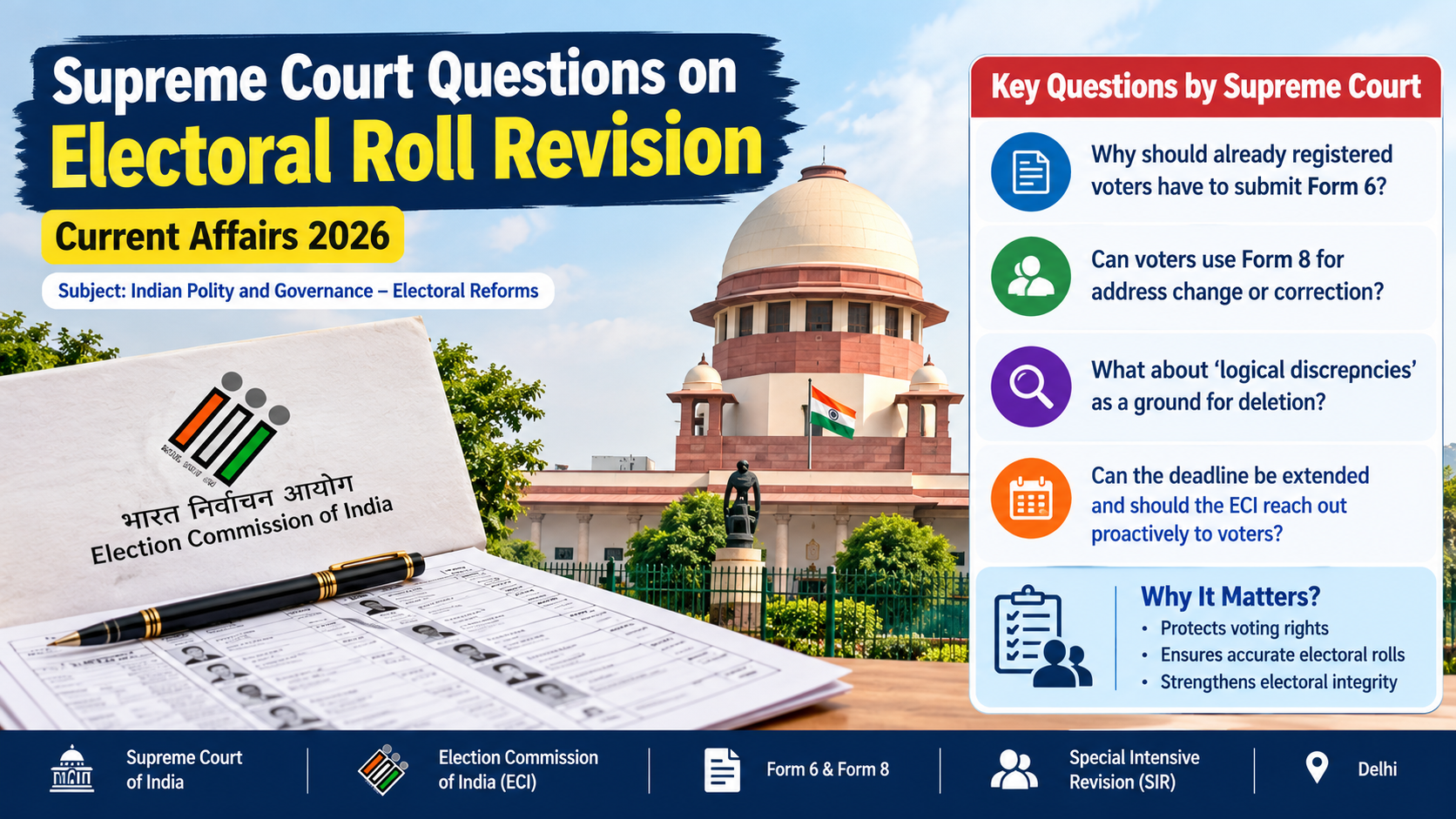
On 28 October 2026, the Supreme Court of India questioned the Election Commission of India (ECI) about the procedure for restoring the names of voters omitted from Delhi’s draft electoral rolls during the Special Intensive Revision (SIR) process. The Court raised concerns about asking already registered voters to submit Form 6 to get their names included again.
Key Details
Court: Supreme Court of India
Institution involved: Election Commission of India (ECI)
Issue: Restoration of names omitted from draft electoral rolls during SIR
Location under discussion: Delhi
Main concern: The procedure voters must follow to restore their names.
What Did the Supreme Court Ask?
The Supreme Court questioned why voters who were already registered should be required to submit Form 6, which is generally used to apply for inclusion in the electoral roll, particularly by new voters.
The Court discussed whether existing voters could instead use enumeration forms or Form 8, which is used for corrections and changes such as shifting residence. It also emphasized the importance of informing affected voters about the process and considering adequate time to complete the required formalities.
The Election Commission indicated that it would consider the Court’s suggestions. Reports also stated that the deadline was expected to be extended. However, the Court did not itself issue a final order extending the deadline at that hearing.
Important Data from Delhi’s Draft Electoral Roll
According to reports concerning the proceedings:
Voters in the initial roll: Approximately 1.45 crore
Enumeration forms submitted: Approximately 97.54 lakh
Forms not returned: Approximately 47.57 lakh
Voters reportedly issued notices over logical discrepancies: Approximately 19.34 lakh
These figures relate to the reported Delhi revision exercise and should be read in that context.
What Is Special Intensive Revision (SIR)?
Special Intensive Revision is a detailed exercise conducted by the Election Commission to verify and update electoral rolls. Its purpose is to improve the accuracy of voter lists by identifying eligible voters, correcting records and addressing cases requiring verification.
Electoral roll revision is important because only eligible persons whose names appear on the relevant electoral roll can ordinarily cast their votes in an election.
Difference Between Form 6 and Form 8
Form 6: Generally used to apply for inclusion of a name in the electoral roll, particularly for new electors.
Form 8: Used for purposes such as correcting entries in the electoral roll, changing residence details and replacing an Elector Photo Identity Card (EPIC), as applicable under the prescribed procedure.
Voters should follow the latest instructions issued by the Election Commission or the relevant electoral registration officer for their particular case.
What Is a Logical Discrepancy?
A logical discrepancy refers to an inconsistency or mismatch in information contained in electoral records that may require verification. The issue before the Supreme Court included concerns about using such discrepancies as a ground for issuing notices or removing names from electoral rolls.
The Court clarified that it had not finally decided the legality or constitutionality of using “logical discrepancy” as a ground for deletion. The issue therefore remained subject to further consideration.
Constitutional Provision: Article 324
Article 324 of the Constitution of India provides for the Election Commission’s superintendence, direction and control of elections to Parliament, state legislatures, and the offices of the President and Vice-President, subject to the constitutional framework.
The Election Commission plays a key role in preparing and revising electoral rolls to help ensure that elections are conducted in accordance with the law.
Why Is This Issue Important?
The case highlights the balance between maintaining accurate electoral rolls and protecting eligible citizens’ voting rights. Clear procedures, accessible information and reasonable opportunities to respond are important when voters’ names are missing from draft lists or their records require verification.
The Supreme Court matter also raises broader questions about transparency, due process and the responsibilities of election authorities during electoral roll revision.
Key Facts for Competitive Exams
Article related to the Election Commission: Article 324
Election authority: Election Commission of India
Form 6: Application for inclusion in the electoral roll
Form 8: Correction of entries and other prescribed changes, including shifting residence
SIR: Special Intensive Revision
Main issue: Procedure for restoring omitted voter names and the use of logical discrepancies during electoral roll revision
Court involved: Supreme Court of India
07Price Regulation of Anti-Cancer Medicines in India 2026: NPPA Caps Trade Margins at 30%
Key points
Why in the News?
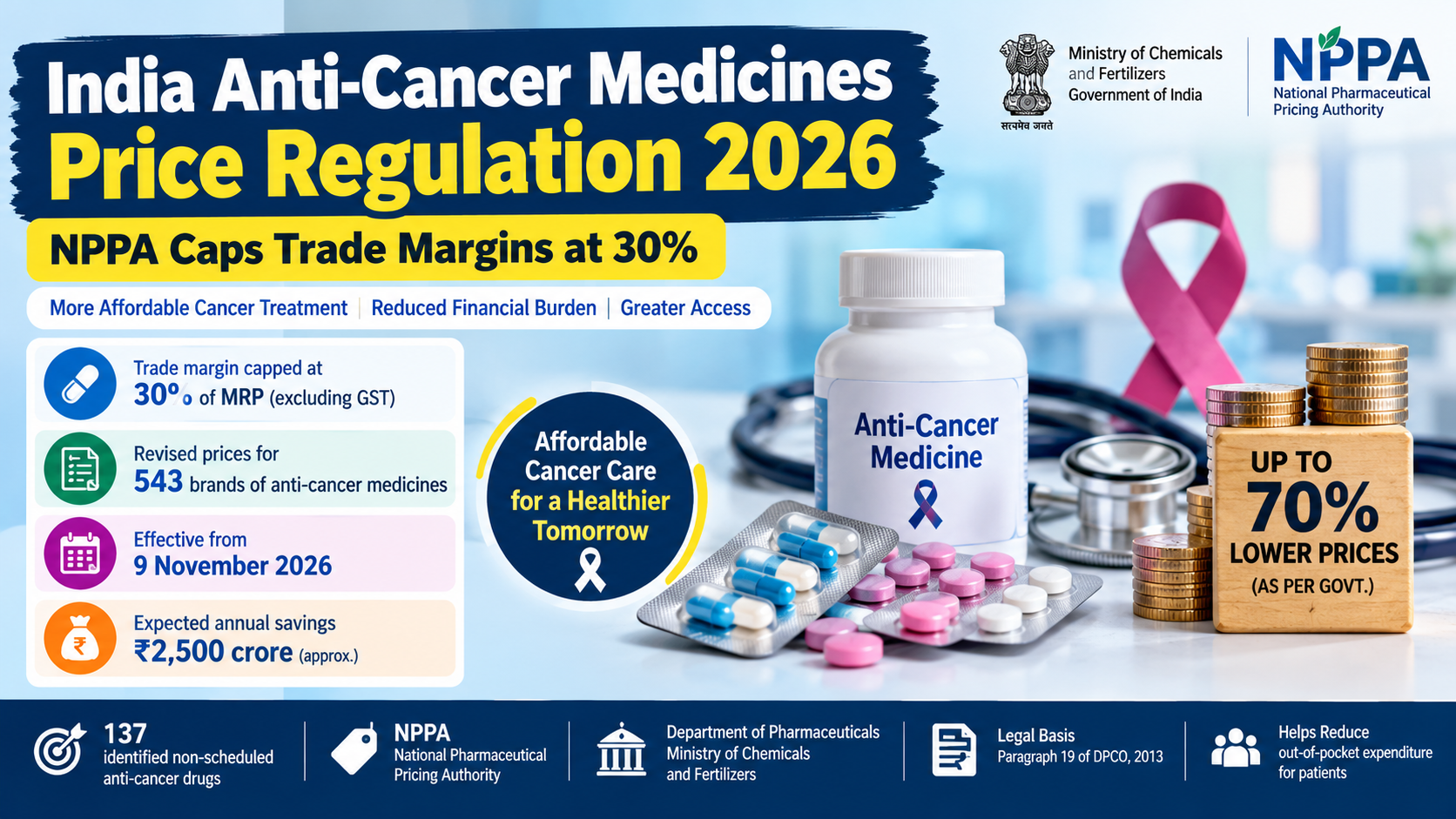
On 28 October 2026, the Department of Pharmaceuticals announced that the National Pharmaceutical Pricing Authority (NPPA) had released revised maximum retail prices (MRPs) for 543 brands of anti-cancer medicines. The revised prices will come into effect on 9 November 2026.
The measure follows the government's decision to regulate trade margins on 137 identified non-scheduled anti-cancer drugs to make cancer treatment more affordable and reduce the financial burden on patients. <Link url="https://www.pib.gov.in/PressReleasePage.aspx?PRID=2329698&lang=1®=48" title="Official PIB announcement"/>
Key Highlights
Regulatory authority: National Pharmaceutical Pricing Authority (NPPA)
Nodal department: Department of Pharmaceuticals
Ministry: Ministry of Chemicals and Fertilizers
Medicines covered: 137 identified non-scheduled anti-cancer drugs
Revised price list: 543 brands
Trade margin cap: 30% of the maximum retail price (MRP), excluding GST
Effective date: 9 November 2026
Expected annual savings: Approximately ₹2,500 crore, according to the government
Legal provision: Paragraph 19 of the Drugs (Prices Control) Order, 2013
What Is the Government's Decision?
The government has introduced Trade Margin Rationalisation (TMR) for 137 identified non-scheduled anti-cancer drugs. Under this measure, the trade margin is capped at 30% of the MRP, excluding applicable GST.
Trade margins are the amounts added through the distribution and sale chain between the manufacturer and the final consumer. Excessive margins can significantly increase the price paid by patients, especially for expensive cancer medicines.
The intervention aims to reduce these excessive margins while maintaining the availability of essential cancer treatments. The government expects the measure to reduce the MRPs of the identified medicines by up to 70%, depending on their existing price structures.
What Is the National Pharmaceutical Pricing Authority (NPPA)?
The National Pharmaceutical Pricing Authority is a government regulatory body under the Department of Pharmaceuticals, Ministry of Chemicals and Fertilizers.
Its main responsibilities include:
Fixing and revising prices of medicines under applicable drug-pricing rules.
Monitoring the prices of scheduled formulations.
Ensuring compliance with government price-control orders.
Taking action against manufacturers or sellers who charge prices beyond permitted limits.
Promoting the availability of medicines at affordable prices.
The NPPA plays an important role in balancing access to affordable medicines with the need to maintain their supply.
Scheduled and Non-Scheduled Medicines: What Is the Difference?
Scheduled medicines: These are formulations included in the National List of Essential Medicines (NLEM) and covered by the applicable price-control provisions. Their ceiling prices are fixed by the government under the Drugs (Prices Control) Order.
Non-scheduled medicines: These are formulations not included in the scheduled list. They are not generally subject to the same scheduled-medicine ceiling-price mechanism, although they remain subject to applicable regulatory provisions.
The new trade-margin rationalisation measure extends additional price protection to selected non-scheduled anti-cancer drugs.
Which Anti-Cancer Medicines Are Covered?
The identified medicines include several types of cancer treatments, including:
Immunotherapy medicines: Used to help the immune system recognise and fight cancer.
Denosumab: Used in certain conditions involving bone complications, including in some patients with breast or prostate cancer.
Pegfilgrastim: Used to reduce the risk of neutropenia, a condition involving low levels of neutrophils, in appropriate cancer-treatment settings.
Bevacizumab: A targeted therapy used for certain cancers, including colorectal, ovarian and cervical cancers.
The measure also covers widely used medicines such as pembrolizumab, durvalumab and osimertinib. The exact medicines and brand-level revised prices should be checked against the official NPPA list.
Revised Prices of Cancer Medicines
On 28 October 2026, the government announced revised MRPs for 543 brands. The list includes medicines manufactured by multiple pharmaceutical companies.
Examples published by the Press Information Bureau include:
Medicine and brand | Pack or strength | Old MRP | Revised MRP |
|---|---|---|---|
Anastrozole — Anarzole | 1 mg, 10 tablets | ₹695.76 | ₹73.00 |
Azacitidine — Azacytin | 100 mg injection | ₹6,337.00 | ₹1,495.04 |
Bevacizumab — Bevacizab | 100 mg/4 ml injection | ₹21,767.70 | ₹5,930.13 |
Dasatinib — Dasanat 20 | 20 mg, 60 tablets | ₹2,812.50 | ₹1,085.93 |
Important: These are examples from the official revised-price announcement. The revised prices are scheduled to take effect on 9 November 2026. Check the latest NPPA list for the exact brand, pack size and price before purchasing.
Why Has the Government Introduced This Measure?
Cancer treatment can involve substantial expenditure on medicines, hospitalisation, diagnostic tests and other medical services. High medicine prices can force patients and families to spend a significant part of their income on treatment.
The government cited NPPA market analysis indicating that non-scheduled anti-cancer medicines had an average trade mark-up of around 170%, with some cases reaching 700% or more.
By limiting trade margins on selected medicines, the government aims to:
Reduce the cost of cancer medicines.
Improve access to essential cancer treatments.
Reduce patients' out-of-pocket expenditure.
Address excessive margins across the medicine supply chain.
Encourage fairer pricing while maintaining medicine availability.
The estimated annual savings of approximately ₹2,500 crore are a government projection, not a guarantee of identical savings for every patient.
Legal Basis: Drugs (Prices Control) Order, 2013
The NPPA has used Paragraph 19 of the Drugs (Prices Control) Order, 2013 (DPCO) for the trade-margin rationalisation measure.
This provision allows the government to intervene in drug pricing in the public interest under the applicable framework. The decision builds on an earlier initiative from 2019, when trade margins were capped on 42 selected non-scheduled anti-cancer drugs. That exercise reportedly reduced MRPs by up to 91% across 526 brands and generated estimated annual savings of ₹984 crore.
08India’s Industrial Production Growth September 2026
Key points
Why in the News?
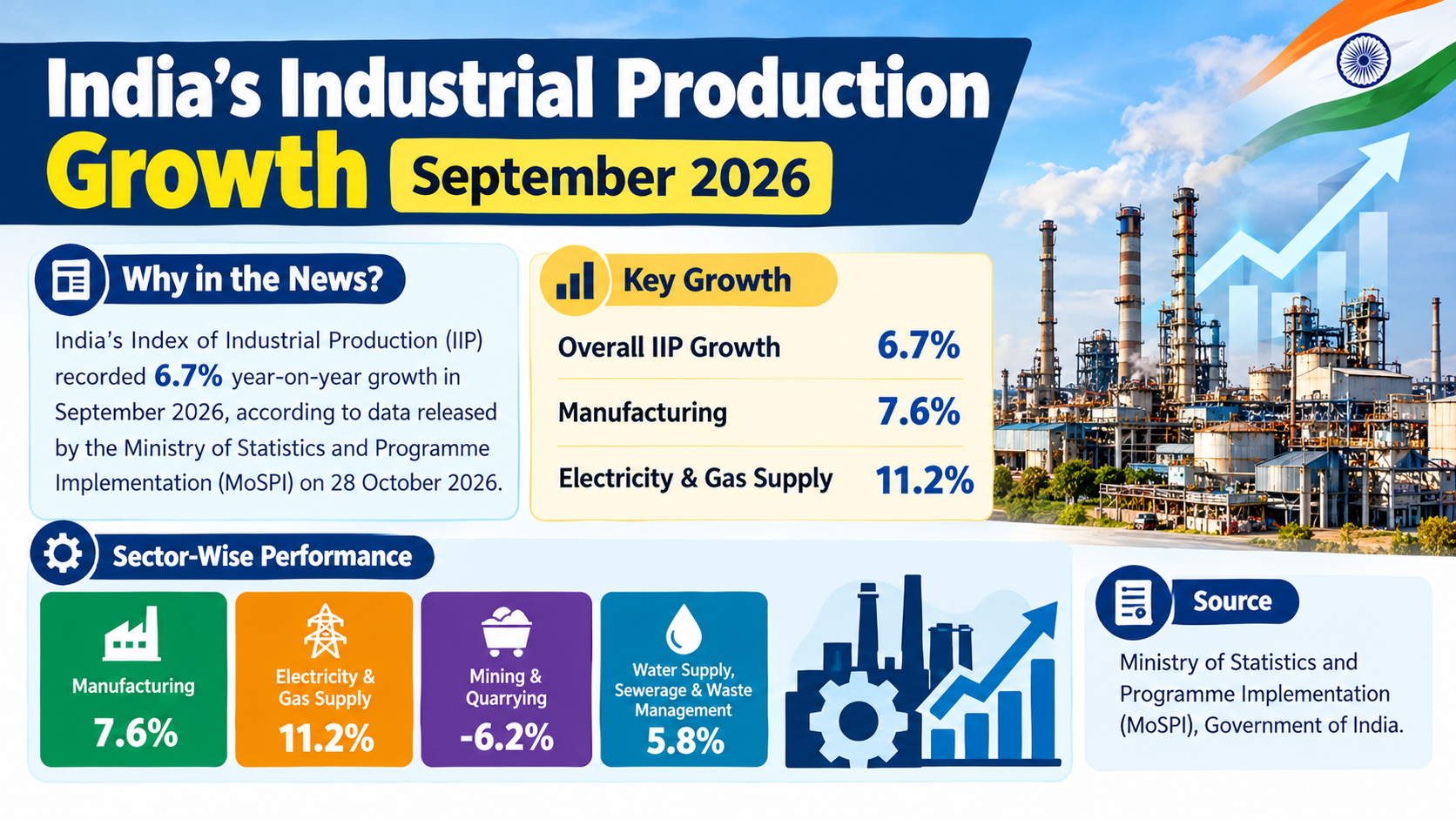
India’s Index of Industrial Production (IIP) recorded 6.7% year-on-year growth in September 2026, according to the latest data released by the Ministry of Statistics and Programme Implementation (MoSPI) on 28 October 2026. Industrial growth moderated from August’s revised growth rate of 7.8%.
Key Highlights
Industrial production growth: 6.7% in September 2026
Previous month: 7.8% in August 2026 (revised figure)
Manufacturing growth: 7.6%
Electricity and gas supply growth: 11.2%
Mining and quarrying: Contracted by 6.2%
Water supply, sewerage and waste management: Grew by 5.8%
IIP index: 124.3 in September 2026, compared with 116.5 in September 2025
Data released by: Ministry of Statistics and Programme Implementation (MoSPI)
Sector-Wise Industrial Performance
Industrial production showed mixed performance across major sectors in September 2026.
Sector | Growth in September 2026 |
|---|---|
Manufacturing | 7.6% |
Electricity and gas supply | 11.2% |
Water supply, sewerage and waste management | 5.8% |
Mining and quarrying | -6.2% |
Manufacturing remained an important contributor to industrial growth, while electricity and gas supply recorded stronger growth. Mining and quarrying contracted during the month.
Which Industries Recorded Strong Growth?
Within the manufacturing sector, 17 out of 23 industry groups recorded positive growth compared with September 2025.
The leading contributors included:
Electrical equipment manufacturing: 33.9% growth
Rubber and plastics products: 19.9% growth
Motor vehicles, trailers and semi-trailers: 19.0% growth
These figures highlight the contribution of selected manufacturing industries to India's overall industrial output.
What Is the Index of Industrial Production (IIP)?
The Index of Industrial Production is an important economic indicator that measures changes in the volume of industrial production over time.
It helps assess the performance of India's industrial sector and provides information about changes in manufacturing, mining and electricity-related activity.
The IIP is compiled and released by the National Statistical Office (NSO) under MoSPI.
Three Major Sectors of IIP
Mining: Covers the extraction of minerals and related activities.
Manufacturing: Covers the production and processing of goods in factories.
Electricity: Measures electricity generation and related activity included in the index.
The index also provides information through use-based classifications, such as primary goods, capital goods, intermediate goods, infrastructure and construction goods, consumer durables and consumer non-durables.
Why Is Industrial Production Important?
Industrial production is an important indicator of economic activity because it reflects changes in manufacturing output, infrastructure-related production and other industrial operations.
Higher industrial output can support employment, investment, supply chains and economic growth. However, a single month's IIP figure does not by itself determine the overall performance of the economy.
The September 2026 data showed that industrial production continued to expand, although the growth rate was lower than the revised figure for August.
Important Facts for Competitive Exams
IIP: Index of Industrial Production
Released by: National Statistical Office (NSO), under MoSPI
September 2026 IIP growth: 6.7%
Manufacturing growth: 7.6%
Electricity and gas supply growth: 11.2%
Mining and quarrying growth: -6.2%
IIP base year: 2022–23 = 100
Data release date: 28 October 2026
Conclusion
India’s industrial production grew by 6.7% in September 2026. Manufacturing and electricity-related activity supported the expansion, while contraction in mining and quarrying weighed on the overall performance. The latest IIP data provides an important snapshot of industrial activity and is useful for understanding India's economic trends.
0912th BRICS Parliamentary Forum 2026 in New Delhi
Key points
Why in the News?
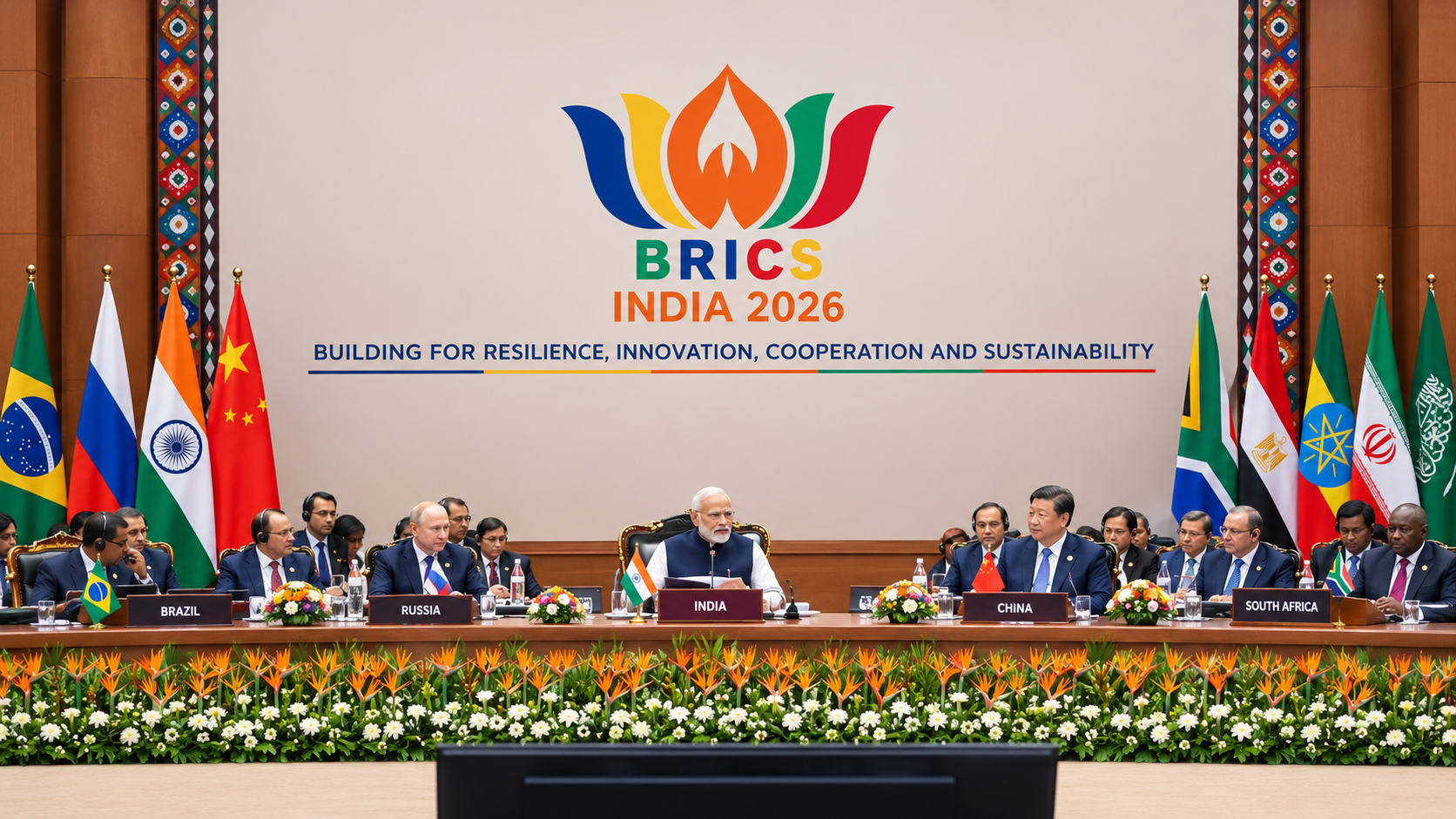
The 12th BRICS Parliamentary Forum was held on 26–27 October 2026 at the historic Samvidhan Sadan in the Parliament House Complex, New Delhi. The forum brought together parliamentary leaders and delegations from BRICS member and partner countries to discuss parliamentary cooperation, people-centric development and global challenges.
The forum was inaugurated by Lok Sabha Speaker Om Birla. Prime Minister Narendra Modi also interacted with parliamentary delegations from BRICS countries.
Key Highlights
Event: 12th BRICS Parliamentary Forum
Venue: Samvidhan Sadan, Parliament House Complex, New Delhi
Dates: 26–27 October 2026
Host country: India
Chairmanship: India
Inaugurated by: Lok Sabha Speaker Om Birla
Prime Minister: Narendra Modi
Theme: “Fostering Parliaments for People-Centric Development”
Main focus: Parliamentary cooperation, democratic institutions, innovation, global governance and sustainable development
Outcome: Adoption of a joint declaration
What Is the BRICS Parliamentary Forum?
The BRICS Parliamentary Forum is a platform for parliamentary representatives of BRICS countries to exchange views, strengthen cooperation and discuss shared international challenges.
It provides an opportunity for lawmakers to discuss the role of parliaments in democratic governance, sustainable development, technological innovation and international cooperation.
The forum complements wider BRICS cooperation by promoting dialogue among parliamentary institutions and encouraging the exchange of legislative experience and best practices.
Major Themes Discussed
The 12th BRICS Parliamentary Forum focused on four broad areas:
1. Resilience
Strengthening parliamentary institutions so that they remain effective, accountable and capable of responding to emerging challenges.
2. Innovation
Promoting human-centred innovation in artificial intelligence and digital technologies, including their responsible use in parliamentary functioning.
3. Cooperation
Encouraging parliamentary diplomacy and cooperation to support a more representative system of global governance.
4. Sustainability
Promoting sustainable and inclusive development while balancing economic progress with environmental protection.
The discussions also highlighted youth empowerment, democratic values, mutual trust and the importance of giving the Global South a stronger voice in international affairs.
Joint Declaration of the 12th BRICS Parliamentary Forum
On 27 October 2026, the forum issued a joint declaration under the theme “Fostering Parliaments for People-Centric Development.”
The declaration reaffirmed the importance of parliamentary cooperation among BRICS members and partner countries. It also emphasised inclusive development, mutual benefit and collaboration in areas of shared interest.
The declaration reflected a common commitment to strengthening parliamentary engagement and addressing global challenges through dialogue and cooperation.
What Is BRICS?
BRICS is a grouping of major emerging economies that provides a platform for cooperation on economic, political, developmental and international issues.
The grouping's name originated from Brazil, Russia, India, China and South Africa. It has subsequently expanded to include additional members.
The BRICS Parliamentary Forum supports cooperation among the legislative institutions of participating countries.
BRICS Member Countries
The 11 member countries identified in the official joint declaration for the 2026 forum were:
Brazil
Russia
India
China
South Africa
Egypt
Ethiopia
Indonesia
Iran
United Arab Emirates
Saudi Arabia
Partner countries also participated in the forum. The joint declaration recognised their contribution to inter-parliamentary cooperation.
Why Is the Forum Important?
The forum is significant for several reasons:
Parliamentary diplomacy: It creates opportunities for dialogue between lawmakers from different countries.
Democratic governance: It encourages discussion on accountability, transparency and effective parliamentary institutions.
Global governance: It supports dialogue on making international institutions more representative.
Technology: It provides a platform to discuss the responsible use of artificial intelligence and digital tools.
Sustainable development: It encourages cooperation on inclusive growth and environmental responsibility.
Global South: It offers participating countries an opportunity to discuss shared development priorities and international concerns.
Important Facts for Competitive Exams
Forum: 12th BRICS Parliamentary Forum
Dates: 26–27 October 2026
Venue: Samvidhan Sadan, New Delhi
Host: India
Inaugurated by: Lok Sabha Speaker Om Birla
Theme: Fostering Parliaments for People-Centric Development
Four focus areas: Resilience, Innovation, Cooperation and Sustainability
Outcome: Joint declaration adopted on 27 October 2026
Main purpose: Strengthening parliamentary cooperation and people-centric development
Conclusion
The 12th BRICS Parliamentary Forum in New Delhi highlighted the role of parliamentary institutions in promoting people-centric development, democratic governance, technological innovation and international cooperation. The joint declaration reinforced the importance of dialogue between BRICS members and partner countries in addressing shared global challenges.
10India–Poland Relations 2026: Strategic Partnership, Trade, Defence Cooperation & Key Facts
Key points
Why in the News?
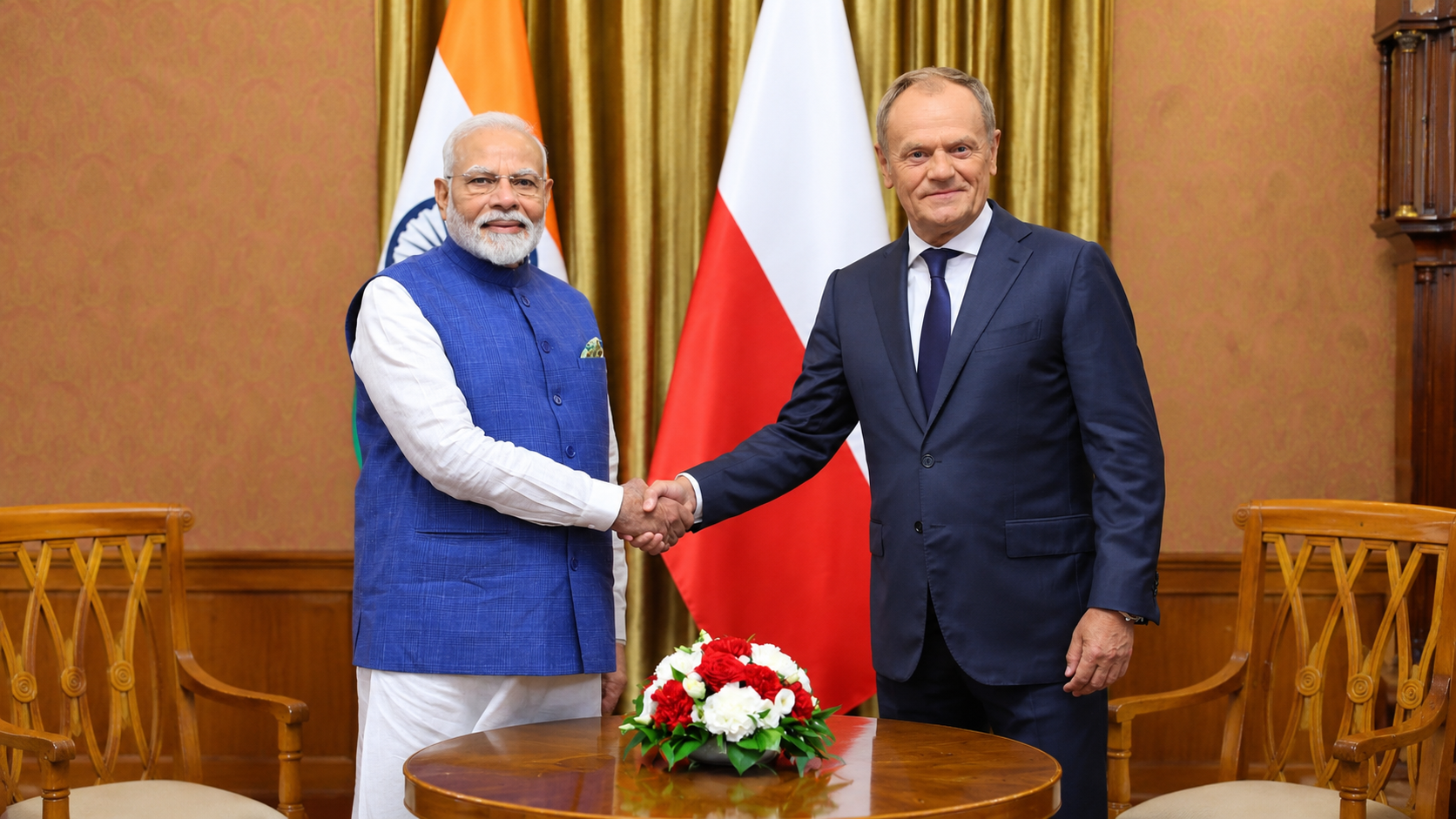
India–Poland relations are gaining importance as both countries work to strengthen their Strategic Partnership through cooperation in trade, defence, technology, space, clean energy and international affairs. The partnership is guided by the India–Poland Action Plan 2024–2028.
India–Poland Relations: Key Highlights
Diplomatic relations: Established in 1954.
Strategic Partnership: Announced in August 2024.
Indian Prime Minister: Narendra Modi.
Polish Prime Minister: Donald Tusk.
Action Plan: India–Poland Action Plan 2024–2028.
Major cooperation areas: Trade, defence, science and technology, space, education and culture.
1. Trade and Economic Cooperation
India and Poland are working to expand bilateral trade and investment. Both countries have opportunities to cooperate in manufacturing, information technology, pharmaceuticals, food processing, clean energy and advanced industries.
Stronger business-to-business connections and cooperation between startups can help diversify supply chains and create new economic opportunities.
2. Defence and Security Cooperation
Defence cooperation is an important area of the India–Poland relationship. Both countries can explore collaboration in defence manufacturing, military technology, cybersecurity and defence industry partnerships.
They also share an interest in counter-terrorism and addressing emerging security challenges.
3. Science, Technology and Innovation
India and Poland have opportunities to strengthen cooperation in emerging technologies, including:
Artificial Intelligence (AI)
Semiconductors
Space research and technology
Critical minerals
Clean energy and battery technology
Startup and innovation ecosystems
Such cooperation can support research, technological development and industrial growth in both countries.
4. Climate Change and Disaster Management
India and Poland can collaborate on climate-resilient infrastructure, renewable energy and sustainable development.
The Coalition for Disaster Resilient Infrastructure (CDRI), an international initiative launched by India in 2019, provides a platform for countries to cooperate on strengthening infrastructure against natural disasters.
5. United Nations and Global Cooperation
India and Poland engage on international issues through multilateral institutions, including the United Nations. Their discussions cover global governance, international security and reform of multilateral institutions.
India supports reform of the UN Security Council to make it more representative of contemporary global realities.
Historical Background of India–Poland Relations
India and Poland established diplomatic relations in 1954. Relations have developed through political dialogue, trade, education, cultural exchanges and cooperation in international forums.
An important historical connection dates back to the Second World War, when the Maharaja of Nawanagar, Jam Saheb Digvijaysinhji, provided refuge to Polish children. His humanitarian contribution remains an important symbol of friendship between the two countries.
In August 2024, Prime Minister Narendra Modi visited Poland, and the two countries elevated their relationship to a Strategic Partnership. They also adopted the India–Poland Action Plan 2024–2028 to guide bilateral cooperation.
Important Facts for Competitive Exams
Topic | Important Fact |
|---|---|
Capital of India | New Delhi |
Capital of Poland | Warsaw |
Diplomatic relations established | 1954 |
Strategic Partnership | 2024 |
Bilateral framework | India–Poland Action Plan 2024–2028 |
Indian Prime Minister | Narendra Modi |
Polish Prime Minister | Donald Tusk |
Important historical figure | Jam Saheb Digvijaysinhji |
Disaster-resilience initiative | Coalition for Disaster Resilient Infrastructure (CDRI) |
Conclusion
India–Poland relations have expanded from traditional diplomatic ties to a broader partnership involving trade, defence, technology, education and sustainable development. Continued engagement can create opportunities for economic growth, innovation and cooperation on global challenges.