India GDP Growth Forecast FY 2026–27: Economic Outlook, RBI and IMF Projections
Key points
Why in the News?
India’s economic growth outlook for the financial year 2026–27 has remained in focus following the latest projections from the Ministry of Finance and major economic institutions.
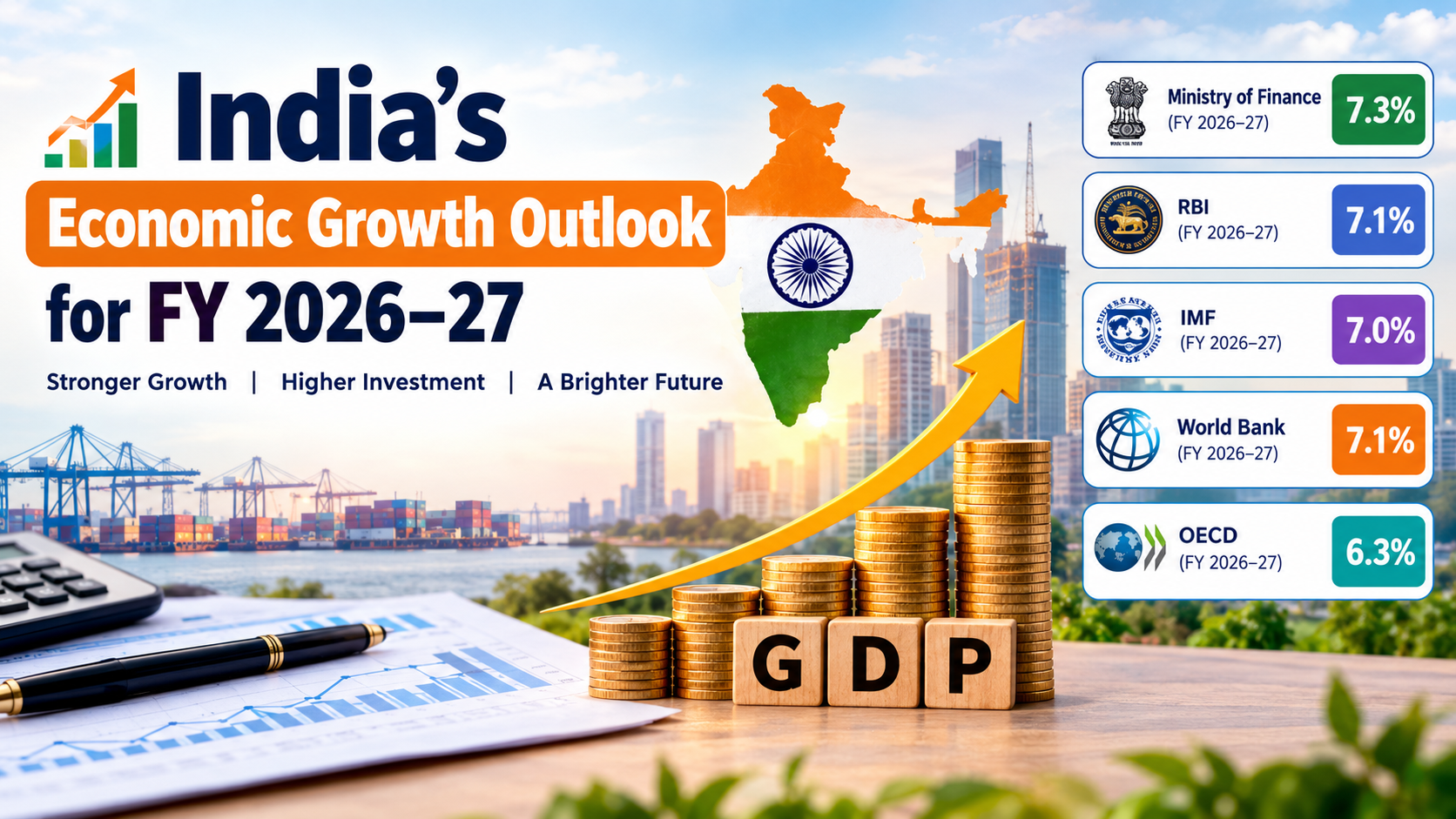
According to a Reuters report published on 29 October 2026, the Ministry of Finance expects India’s economy to grow by 7.3% in FY 2026–27, according to its October economic review. This projection is slightly higher than the Reserve Bank of India’s forecast of 7.1% announced earlier in October. The International Monetary Fund has also raised its FY27 growth projection to 7%.
Key Economic Growth Projections for FY 2026–27
Ministry of Finance: 7.3%, according to the October economic review reported by Reuters.
Reserve Bank of India (RBI): 7.1%, according to its October 2026 forecast.
International Monetary Fund (IMF): 7.0%, according to its October 2026 World Economic Outlook.
World Bank: 7.1%, according to its latest reported upward revision.
Organisation for Economic Co-operation and Development (OECD): Its published outlook projected 6.3%, reflecting a different forecast vintage and economic assumptions.
These estimates differ because institutions use different data cut-off dates, models and assumptions about global conditions. Forecasts may be revised as new economic information becomes available.
What Is GDP Growth?
Gross Domestic Product (GDP) is the total monetary value of final goods and services produced within a country during a specific period.
GDP growth measures the change in economic output over time. In India, the financial year runs from 1 April to 31 March.
Real GDP measures economic growth after adjusting for price changes, while nominal GDP measures output at current prices.
Major Drivers of India’s Economic Growth
1. Domestic Consumption
Household spending on goods and services is an important driver of India’s economy. Consumption supports production, trade, employment and service-sector activity.
2. Services Sector
Information technology, financial services, telecommunications, tourism, transport and professional services contribute significantly to economic activity and employment.
3. Infrastructure and Government Capital Expenditure
Investment in roads, railways, ports, power and other infrastructure can improve connectivity, reduce logistics costs and encourage private investment.
4. Manufacturing and Private Investment
Manufacturing expansion, improved logistics, technology adoption and investment in industrial capacity can support productivity and job creation.
5. Trade Agreements and Exports
Trade agreements may improve market access for Indian goods and services, strengthen supply chains and attract investment. Their overall benefits depend on implementation and global demand.
Challenges to the Growth Outlook
Despite the positive growth projections, several risks remain:
Higher energy prices: Rising crude oil and gas prices can increase production and transportation costs.
Inflation: Higher food and energy prices may reduce household purchasing power.
Global uncertainty: Geopolitical tensions and weaker international demand can affect exports and investment.
External sector pressure: Higher energy import costs may widen the current account deficit.
Employment and productivity: Sustaining growth requires productive jobs, workforce skills and stronger labour-force participation.
The OECD has specifically highlighted higher energy costs, inflation and weaker external demand as risks to India’s growth outlook.
Why Is India’s Economic Growth Outlook Important?
India’s growth outlook matters for employment generation, government revenue, infrastructure development, poverty reduction and improvements in living standards.
Sustained economic expansion also depends on productivity gains, investment, human-capital development, price stability and the ability to manage external economic shocks.
Important Facts for UPSC, State PCS and UGC NET/JRF
FY 2026–27: 1 April 2026 to 31 March 2027.
GDP: Gross Domestic Product.
Real GDP: GDP adjusted for price changes.
Nominal GDP: GDP measured at current prices.
RBI: India’s central bank.
IMF: International Monetary Fund.
World Bank: An international development institution.
OECD: Organisation for Economic Co-operation and Development.
Capital expenditure: Government spending that creates or improves assets, such as infrastructure.
Conclusion
India’s economic outlook for FY 2026–27 remains positive, with the Ministry of Finance projecting 7.3% growth in its October economic review, as reported by Reuters. However, higher energy prices, inflation and global uncertainty remain important risks. Actual growth will depend on domestic demand, investment, productivity and developments in the global economy.