India's Small Hydropower Development Scheme Targets 1,500 MW Renewable Energy Expansion
Key points
In the News
The Press Information Bureau (PIB) released a backgrounder titled “Harnessing Small Hydro Power: Strengthening Energy Security for Sustainable Development” on 22 November 2026, highlighting India's small hydropower potential and the government's efforts to expand renewable electricity generation.
India has an estimated 21,134 MW of small hydropower potential across 7,133 identified sites, with approximately one-fourth of this potential already utilised.
The government has approved the Small Hydro Power Development Scheme with an allocation of ₹2,584.60 crore to support new projects and improve energy access, particularly in hilly and northeastern regions.
Background
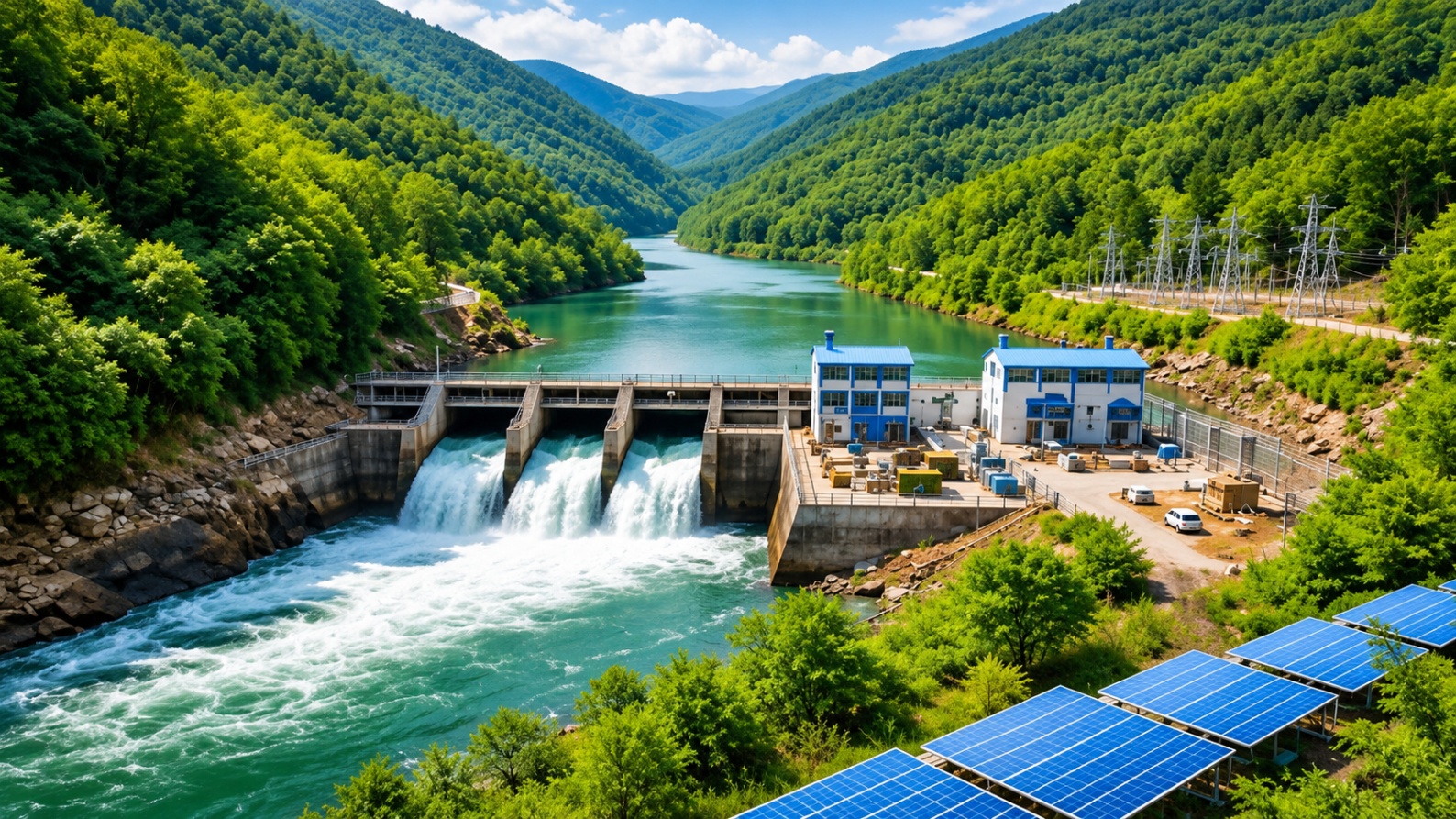
Small Hydropower (SHP) refers to electricity generation using the natural flow of rivers, streams and canals.
In India, hydropower projects with an installed capacity of up to 25 MW are classified as small hydropower projects. The new government scheme specifically covers projects with capacities from 1 MW to 25 MW.
Small hydropower provides renewable electricity and can support decentralised energy generation in remote areas.
Unlike many large hydropower projects, small installations generally require less land and may involve comparatively limited displacement. However, their environmental effects depend on project design and local river conditions.
Key Highlights
1. Small Hydropower Potential in India
Indicator | Details |
|---|---|
Estimated potential | 21,134 MW |
Identified project sites | 7,133 |
Installed capacity | 5,189.26 MW |
Utilised potential | Approximately 25% |
Responsible ministry | Ministry of New and Renewable Energy |
India has substantial opportunities to develop additional small hydropower capacity, particularly in mountainous and river-rich regions.
2. Small Hydro Power Development Scheme
The government has approved the scheme for FY 2026–27 to FY 2030–31.
Major features:
Financial outlay: ₹2,584.60 crore.
Target: Approximately 1,500 MW of additional capacity.
Priority regions: Hilly states, northeastern states and international border districts.
Implementing agency: Solar Energy Corporation of India (SECI).
Project coverage: Hydropower installations between 1 MW and 25 MW.
The scheme provides Central Financial Assistance (CFA) to encourage investment and improve the affordability of renewable electricity.
3. Financial Assistance
The scheme provides different levels of support according to project location.
Project location | Financial assistance |
|---|---|
Northeastern states and international border districts | Up to 30% of eligible project cost, capped at ₹30 crore |
Other eligible locations | Up to 20% of eligible project cost, capped at ₹20 crore |
Assistance is subject to the scheme's detailed eligibility and cost-calculation conditions.
4. Employment and Environmental Benefits
The scheme is expected to contribute to:
Approximately 9,000 permanent jobs.
Around 51 lakh person-days of construction employment.
Avoidance of approximately 4.3 million tonnes of CO₂ emissions annually after commissioning the targeted 1,500 MW capacity.
Preparation of Detailed Project Reports for at least 200 projects.
Technical research and institutional capacity building through IITs, NITs and other institutions.
These are projected benefits, not outcomes already achieved.
5. Importance for Remote and Hilly Areas
Small hydropower can provide locally generated electricity in regions where extending conventional power infrastructure is difficult.
Potential benefits include improved energy access, local employment, support for small enterprises and diversification of renewable energy sources.
Projects must nevertheless consider ecological flows, aquatic biodiversity, sediment movement and community needs.
Important Facts for Competitive Exams
Small Hydropower
Indian classification: Projects with capacity up to 25 MW.
Scheme eligibility: 1–25 MW.
Energy source: Flowing water.
Energy category: Renewable energy.
Responsible ministry: Ministry of New and Renewable Energy (MNRE).
National implementing agency: Solar Energy Corporation of India (SECI).
Hydropower and Energy Security
Hydropower uses flowing or falling water to drive turbines connected to electricity generators.
Its advantages include renewable generation, grid support and reduced dependence on fossil fuels.
Small hydropower can complement solar and wind power, although electricity output depends on water availability and seasonal river flows.
Important Organisations
MNRE: Ministry of New and Renewable Energy, responsible for promoting renewable energy development.
SECI: Solar Energy Corporation of India Limited, the national implementing agency for the Small Hydro Power Development Scheme.
CERC: Central Electricity Regulatory Commission, responsible for central-level electricity tariff and regulatory matters.
IIT Roorkee: Associated with the assessment of India's small hydropower potential.
Quick Revision
India's estimated small hydropower potential is 21,134 MW.
The country has 7,133 identified small hydropower sites.
Installed small hydropower capacity is approximately 5,189 MW.
Small hydropower projects have capacities up to 25 MW.
The new development scheme covers projects from 1 MW to 25 MW.
Scheme allocation: ₹2,584.60 crore.
Additional capacity target: 1,500 MW.
National implementing agency: SECI.
Northeastern and border districts receive enhanced financial assistance.
Expected permanent employment: 9,000 jobs.
Estimated annual avoided CO₂ emissions: 4.3 million tonnes.
At least 200 Detailed Project Reports are targeted.
Responsible ministry: Ministry of New and Renewable Energy.