New Backswimmer Species Enithares deccanensis Discovered in Eastern Ghats
Key points
In the News
Scientists have discovered a new freshwater insect species, Enithares deccanensis, in the Eastern Ghats of India.
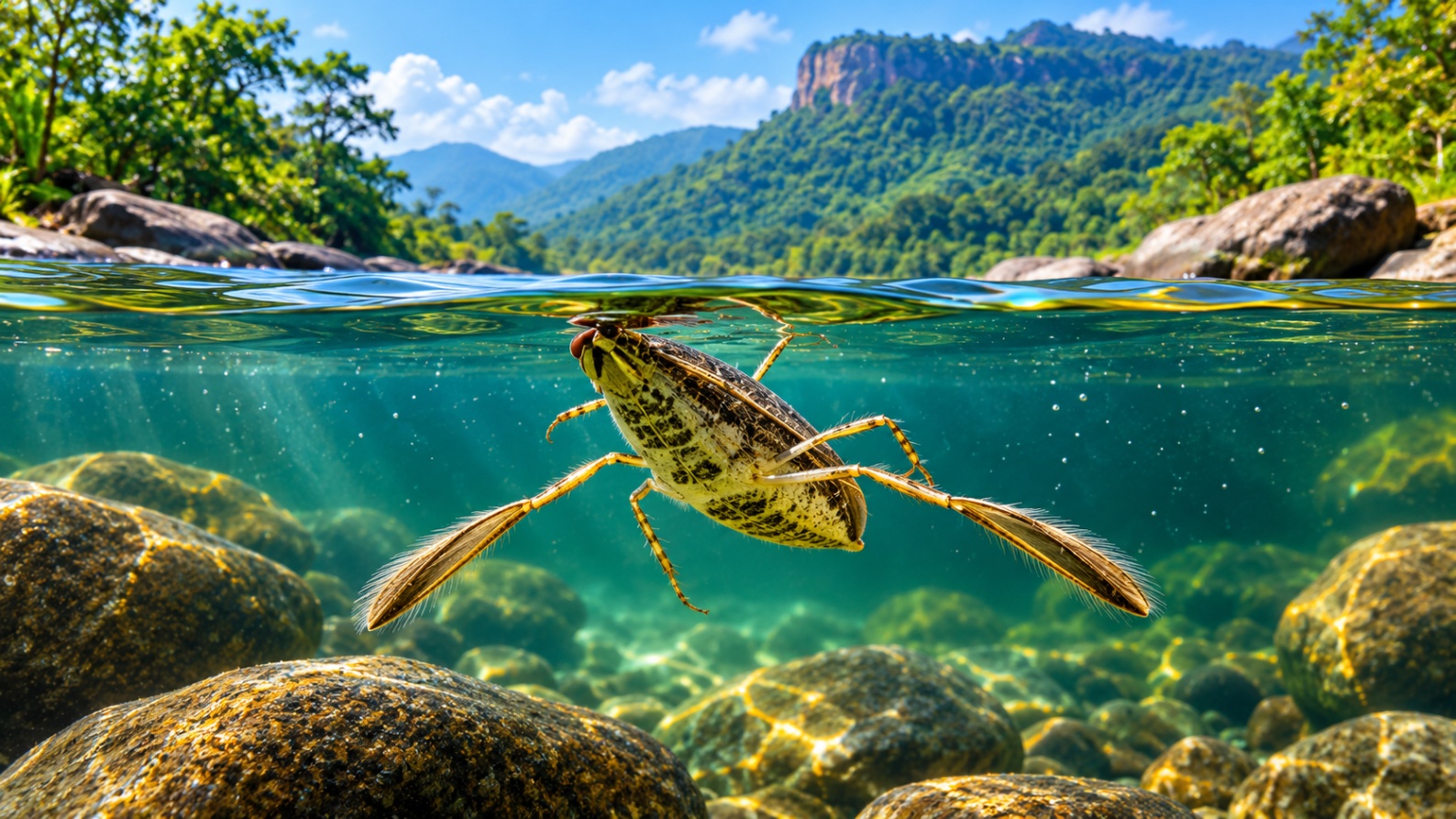
The species belongs to the Notonectidae family, commonly known as backswimmers, which are recognised for their ability to swim upside down beneath the water surface.
The discovery highlights the rich freshwater biodiversity of the Eastern Ghats.
Background
Backswimmers are predatory aquatic insects found in freshwater ecosystems such as ponds, lakes, streams and pools.
They swim on their backs using specialised hind legs and feed on small aquatic organisms.
The new species was identified by researchers associated with the Zoological Survey of India (ZSI) and VHNSN College, Tamil Nadu.
Key Highlights
Scientific Name: Enithares deccanensis
Family: Notonectidae
Genus: Enithares
Common Group: Backswimmers
Discovery Region: Eastern Ghats
State Locations: Andhra Pradesh and Telangana
Habitats: Seshachalam Biosphere Reserve and Amrabad Tiger Reserve
Research Journal: Journal of Natural History
Identification Methods: Morphological examination, DNA barcoding and phylogenetic analysis
Unique Characteristics
Swims upside down beneath the water surface.
Has a distinctive dark V-shaped marking on its wings.
Males possess a sickle-shaped reproductive structure.
Displays both light and dark colour forms.
Shows approximately 10–14.5% genetic divergence from examined related species.
Important Facts for Competitive Exams
Seshachalam Biosphere Reserve: Andhra Pradesh.
Amrabad Tiger Reserve: Telangana.
Zoological Survey of India: Established in 1916.
ZSI Headquarters: Kolkata, West Bengal.
DNA Barcoding: Technique used to identify species through short DNA sequences.
Phylogenetic Analysis: Study of evolutionary relationships among organisms.
Notonectidae: Family of predatory freshwater insects commonly called backswimmers.
Environmental Significance
The discovery highlights the importance of conserving small freshwater habitats, including forest streams, shaded rock pools and pools near waterfalls.
These ecosystems support aquatic biodiversity and may contain species that have not yet been scientifically documented.