PANI Project to Connect Eight Andaman Islands Through Undersea Optical Fibre Cable
Key points
In the News
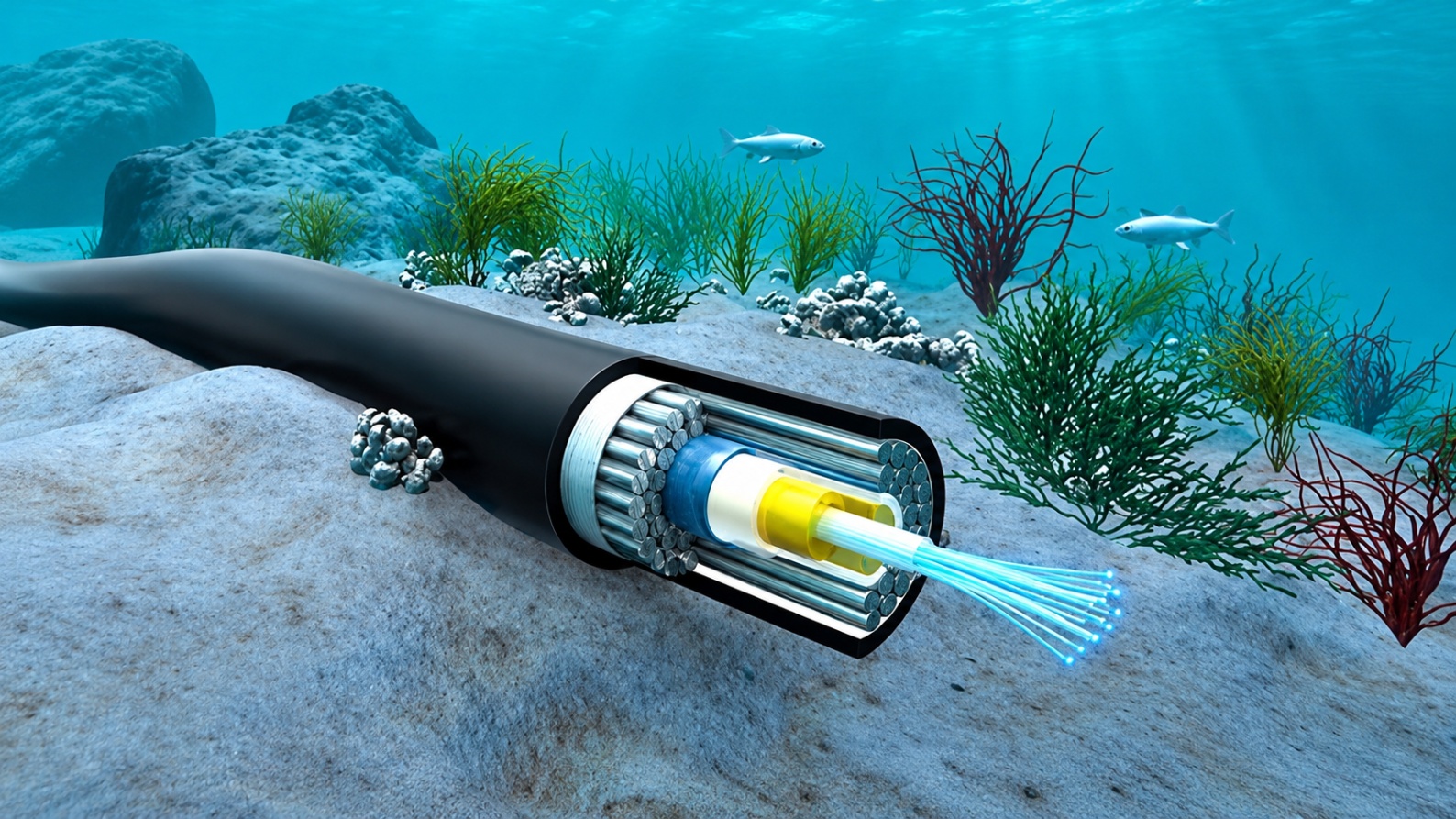
The Government of India is considering the PANI (Port Alternative Network for Islands) Project, a proposed submarine optical fibre cable network to connect eight locations across the Andaman and Nicobar Islands.
The project aims to strengthen digital connectivity, improve internet services and provide an alternative communication route during network disruptions and emergencies.
The proposed network will originate from Puri in Odisha, providing an alternative to the existing Chennai–Andaman and Nicobar Islands (CANI) submarine cable system.
Background
The Andaman and Nicobar Islands are a strategically important Union Territory located in the Bay of Bengal and the Andaman Sea.
Due to their geographical isolation, several remote islands face challenges in accessing reliable mobile networks and high-speed internet services.
The existing Chennai–Andaman and Nicobar Islands submarine optical fibre cable network provides connectivity between mainland India and the island territory.
However, dependence on a limited number of undersea communication routes creates challenges during cable damage or service disruptions.
The proposed PANI Project aims to improve network reliability by establishing an additional submarine optical fibre connection.
Key Highlights
1. PANI Project: Eight Proposed Island Connections
The project proposes connecting the following eight locations through submarine optical fibre cables:
Diglipur
Mayabunder
Shaheed Dweep
Chowra
Teressa
Katchal
Nancowry
Little Nicobar
These connections are intended to improve telecommunications services across geographically dispersed island communities.
2. Alternative Cable Route from Odisha
Project name: Port Alternative Network for Islands (PANI).
Proposed mainland origin: Puri, Odisha.
Destination: Andaman and Nicobar Islands.
Technology: Submarine optical fibre cable.
Primary objective: Reliable digital connectivity and network redundancy.
The proposed PANI cable will serve as an alternative route to the existing CANI network originating from Chennai.
Network redundancy means having an additional communication route that can help maintain services if the primary network experiences disruption.
3. Proposal to Include Dugong Creek
During discussions with senior telecommunications officials, Lieutenant Governor Dinesh Sharma suggested including Dugong Creek in the proposed submarine cable network.
The proposal also included establishing a cable landing station at Dugong Creek.
A cable landing station connects submarine communication cables to terrestrial telecommunications networks.
4. Expansion of 4G Connectivity
The meeting also reviewed the implementation of the 4G Saturation Scheme under Digital Bharat Nidhi.
Important proposals included:
Extending 4G mobile services to 87 uncovered villages.
Prioritising villages based on population and connectivity requirements.
Improving access to mobile communication in remote island settlements.
Strengthening emergency communication facilities.
The proposed expansion is intended to reduce the digital connectivity gap between mainland India and remote island communities.
5. BharatNet Connectivity Expansion
The revised BharatNet Programme was also discussed to improve broadband access across the islands.
Important details include:
Fibre-to-the-Home (FTTH) connectivity proposed for 174 uncovered villages.
Seventy gram panchayats already covered under the programme.
Four of seven tribal council areas connected.
Plans to extend connectivity to the remaining three tribal council areas.
BharatNet aims to expand broadband infrastructure in rural and underserved regions.
6. Digital Bharat Nidhi
Digital Bharat Nidhi is a telecommunications funding mechanism established under the Telecommunications Act, 2023.
It supports the expansion of telecommunications infrastructure and services in underserved, rural and remote areas.
Its objectives include:
Improving universal access to telecommunications.
Supporting mobile connectivity in remote regions.
Reducing the digital divide.
Strengthening communication infrastructure.
7. Importance of Submarine Optical Fibre Cables
Submarine optical fibre cables are installed along the seabed to transmit large volumes of digital information between different geographical locations.
Their advantages include:
High-speed data transmission.
Large bandwidth capacity.
Reliable long-distance communication.
Support for broadband and mobile networks.
Improved connectivity for remote regions.
Submarine cables form a major component of international and domestic digital communication infrastructure.
Important Facts for Competitive Exams
Particular | Details |
|---|---|
Project | PANI Project |
Full form | Port Alternative Network for Islands |
Project status | Proposed |
Union Territory | Andaman and Nicobar Islands |
Proposed mainland origin | Puri, Odisha |
Number of proposed island connections | Eight |
Technology | Submarine optical fibre cable |
Existing cable network | Chennai–Andaman and Nicobar Islands (CANI) |
Proposed 4G expansion | 87 uncovered villages |
Proposed FTTH coverage | 174 uncovered villages |
Telecommunications funding mechanism | Digital Bharat Nidhi |
Relevant legislation | Telecommunications Act, 2023 |
Geographical Importance
The Andaman Islands and Nicobar Islands are separated by the Ten Degree Channel.
The islands are located near important maritime routes in the eastern Indian Ocean.
Sri Vijaya Puram is the capital of the Andaman and Nicobar Islands.
The island territory has significant strategic and maritime importance.
Important Concepts
Submarine Optical Fibre Cable: An underwater cable system that transmits digital data using optical fibres.
Network Redundancy: The availability of an alternative communication pathway to maintain services during disruptions.
FTTH: Fibre-to-the-Home, a broadband connectivity technology that provides optical fibre connections directly to premises.
Digital Bharat Nidhi: A mechanism supporting telecommunications access in underserved areas.
Quick Revision
PANI stands for Port Alternative Network for Islands.
The PANI Project is a proposed submarine optical fibre network.
The project aims to connect eight locations in the Andaman and Nicobar Islands.
The proposed mainland origin is Puri in Odisha.
CANI stands for Chennai–Andaman and Nicobar Islands.
The PANI network is intended to provide an alternative to the existing CANI cable.
Dugong Creek has been suggested as an additional cable landing location.
The 4G expansion proposal covers 87 uncovered villages.
BharatNet FTTH expansion targets 174 uncovered villages.
Digital Bharat Nidhi is provided for under the Telecommunications Act, 2023.
Network redundancy improves communication reliability.
Submarine optical fibre cables transmit digital data across underwater routes.
The Ten Degree Channel separates the Andaman and Nicobar island groups.
Sri Vijaya Puram is the capital of the Andaman and Nicobar Islands.