
CTET Mock Test 2026: Practise Paper 1 and Paper 2 the Right Way
Practise the real 150-question CTET pattern and learn how to analyse every attempt before December.
CTET Pedagogy Practice Test
⭐ 2.50₹199₹59
CTET Paper 1 Mock Test Series (Classes 1-5) - 3 Full-Length Mocks with Solutions
₹199₹99
Child Development And Pedagogy Paper
₹100₹50
CTET Paper 2 Mock Test Series (Maths and Science) - 2 Full-Length Mocks with Solutions
₹149₹79
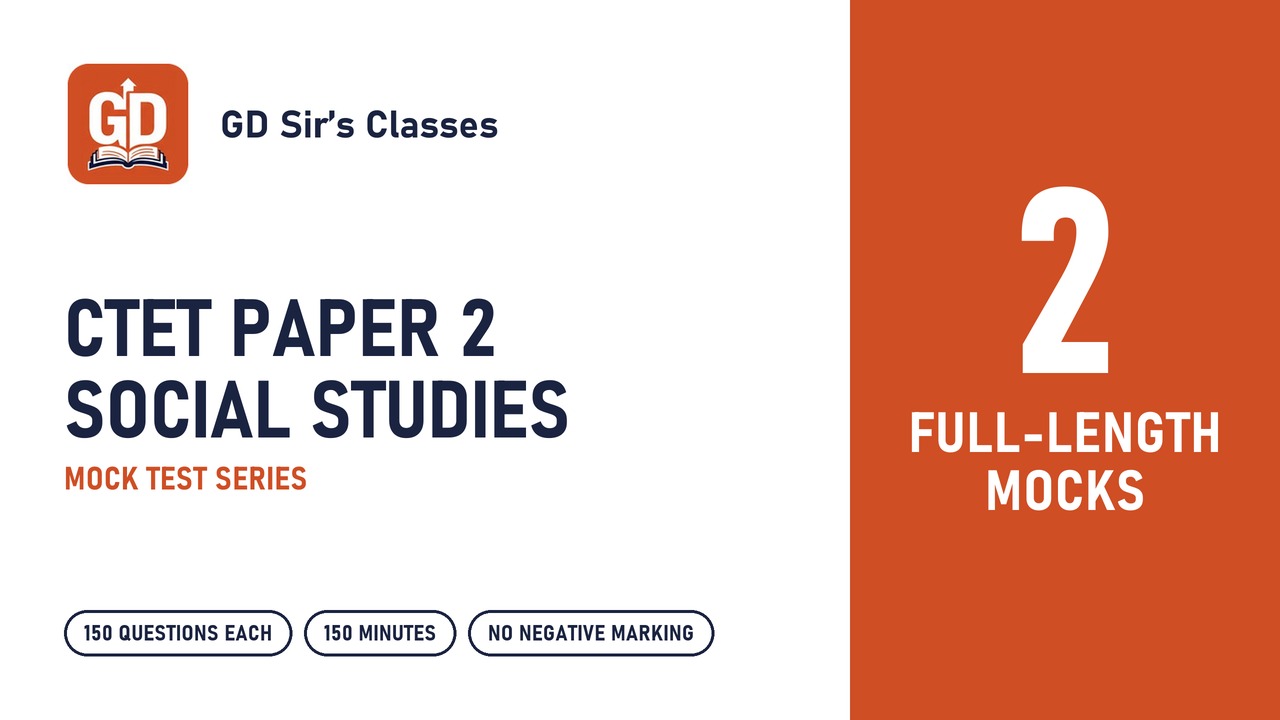
CTET Paper 2 Mock Test Series (Social Studies) - 2 Full-Length Mocks with Solutions
₹149₹79
CTET Paper I Mock Test Set 1 | English I + Hindi II | 150 Questions
₹21
CTET Paper I Mock Test Set 2 | English I + Hindi II | 150 Questions
₹21
CTET Paper I Mock Test Set 6 | English I + Hindi II | 150 Questions
₹21
CTET Paper I Mock Test Set 10 | English I + Hindi II | 150 Questions
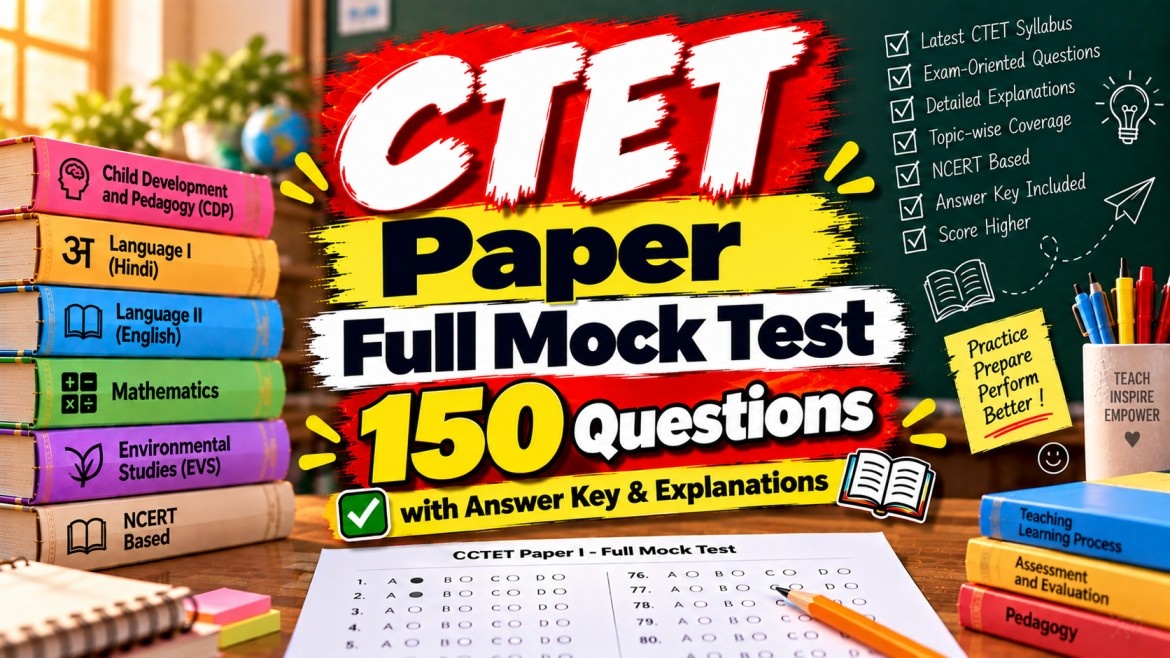
₹21
CTET Paper I Mock Test Set 8 | English I + Hindi II | 150 Questions
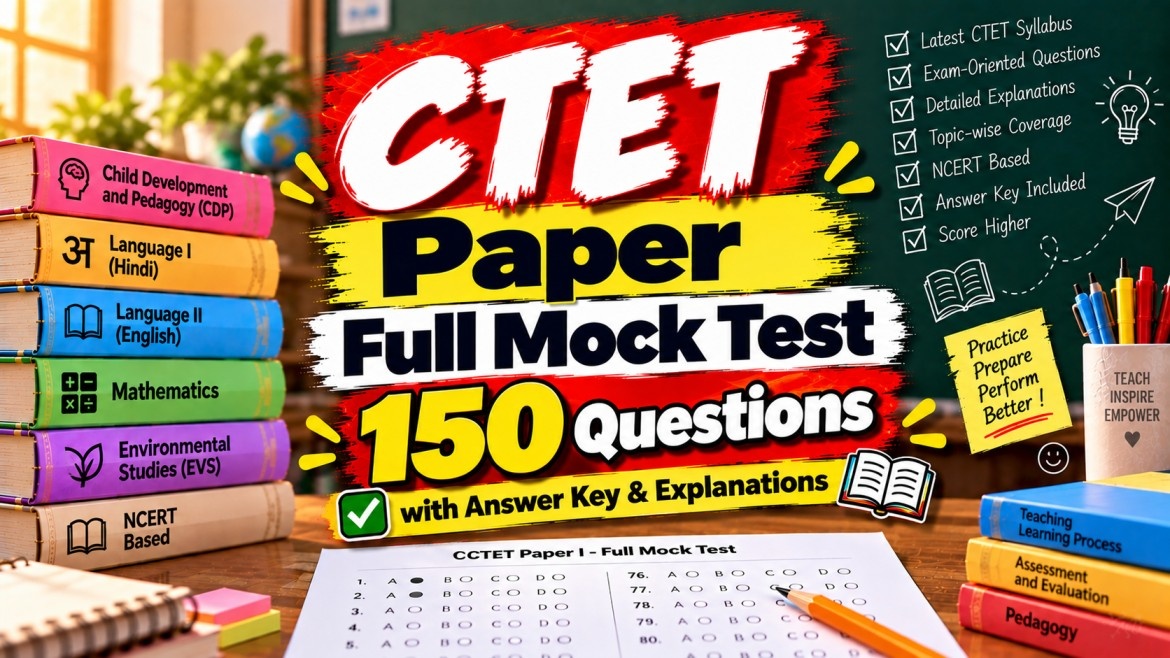
₹21
CTET Paper I Mock Test Set 9 | English I + Hindi II | 150 Questions
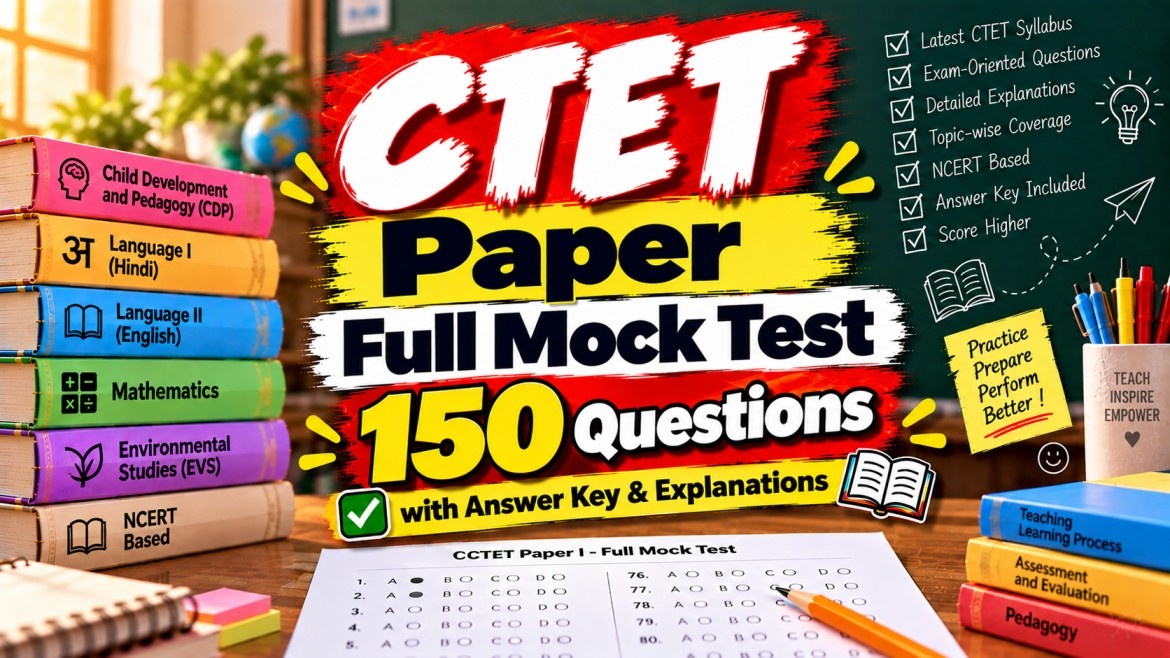
₹21
CTET Paper I Mock Test Set 3 | English I + Hindi II | 150 Questions
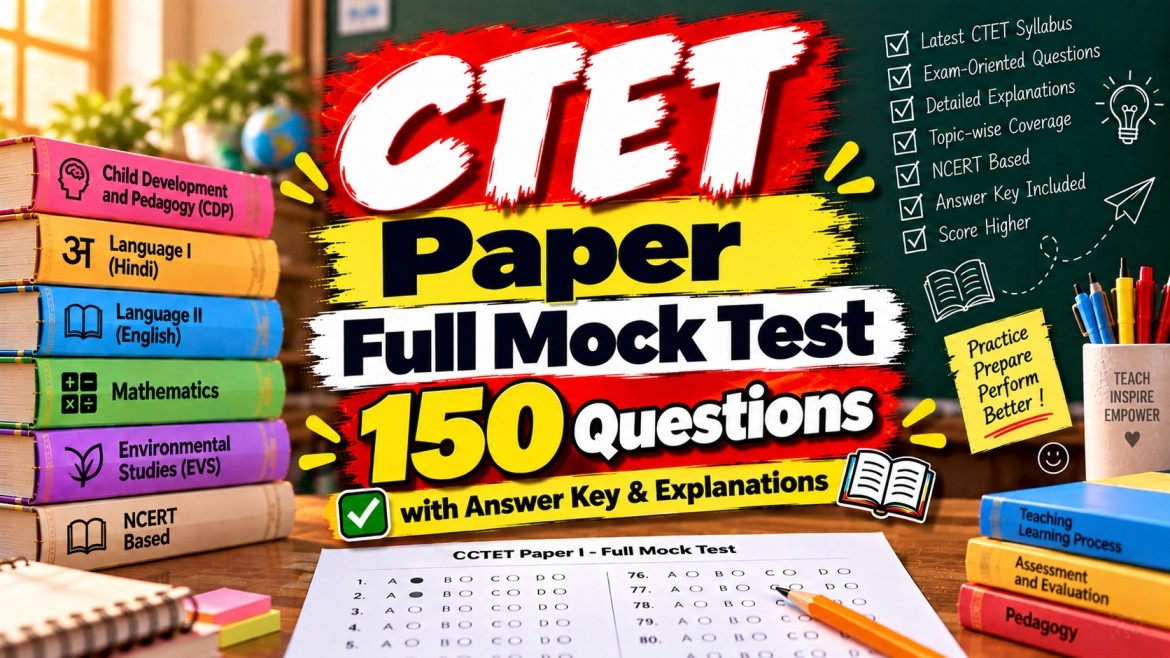
₹21
A CTET mock test is a practice paper built on the real exam: 150 multiple-choice questions in 2 hours 30 minutes, with no negative marking. With the current session's exam scheduled for 12 and 13 December 2026, regular mocks are the best way to check your preparation. They show whether you can handle pedagogy questions, long language passages and the time pressure of a full paper.
Why CTET Mock Tests Matter
Pedagogy practice: Many CTET sections give half their marks to pedagogy. Mocks train you to pick the most child-centred answer.
Time management: 150 questions in 150 minutes leaves about a minute per question. Mocks build that rhythm.
Stamina: Sitting through a full 2.5-hour paper needs practice.
Weak-area detection: Section-wise scores show which subject needs more work.
Confidence: The February 2026 pass rate was only 25.68% overall, according to CBSE. Regular practice helps you stay ahead.
What a Good CTET Mock Test Looks Like
Feature | What to check |
|---|---|
Questions and time | 150 questions in 150 minutes |
Paper I sections | CDP, Language I, Language II, Maths, EVS (30 each) |
Paper II sections | CDP, Language I, Language II (30 each) and Maths and Science or Social Studies (60) |
Content vs pedagogy | Matches the official split (for example, 15 content and 15 pedagogy in Paper I Maths) |
Marking | 1 mark per question, no negative marking |
Solutions | Explanations, especially for pedagogy answers |
Types of CTET Tests
Test type | Best used for |
|---|---|
Full-length mock | Checking overall readiness and timing |
Sectional test | Improving one subject, such as CDP or EVS |
Pedagogy mini test | Practising classroom-situation questions |
Previous year papers | Learning CBSE's question style |
Live tests | Comparing your score with other candidates |
How Many Mocks Should You Take?
Early stage: Sectional and topic tests after each chapter.
Middle stage: One full-length mock a week.
Final 6 weeks: Two to three full-length mocks a week, on the same timing as your shift (Paper II in the morning, Paper I in the afternoon).
Around 20 to 25 full mocks, each carefully reviewed, is a practical target for most candidates.
How to Analyse a CTET Mock
Check your score against 90: Are you above the 60% qualifying mark? Aim for 100 or more.
Split content and pedagogy: Note which type of question you lose more marks in.
Review every wrong pedagogy answer: Understand why the correct option is more child-centred or inclusive.
Track language timing: If passages take too long, practise reading questions before the passage.
Keep a mistake notebook: Revise it every week.
Common CTET Mock Test Mistakes
Leaving questions blank, even though there is no negative marking
Checking only the total score and skipping the review
Taking mocks without a timer
Ignoring Language II practice
Choosing "strict" or rote-learning answers in pedagogy questions