
UPPSC PCS Mock Test 2026: Online Practice for Prelims
Practise for the UPPSC PCS prelims on 6 December 2026 with timed GS Paper I and CSAT mock tests, then use each result to fix weak areas.
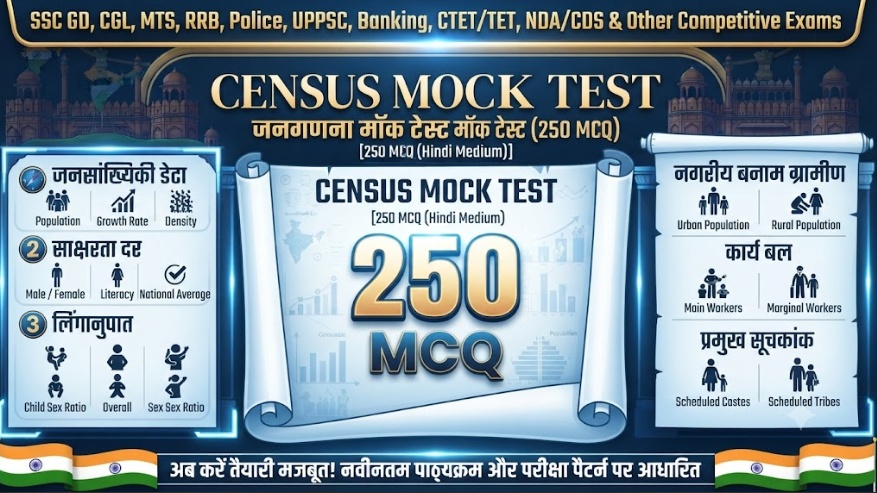
Census Mock Test 250 MCQ Hindi Medium for SSC GD, SSC CGL, SSC MTS, SSC GD, RRB, Police, UPPSC, Banking, CTET/TETNDA/CDS and other competitive exam
₹99₹9
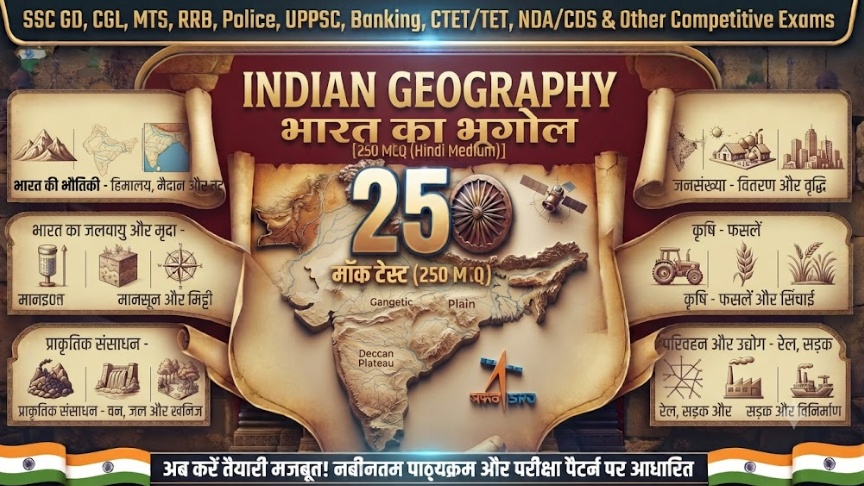
Indian Geography Mock Test [250 MCQ (Hindi Medium)] for all competitive exam
₹99₹9
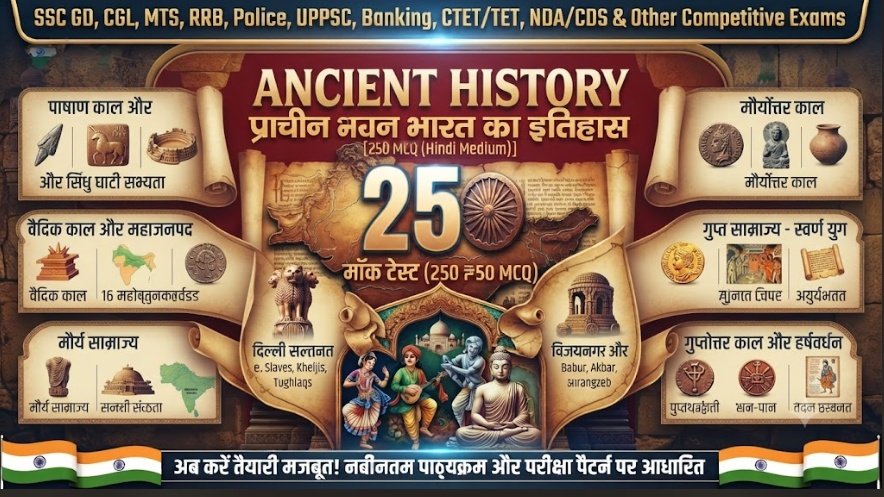
Ancient History Mock Test [250 MCQ (Hindi Medium)] for SSC GD, SSC CGL, SSC MTS, SSC GD, RRB, Police, UPPSC, Banking, CTET/TETNDA/CDS and other competitive exam
₹9
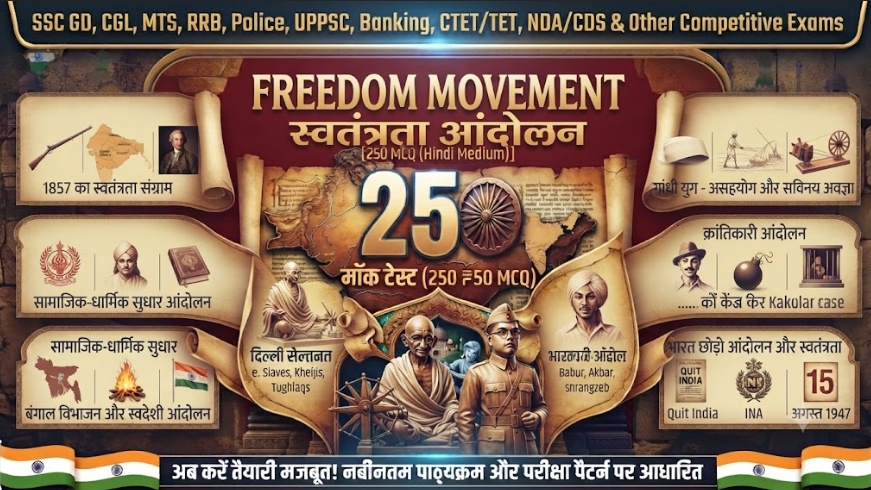
Freedom Movement Mock Test [250 MCQ (Hindi Medium)] for SSC GD, SSC CGL, SSC MTS, SSC GD, RRB, Police, UPPSC, Banking, CTET/TETNDA/CDS and other competitive exam
₹99₹9
Indian States & Capitals Mock Test [250 MCQ (Hindi Medium)] for SSC GD, SSC CGL, SSC MTS, SSC GD, RRB, Police, UPPSC, Banking, CTET/TETNDA/CDS and other competitive exam v
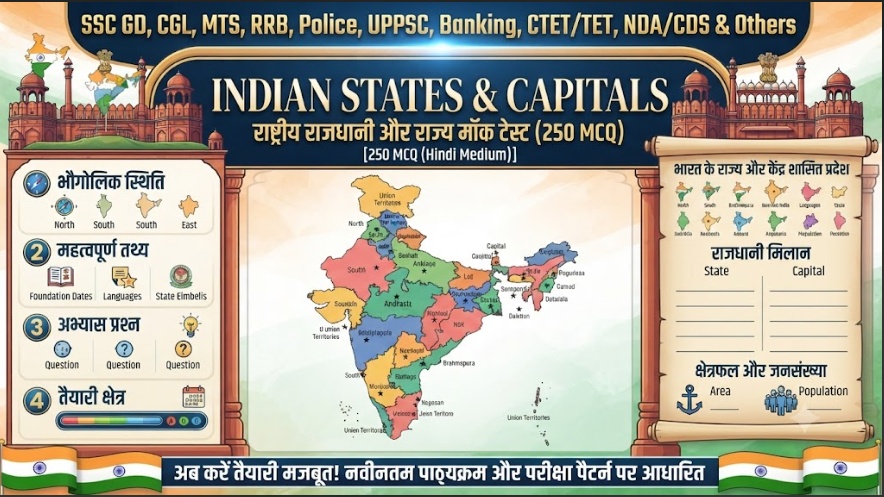
₹99₹9
Modern History Mock Test 250 MCQ Hindi Medium for SSC GD, SSC CGL, SSC MTS, SSC GD, RRB, Police, UPPSC, Banking, CTET/TETNDA/CDS and other competitive exam
₹9
Art & Culture Mock Test 250 MCQ in Hindi for SSC GD, SSC CGL, SSC MTS, SSC GD, RRB, Police, UPPSC, Banking, CTET/TETNDA/CDS and other competitive exam
₹99₹9
Medieval History 250 MCQ Mock Test Hindi Medium for SSC GD, SSC CGL, SSC MTS, SSC GD, RRB, Police, UPPSC, Banking, CTET/TETNDA/CDS and other competitive exam
₹99₹9
UPPSC PCS mock tests help you turn months of reading into marks. The prelims has 150 GS questions in two hours with a one-third penalty for each wrong answer. Knowing the content is not enough. You also need speed, judgement on when to guess, and the stamina to stay accurate for the full paper. Timed mocks are the only practice that builds all three together.
With the 2026 prelims scheduled for 6 December 2026, this page explains which types of tests to take and when, how to analyse each one, and which benchmarks to track so your scores keep rising.
Types of UPPSC PCS Mock Tests
Test type | What it covers | When to take it |
|---|---|---|
Topic-wise tests | One topic, such as modern history, UP geography or the Constitution | Right after you finish studying the topic |
Subject-wise tests | A full subject, such as polity, economy or environment | After finishing a subject, then once a month |
UP special tests | UP history, culture, geography, economy and schemes | Every two weeks, as UP questions appear across GS |
Current affairs tests | Monthly national, international and UP events | At the end of each month |
CSAT sectional tests | Comprehension, reasoning, maths and language | Weekly, from the start of preparation |
Full-length GS Paper I mocks | 150 questions, 200 marks, 2 hours | From about three months before prelims |
Previous year papers | Actual UPPSC GS and CSAT papers | Early to understand the level, then timed in the final phase |
The Pattern You Should Practise In
Practise in the current prelims pattern: Paper I (General Studies) with 150 questions for 200 marks, and Paper II (CSAT) with 100 questions for 200 marks, each in two hours. CSAT is qualifying at 33%, and your rank for mains depends only on Paper I. Every wrong answer costs one-third of that question's marks.
How to Use Mock Tests
Foundation phase (until about four months before prelims): One or two topic tests a week and one CSAT sectional test. The goal is accuracy, not speed.
Building phase (four to two months before): One full-length GS Paper I mock every week, plus subject tests for weak areas and a monthly current affairs test.
Final phase (last eight weeks): Two to three full-length mocks a week at the real exam time of day, with at least two full CSAT papers.
Last week: One or two mocks only, and spend the rest of the time revising your error log.
How to Analyse a Mock Test
A mock without analysis is wasted practice. Spend at least as long on analysis as on the test itself, on the same day.
Wrong answers: Sort them into "did not know", "confused between two options" and "silly error". Each needs a different fix.
Risky guesses: Count how many guesses were right and wrong. If your guesses lose marks overall, guess less.
Slow questions: Note questions that took more than two minutes and check whether a faster method exists.
Skipped but solvable: Mark questions you left blank but could have answered. These show overcaution.
Error log: Write every new fact or concept from the test into a single notebook and revise it weekly.
Benchmarks to Track
GS Paper I score: Aim for steady scores above 125 out of 200 in the final phase. Past general category cut-offs ranged from about 101 to 125.
Accuracy: Aim for 80% or more of your attempted questions correct.
Attempts: Most serious candidates attempt about 110 to 125 questions. Find the attempt level where your net score is highest.
Subject scores: Track history, polity, geography, economy, environment, science and current affairs separately.
CSAT safety margin: Score 90 or more in practice so the 66-mark minimum is never in doubt.
Common Mistakes
Taking mocks too late: Full-length mocks only in the last month leave no time to fix the gaps they reveal.
Ignoring CSAT: Many strong GS candidates fail by missing the 33% mark.
Chasing the score: Repeating the same test series questions inflates scores without building knowledge.
Skipping UP topics: UP questions are spread across GS, and they are easy marks once covered.