Ayushman Vay Vandana Scheme Completes Two Years: 23.46 Lakh Hospital Admissions Recorded
Key points
Why in the News?
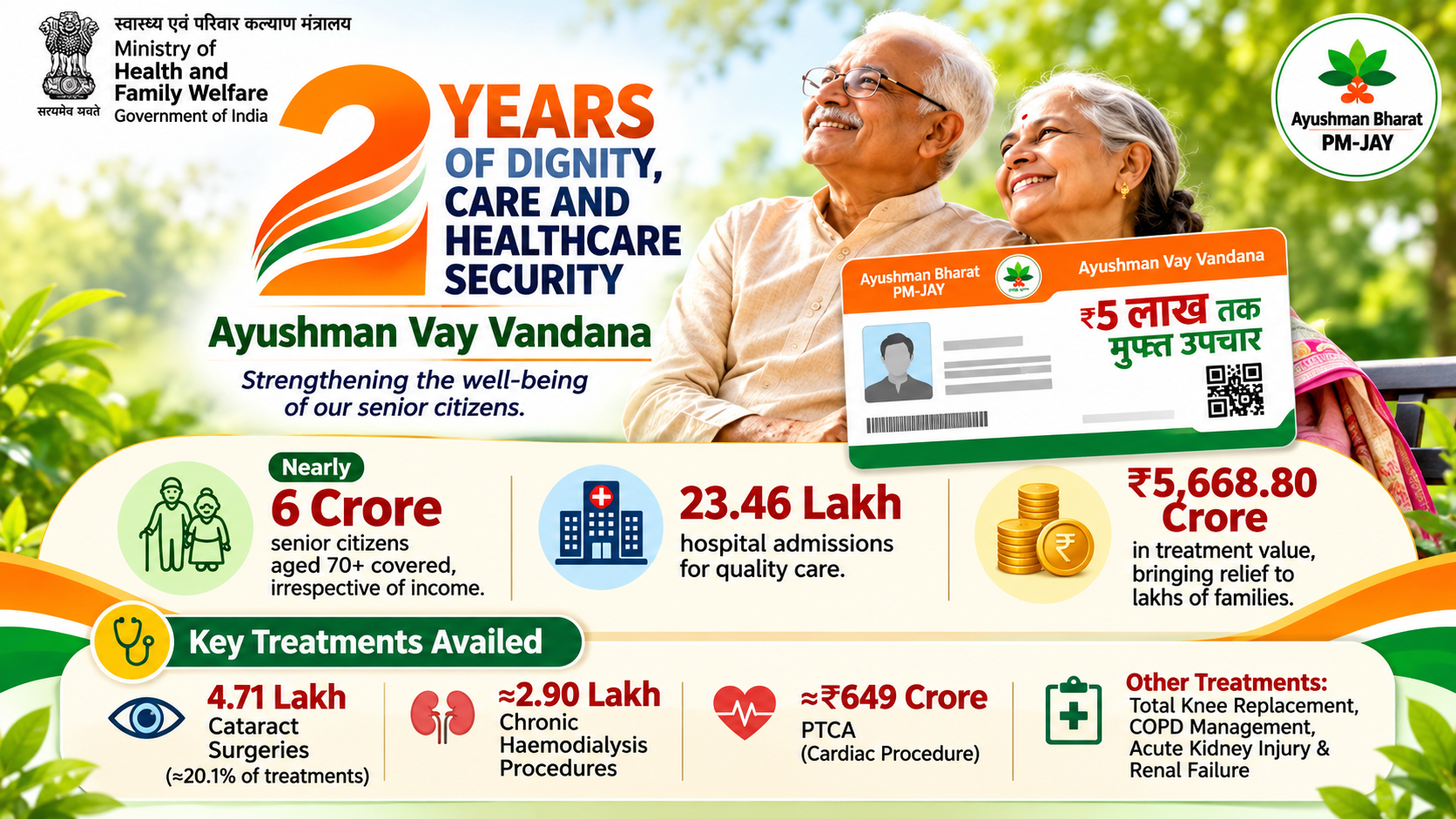
The Ayushman Vay Vandana Scheme completed two years on 29 October 2026, marking an important milestone in providing healthcare protection to India's elderly population.
According to official data, the scheme recorded 23.46 lakh authorised hospital admissions worth ₹5,668.80 crore as of 20 October 2026.
Launched by Prime Minister Narendra Modi on 29 October 2024, the initiative provides health coverage to senior citizens aged 70 years and above, regardless of income or socio-economic status.
About Ayushman Vay Vandana Scheme
Ayushman Vay Vandana is an extension of the Ayushman Bharat – Pradhan Mantri Jan Arogya Yojana (AB PM-JAY).
The scheme aims to improve access to hospital-based healthcare and protect senior citizens from financial difficulties caused by medical treatment.
It is implemented by the National Health Authority (NHA) under the Ministry of Health and Family Welfare.
Key Features of the Scheme
Feature | Details |
|---|---|
Launch Date | 29 October 2024 |
Eligible Beneficiaries | Indian citizens aged 70 years and above |
Income Criteria | No income restriction |
Annual Health Coverage | Up to ₹5 lakh per family |
Healthcare Services | Secondary and tertiary hospitalisation |
Additional Coverage | ₹5 lakh annual top-up for eligible elderly members of existing PM-JAY families |
Target Population | Approximately 6 crore senior citizens |
Target Families | Approximately 4.5 crore |
Implementing Agency | National Health Authority |
Additional Health Coverage
Senior citizens aged 70 years and above belonging to families already covered under AB PM-JAY receive an additional annual top-up of up to ₹5 lakh exclusively for eligible elderly members.
This coverage is separate from the existing family health cover available to members below 70 years of age.
Performance and Key Achievements
As of 20 October 2026, the scheme recorded the following achievements:
Indicator | Achievement |
|---|---|
Authorised Hospital Admissions | 23.46 lakh |
Value of Authorised Hospital Care | ₹5,668.80 crore |
Cataract Surgery Procedures | 4.71 lakh |
Share of Cataract Surgery | Approximately 20.1% |
Chronic Haemodialysis Procedures | Approximately 2.90 lakh |
Authorised Value of PTCA Procedures | Approximately ₹649 crore |
Major Medical Treatments
1. Cataract Surgery
Cataract surgery was the most frequently availed treatment, accounting for approximately 4.71 lakh procedures, or 20.1% of authorised treatments.
2. Chronic Haemodialysis
Chronic haemodialysis was the second most frequently availed treatment, with approximately 2.90 lakh procedures.
3. Percutaneous Transluminal Coronary Angioplasty (PTCA)
PTCA accounted for approximately ₹649 crore, representing the highest authorised treatment expenditure among the reported procedures.
4. Other Important Treatments
Other commonly availed treatments included:
Total knee replacement
Management of acute exacerbations of Chronic Obstructive Pulmonary Disease (COPD)
Acute febrile illness
Acute kidney injury
Renal failure
These figures highlight the scheme's role in supporting both routine surgeries and specialised medical treatment.
Significance of the Scheme
1. Improved Healthcare Access
The scheme helps senior citizens access hospital-based medical services by reducing financial barriers.
2. Financial Security
It protects elderly individuals and their families from high hospitalisation expenses.
3. Inclusive Healthcare
By covering eligible citizens aged 70 years and above irrespective of income, the initiative promotes inclusive healthcare.
4. Support for Chronic Diseases
Coverage for treatments such as haemodialysis and cardiac procedures supports elderly patients requiring specialised medical care.
5. Strengthening Social Security
The scheme recognises the healthcare needs of senior citizens and contributes to their financial and social security.
Conclusion
The completion of two years of Ayushman Vay Vandana represents an important step in expanding publicly funded healthcare coverage for India's elderly population.
By providing health protection irrespective of socio-economic background, the initiative aims to promote accessible healthcare, financial security and dignified ageing.
As of 20 October 2026, the scheme recorded 23.46 lakh authorised hospital admissions worth ₹5,668.80 crore.