
Central Board of Secondary Education Class 12
Senior secondary examination conducted by CBSE
CBSE Class 12 Study Material
Mock Tests
View allGoodwill - MCQ Test (CBSE Class 12 Accountancy)
Free
Admission of a Partner: Chapter Test (CBSE Class 12)
Free
Business studies PAPER LEAK CLASS 12 80/80 MARKS

₹29₹19
Class 12 Physics Mock Test

₹10
NEET Full Syllabus Mock Test Series 2026
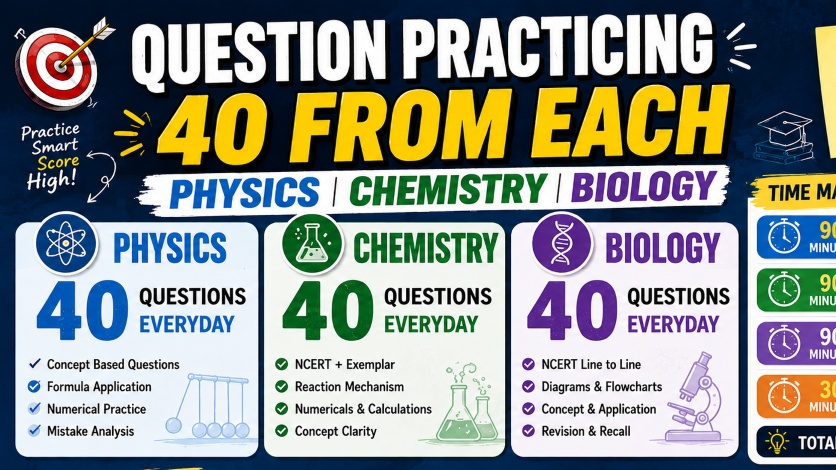
₹69₹49
CBSE CLASS 12TH GEOGRAPHY TEST SERIES FOR BOARD EXAM 2026

₹25₹5
Study Notes
View allCBSE Class XII Accountancy: Nature & Valuation of Goodwill
8 pagesFree
CBSE Class 12 Physics: 1400 MCQs or objectives – Complete Chapter-Wise Question Bank each chapter contains 100 MCQs
171 pages₹9
trignometry notes for class11th&12th
12 pages₹2
NCERT Class 12 History chapter 2 Notes in Hindi
31 pagesFree
Evolution Class 12 Biology Notes
1 pagesFree
NCERT Biology Class 12 Evolution Handwritten Notes
18 pages₹15
Bundles
View allUltimate Biochemistry Notes & Flowcharts Bundle | Complete Guide for B.Sc Medical, Biotechnology & NEET Exams
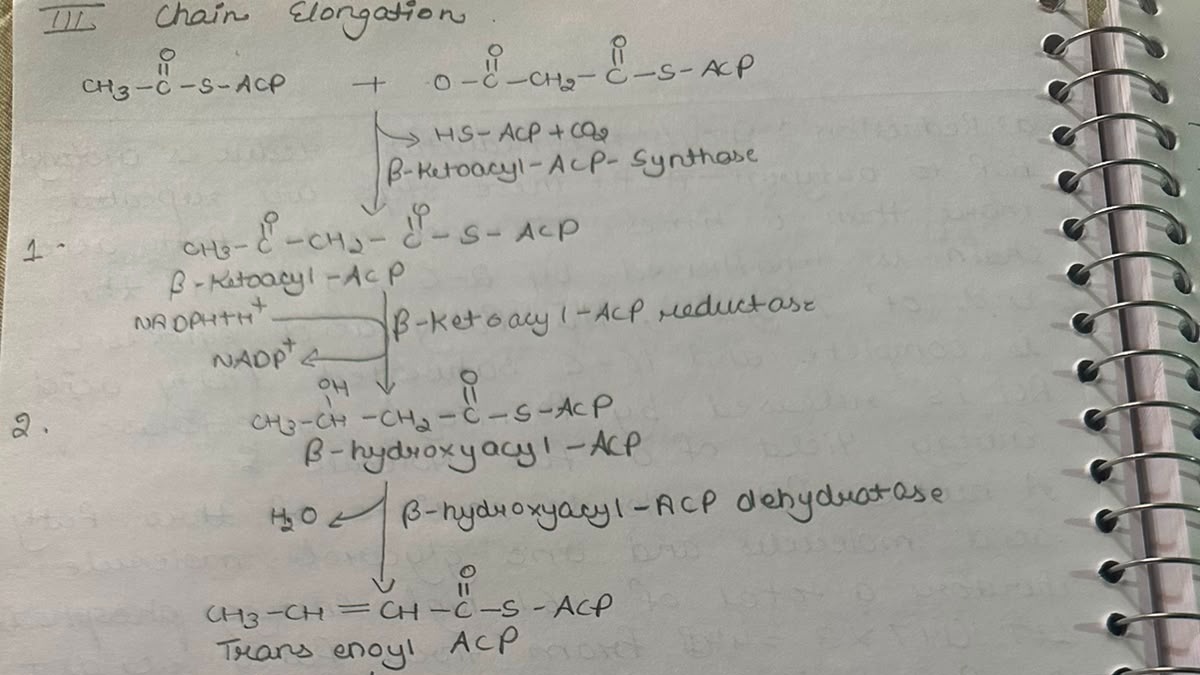
9 itemsSave 37%₹394₹249
Complete Exam Preparation Bundle: Notes, Mock Tests & Practice Papers
6 itemsSave 26%₹134₹99
Class 12 History Presentation PDF Bundle | Four Themes in Indian History-I
4 itemsSave 23%₹84₹65
All-in-One Exam Preparation Study Package with Notes, Tests and Courses
10 itemsSave 95%₹1,648₹80
CBSE Class 12 Partnership Accounts Bundle – Exam-Ready Revision Notes
6 itemsSave 18%₹97₹80
CBSE Class 12 Mathematics: High-Weightage 7-Chapter Mastery Bundle (Highlights value)
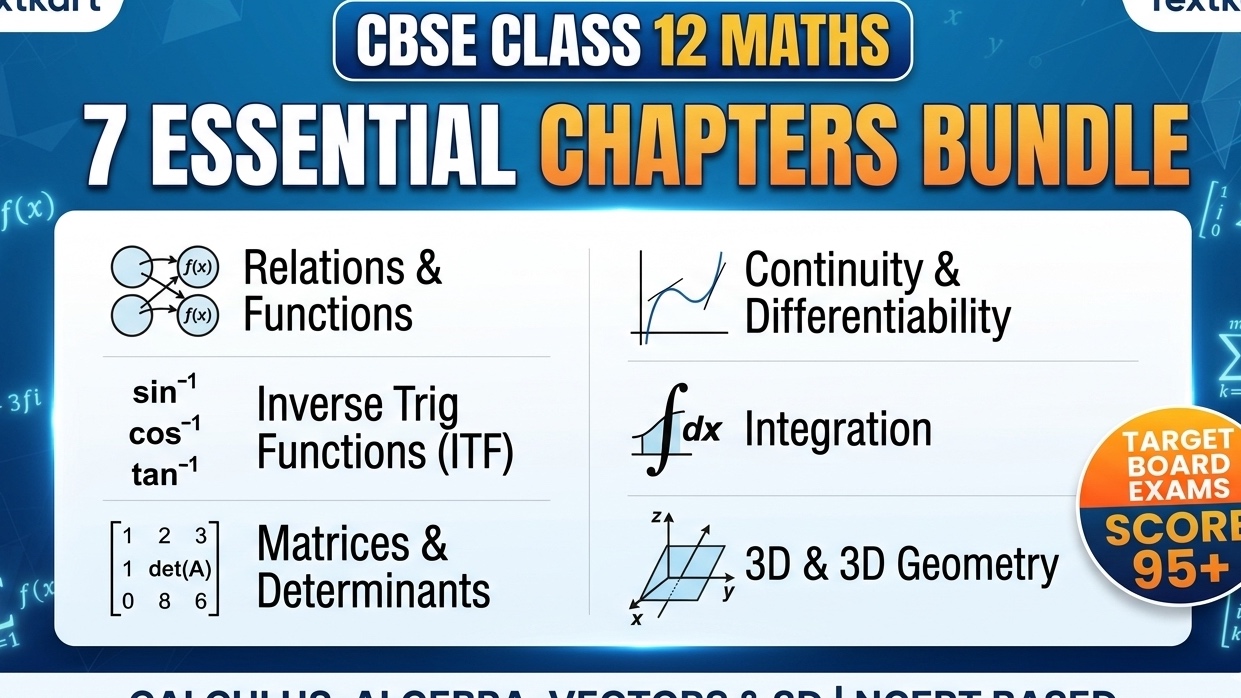
7 itemsSave 57%₹693₹299
The CBSE Class 12 exam 2027 is the Senior School Certificate Examination for students finishing the 2026-27 session in schools affiliated to the Central Board of Secondary Education (CBSE). CBSE is an autonomous body under the Ministry of Education, and the Class 12 marksheet is a key document for college admissions and for eligibility in many entrance exams.
This guide explains where the 2026-27 cycle stands today, what CBSE has confirmed and what is still awaited, how marks are divided subject by subject, how the question paper is designed and how to plan your preparation. The facts below come from CBSE's own circulars and curriculum documents. Anything unconfirmed is marked as tentative.
CBSE Class 12 Exam 2027 at a Glance
Particular | Details |
|---|---|
Conducting body | Central Board of Secondary Education (CBSE) |
Session | 2026-27 |
Examination | Class 12 main board examination, with a supplementary examination later in the year |
Format | Written theory paper at the exam centre, plus practical or internal assessment through the school |
Theory paper duration | 3 hours (as shown in the 2026-27 sample papers) |
Question paper design | 50% competency-focused, 20% select-response (MCQ-type), 30% constructed-response (short and long answer) |
Passing criteria | Same as 2025-26, as confirmed by CBSE |
Negative marking | None |
Expected exam window | February to March 2027 (tentative) |
Official website | cbse.gov.in |
Latest Updates for the 2026-27 Cycle
These updates are current as of 30 September 2026.
LOC process has begun: CBSE issued its circular on submitting the List of Candidates (LOC) for the Class X and Class XII main examinations 2026-27 on 21 September 2026. A prior intimation had come on 10 September 2026.
Sample papers are out: CBSE released the 2026-27 sample question papers and marking schemes on 21 September 2026. Its notification says there is no change in the question paper design and assessment pattern, and that the passing criteria stay the same as in 2025-26.
Registration and LOC webinar: In a press release dated 29 September 2026, CBSE said the LOC process has started and registration for Classes IX and XI will begin shortly. The processes cover nearly 32,000 affiliated schools in India and 26 countries, and CBSE stressed correct student particulars and subject combinations.
Corrections: A circular dated 23 September 2026 streamlines the process for correcting demographic details.
Date sheet: Not yet published on the CBSE website.
Important Dates
Event | Date |
|---|---|
LOC circular for 2026-27 main examinations | 21 September 2026 (issued) |
Class XII sample question papers 2026-27 | 21 September 2026 (released) |
Date sheet | Not announced yet |
Practical examinations | Conducted by schools under CBSE guidelines, normally before the theory papers; schedule awaited |
Theory examinations | Expected from February 2027 (tentative) |
Result | Expected around May 2027 (tentative); the 2026 results were declared in May 2026 |
Supplementary examination | Normally held in July; in 2026 CBSE published the date sheet on 17 July 2026 and declared results on 12 August 2026 |
Tentative dates come from earlier cycles and can change. Track the official notices on cbse.gov.in and the circulars your school receives.
Registration and List of Candidates (LOC)
Regular students do not fill in the board exam form themselves. Your school submits the LOC on CBSE's portal, and the details in it flow into your admit card and marksheet. Private candidates apply separately through the notices CBSE publishes for them.
Check your particulars: Confirm your name, parents' names and date of birth exactly as in your records.
Check subject codes: Make sure every subject and its code matches what you study, and that the combination is allowed (see the rules below).
Raise errors early: Ask your school to correct mistakes through the process in CBSE's 23 September 2026 circular rather than waiting for the admit card.
Special needs: Students with disabilities should ask the school to apply the provisions CBSE allows for Children with Special Needs (CWSN).
Eligibility for the CBSE Class 12 Board Exam
A regular candidate must be studying in Class 12 in a CBSE-affiliated school. Classes XI and XII are treated as one composite course, so the subjects you take in Class XI must continue in Class XII. CBSE also sets a minimum attendance requirement, generally 75%, and explains the rules for shortage of attendance on its website. Hindi or English must be one of your two languages.
Private candidates, including those reappearing or improving their performance, follow the separate notices issued by CBSE each year. For a fuller breakdown, read the CBSE Class 12 eligibility guide on Testkart.
Subjects and Scheme of Studies
CBSE's 2026-27 curriculum allows five compulsory subjects, one optional sixth subject and three internal-assessment areas for regular candidates.
Slot | What you can choose |
|---|---|
Subject 1 | Hindi Elective, Hindi Core, English Elective or English Core |
Subject 2 | Any one language from Group L not taken as Subject 1, or any one elective from Group A |
Subjects 3 and 4 | Any elective from Group A or a skill subject from Group S |
Subject 5 | Any elective from Group A |
Subject 6 (optional) | Any one elective or language from Group L or A |
Subjects 7 to 9 | Health and Physical Education, Work Experience and General Studies (internal assessment) |
Rules that catch students out
Core and Elective: The same language cannot be offered at both Core and Elective level.
Blocked combinations: Business Studies (054) with Business Administration (833), Mathematics (041) with Applied Mathematics (241), and more than one of Informatics Practices (065), Computer Science (083) and Information Technology (802) cannot be taken together.
Sixth subject replacement: If you fail one of your first five subjects, the sixth subject can replace it, provided Hindi or English still remains among the main five.
No aggregate percentage: CBSE issues a marksheet-cum-certificate with subject-wise marks and no aggregate. Colleges calculate percentage by their own norms, especially when you have taken six or seven subjects.
CBSE Class 12 Exam Pattern and Marking Scheme
Question paper design
CBSE has used the same composition for Class 12 theory papers since 2024-25, and its 2026-27 notification confirms no change.
Question type | Share of paper | Includes |
|---|---|---|
Competency-focused | 50% | MCQs, case-based, source-based and integrated questions |
Select-response | 20% | Plain MCQs |
Constructed-response | 30% | Short-answer and long-answer questions |
The exact split differs slightly by subject, so always check the sample paper for your subject.
Theory and practical marks by subject
Subject group | Examples | Theory | Practical or internal |
|---|---|---|---|
Languages and humanities | English, Hindi, History, Political Science, Sociology, Legal Studies | 80 | 20 internal assessment |
Mathematics | Mathematics, Applied Mathematics | 80 | 20 internal assessment |
Commerce and Economics | Accountancy, Business Studies, Economics | 80 | 20 practical (project work) |
Sciences and similar subjects | Physics, Chemistry, Biology, Geography, Psychology, Computer Science, Informatics Practices, Physical Education | 70 | 30 practical |
Arts and performing arts | Painting, Graphics, Sculpture, Dance | 30 | 70 practical |
Skill electives | Most Group S subjects | 60 | 40 practical (some subjects are 50 and 50) |
Each subject is worth 100 marks in total. Music subjects carry 30 theory, 50 practical and 20 internal assessment marks.
A worked example: the Physics sample paper
The 2026-27 Physics sample paper is for 70 marks and 3 hours, with 33 compulsory questions in five sections.
Section | Questions | Marks each | Type |
|---|---|---|---|
A | 16 | 1 | 12 MCQs and 4 assertion-reasoning |
B | 5 | 2 | Short answer |
C | 7 | 3 | Short answer |
D | 2 | 4 | Case study |
E | 3 | 5 | Long answer |
What this means for you:
Application matters: Roughly half the marks reward applying a concept to a situation, so reading the NCERT text once is not enough.
Wrong answers cost nothing: There is no negative marking, so never leave an MCQ blank.
Internal choice helps: The sample paper offers choices only in some questions, so you still need full syllabus coverage.
CBSE Class 12 Syllabus 2026-27
CBSE publishes the 2026-27 senior secondary curriculum (Part 2, Classes XI-XII) as one PDF per subject on its academic website. The curriculum groups subjects into Languages (Hindi, English and 34 other languages), Academic Electives, Skill Electives and internal-assessment areas. Biology, Chemistry and Geography also carry extra reading material on the same page.
Start from the subject PDF: It lists units, marks per unit and practical content, which a guidebook may not match.
Use NCERT as the base: CBSE states that the competencies tested come from the prescribed syllabus and its recommended textbooks.
Do not reuse old notes blindly: Compare last year's notes with this year's unit list before you revise from them.
You can download every subject from the official curriculum 2026-27 page, and the sample papers and marking schemes from the Class XII sample paper page. For a chapter-wise view, see the CBSE Class 12 syllabus and CBSE Class 12 exam pattern guides on Testkart.
Passing Criteria, Results and Supplementary Exam
CBSE has confirmed that the passing criteria for 2026-27 are the same as in 2025-26. Under CBSE's examination rules you need at least 33% in each subject, and in subjects with a practical component the practical is also part of the pass requirement, so do not treat it as a formality. Check the examination bye-laws on the CBSE website for the exact wording.
Grades: CBSE's curriculum describes a nine-point scale, A1 to D2, awarded by rank among passed candidates, with E meaning essential repeat.
Results: Results are released online, and digital marksheets are available through DigiLocker.
After the result: CBSE runs post-result facilities such as verification of marks and re-evaluation, with dates and fees notified each year.
Supplementary exam: Students who do not clear eligible subjects can appear in the supplementary exam, normally in July. The yearly circular sets out who can apply.
How to Prepare for the CBSE Class 12 Board Exam 2027
With the exams expected in February 2027, you have a few months to work with. A simple three-phase plan works for most subjects.
October to November: Finish any pending chapters, revise NCERT line by line and start a short-notes file with formulas, definitions and diagrams.
December to January: Solve chapter-wise questions, then CBSE sample papers and previous year papers with the marking scheme open, so you learn how step marks are awarded. Complete practical files and projects in this window.
January to February: Take full-length papers in exam conditions, check each one the same day and keep an error log of repeated mistakes for final revision.
Practise competency questions: Case-based and assertion-reasoning questions need regular practice, not last-minute reading.
Protect practical marks: In Science subjects the practical carries 30 of 100 marks, so prepare for the viva as seriously as for the theory paper.
Align with entrance exams: If you are also preparing for CUET, use the board syllabus as your common base and add entrance-specific practice on top.
If you prefer guided preparation, explore the CBSE Class 12 courses and test series bundles listed for this exam, and choose the ones that match your subjects and the time you have left.