
Central Board of Secondary Education Class 10
Secondary examination conducted by CBSE
CBSE Class 10 Study Material

Mock Tests
View allMathematics Important MCQs - Mock Test

Free
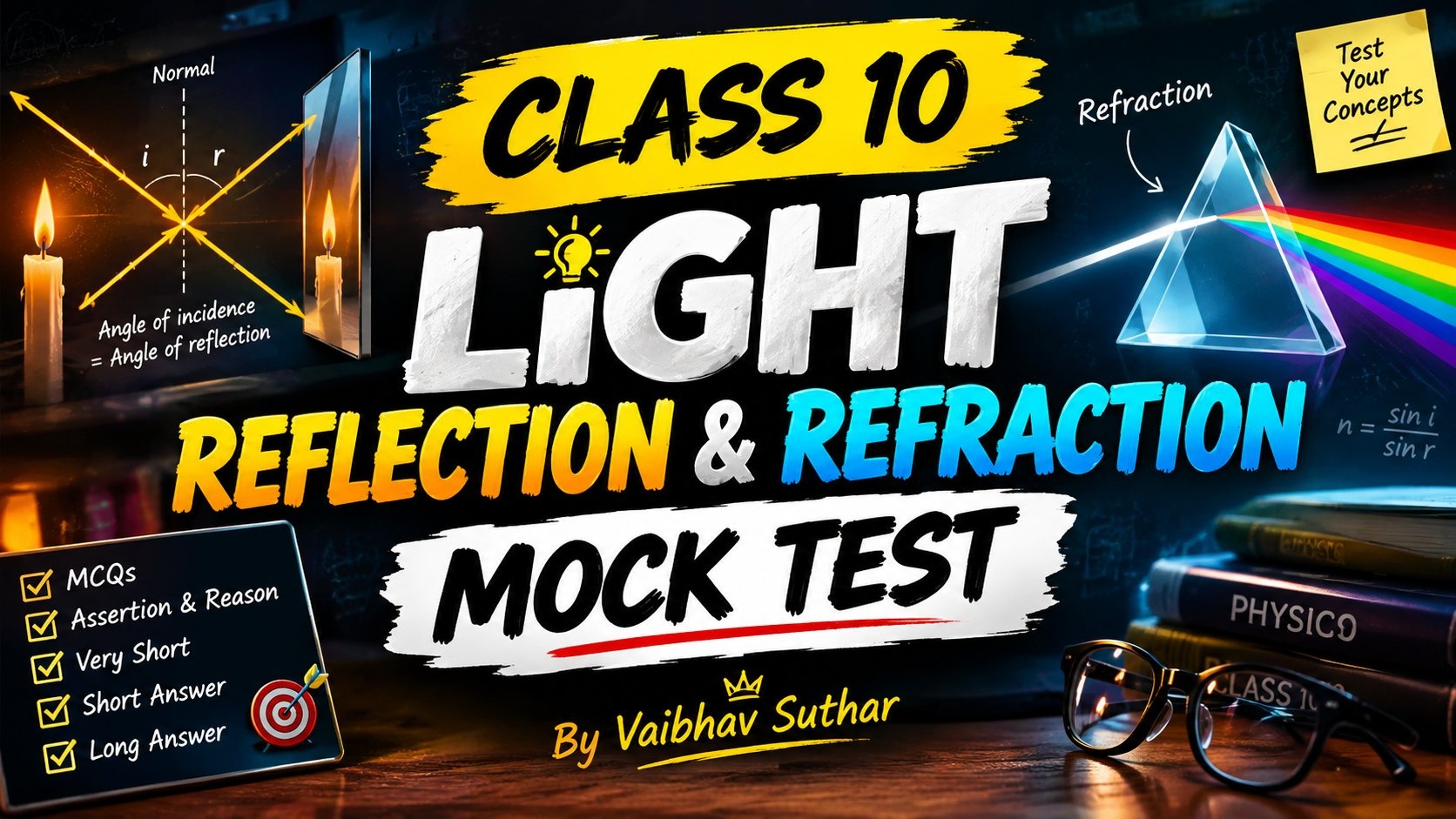
Class 10 Science Light Reflection and Refraction Mock Test
Free
Practice mock test for english grammar

₹100₹50
MCQs on Chemical Reactions and Equations, Class X CBSE Board
₹20
CBSE Class 10 Social Science (History and Geography)

₹20
Class 10 Chemistry - Chemical Reactions and Equations Test
Free
Study Notes
View all🔵 CBSE Class 10 🟢 Chemical Reactions & Equations 🟣 Colourful Notes 🟠 2026–27
15 pagesFree
Class 10th Light reflection and refraction handwritten notes
44 pagesFree
Class 10 CBSE Maths Mind Maps with 10 Years PYQs
15 pagesFree
Class 10 Science Presentation PDF - Carbon and Its Compounds | Chapter 4
25 pages₹21
Class 10 English First Flight PPT PDF - Madam Rides the Bus | Chapter 7
10 pages₹13
Life Processes CBSE Class 10 3D Notes
70 pagesFree
Bundles
View allClass 10 Science & Maths Mindmaps with PYQs

2 itemsFree
Class 10 Science Presentation PDF Bundle | Chapters 1–13

13 itemsSave 23%₹273₹209
Class 10 SST Contemporary India 2 Presentation PDF Bundle | Chapters 1–7
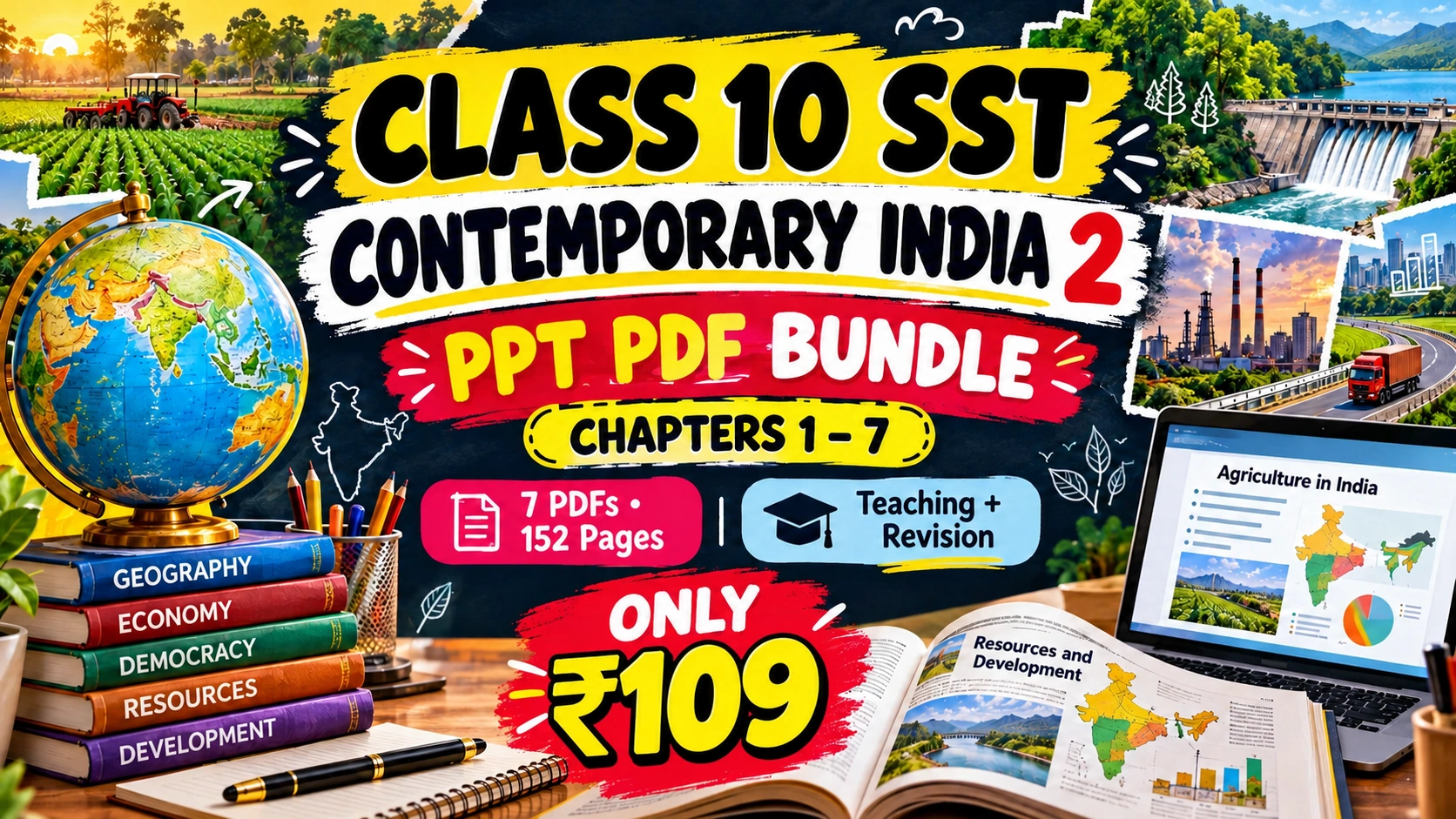
7 itemsSave 26%₹147₹109
CBSE Class 10 Science Chemistry All Chapters Handwritten Notes Bundle
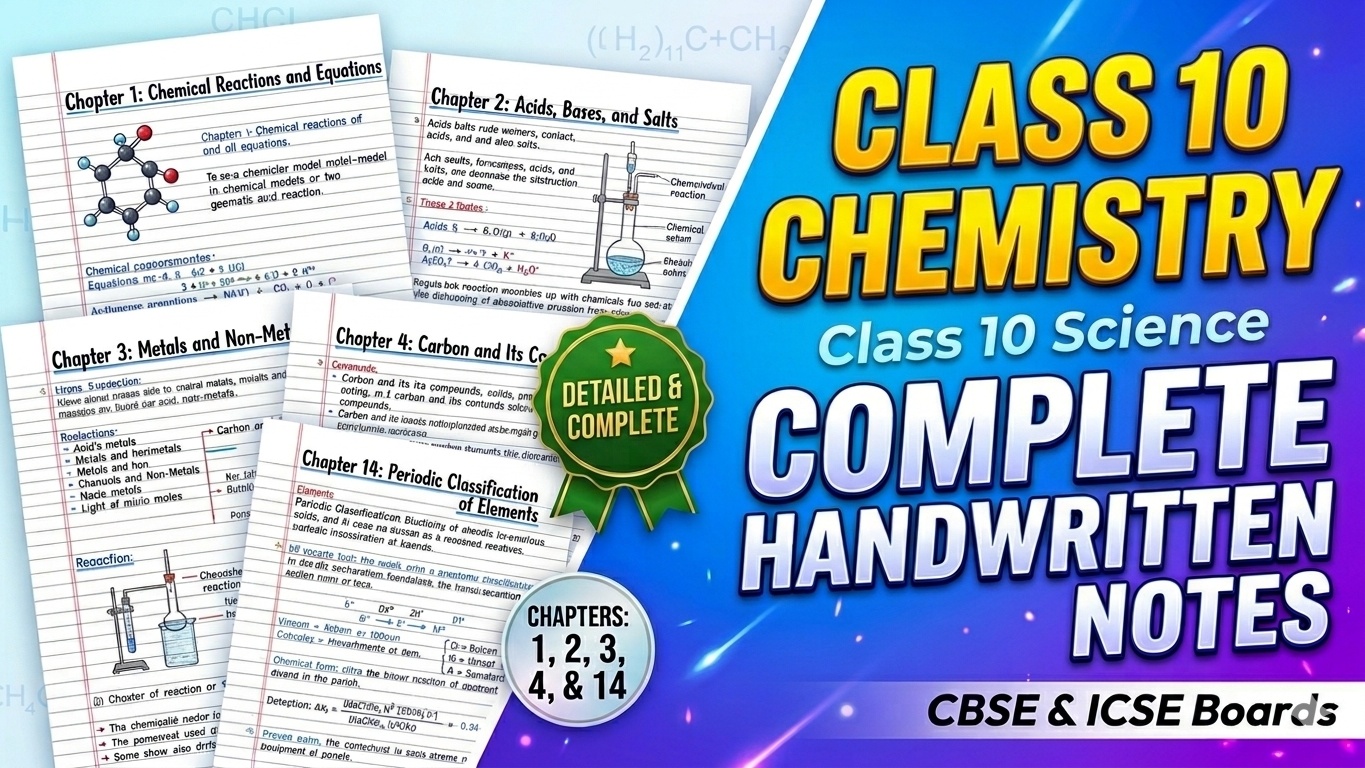
5 itemsSave 20%₹375₹299
CBSE Class 10 Science All Chapters Biology Handwritten Notes Bundle
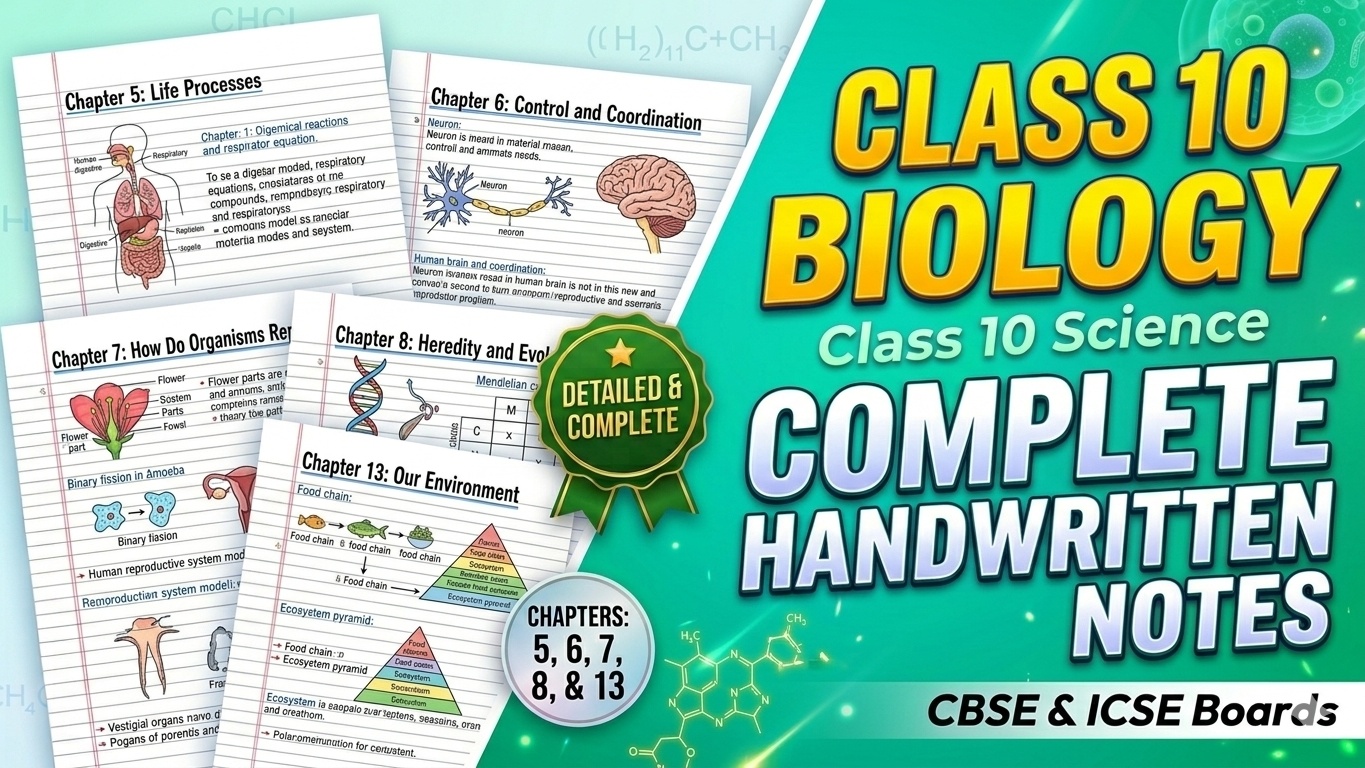
5 itemsSave 27%₹475₹349
CBSE Class 10 Science Physics All Chapters Handwritten Notes Bundle
4 itemsSave 18%₹366₹299
The CBSE Class 10 board exam is the first major board examination most Indian students sit, and its result shapes stream choice, school admissions and early career plans. It is conducted by the Central Board of Secondary Education (CBSE) for students of CBSE-affiliated schools, along with eligible private candidates. For the 2026-27 session, the CBSE Class 10 board exam 2027 follows the two-exam scheme that began in 2026: a compulsory first exam in February to March and an optional second exam in May.
According to CBSE's notification dated 21 September 2026, the Class 10 sample question papers and marking schemes for 2026-27 have been released, with no change in the question paper design or assessment pattern and no change in the passing criteria from 2025-26. CBSE has not yet published the 2027 date sheet, so every exam date on this page is marked as expected until the official schedule arrives on cbse.gov.in.
This guide explains how the two exams work, the important dates, who can appear, the exam pattern, grading and passing marks, a syllabus summary and a month-by-month preparation plan. Detailed chapter lists and subject-wise paper layouts are on the dedicated Testkart pages linked in each section.
Table of Contents
CBSE Class 10 Board Exam at a Glance
| Particular | Details |
|---|---|
| Exam | CBSE Class 10 board examination (All India Secondary School Examination) |
| Conducting body | Central Board of Secondary Education (CBSE) |
| Session | 2026-27, with exams held in 2027 |
| Number of exams | Two: the first is compulsory, the second is optional |
| First exam | February to March 2027 (expected; date sheet awaited) |
| Second exam | May 2027 (expected) |
| Mode | Pen and paper, offline |
| Marks per main subject | 100 (80 theory + 20 internal assessment) |
| Theory paper duration | 3 hours |
| Negative marking | None |
| Official websites | cbse.gov.in and cbseacademic.nic.in |
Latest Updates for the 2026-27 Session
Sample papers and marking schemes: Released by CBSE through a notification dated 21 September 2026. The Board states there is no change in the question paper design and assessment pattern for 2026-27. They are the closest guide to the real paper and are available on the CBSE academic website.
Passing criteria: The same notification says the passing criteria remain the same as in 2025-26.
List of Candidates (LOC): CBSE issued the LOC circular for the 2026-27 Class X and XII main examinations on 21 September 2026, after a prior intimation on 10 September 2026. Schools submit the LOC, and students do not apply on their own. Ask your school for the submission deadline and check your details when it shares them.
Date sheet: The 2027 date sheet had not been published on the CBSE website at the time of writing. Last cycle, CBSE issued a tentative date sheet on 24 September 2025. Watch the official website for this year's release.
Last year's second exam: CBSE declared the Class 10 second board exam results for 2026 on 18 July 2026, which gives a realistic idea of how the optional exam runs.
How the Two CBSE Class 10 Board Exams Work
CBSE announced the two-exam system on 25 June 2025, in line with the National Education Policy 2020. The first exam is the main one. The second gives students another attempt within the same academic year.
| Feature | First exam | Second exam |
|---|---|---|
| Status | Compulsory for every student | Optional |
| Expected window | February to March 2027 | May 2027 |
| Subjects | All subjects | Up to three of Science, Mathematics, Social Science and languages |
| Result (as per the scheme) | April | June (declared 18 July in 2026) |
| Purpose | Main board result | Improvement, or a second chance after missing one or two subjects |
The rules that matter most:
Best score counts: CBSE takes the better of your two scores in a subject, so a weaker second attempt does not lower your result.
Eligibility for the second exam: You must have appeared in the first exam. Students who miss three or more subjects in the first exam are reported to fall in the Essential Repeat category and reappear the following year.
No separate compartment exam: The second exam also serves as the supplementary exam for students who did not pass one or two subjects.
Full syllabus: Both exams cover the full syllabus, so the second paper is not a shortened one.
Internal assessment: The school awards these marks during the year. They are not reassessed for the second exam.
What this means for you
Treat the first exam seriously: It is the only compulsory attempt, and everyone sits it.
Choose improvement subjects after the April result: Pick the subjects where a few extra marks will help most, then revise the full syllabus for each.
Keep revision notes ready: You will have roughly a month between the April result and the May exam.
CBSE Class 10 Important Dates
| Event | Date | Status |
|---|---|---|
| Sample papers and marking schemes | Notification dated 21 September 2026 | Released |
| LOC circular for 2026-27 | 21 September 2026 | Released; schools submit |
| Practical and internal assessment | Before the theory exams; your school shares the dates | School-level |
| Date sheet | Not announced | Awaited |
| Admit card | Before the first exam, through your school | Expected |
| First exam | February to March 2027 | Expected |
| First exam result | April 2027 | Per the scheme |
| Second exam | May 2027 | Expected |
| Second exam result | June 2027 | Per the scheme |
For reference, the 2026 first exam began on 17 February 2026. Expected dates come from the two-exam scheme and last cycle's pattern, and they can change. Track the official website and your school notices.
Eligibility: Who Can Appear in the CBSE Class 10 Exam?
Regular students: Students enrolled in a CBSE-affiliated school and registered by the school through the LOC. CBSE attendance rules apply, generally 75% with limited relaxation in documented cases.
Private candidates: Eligible candidates apply separately under CBSE's private candidate notice, which the Board publishes on its website.
Second exam: Open only to students who appeared in the first exam, as explained above.
Read the full conditions on the CBSE Class 10 eligibility page.
CBSE Class 10 Exam Pattern and Marking Scheme
Each main subject is worth 100 marks. A written paper carries 80 marks and the school awards the remaining 20.
| Component | Marks | Conducted by |
|---|---|---|
| Theory paper (3 hours) | 80 | CBSE (external) |
| Internal assessment | 20 | School |
| Total per subject | 100 |
Reports on the current pattern say about half the paper is competency-based questions, about 20% is multiple choice and the rest is short and long answers. Use the official sample papers to see the exact section layout for each subject.
Internal Assessment (20 Marks)
Most subjects split the 20 marks into four parts of 5 marks each: periodic assessment (written tests through the year), multiple assessment (quizzes, oral tests and activities), portfolio (classwork, notebooks and records) and subject enrichment (practical, lab, map or language activities). Your school's circular has the exact scheme for each subject.
Subjects and Marks
| Subject | Theory | Internal assessment |
|---|---|---|
| English (Language and Literature) | 80 | 20 |
| Hindi (Course A or B) or another language | 80 | 20 |
| Mathematics (Standard or Basic) | 80 | 20 |
| Science | 80 | 20 |
| Social Science | 80 | 20 |
Skill subjects such as Information Technology and Artificial Intelligence use a different theory and practical split. Check the subject's own syllabus document.
What this means for you
Attempt every question: There is no negative marking, so a blank answer can only cost you.
Do not ignore the 20 marks: Internal assessment is a fifth of each subject and depends on steady work through the year.
Practise case-based questions: With so much of the paper competency-based, rote learning alone will not be enough.
See the CBSE Class 10 exam pattern page for a subject-wise breakdown.
CBSE Class 10 Grading System and Passing Marks
CBSE awards grades on the marks you score in each subject.
| Marks | Grade | Grade point |
|---|---|---|
| 91 to 100 | A1 | 10 |
| 81 to 90 | A2 | 9 |
| 71 to 80 | B1 | 8 |
| 61 to 70 | B2 | 7 |
| 51 to 60 | C1 | 6 |
| 41 to 50 | C2 | 5 |
| 33 to 40 | D | 4 |
| Below 33 | E (needs improvement) | Not applicable |
The minimum requirement is 33% in each subject, and CBSE has confirmed the passing criteria are unchanged for 2026-27. Sources differ on whether the 33% is counted on the combined total or separately for theory and internal assessment. Many guides read it as separate, which works out to 27 out of 80 in theory and 7 out of 20 in internal assessment. Treat those two figures as your safe minimums, aim far above them, and confirm the rule in the latest CBSE notice.
Students who miss one or two subjects can use the second exam as their supplementary attempt.
CBSE Class 10 Syllabus Summary
The syllabus is based on NCERT textbooks and is published by CBSE on its academic website. CBSE updates the documents each session, so use the 2026-27 PDF and not older notes or guides.
| Subject | Areas to prepare | Start with |
|---|---|---|
| English | Reading comprehension, grammar, writing formats, literature textbooks | Writing formats and grammar rules, which are quick to master |
| Mathematics | Algebra, geometry, trigonometry, mensuration, statistics and probability | Algebra and trigonometry, which feed many other chapters |
| Science | Chemistry, biology and physics sections | NCERT text, diagrams and numerical practice in physics |
| Social Science | History, geography, political science, economics | Map work and NCERT summaries, since maps help both theory and internal marks |
| Hindi or other language | Reading, writing, grammar, literature | Grammar and letter or essay formats |
The full chapter list is on the CBSE Class 10 syllabus page, and you can download the official documents from the CBSE curriculum 2026-27 page.
How to Prepare for the CBSE Class 10 Board Exam
With the first exam expected in February, you have about four months. A phased plan keeps revision calm.
October to November: Finish the NCERT syllabus in every subject. Solve the textbook examples and exercises, and keep a short notebook of formulas, definitions and dates.
December: Move to topic-wise practice with case-based and assertion-reason questions. Start an error log, where you note every mistake and its correct method.
January: Attempt the official sample papers in exam conditions, three hours at a time. Finish practicals, projects and portfolios at school.
February: Revise from your notes and error log, not new material. Solve one paper per subject in the last week and sleep well before each exam.
If You Plan to Take the Second Exam
Decide with data: After the April result, compare your marks across subjects and choose up to three where improvement is realistic.
Work from your error log: Repeated mistakes usually point to two or three weak chapters per subject.
Revise the full syllabus: The second paper covers everything, so plan the four weeks subject by subject.
Sample Papers and Practice Tests
Start with the official sample papers and marking schemes, because they show how CBSE frames questions and awards marks. After that, timed practice tests help you build speed and spot weak chapters. You can practise subject-wise and chapter-wise tests in the current pattern on Testkart, then review the analysis to decide what to revise next. Pair them with previous year papers so the real difficulty level is familiar by January.
When the date sheet arrives, plan your revision backward from each paper. Until then, bookmark the official website, download the 2026-27 syllabus and sample papers, and fix a weekly study plan today.