SSC CHSL Mock Test 2026: Online Test Series and Practice Plan
Sectional and full-length SSC CHSL mocks in the 2026 pattern, with a practice plan, analysis method and score benchmarks.
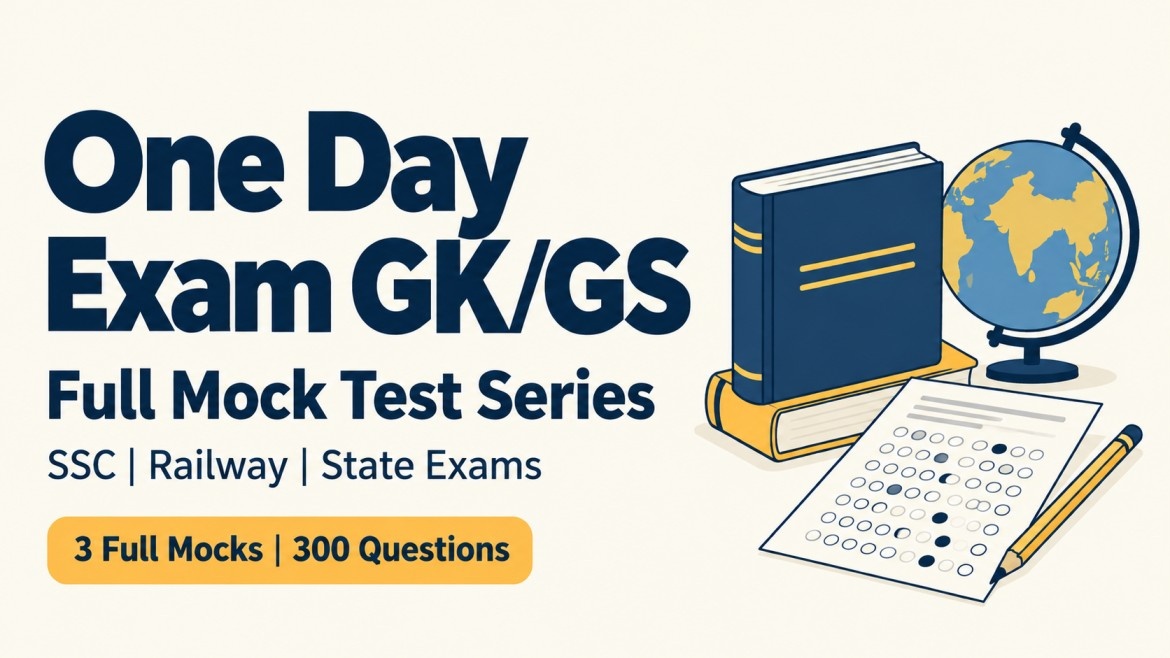
One Day Exam GK/GS Full Mock Test Series (SSC, Railway & State Exams)
₹199
English Language Full Mock Test for Competitive Exams

Free
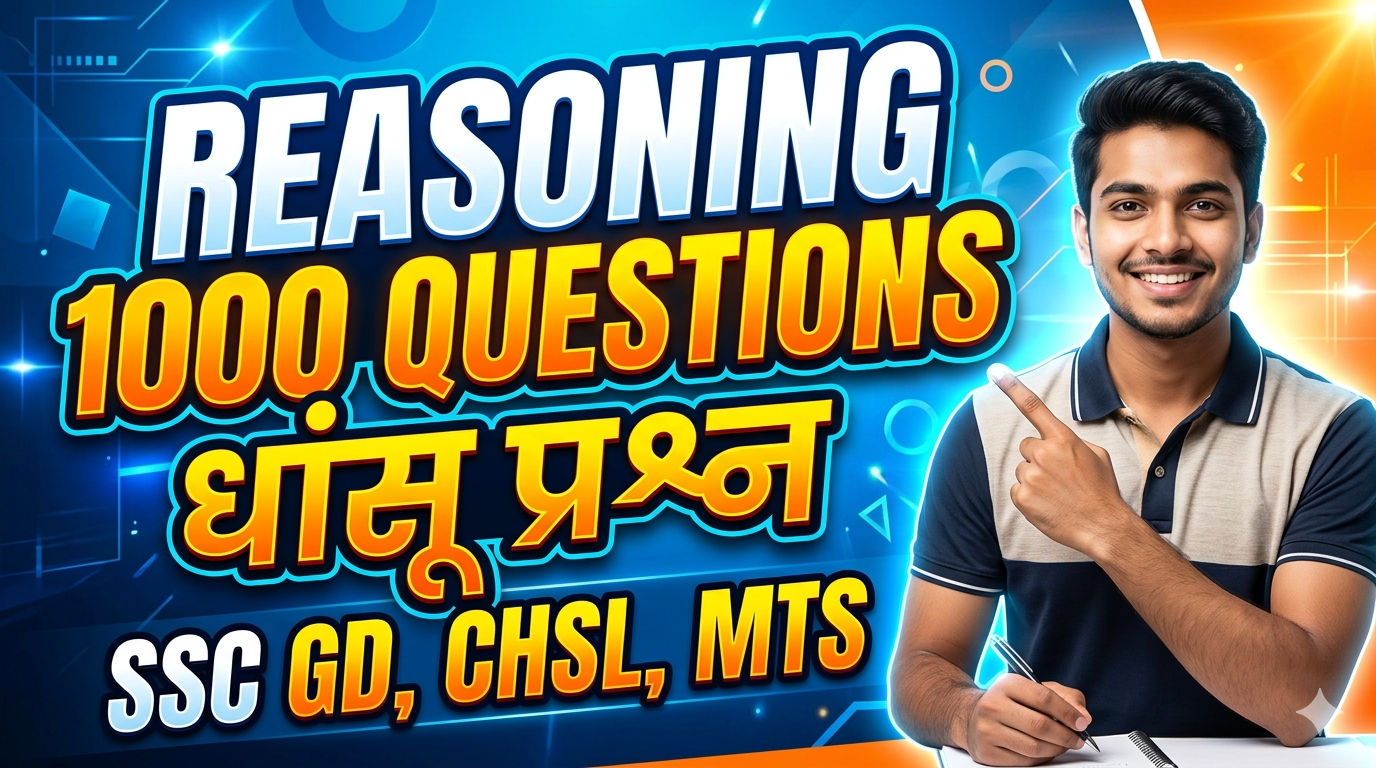
SSC Reasoning: 1000 अति महत्वपूर्ण प्रश्न 🔥 | SSC GD, CHSL
₹50₹20
Unlimited Gyan - 200 General Knowledge Questions
Free
English Grammar & Vocabulary Mock Test Set 2
₹10
Logical Reasoning Practice Test 40 Questions
Free
SSC CGL General Awareness Test - 141 Questions
Free
SSC CHSL Mock Test 250 Important Questions Hindi
₹499₹49
Government Exams GK & GS Mock Test 250 MCQ Hindi
₹399₹49
SSC
₹179
UPSC/SSC Polity Mock Test: Historical Background

Free
SSC MTS 25 Gk Questions Full-Length Mock Test Series 2026
₹35
An SSC CHSL mock test is a full-length or sectional practice paper built on the current exam pattern, taken under real time limits. For the 2026 cycle, mocks matter more than before: Tier 1 now gives each of its four sections a fixed 15-minute timer, so you can no longer borrow time from a strong section to rescue a weak one. The only way to get used to that rhythm before 30 November 2026, when Tier 1 begins, is timed practice.
This page explains which types of tests to take and when, how to plan a mock schedule, how to analyse each test, which numbers to track, and how to prepare for the Tier 2 typing or skill test alongside.
Types of SSC CHSL Mock Tests
Test type | What it covers | When to take it |
|---|---|---|
Topic-wise tests | One topic, such as percentages, error spotting or coding-decoding | Right after you finish studying that topic |
Sectional tests | 25 questions of one subject in 15 minutes, as in Tier 1 | Once you have covered most topics in a subject |
Full-length Tier 1 mocks | 100 questions, 200 marks, four 15-minute sections | Weekly at first, then three or more a week in the final phase |
Previous year papers | Actual questions from earlier CHSL shifts | Throughout, to judge real difficulty and repeated question types |
Tier 2 mocks | Sections I and II (360 marks) plus the Computer Knowledge module | After Tier 1, or earlier if your Tier 1 scores are stable |
Typing or skill tests | LDC/JSA typing test or DEO data entry test | Short daily sessions from the start |
Exam Pattern to Practise In
Make sure every mock you take follows the 2026 scheme. Older tests that allow free movement across one 60-minute block will train the wrong habits.
Stage | Questions and marks | Time | Marking |
|---|---|---|---|
Tier 1 | 100 questions, 200 marks (25 per section) | 60 minutes, 15 per section | +2 for correct, -0.50 for wrong |
Tier 2, Sections I and II | 120 questions, 360 marks | 1 hour per section | +3 for correct, -1 for wrong |
Tier 2, Section III | 15 questions, 45 marks (qualifying) | 15 minutes | +3 for correct, -1 for wrong |
Tier 2, Section IV | Typing or skill test (qualifying) | 10 minutes (LDC/JSA), 15 minutes (DEO) | Speed and accuracy standard |
For the full breakdown, see the SSC CHSL exam pattern.
How to Use SSC CHSL Mock Tests: An 8-Week Plan
Weeks 1 to 2, baseline and topic tests: Take one full Tier 1 mock to see where you stand, then switch to topic-wise tests on your weakest areas. Two to three topic tests a day are enough.
Weeks 3 to 5, sectional tests: Take one 15-minute sectional test per subject each day. This builds the per-section speed the new timer demands. Add one full mock each week.
Weeks 6 to 7, full mocks: Move to three full-length mocks a week, ideally in the same time slot as your likely exam shift. Keep one sectional test a day for your weakest subject.
Week 8, final round: Take a full mock every other day and spend the gaps revising your error log. Avoid new topics in the last few days.
Solve SSC CHSL previous year papers alongside, roughly one every week, so your sense of difficulty matches the real exam rather than any single test series.
How to Analyse an SSC CHSL Mock Test
A mock without analysis is only half used. Spend at least as long reviewing a test as you spent taking it, on the same day.
Wrong answers: Mark each one as a concept gap, a calculation slip or a misread question. Concept gaps go back to study; slips need slower, cleaner working.
Slow questions: Note any question that took more than a minute in Tier 1. Find a faster method or decide to skip that type in the exam.
Skipped but solvable: Re-attempt skipped questions without a timer. Those you can solve are lost marks caused by time planning, not knowledge.
Error log: Write each repeated mistake in one notebook or file, grouped by subject, and revise it before every mock.
Benchmarks to Track
These are working targets for self-assessment, not official standards. Mock difficulty varies between test providers, so watch the trend across tests rather than one score.
Metric | How to measure | Working target |
|---|---|---|
Total score | Tier 1 mock score against your category's latest cut-off | 10 to 15 marks above the CHSL 2025 cut-off (144.26 for UR LDC/JSA) in exam-level mocks |
Accuracy | Correct answers divided by attempts | 85% or more in Tier 1; higher in Tier 2, where a wrong answer costs a third of a question |
Sectional balance | Gap between your best and weakest section | No section far behind the others, and all above the qualifying minimum |
Time per question | Seconds spent per question in each section | Under 36 seconds on average in Tier 1, leaving 2 to 3 minutes per section to review |
The SSC CHSL cut-off page has the full category-wise and post-wise figures to set your own target.
Tier 2 Mocks and Typing Practice
Tier 2 decides final merit, and English and Comprehension alone carries 120 of the 360 merit marks. Once your Tier 1 scores are steady, add one Tier 2 mock a week, focusing on reading speed and accuracy under the -1 penalty.
The typing or skill test is held on the same day as Tier 2 Session I. LDC/JSA candidates need 35 words per minute in English or 30 in Hindi in a 10-minute test. DEO candidates need 8,000 or 15,000 key depressions per hour, depending on the department, in 15 minutes. Fifteen minutes of daily practice from the start removes this risk.
Common Mistakes with Mock Tests
Taking too many mocks too early: Full mocks before you know the syllabus measure gaps you already know about. Build topics first.
Chasing scores instead of analysis: A high score with no review teaches less than an average score analysed properly.
Practising without sectional timers: Open 60-minute papers hide the real pressure of the 2026 pattern.
Ignoring General Awareness: With its own 15 minutes, GA is now a protected 50 marks. Regular GA quizzes lift your total directly.
Follow official notices on the SSC website.