UGC NET Mock Test Guide 2026: Importance, Strategy & How to Analyse Performance
Practice with mock tests built specifically for UGC NET 2026: Exam Date, Eligibility, Syllabus & Pattern.
UGC NET Paper 1 Mock Test (10 Questions)

⭐ 4.67Free
UGC NET Free Mock Test 2026 – Practice Online & Boost Your Score

Free
NTA UGC NET Library and Information Science Mock Test Series

⭐ 5.00₹499₹401
UGC NET December 2026 – Teztarrar Paper 1 Mock Test (10 Full-Length Tests)

₹2,999₹499
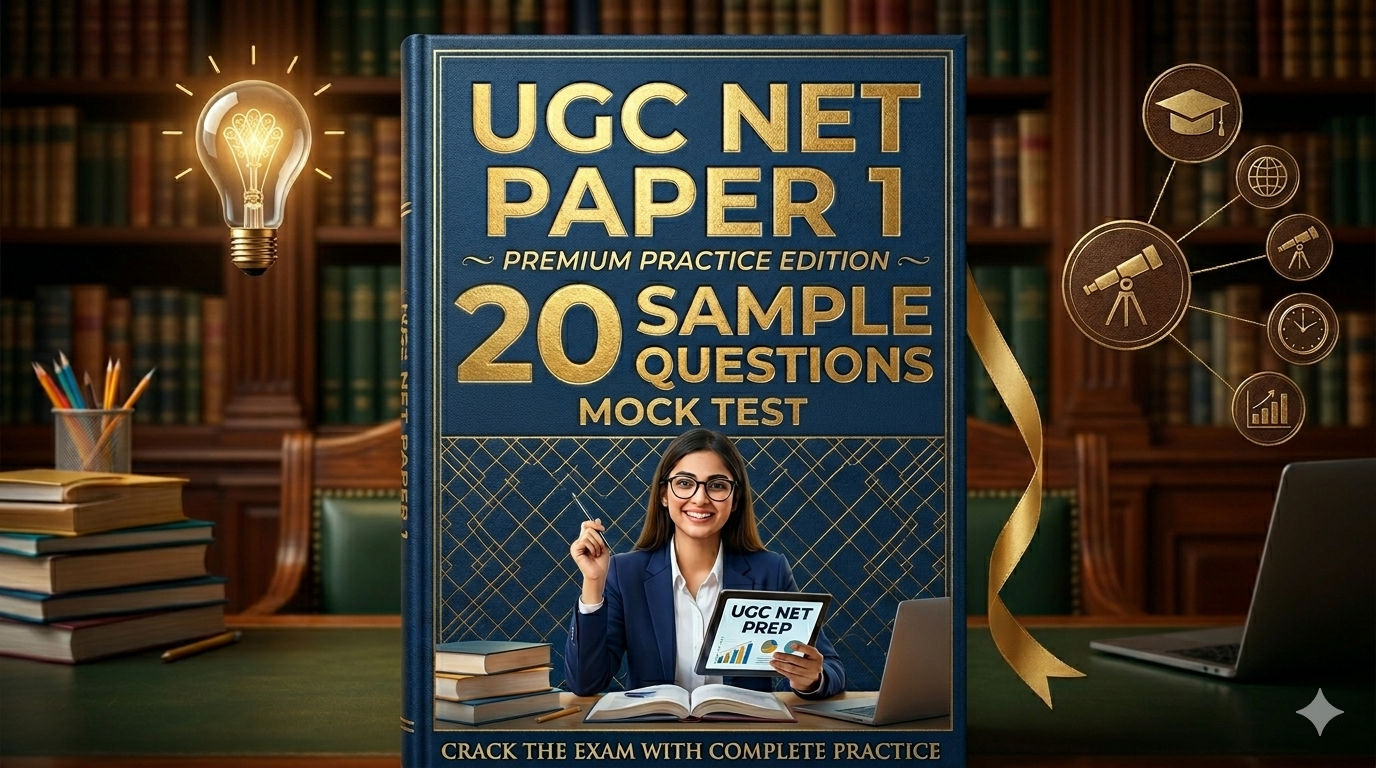
UGC NET Paper 1: 20 Sample Questions (Mock Test)
₹40
Introduction to Taxation: Indian Tax Basics for Exams
₹10₹2
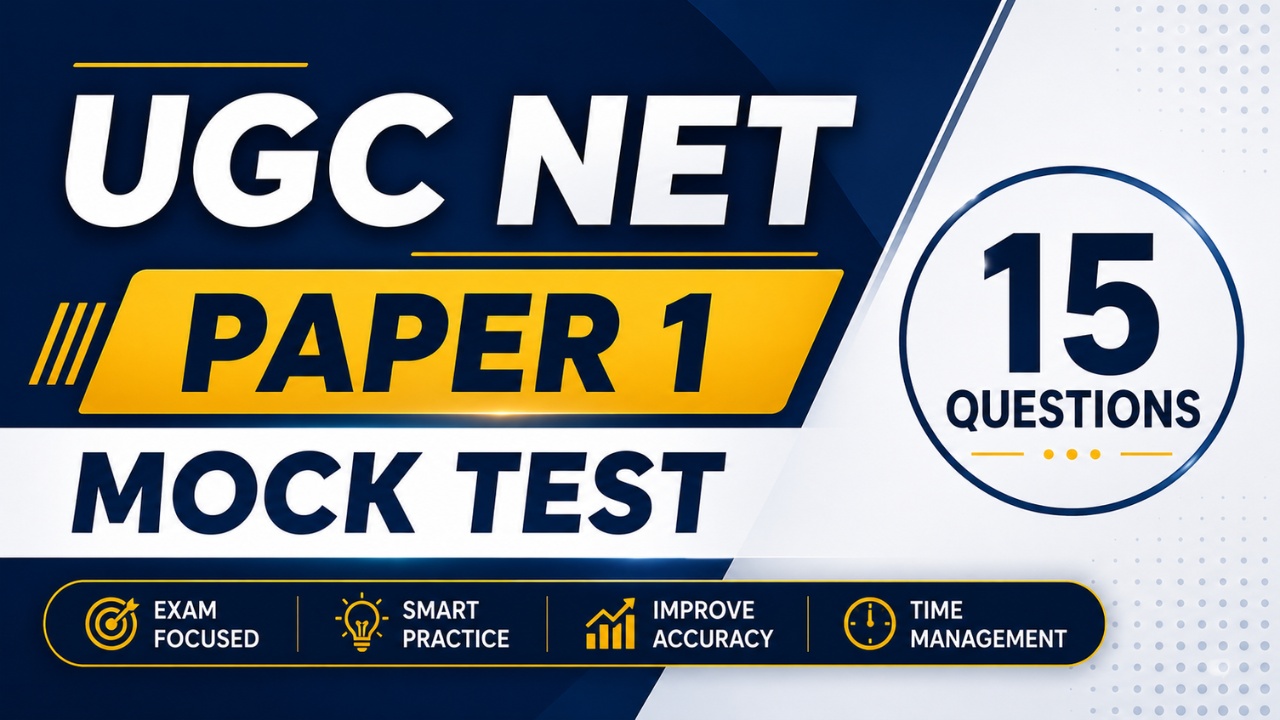
UGC NET Paper 1 Practice Test - 15 Questions
₹15
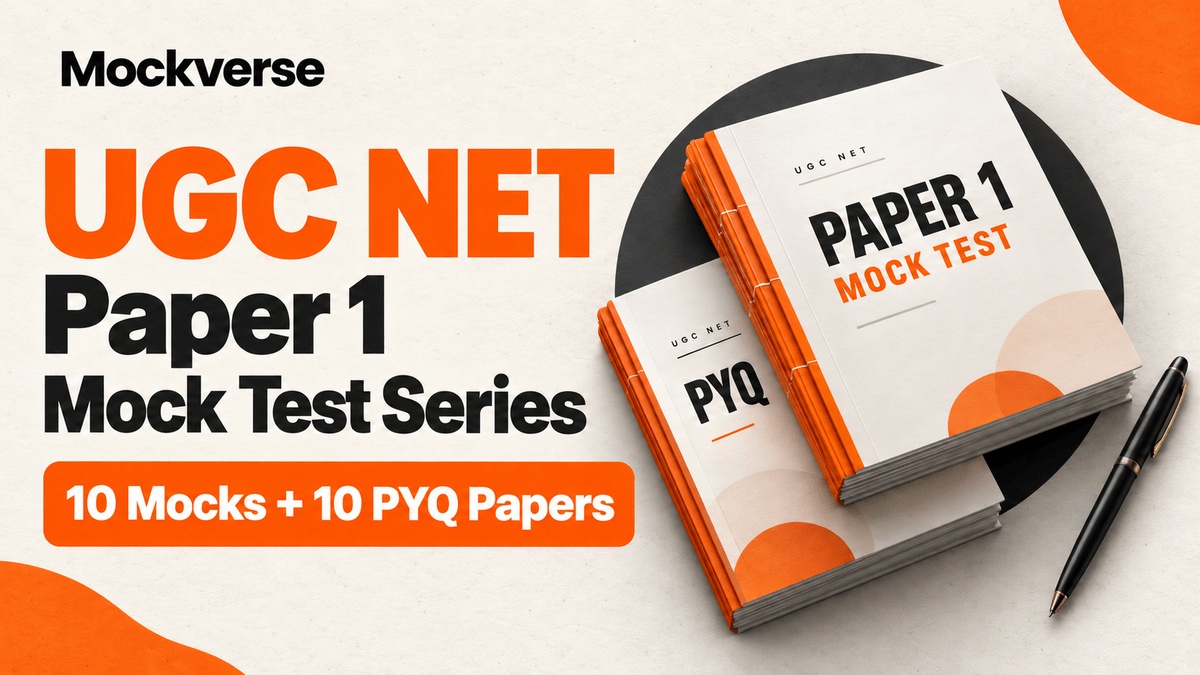
UGC NET Paper 1 Mock Test Series
₹499
UGC NET Commerce Full Mock Test 2026 – Paper 1 + Paper 2
₹999
UGC NET Commerce Paper 2 Mock Test 2026 – 10 Mocks + 10 PYQs
₹799
UGC NET Paper 1 Unit 1 Mock Test December 2026
₹99
UGC NET Political Science Mock Test Series

₹799
Mock tests separate successful UGC NET candidates from those who memorise content but fail in the exam. Thousands of candidates score well in theory but perform poorly under exam pressure, time constraints, and the digital CBT format. Mock tests address this gap by simulating actual exam conditions and building both technical knowledge and exam temperament. This comprehensive guide explains why mock tests matter, how to use them strategically, and how to analyze performance data to maximise your score.
Why Mock Tests Are Non-Negotiable for UGC NET
The Gap Between Knowing and Doing
Knowing the content is different from applying it under exam pressure. Mock tests bridge this gap.
Content Knowledge Alone Doesn't Guarantee Qualification:
You might understand Paper 1 concepts but struggle with time management
You might know Paper 2 topics but make careless errors under stress
You might solve questions correctly at home but panic during the exam
You might not understand the CBT interface until you practice on it
Mock tests transform theoretical knowledge into exam readiness.
Why Candidates Fail Despite Knowing Syllabus
Time Pressure: 150 questions in 3 hours seems manageable until you're solving them. Mock tests reveal your actual speed.
Accuracy Under Stress: Knowing content and applying it under timed conditions are different skills.
Weak Area Blindness: Without practice tests, you don't discover weak areas until the actual exam.
Decision Fatigue: By question 100, fatigue affects decision-making. Mock tests build stamina.
Technical Issues: Unfamiliar with CBT navigation, on-screen calculator, marking features. Mocks train you.
7 Critical Benefits of UGC NET Mock Tests
Understanding Actual Exam Pattern
What You Learn:
Paper 1 question distribution across 10 units
Paper 2 question focus areas (high-weightage topics)
Question type variations (application-based vs recall)
Difficulty level of actual exam questions
Marking scheme application in practice
Why It Matters: Many candidates prepare for a different exam structure than what actually exists. Mock tests show the real pattern.
Mastering Time Management
The Challenge:
50 questions in Paper 1 (~1 minute per question)
100 questions in Paper 2 (~1.2 minutes per question)
3 hours total for both papers, no break
No sectional time limits; free navigation
What Mock Tests Teach:
How long you actually spend per question
Which question types take longer
Optimal time allocation between papers
When to skip vs when to answer
How to pace yourself for 3 straight hours
Real Example: If you spend 75 minutes on Paper 1, you have 105 minutes for 100 Paper 2 questions—roughly 63 seconds per question. Mock tests reveal this mismatch before the actual exam.
Identifying Strengths and Weaknesses
Before Mock Tests: You think you know your weak areas. After Mock Tests: You discover actual weak areas with data.
Example: A candidate thought Paper 1's Reading Comprehension was weak. After 5 mocks, data showed the real weakness was Data Interpretation. Without mocks, they'd have wasted preparation time on the wrong topic.
What Detailed Analysis Reveals:
Unit-wise performance in Paper 1
Subject-wise performance in Paper 2
Question type accuracy (concept-based vs application-based)
Careless errors vs knowledge gaps
Topics requiring more practice
Improving Accuracy and Speed
Speed Without Accuracy Is Dangerous: Attempting all 150 questions in 3 hours but getting 40% correct (60 marks out of 300) doesn't qualify you.
Accuracy Then Speed:
Phase 1: Focus on getting questions correct (even if slow)
Phase 2: Improve speed while maintaining accuracy
Phase 3: Optimise both simultaneously
Mock Test Progression:
Mock 1-3: Build accuracy (expect slower speed)
Mock 4-7: Increase speed carefully
Mock 8-15: Optimise both together
Final mocks: Simulate exam pressure
How Mock Tests Help:
Repeated exposure to exam format reduces fear
Success in mocks builds confidence
Each mock makes the real exam feel less intimidating
Knowing you've solved 150 questions successfully multiple times reduces anxiety
Familiarity breeds confidence
Building Mental Stamina
The Reality: By question 130, mental fatigue is real. Your brain has processed 260 questions over 160+ minutes. Concentration naturally wavers.
What Mock Tests Do:
Condition your brain to focus for 3 straight hours
Build stamina through repeated practice
Train you to maintain accuracy even when tired
Develop strategies for the final push when concentration dips
Understanding CBT Format and Features
CBT Unique Features:
On-screen calculator (different from physical calculators)
Mark for Review function (for uncertain questions)
Question palette showing attempted/unattempted/marked
Free navigation between papers
No option to revisit after submission
Surprises Without Mock Test Practice:
Struggling with on-screen calculator mechanics
Forgetting to mark questions, running out of time
Confusion during paper switching
Accidentally submitting before reviewing
Panicking because interface seems unfamiliar
How Many Mock Tests Should You Take?
Recommended Mock Test Timeline
Preparation Stage | Duration | Mocks | Frequency |
|---|---|---|---|
Foundation (Concept Learning) | Weeks 1-8 | 2-3 | Unit-wise tests, not full-length |
Building (Topic Consolidation) | Weeks 9-16 | 5-7 | 1 full-length per week |
Practice (Refinement) | Weeks 17-24 | 5-7 | 2 full-length per week |
Final Push (Optimisation) | Weeks 25-28 | 3-5 | 3 full-length per week |
Total | 6-7 months | 15-20 | Full-length mocks |
Why 15-20 Mocks?
First 3-5 mocks: You learn how you perform and identify major weak areas
Mocks 6-10: You refine strategy and improve weak areas
Mocks 11-15: You optimise time allocation and build accuracy
Mocks 16-20: You simulate exam pressure and build confidence
Mock Test Strategy: Free vs Paid
Free Mock Tests
Advantages:
Zero cost
Good for initial understanding
Accessible online from multiple platforms
Helps assess basic preparation level
Limitations:
May not match latest exam pattern
Limited or no performance analytics
Occasionally inaccurate answers
No detailed solution explanations
Difficulty level may not match actual exam
Best For:
First 1-2 mocks (to understand exam format)
Budget-constrained candidates
Paid Mock Test Series
Advantages:
Curated by experts matching actual exam pattern
Detailed performance analytics
Comprehensive solution explanations
Difficulty levels matching actual exam
Updated based on latest exam trends
Category-wise and subject-wise analysis
Limitations:
Cost (typically ₹500-2000 for 15-20 mocks)
No trial; commit before knowing quality
Best For:
Mocks 3-20 (bulk of preparation)
Serious candidates targeting JRF or high Assistant Professor cutoff
ROI Perspective: If paid mocks help you qualify for JRF (worth ₹50,000+ fellowship), or secure Assistant Professor post (worth ₹70,000+ monthly salary), the ₹1000-2000 investment has massive returns.
Hybrid Approach (Recommended)
Mocks 1-2: Free mocks (understand format)
Mocks 3-15: Paid test series (serious preparation)
Mocks 16-20: Mix of paid + revisit previous paid mocks
Analysing Mock Test Performance: The Data-Driven Approach
Beyond Just Scores
Never just look at your score. Detailed analysis drives improvement.
Performance Metrics to Track
1. Accuracy Rate
Accuracy % = (Correct Answers / Total Attempted) × 100Target: 70%+ for qualification
Track unit-wise accuracy in Paper 1
Track topic-wise accuracy in Paper 2
2. Speed Metrics
Average time per question
Time spent on each unit/topic
Identify which sections make you slower
3. Attempt Rate
Attempt % = (Questions Answered / Total Questions) × 100Should be 95%+ (never leave questions unanswered in UGC NET)
If less, analyze why you're skipping questions
4-Step Mock Analysis Process
Immediate Post-Test (15 minutes)
Note how you felt (energy, confidence, stress)
Identify which section was hardest
Remember which questions you skipped
Score Breakdown (30 minutes)
Check your score and accuracy
Compare with your target score
Identify questions you got wrong despite knowing
Topic-wise Analysis (45 minutes)
Create a spreadsheet tracking:
Topic
Number of questions attempted
Number correct
Accuracy %
Time spent
Identify patterns across mocks
Action Items (30 minutes)
List 3-5 weak areas from this mock
Plan how to improve before next mock
Adjust study schedule if needed
Understanding Your Data
Example Analysis:
Topic | Q Attempted | Q Correct | Accuracy | Time (mins) |
|---|---|---|---|---|
Teaching Aptitude | 5 | 4 | 80% | 6 |
Research Aptitude | 5 | 3 | 60% | 5 |
Reading Comprehension | 5 | 4 | 80% | 7 |
Communication | 5 | 2 | 40% | 4 |
Reasoning | 5 | 3 | 60% | 6 |
PAPER 1 TOTAL | 25 | 16 | 64% | 28 mins |
Insights:
Communication (40%) is your weakest area needs focus
Reading Comprehension takes longest (7 mins) despite good accuracy optimise speed
Teaching Aptitude (80%) is strength don't over-practice
Paper 1 accuracy (64%) is below 70% target needs improvement
Action: Focus on Communication and Reading Comprehension; attempt to improve accuracy to 70%+ in next mock.
Mock Test Mistakes to Avoid
Not Taking Mocks Seriously
Solving mocks casually without time limits
Taking breaks mid-mock
Checking answers while solving
Correct Approach: Treat every mock exactly like the real exam 3 hours, continuous, no breaks.
Not Analysing Results
Just noting the score and moving on
Not identifying weak areas
Not reviewing wrong answers
Taking Too Many Mocks Without Studying
Solving 20 mocks without learning concepts
Repeating the same mistakes across mocks
No study time between mocks
Correct Approach: Study → Mock → Analyse → Improve → Study (weak areas) → Next Mock
Not Tracking Progress
Taking mocks but not tracking improvement over time
Not comparing performance across mocks
Not noticing patterns
Correct Approach: Create a progress tracker see your accuracy improving from Mock 1 (60%) to Mock 15 (75%).
Timing Pressure Creates Panic
Rushing through questions because of time
Making careless errors due to hurry
Not checking marked questions due to time
Sample Mock Test Timeline
Foundation
Complete syllabus study
Week 4: Take 1-2 free mocks (assess baseline)
Building
Targeted study of weak areas
Weekly: 1 full-length paid mock
Analyse and revise weaknesses
Practice
Consolidation of all topics
2 full-length mocks per week
Detailed performance analysis
Focused revision of weak areas