
UPSC CSE Course 2027: How to Choose the Right One
What a good UPSC CSE course should cover, the main course types and a simple way to compare them.
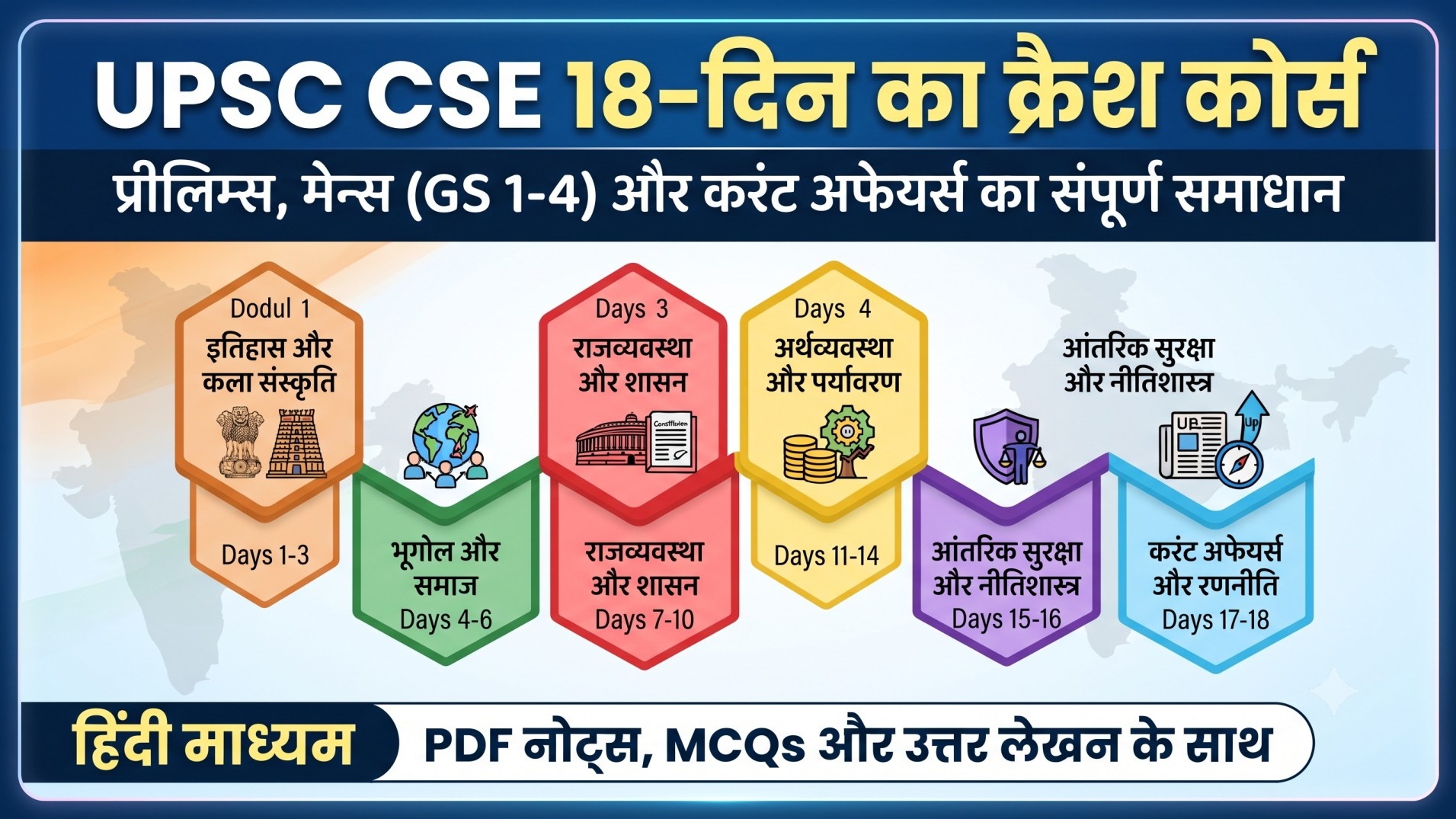
A UPSC CSE course gives structure to a very large syllabus: two Prelims papers, nine Mains papers and a Personality Test. Self-study works for some aspirants, but many prefer a course for the schedule, the answer-writing feedback and the test practice. This page explains what a good UPSC CSE course should include and how to compare your options before you enrol.
What a Good UPSC CSE Course Includes
Full syllabus coverage: Prelims General Studies and CSAT, plus Mains General Studies I to IV and the essay, as printed in the official notice.
Answer-writing practice with feedback: The Mains carries about 86 per cent of the final merit marks, so evaluated answers matter more than extra lectures.
Regular tests: Topic-wise and full-length tests that follow the real Prelims pattern.
Current affairs support: Monthly compilations and tests, not only daily news.
Optional subject guidance: Help with choosing and covering one of the 25 optional subjects or a language literature.
Types of UPSC CSE Courses
Type | Suits | Typical inclusions |
|---|---|---|
Foundation course | Beginners starting from scratch | Core subjects, current affairs, basic tests |
Prelims-focused course | Candidates close to the exam | Revision, CSAT, full-length tests |
Mains and answer-writing course | Candidates who cleared or expect to clear the Prelims | Writing practice, essay, ethics case studies |
Optional subject course | Candidates who have chosen an optional | Two-paper coverage and test practice |
How to Choose a Course
Match it to your stage: A first-time aspirant and a repeat candidate need different courses.
Check the syllabus alignment: The content should follow the latest notice. Optional syllabi were revised, so older material may be outdated.
Look at the evaluation process: Ask how quickly answers are checked and whether feedback is specific.
Test the schedule: Pick a pace you can sustain alongside your job or studies.
Common Mistakes to Avoid
Many aspirants enrol in several courses at once and finish none. Others skip revision because the lectures feel complete. A course is a guide, not a replacement for your own notes and regular tests. Choose one main course and add only what fills a clear gap.